

Colorado justices recognize limited right to evidence in postconviction challenges
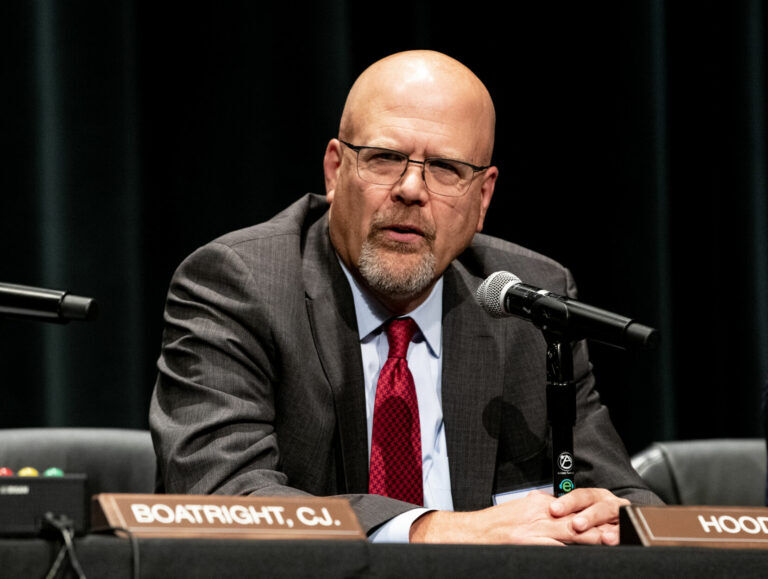
The Colorado Supreme Court ruled on Monday that defendants challenging their convictions may, in certain circumstances, be entitled to receive the information the prosecution already handed over for trial at no cost.
The justices rejected the argument that defendants seeking postconviction relief must use the open records law specific to criminal justice records, which prosecutors’ offices have the discretion to partially or completely withhold. However, the Supreme Court stopped short of concluding that judges can order disclosure of the trial evidence in every postconviction case.
“Although a defendant with the financial means to pay for copies is free to spend his money to pursue frivolous claims, the state isn’t obligated to subsidize that pursuit,” wrote Justice William W. Hood III in the May 4 opinion.
Instead, Hood continued, a defendant with appointed counsel can receive trial documents if he “has shown that he may be entitled to postconviction relief based on specific facts likely mentioned in pretrial discovery, which is unavailable to postconviction counsel, and which would help the defendant substantiate his allegations.”
Ramsey Lama, a former trial judge who now specializes in postconviction relief, called the decision a “meaningful step,” but said the court’s ruling posed a practical problem for defendants seeking relief on valid grounds.
“The petitioner must point to specific facts in the discovery that would substantiate alleged errors. Yet, a petitioner usually cannot identify those facts until reviewing the discovery itself,” he said. “For me, it is common sense that a defendant needs discovery in the postconviction phase of the case.”
Lama said the accessibility pitfall resembles one the Supreme Court created months ago — with an opinion also authored by Hood — when it concluded that a defendant failed to show how uninvestigated, unavailable DNA evidence would have entitled him to relief.
In contrast to direct appeals of criminal convictions, which usually allege errors before trial, at trial or at sentencing, defendants also have the opportunity to seek postconviction relief directly in the trial courts. That pathway, however, is available only for specific reasons, such as constitutionally ineffective assistance of counsel or newly discovered evidence — assertions that would require some investigation.
Following Keevin Bell II’s 2019 murder conviction in Jefferson County, he unsuccessfully appealed. In 2024, representing himself, he filed a petition for postconviction relief, contending his trial lawyers acted unreasonably in handling certain aspects of his defense.
District Court Judge Ryan P. Loewer concluded at least one of Bell’s claims had merit. He appointed defense counsel to investigate.
Bell’s attorney, Moorea E. Diamond, then emailed the DA’s office because a “significant amount of discovery” was missing from the files of Bell’s trial lawyers.
“I am aware that it is the policy of your office not to provide discovery” in postconviction cases, she wrote. But without “a complete copy of the discovery that was provided to trial counsel, we will be unable to be effective.”
Senior Deputy District Attorney Rebecca Adams responded that Diamond should file an open records request and pay the associated costs.
Diamond asked Loewer to order the prosecution to turn over the evidence they already had provided Bell’s trial lawyers. She argued the DA’s process would cost thousands of dollars and would produce redacted files that may not be helpful.
In a May 2025 order, Loewer noted there was “no rule, no statute, and no inherent authority” compelling prosecutors to turn over their trial-related evidence to postconviction defense attorneys. It was possible that the constitutional right to due process required disclosure, but Loewer determined Bell had no such right under the circumstances.
Bell’s lawyers turned to the Supreme Court, arguing that their own ability to provide effective assistance to Bell was imperiled if they could not access the trial evidence. Further, they pointed out that trial judges across Colorado have reached different conclusions about their ability to order a DA’s office to hand over the files.
The Office of the Alternate Defense Counsel, which represents defendants when the public defender’s office has a conflict, echoed that there is no uniform approach to the issue.
“In some jurisdictions, prosecutors automatically disclose to postconviction counsel a complete copy of the discovery that was previously provided to trial counsel. Those prosecutors simply upload the discovery to the eDiscovery website without any issue or objection. It costs nothing,” wrote attorney Krista Schelhaas. “In other jurisdictions, prosecutors refuse to disclose to postconviction counsel a copy of the discovery that was previously provided to trial counsel.”
Meanwhile, the Colorado District Attorneys’ Council urged the Supreme Court to consider the logistical and financial challenges faced by prosecutors’ offices.
“Depending on the age of the case, prosecutors and other staff may need to review voluminous paper files or electronic records to approximate what was originally produced without inadvertently releasing privileged or otherwise non-discoverable information. All that takes a lot of time,” wrote Denver Senior Deputy District Attorney Richard Lee.
The Supreme Court agreed it needed to weigh in because of the wide variation in how prosecutors’ offices handle the disclosure question in postconviction cases. Hood noted that defendants are generally not entitled to evidence in postconviction cases, save for a few existing exceptions.
However, the court recognized that postconviction counsel must also provide constitutionally effective assistance, which may require them to review trial information. Consequently, judges can direct prosecutors’ offices to disclose those files.
“To hold otherwise — that is, to flatly prohibit such orders — would elevate administrative ease for district attorneys over the effectiveness of postconviction counsel in fulfilling their assigned role in a system that our state government created,” Hood wrote.
Lama, the former trial judge, said the legislature should go further and ensure that self-represented defendants can review trial-related documents for errors so that they may raise them in time through a postconviction petition.
“The General Assembly should create a statutory right to postconviction discovery paralleling the prosecution’s (disclosure) obligation at trial,” he said. “That ends the case-by-case satellite litigation Bell invites, ensures uniformity across districts, and aligns Colorado’s postconviction process with the equal-protection principles the court just endorsed.”
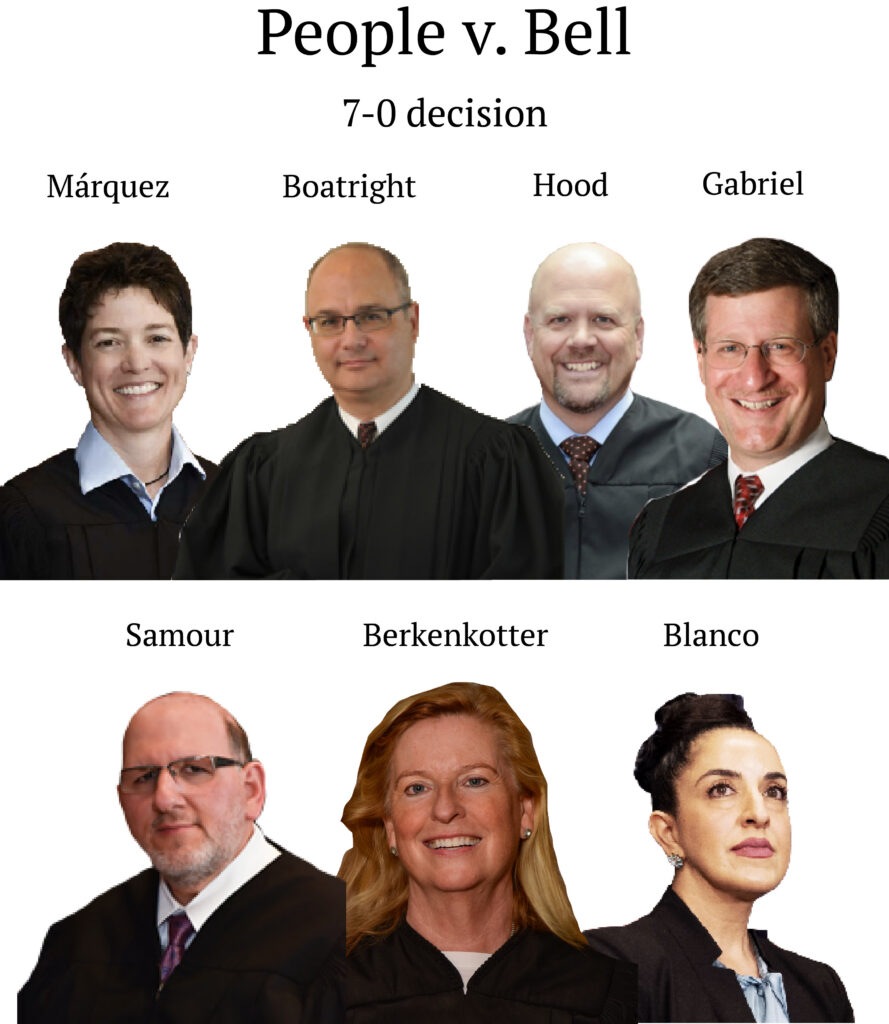
The case is People v. Bell.

10th Circuit says landowner cannot sue ex-Routt County judge for statements in decision
Michael Karlik
michael.karlik@coloradopolitics.com
Updated 2 hours ago
A Routt County landowner cannot sue a former judge for his allegedly inaccurate statements in a case where the landowner was not a party, the Denver-based federal appeals court decided on Wednesday. Anne Fitzsimmons, who lives in Germany, owns a...
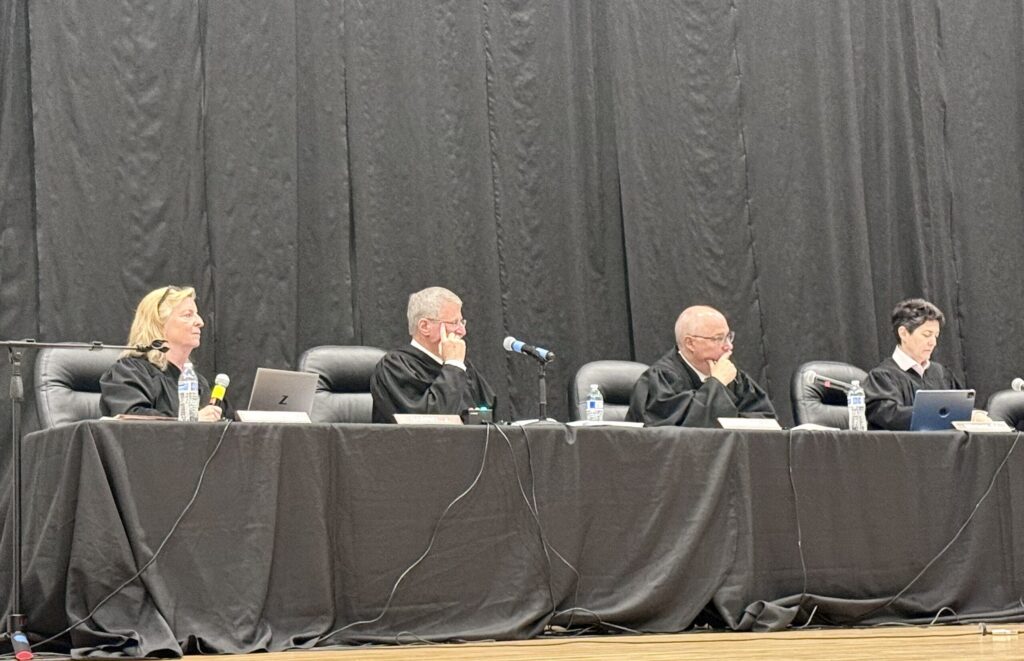
Parole, appeals deadlines and restitution: Colorado justices accept cases
Michael Karlik
michael.karlik@coloradopolitics.com
Updated 1 day ago
The Colorado Supreme Court announced on Monday that it will determine how a defendant’s parole-eligibility date should be calculated in instances where a new trial results in a sentence being imposed retroactively to the date of the original, since-overturned sentence....
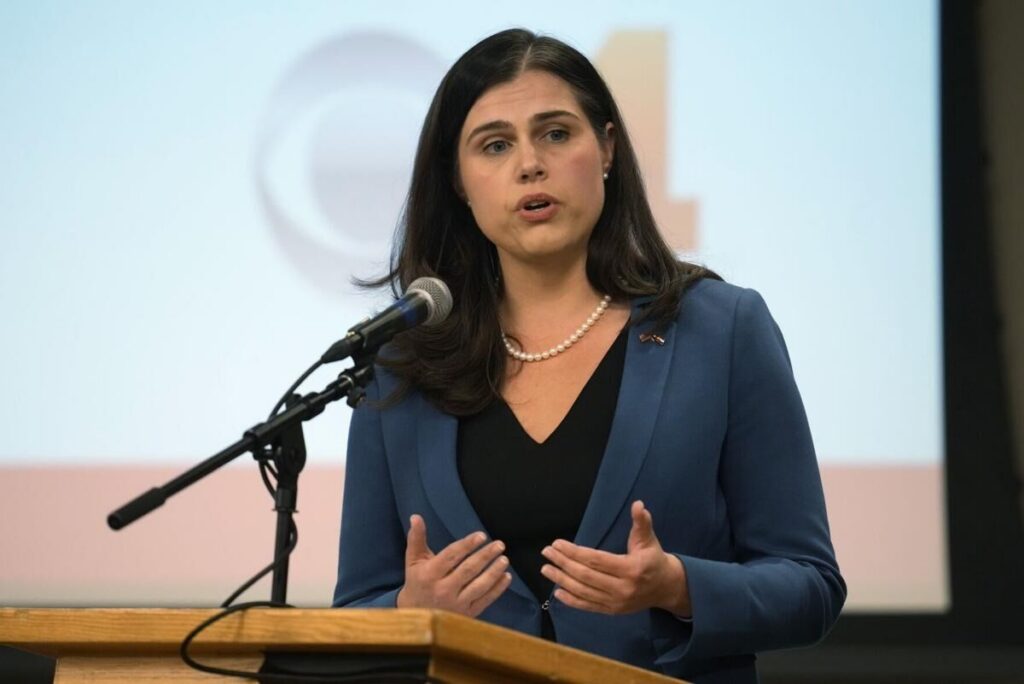
Federal judge rejects DOJ bid to force Colorado to hand over voter information
Marissa Ventrelli
marissa.ventrelli@coloradopolitics.com
Updated 58 minutes ago
A U.S. district court judge has dismissed a lawsuit filed by the U.S. Department of Justice against Colorado Secretary of State Jena Griswold for refusing to provide the agency with personal voter information. Last December, the DOJ’s Civil Rights Division asked...
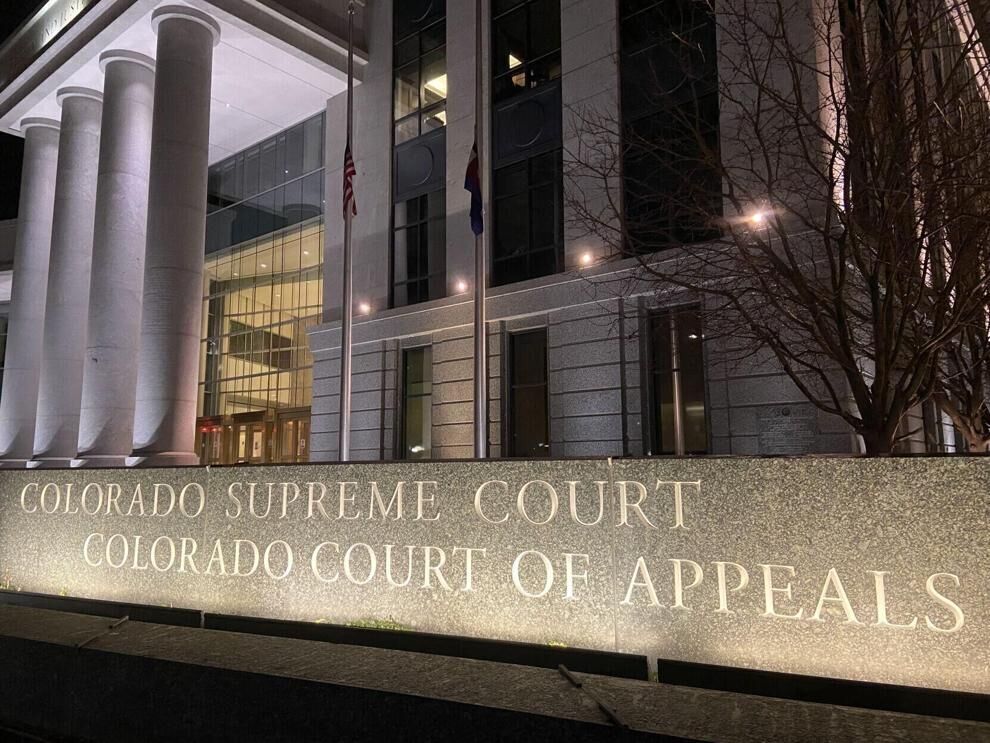
3 Colorado judges receive unfavorable retention recommendation as one performance commission violates rules
Michael Karlik
michael.karlik@coloradopolitics.com
Updated 1 day ago
Of the 123 Colorado judges standing for retention on the November ballot, citizen-led performance commissions found that three did not meet the required performance standards. However, in an unprecedented move, the commission charged with evaluating Supreme Court and Court of...

10th Circuit weighs Gross Reservoir expansion, judge’s ‘punishment’ of Denver Water
Michael Karlik
michael.karlik@coloradopolitics.com
Updated 3 hours ago
Members of the Denver-based federal appeals court considered on Friday whether they could intervene in an ongoing infrastructure project to enlarge a Boulder County dam after a trial judge deemed the underlying permit unlawful nearly two years ago. Denver Water...

10th Circuit upholds federal prohibition on juvenile handgun possession
Michael Karlik
michael.karlik@coloradopolitics.com
Updated 1 day ago
The Denver-based federal appeals court concluded on Monday that Congress acted within its constitutional powers to make it a crime for juveniles to possess handguns in most instances. The decision from the U.S. Court of Appeals for the 10th Circuit...

Senate advances judicial nominee, Montezuma County judge agrees to discipline | COURT CRAWL
Michael Karlik
michael.karlik@coloradopolitics.com
Updated 2 days ago
Welcome to Court Crawl, Colorado Politics’ roundup of news from the third branch of government. A U.S. Senate committee advanced a judicial nominee from Colorado, plus a Montezuma County judge agreed to receive discipline for his misconduct that stops short...
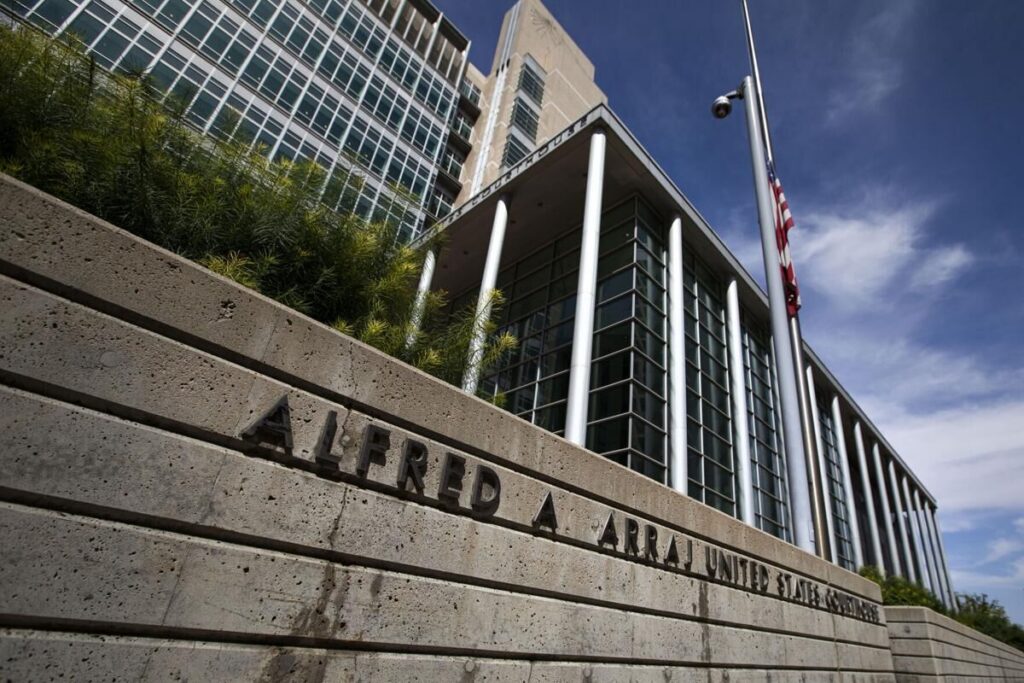
Judge denies Calderon injunction case against Denver, Johnston
Deborah Grigsby
deborah.smith@denvergazette.com
Updated 2 days ago
A U.S. District Court judge has denied a preliminary injunction in the case of Jessica Calderon, the Denver city employee who won a temporary restraining order preventing the City and County of Denver from terminating her amid the 2025 citywide...

10th Circuit partially revives lawsuit over 2020 Denver protest injuries
Michael Karlik
michael.karlik@coloradopolitics.com
Updated 3 days ago
The Colorado-based federal appeals court revived a man’s claims against Denver on Friday after concluding a trial judge resolved the case in the city’s favor without analyzing two of the three instances of alleged excessive force and other constitutional violations....

Federal judges find Colorado immigration judge violated several orders
Michael Karlik
michael.karlik@coloradopolitics.com
Updated 4 days ago
Multiple federal judges in Colorado have freed people from immigration custody after determining that one immigration judge violated their directives for properly conducting bond hearings. For nearly a year, Colorado’s U.S. District Court has faced a flood of habeas corpus petitions...
PREV
PREVIOUS

Colorado legislature enters final 10 days with hundreds of bills still unresolved
With less than two weeks left in the 2026 session, Colorado lawmakers are staring down the final stretch of a crowded agenda, with 228 bills still unresolved as of Monday and several major measures that have yet to even be introduced. There are 228 bills still awaiting final resolution, including 78 House bills and 53 […]
Road-funding amendment divides Colorado over $539M general fund shift
A battle is brewing over funding for Colorado’s roads after a citizen initiative has been cleared to gather signatures to put it on the ballot for voters to decide. Supporters of the proposed constitutional amendment that would change existing law on transportation funding and increase state revenue allotted for road transportation said it would end […]