

Divided Colorado Supreme Court rejects defendant’s claim of deficient DNA investigation
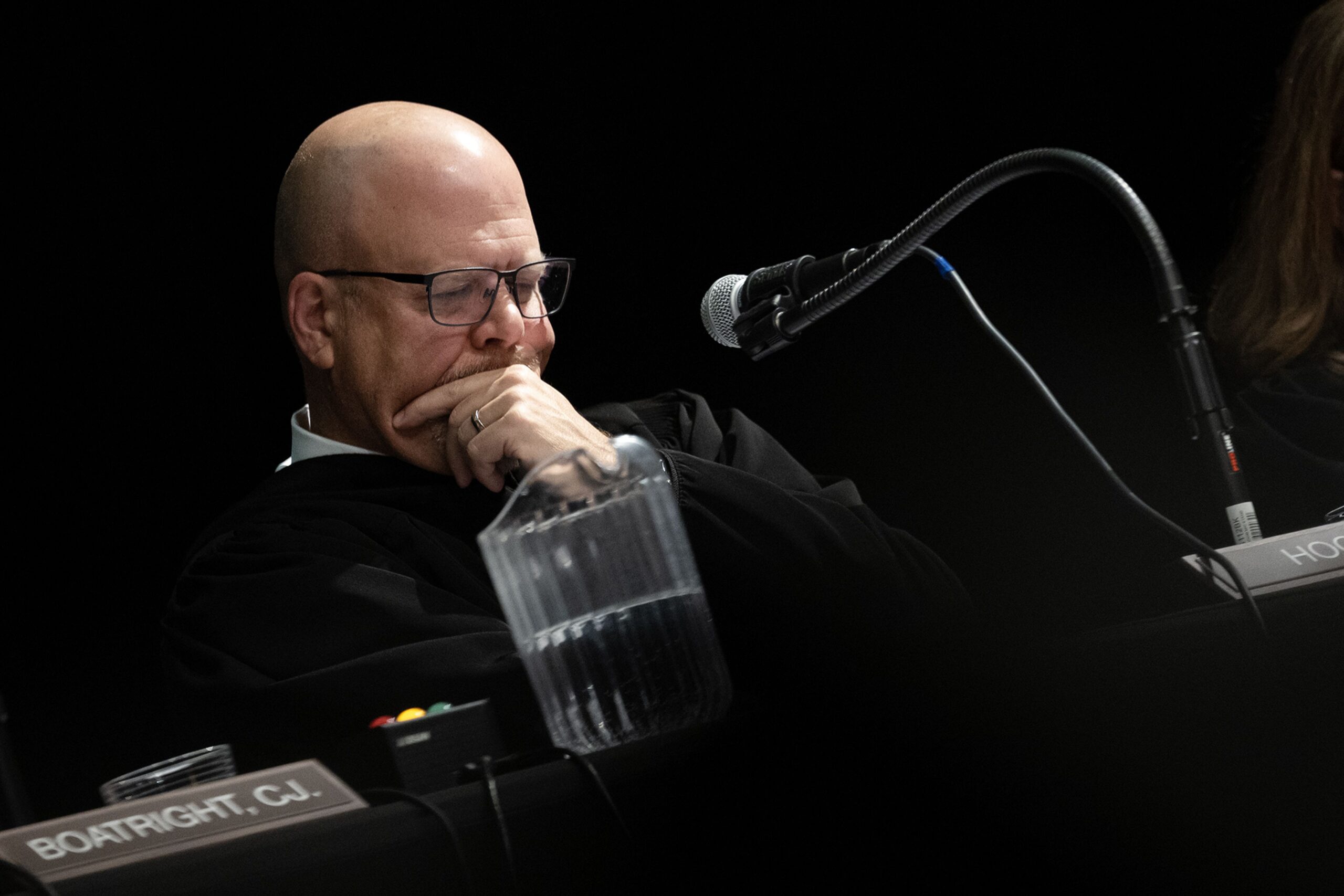
The Colorado Supreme Court decided on Tuesday, by 4-2, that a defendant failed to allege how uninvestigated, inaccessible DNA evidence would have shown he was wrongly convicted.
When Jamale D. Townsell filed a petition from prison seeking postconviction relief, he argued his trial lawyer was constitutionally ineffective for failing to properly investigate DNA evidence that would have called his culpability for a 2013 bank robbery into question.
The state’s Court of Appeals rejected his petition, reasoning Townsell had not shown how the evidence would have changed the outcome of his criminal case, or if a DNA expert was “available and willing to testify.”
In the Feb. 17 decision, all members of the Supreme Court agreed that any defendant in Townsell’s shoes would need to explain why his lawyer’s deficient performance would have likely changed the result of his proceeding. However, the justices disputed whether Townsell’s petition met that threshold.
“Although Townsell didn’t need to use any magic words, he needed to provide some explanation of how further investigation would have excluded him or how it would have overcome the substantial evidence introduced at trial against him,” wrote Justice William W. Hood III for the majority. “Townsell only asserted that further DNA testing would prove his exclusion but never the inclusion of another suspect.”
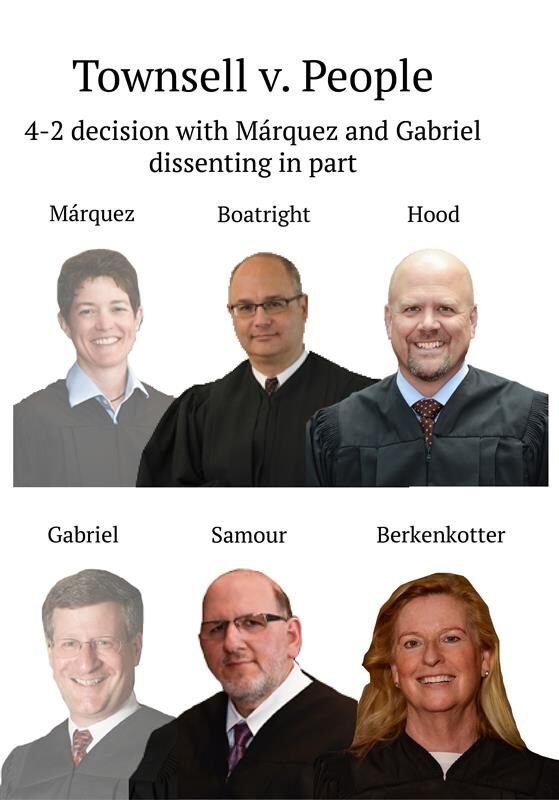
Justice Richard L. Gabriel, writing for himself and Chief Justice Monica M. Márquez, saw otherwise. He noted the judicial form used by self-represented defendants does not direct them to describe how their case was harmed. Nonetheless, Gabriel believed Townsell adequately explained how his case would have been different with better legal representation.
“Indeed, I cannot discern what more Townsell could have alleged without actually conducting the neglected DNA testing and asserting the results,” he wrote. “In my view, the majority’s ruling imposes an impossible burden on criminal defendants who are seeking postconviction relief.”
Hollis Whitson, who represented Townsell at the Supreme Court, said the majority’s decision reinforces a “two-tiered system” for defendants alleging problems with their convictions.
“A prisoner with more education or who has money to get help writing their first motion will likely be referred to a public defender who will assess their claims to see if they have arguable merit,” she said. “But people with less education, intellectual or mental disabilities, and no money aren’t likely to get even a referral.”
In contrast to direct appeals of criminal convictions that assert errors before trial, during trial, or at sentencing, defendants can also seek postconviction relief directly from the trial courts. That pathway, however, is only available for specific reasons, like ineffective assistance of counsel or newly discovered evidence — assertions generally requiring some investigation.
When a self-represented defendant files a petition, the Supreme Court has previously explained that trial judges must deny the request outright if the defendant is not entitled to relief. But if there is at least one claim with “arguable merit,” the judge must forward the petition to the public defender’s office so that an attorney can investigate and potentially refine the defendant’s assertions. After all of that happens, there is an opportunity for the defendant to receive a hearing.
An Arapahoe County jury convicted Townsell of entering a bank while wearing a mask, demanding money at gunpoint, and fleeing with $1,100 in cash in under 30 seconds. He is serving 32 years in prison.
After the Court of Appeals upheld his convictions, Townsell filed a petition on his own arguing his defense lawyer failed to diligently investigate the possibility that DNA evidence would exonerate Townsell and point to an alternate suspect.
A three-judge panel for the Court of Appeals sided against Townsell by 2-1. The majority concluded a trial judge was not obligated to appoint counsel to represent Townsell because even if he had credibly alleged his original lawyer was ineffective, he failed to show the lack of DNA investigation harmed him.
Judge Timothy J. Schutz disagreed with the majority’s conclusion that Townsell neglected to explain how his attorney’s actions compromised his defense. Schutz further argued it is unreasonable to expect an incarcerated defendant to essentially perform the DNA investigation their trial lawyer allegedly failed to do.
“Townsell is, by all appearances, indigent, and he is in prison,” Schutz wrote. “The net effect of such reasoning is to deprive a defendant of an evidentiary hearing because of the failure to present the evidence that he claims trial counsel failed to procure in the first instance.”

Ultimately, the Supreme Court concluded Townsell did not go far enough by alleging a lawyer who properly investigated the prosecution’s DNA evidence “would have discovered substantial evidence of defendant’s exclusion.”
“Townsell needed to provide some basis, which if true, would explain how further investigation would have excluded him from the robbery given the strength of the evidence used to convict him,” wrote Hood. “His motion focused on the nature of defense counsel’s mistake but failed to include the potential prejudice the mistake caused.”
Gabriel, in dissent, wrote that the majority was effectively creating a requirement for self-represented defendants to show how DNA testing would exclude them and include a different suspect, without access to the evidence from prison.
“Here, the majority not only holds Townsell to the standard of learned counsel but also appears to have imposed on him,” wrote Gabriel, “a burden that even lawyers would likely find insurmountable.”
The case is Townsell v. People.

Federal judge hears arguments about Colorado’s 3-day gun purchase waiting period
Michael Karlik
michael.karlik@coloradopolitics.com
Updated 9 hours ago
A federal judge heard arguments on Monday about the constitutionality of a 2023 Colorado law that generally imposes a three-day waiting period on firearm purchases after the initiation of a background check. The test that the U.S. Supreme Court created...
Colorado Supreme Court intervenes in Weld County prosecution dismissed due to Missy Woods misconduct
Michael Karlik
michael.karlik@coloradopolitics.com
Updated 13 hours ago
The Colorado Supreme Court ordered a Weld County trial judge last week to respond to the district attorney’s claim that he improperly dismissed a criminal case because of “outrageous” conduct by the Colorado Bureau of Investigation. Daniel Lee Eatinger stood...
Schoolchildren’s presence at child sex-related trial did not harm Arapahoe County defendant, appeals court says
Michael Karlik
michael.karlik@coloradopolitics.com
Updated 3 days ago
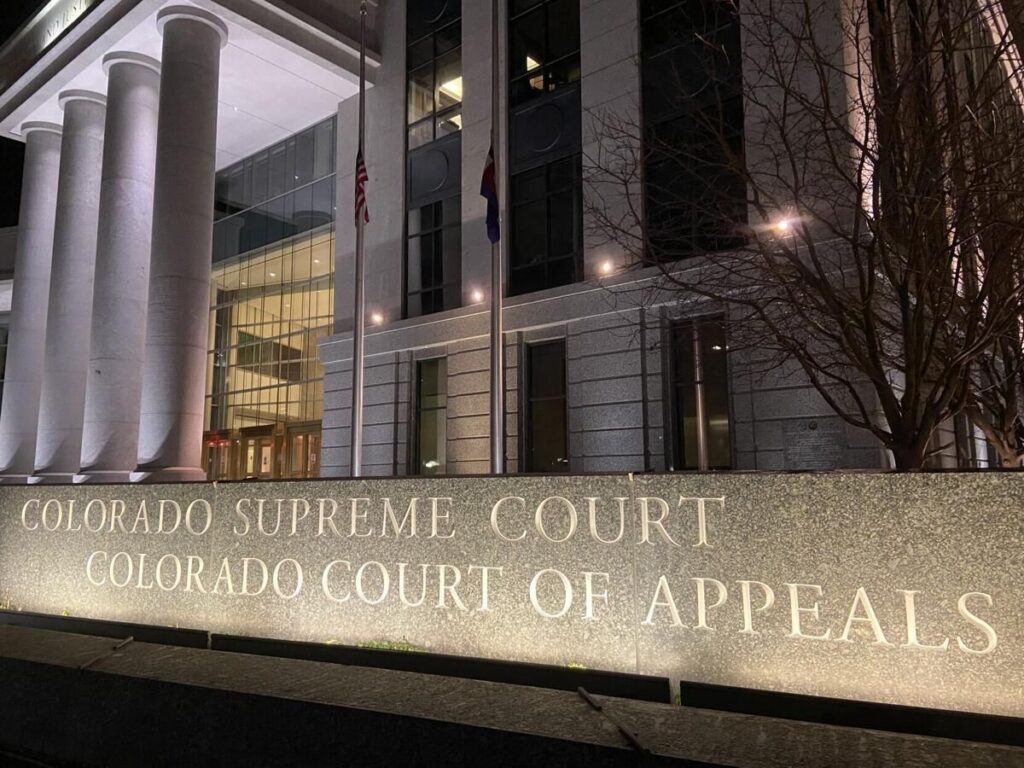
Colorado’s second-highest court decided on Thursday that the presence of a group of schoolchildren on the first day of a child sexual exploitation trial did not violate an Arapahoe County defendant’s constitutional right to a fair trial. Prosecutors charged Jerry...
Appeals court cites week-old Colorado law to reinstate child neglect case at child, father’s request
Michael Karlik
michael.karlik@coloradopolitics.com
Updated 2 days ago
Colorado’s second-highest court invoked a new state law for the first time on Thursday and reinstated a child neglect case that both the child and her father wished to reopen. House Bill 1227 took effect on Aug. 12, reversing a...
Colorado Supreme Court names William Hood as next chief justice
Michael Karlik
michael.karlik@coloradopolitics.com
Updated 4 days ago
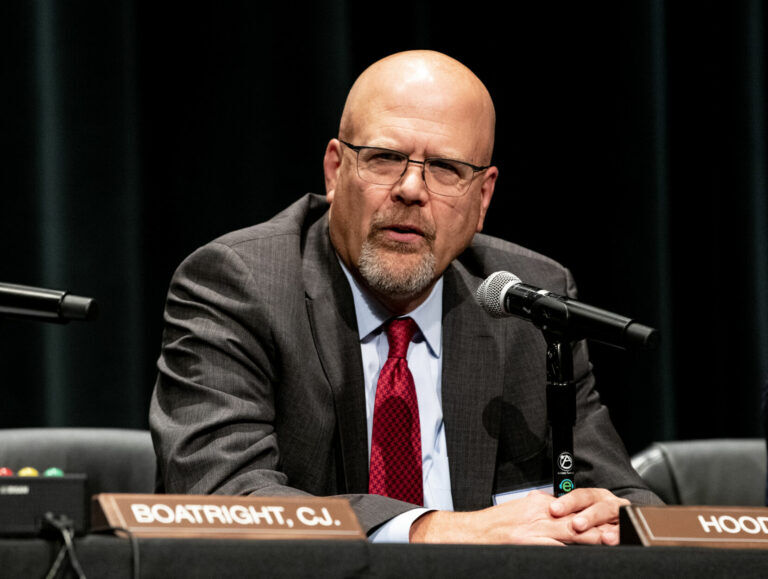
The Colorado Supreme Court has selected Justice William W. Hood III to be the next chief justice, the judicial branch announced on Friday. Hood will succeed Chief Justice Monica M. Márquez, who took over the role in July 2024. “I...
Family of slain Lakewood teacher releases statement as murder suspect makes first court appearance
Matt Kyle
matt.kyle@denvergazette.com
Updated 20 hours ago
Patrick Theodore Barnett, the Lakewood man accused of killing his wife, a Jeffco Public Schools art teacher, made his first court appearance Friday morning as his wife’s family looked on. The status conference hearing was held before District Court Judge...
Appeals court upholds Park County trophy hunting conviction
Michael Karlik
michael.karlik@coloradopolitics.com
Updated 3 days ago
Colorado’s second-highest court clarified on Thursday that a defendant may stand convicted under the state’s trophy hunting laws if he abandons a bear carcass but returns later to remove the meat. Under Colorado law, it is a felony to detach...
Judge grants partial injunction to GEO in fight against state health inspection law
Kyla Pearce
kyla.pearce@gazette.com
Updated 5 days ago
A judge ruled Thursday that The GEO Group does not have to follow parts of a new state law requiring more frequent health and safety inspections at the U.S. Immigration and Customs Enforcement processing center in Aurora. Under the order...
Parker man faces 20 years to life for serial sexual assaults
Nicholas Fogleman
nicholas.fogleman@denvergazette.com
Updated 5 days ago
A 25-year-old Parker man who sexually assaulted three women in 2025 pleaded guilty Wednesday and will serve 20 years to life in prison. Javier Rodriguez-Andrade pleaded guilty to charges stemming from three sexual assaults involving women ages 19 to 24. ...
Divided appeals court upholds warrantless DNA collection in Colorado cold case, cautions of government overreach
Michael Karlik
michael.karlik@coloradopolitics.com
Updated 5 days ago
Colorado’s second-highest court upheld the warrantless collection of a suspect’s DNA from a discarded soda can as constitutional on Thursday, while warning about potential abuse of DNA privacy in the absence of further guardrails. By 2-1, a three-judge Court of...
PREV
PREVIOUS
Colorado justices uphold shooting conviction despite jury saying defendant not the shooter
The Colorado Supreme Court ruled on Tuesday that a man can stand convicted of murder, even though jurors found he was not the one who shot the victim and the evidence suggested he was not present for the shooting. There was no dispute that Terrence G. Davis died by gunshot in an Aurora alleyway in 2017. […]

Colorado's 'first public Christian school' sues state, alleges discrimination
Riverstone Academy, a public elementary school that opened last fall in Pueblo as a tuition-free option with Christian-based instruction, has filed a lawsuit against the state of Colorado over alleged religious discrimination. The lawsuit, filed in U.S. District Court for the District of Colorado, claims that Colorado law violates the free exercise clause of the […]