

Colorado federal judge speaks about judicial innovation, leadership
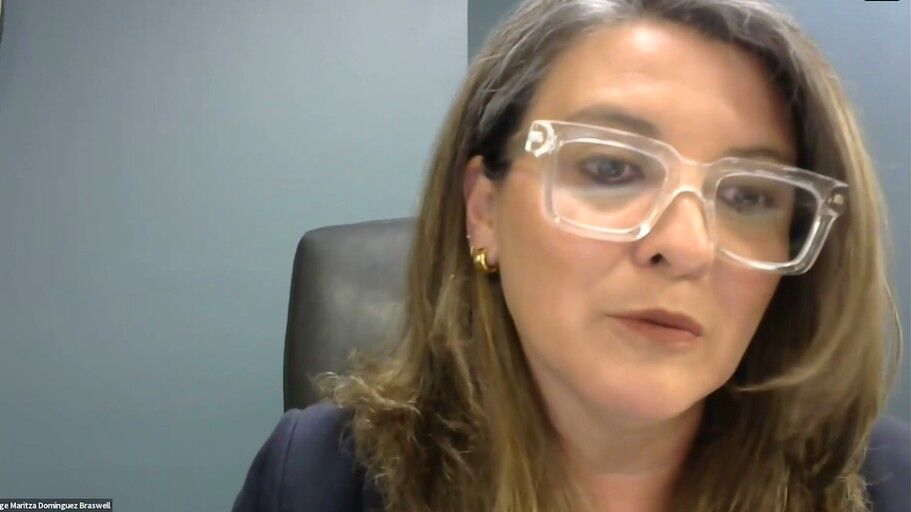
U.S. Magistrate Judge Maritza Dominguez Braswell spoke on a virtual panel of judges last week about innovation and leadership in the judiciary, touching on her experiences before and during her time on the bench.
“When I was at the (attorney general’s) office leading a litigation team, of course the litigation team is very focused on getting the perspectives from the lawyers,” she said. “And I thought, ‘What about the paralegals?’ Our paralegals have a completely different perspective on what documentation is necessary, how we need to organize ourselves around that documentation, what might need to be prepared for a particular conference or a hearing. Let’s have them be part of the conversation.”
Braswell, who is the sole federal judge stationed in Colorado Springs, participated in a multi-part webinar series sponsored by the Institute for the Advancement of the American Legal System at the University of Denver. The May 13 discussion featured two other judges and was moderated by Colorado Supreme Court Justice Susan Blanco.

Braswell and the other panelists spoke broadly about collaborating to devise better ways to serve the public.
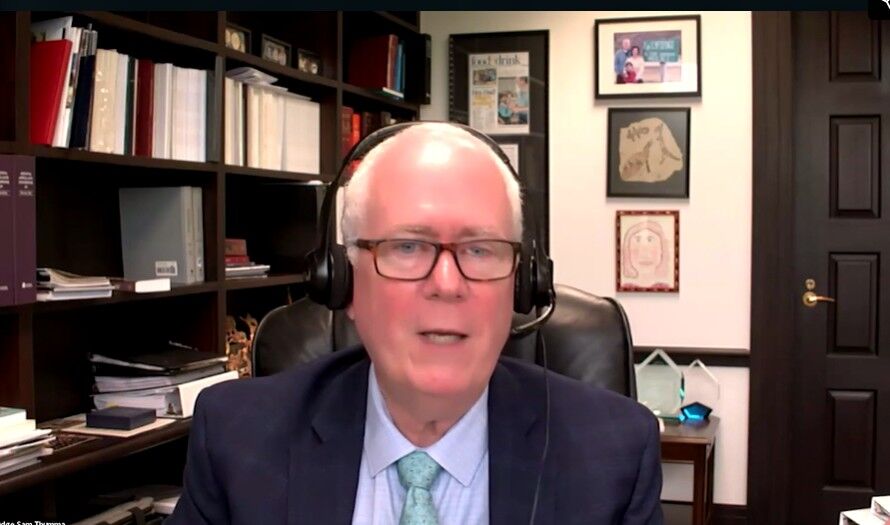
“We are all, as judicial officers, used to issuing orders in court. And that’s how it’s supposed to work,” said Arizona Court of Appeals Judge Samuel A. Thumma. “But if you’re looking to improve the court system … if I don’t listen very, very carefully to folks who aren’t judicial officers — to folks who are gonna be asked to implement change — and to get them on board early and then to modify and correct as we go along, I’m just an old man talking.”
He said he would be interested in organizing a survey of self-represented litigants, who frequently appear in civil or family law cases.
“I’d love to get a blue-ribbon panel, a panel of a couple dozen former self-represented litigants who aren’t so disabused that they hate everything,” Thumma said. “Just to say, ‘Hey, we’re thinking of improving this portal that folks use for electronic filing. Could you do a test run and let us know?'”
Braswell similarly spoke of a nonprofit board she served on before joining the bench, whose members were professionals not in the community served by the organization.
“We didn’t have a parent on the board. Somebody who was actually a beneficiary of these services and who could speak to what the kids were experiencing when they did or didn’t receive certain programming. And so, I pushed for that, for having a parent on the board,” she said. “People were concerned about that. ‘Are they gonna be too close? Are they gonna be too emotionally attached to these issues? Are they gonna be able to make decisions in a dispassionate way?’ And my perspective was, maybe not. But that’s probably a good thing. We probably need some of that. We probably need someone who says, ‘If you cut this program, if you change this approach, you’re really affecting our kids.'”
Bernice Bouie Donald, a retired judge on the Cincinnati-based federal appeals court, described how she is able to facilitate discussions without letting the title of “judge” affect other participants.
“I carry myself in spaces and places as someone who is a peer in whatever we’re doing. We’re peers. And that seems to keep barriers from forming,” she said.
“I’m 5’1” and I don’t feel like I have a very imposing presence,” added Braswell. “I just sort of assumed that when I walk into the room, people aren’t gonna feel intimidated. But being on the bench for the last four years, I realized I’m wrong about that. It doesn’t matter who you are or what you look like, just the title itself creates this different feeling among people.”
Consequently, Braswell said she tries to present herself as a peer rather than as someone who already knows the answers.
“If you’re willing to say, ‘You know what? I don’t understand that. I’m not sure I’m getting that. Can you explain it to me?'” she said. “Or, ‘I’m gonna say this. I’m gonna offer this point, but I haven’t really thought it through yet. So, push back on me if I’m wrong here.’ Just sort of opening yourself up and creating that space to be wrong and admitting when you’re wrong. Those are just small little things you can do to emphasize that you truly do see yourself as a peer here, and that the title doesn’t really matter.”

Schoolchildren’s presence at child sex-related trial did not harm Arapahoe County defendant, appeals court says
Michael Karlik
michael.karlik@coloradopolitics.com
Updated 7 hours ago
Colorado’s second-highest court decided on Thursday that the presence of a group of schoolchildren on the first day of a child sexual exploitation trial did not violate an Arapahoe County defendant’s constitutional right to a fair trial. Prosecutors charged Jerry...
Appeals court cites week-old Colorado law to reinstate child neglect case at child, father’s request
Michael Karlik
michael.karlik@coloradopolitics.com
Updated 4 hours ago
Colorado’s second-highest court invoked a new state law for the first time on Thursday and reinstated a child neglect case that both the child and her father wished to reopen. House Bill 1227 took effect on Aug. 12, reversing a...
Colorado Supreme Court names William Hood as next chief justice
Michael Karlik
michael.karlik@coloradopolitics.com
Updated 1 day ago
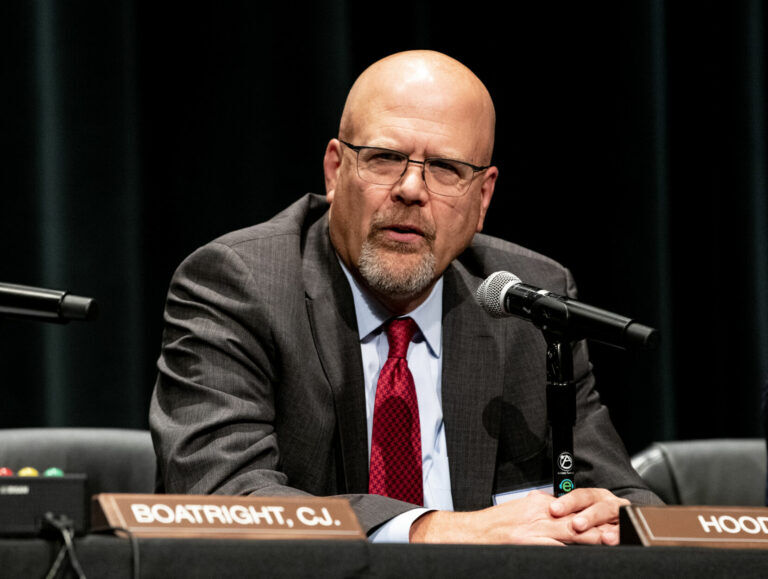
The Colorado Supreme Court has selected Justice William W. Hood III to be the next chief justice, the judicial branch announced on Friday. Hood will succeed Chief Justice Monica M. Márquez, who took over the role in July 2024. “I...
Appeals court upholds Park County trophy hunting conviction
Michael Karlik
michael.karlik@coloradopolitics.com
Updated 1 day ago
Colorado’s second-highest court clarified on Thursday that a defendant may stand convicted under the state’s trophy hunting laws if he abandons a bear carcass but returns later to remove the meat. Under Colorado law, it is a felony to detach...
Judge grants partial injunction to GEO in fight against state health inspection law
Kyla Pearce
kyla.pearce@gazette.com
Updated 2 days ago
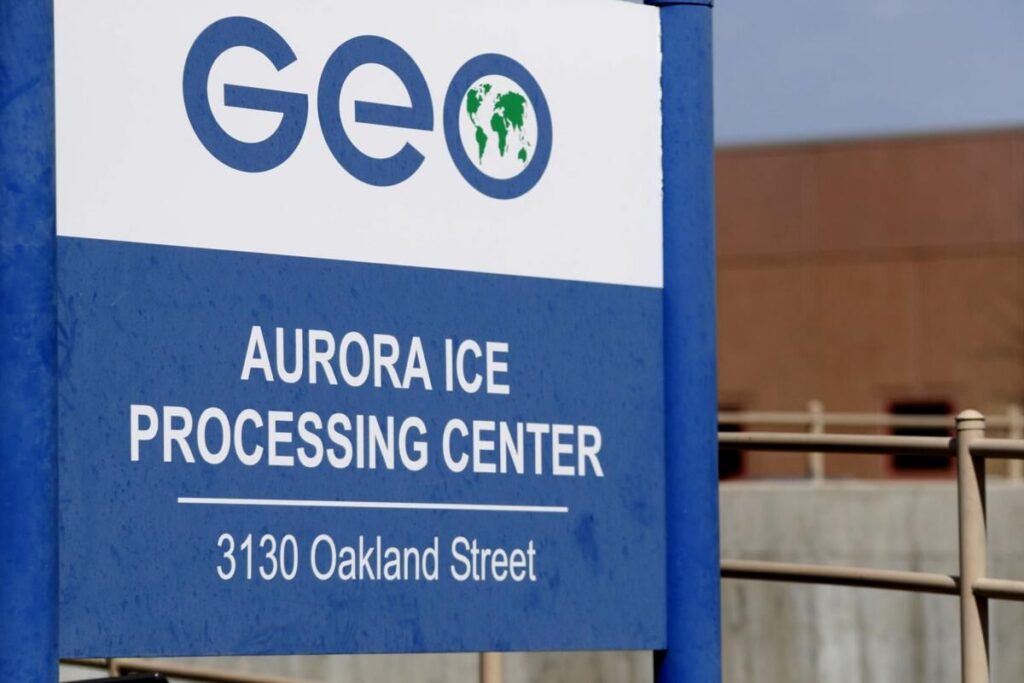
A judge ruled Thursday that The GEO Group does not have to follow parts of a new state law requiring more frequent health and safety inspections at the U.S. Immigration and Customs Enforcement processing center in Aurora. Under the order...

Parker man faces 20 years to life for serial sexual assaults
Nicholas Fogleman
nicholas.fogleman@denvergazette.com
Updated 2 days ago
A 25-year-old Parker man who sexually assaulted three women in 2025 pleaded guilty Wednesday and will serve 20 years to life in prison. Javier Rodriguez-Andrade pleaded guilty to charges stemming from three sexual assaults involving women ages 19 to 24. ...
Divided appeals court upholds warrantless DNA collection in Colorado cold case, cautions of government overreach
Michael Karlik
michael.karlik@coloradopolitics.com
Updated 2 days ago
Colorado’s second-highest court upheld the warrantless collection of a suspect’s DNA from a discarded soda can as constitutional on Thursday, while warning about potential abuse of DNA privacy in the absence of further guardrails. By 2-1, a three-judge Court of...
Man charged in Northglenn homicide of wife
Matt Kyle
matt.kyle@denvergazette.com
Updated 2 days ago
A man has been formally charged with murder and burglary relating to a homicide last week in Northglenn. Alexei Munive-Rodriguez, 48, was arrested Sunday after he was at large following the homicide, which occurred Friday. Police were dispatched around 10:30...

10th Circuit grants immunity to officers for fatal Manitou Springs shooting
Michael Karlik
michael.karlik@coloradopolitics.com
Updated 2 days ago
The Denver-based federal appeals court ruled on Wednesday that responding officers from Manitou Springs and El Paso County cannot be held constitutionally liable for shooting and killing a man after a 20-minute standoff. Wilford Deweese allegedly pulled out a gun...

10th Circuit rejects invitation for full-court review of tax-avoidance case
Michael Karlik
michael.karlik@coloradopolitics.com
Updated 3 days ago
The Denver-based federal appeals court declined to reconsider the standards for holding entities liable for their tax-avoidance schemes, with a majority of judges voting against full-court review on Monday. In April, a three-judge panel of the U.S. Court of Appeals...
PREV
PREVIOUS

Congressional panel probes Denver, Boulder over ICE cooperation limits
A congressional panel is reviewing Denver and Boulder’s policies, alleging that these cities, along with other “sanctuary” jurisdictions, are declining to cooperate with federal immigration authorities, the body announced Wednesday. Rep. Jim Jordan, R-Ohio, who chairs the U.S. House Judiciary Committee, issued letters to the district attorneys, sheriffs and police chiefs of Denver and Boulder, […]

Denver teacher fired after 'same-gender' kissing skits in French class
An administrative law judge has recommended the dismissal of a teacher at Northeast Early College — a high school in the Denver Public Schools district — after finding classroom activities and personal disclosures to students amounted to “incompetence and neglect of duty,” setting up a final vote by the school board. After meeting in executive […]