

Man who asked mom to lie to parole officer can stand convicted, Colorado Supreme Court decides
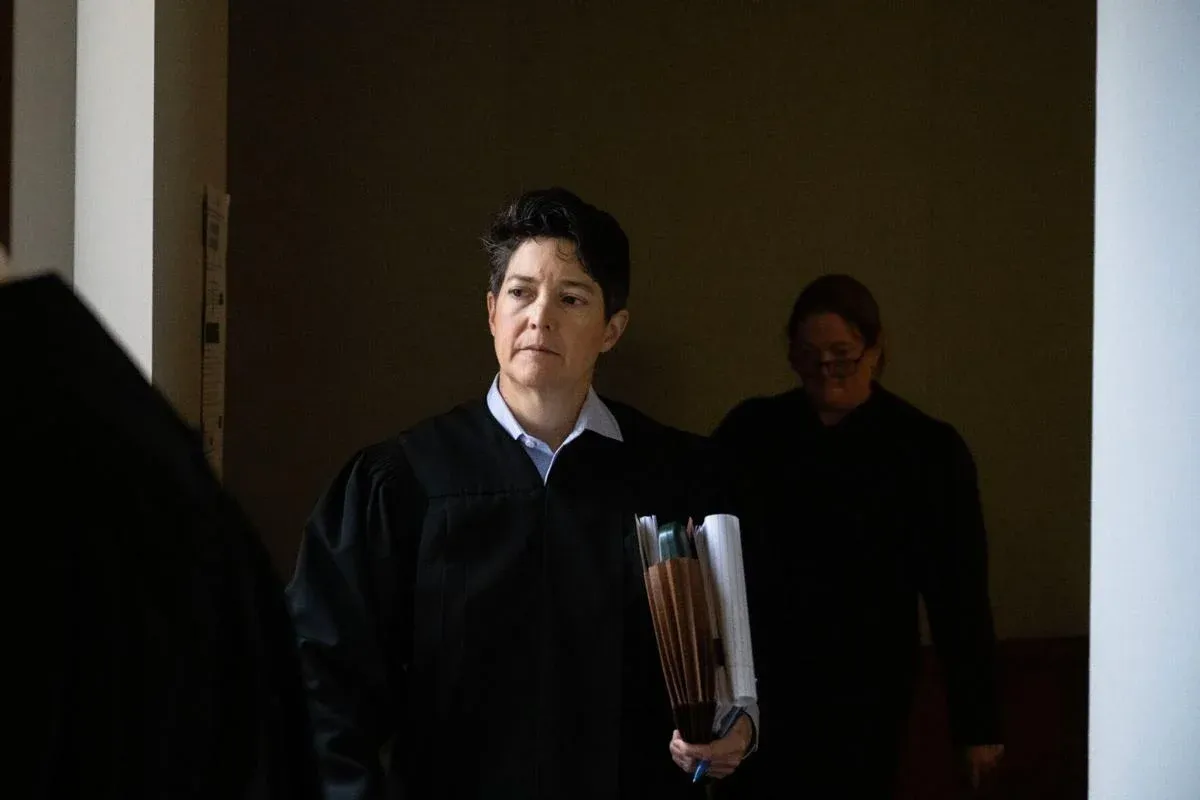
Attempting to influence a public servant is a crime that can include a defendant’s use of a third party to convey false information, the Colorado Supreme Court decided on Monday.
There was no dispute that Michael Thomas Hupke asked his mother to lie to his parole officer on his behalf. Further, Hupke acknowledged Mesa County prosecutors could have charged him as an accomplice to his mother’s deceit, or for soliciting her to do it.
But Hupke maintained prosecutors could not do what they actually did: Charge Hupke directly with a felony for attempting to influence a public servant “by means of deceit.”

The Supreme Court disagreed.
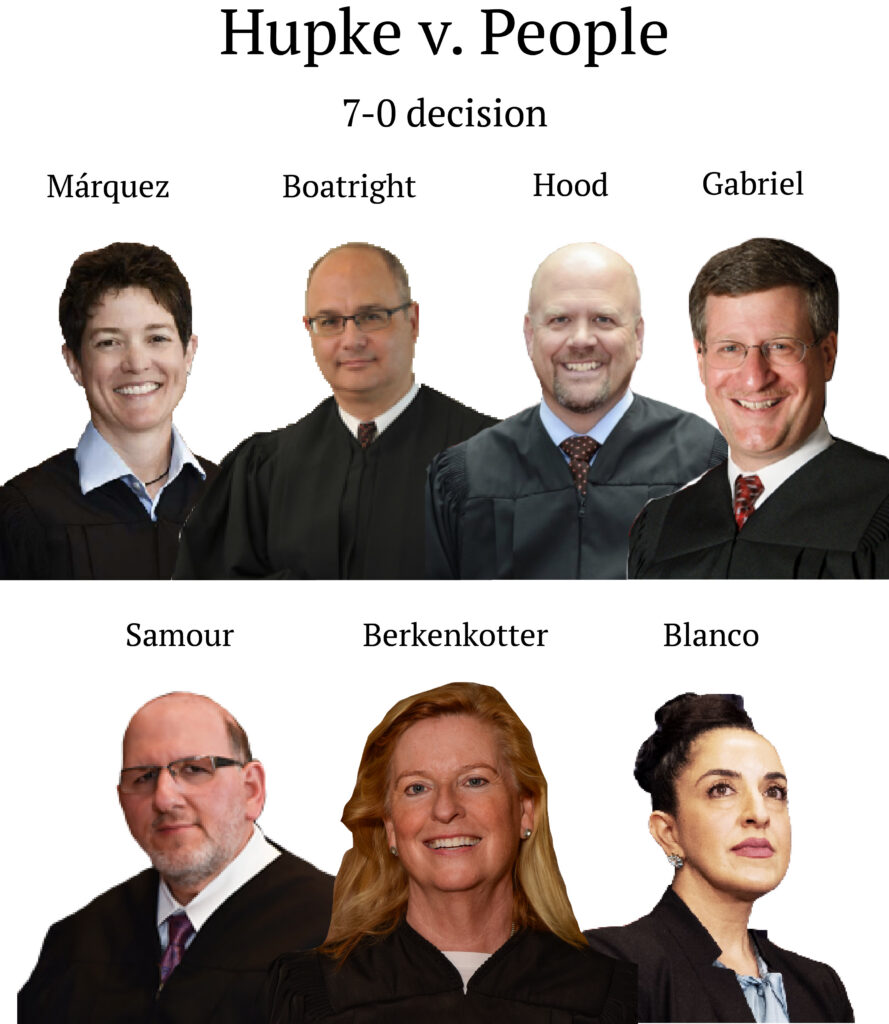
“The plain and ordinary meaning of the word ‘deceit’ is broad, encompassing any trick, contrivance, or act designed to lead someone to believe something that is not true,” wrote Chief Justice Monica M. Márquez in the May 18 opinion. “Using a third party to convey a lie, especially someone who may appear more trustworthy or believable, is an act designed to lead the recipient of that information to believe something that is not true.”
Hupke was on parole when law enforcement arrested him. In jail, Hupke talked to his mother over the phone, asking her to contact his parole officer about getting him released. However, Hupke’s parole terms required him to get permission from his parole officer before changing addresses. Hupke had recently moved apartments without doing so.
Hupke, on the recorded jail call, asked his mother to tell the parole officer he was in the process of moving or was planning to move. He even suggested she “start crying.” Hupke’s mother proceeded to misrepresent the move to his parole officer.
A jury subsequently convicted Hupke of attempting to influence a public servant, a felony that requires the intent to alter a public official’s actions “by means of deceit.”
On appeal, Hupke challenged his conviction, arguing that he was not the one who deceived anyone. Rather, his mom did.
A three-judge Court of Appeals panel disagreed, believing the law criminalized the act of using “some sort of plan or method” to deceive.
“Thus, we conclude, contrary to Hupke’s argument, that the statute does not require that the offender commit the deception themself,” wrote Judge Rebecca R. Freyre.
In challenging that logic to the Supreme Court, public defender Rachel Z. Geiman noted by analogy that a person can commit assault “by means of” a deadly weapon.
“A person doesn’t commit assault by means of a deadly weapon by handing a gun to his friend and saying, ‘Hey, go shoot that person,’” she said during oral arguments. “The friend has committed the assault. And the person who supplied the gun solicited or participated in that crime via complicity.”
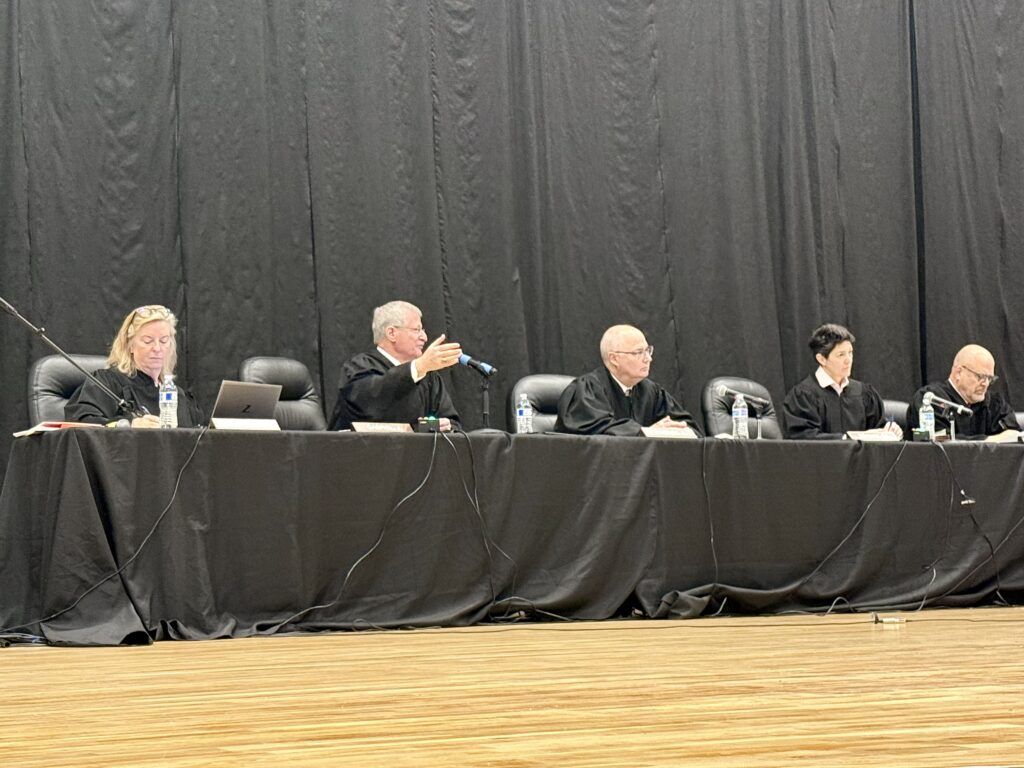
However, the Supreme Court concluded that “deceit” is a broad term that can include a person’s direct actions or their use of another person to trick a government official.
“Indeed, in some cases, it may be even more deceptive to use a messenger to convey untrue information — especially a messenger whom the recipient is likely to find more believable or trustworthy,” wrote Márquez.
However, the court stopped short of holding that a person’s deceit to the third party is necessarily a crime. If Hupke had asked his mother to lie, but she did not follow through, Hupke could not have been convicted for attempting to influence a public servant, Márquez explained.
Likewise, she added, it does not matter if the third party is unaware that the information they are being asked to convey is false.
Because the evidence suggested Hupke used his mother to convey a lie to his parole officer to obtain his release from jail, the Supreme Court upheld his conviction.
The case is Hupke v. People.


Judicial performance evaluations released, Montezuma County judge disciplined | COURT CRAWL
Michael Karlik
michael.karlik@coloradopolitics.com
Updated 6 hours ago
Welcome to Court Crawl, Colorado Politics’ roundup of news from the third branch of government. Colorado’s citizen-led judicial performance commissions released their voter narratives for the judges standing for retention in November, plus a disciplinary panel imposed consequences on a...
Federal judge holds off on dismissing formerly bankrupt medical contractor from Jeffco jail death lawsuit
Michael Karlik
michael.karlik@coloradopolitics.com
Updated 9 hours ago
A federal judge declined on Monday to dismiss the formerly bankrupt medical contractor from a lawsuit over a detainee’s death in Jefferson County jail, but indicated she would do so if the plaintiffs’ attorneys go through the process to ensure...
Federal judge green-lights excessive force, retaliation claims for trial against Fort Collins officers
Michael Karlik
michael.karlik@coloradopolitics.com
Updated 2 days ago
A federal judge green-lit a jury trial last week against multiple Fort Collins police officers on claims that they used excessive force on one man who was standing unarmed in his underwear, and retaliated against another man for exercising his...

10th Circuit revives wage violation lawsuit against Papa John’s operator
Michael Karlik
michael.karlik@coloradopolitics.com
Updated 3 days ago
The Denver-based federal appeals court on Tuesday reinstated a former Papa John’s delivery driver’s lawsuit alleging violations of federal and state wage law. Steve Mighell worked for one month at a Denver Papa John’s location in summer 2023. He alleged...
Colorado appeals judge’s delays in releasing opinions noted by performance commission
Michael Karlik
michael.karlik@coloradopolitics.com
Updated 2 days ago
The citizen-led performance commission that provides guidance to voters about whether to retain members of Colorado’s second-highest court raised concerns by judges and attorneys that Judge Elizabeth L. Harris sometimes struggles with releasing opinions promptly. Harris, who joined the Court...

Colorado judge explores sanctions against DOJ, ICE for rearresting man 4 days after release on bond
Michael Karlik
michael.karlik@coloradopolitics.com
Updated 3 days ago
A federal judge in Colorado is considering sanctions against the government after immigration agents rearrested a man four days after an immigration judge found him suitable for release on bond. On July 28, U.S. Magistrate Judge N. Reid Neureiter ordered...

Divided disciplinary panel censures Montezuma County judge after agreement reached
Michael Karlik
michael.karlik@coloradopolitics.com
Updated 3 days ago
A disciplinary panel formally imposed a public censure, suspension, and further training on Montezuma County Court Judge Ian J. MacLaren on Tuesday by a 2-1 vote. Under constitutional Amendment H, which voters adopted in November 2024, MacLaren was set to...

Colorado’s Western Slope magistrate judges describe unique role in federal judiciary
Michael Karlik
michael.karlik@coloradopolitics.com
Updated 5 days ago
Two of Colorado’s federal judges stationed on the Western Slope spoke to lawyers on Wednesday about their unique roles, the ways their workloads differ, and the need for more criminal defense lawyers to take cases outside the Front Range. “Here...

Denver sues Philip Morris, other tobacco companies over cigarette butt litter
Deborah Grigsby
deborah.smith@denvergazette.com
Updated 4 days ago
Denver is demanding that some of the biggest tobacco companies in the world pay for the cleanup of discarded cigarette butts on its streets, following a similar campaign that cities in other states have pursued. Denver’s lawsuit, filed this week...
Federal judge rules that request for bond hearing not necessary to challenge immigration detention
Michael Karlik
michael.karlik@coloradopolitics.com
Updated 3 days ago
A federal judge in Colorado ruled last week that it is not mandatory for a person to seek a bond hearing with an immigration judge before they challenge the lawfulness of their detention in federal court. For the past year,...
PREV
PREVIOUS

Children's Colorado must resume care to transgender plaintiffs, state Supreme Court rules by 5-2
The Colorado Supreme Court, by a 5-2 vote, ordered Children’s Hospital Colorado on Monday to resume providing certain medical services to a group of transgender plaintiffs, which it had ceased in the face of funding threats from the federal government last year. The unusual appeal before the Supreme Court stemmed from a trial judge’s rejection […]

Daniel Domenico nominated for 10th Circuit, state Supreme Court hears arguments | COURT CRAWL
Welcome to Court Crawl, Colorado Politics’ roundup of news from the third branch of government. Colorado’s chief federal trial judge is the choice for an upcoming vacancy on the Denver-based federal appeals court, plus the state Supreme Court heard oral arguments in three cases. Domenico picked for elevation • U.S. District Court Chief Judge Daniel D. […]