

Municipal camping bans do not violate Colorado Constitution, says appeals court

Municipal ordinances that ban people from living on public property do not violate the Colorado Constitution’s prohibition on cruel and unusual punishment, the state’s second-highest court ruled on Thursday.
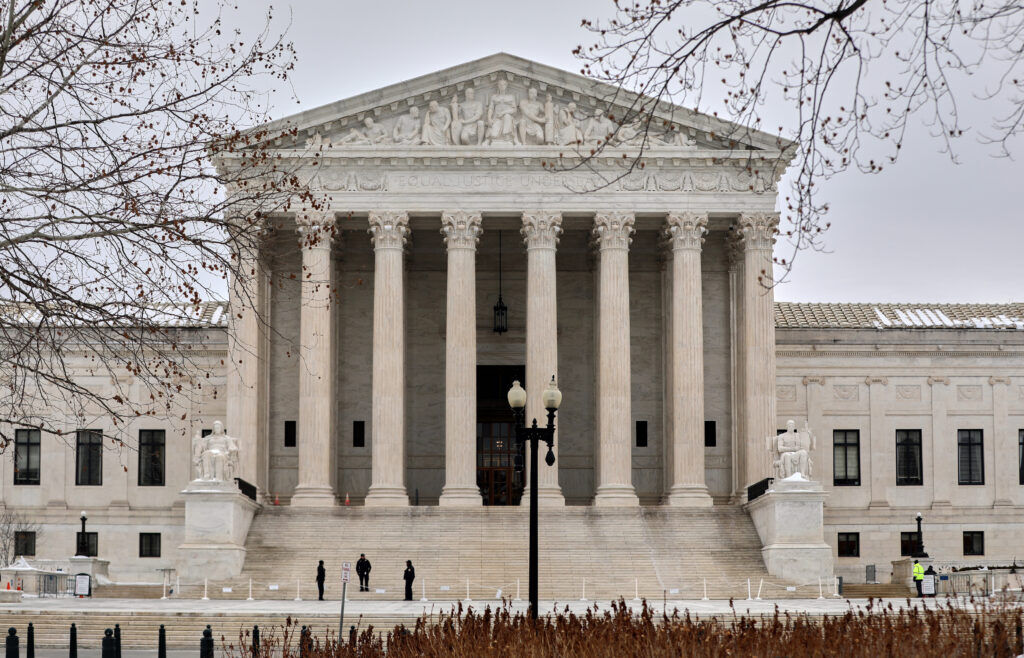
A three-judge Court of Appeals panel agreed that it was appropriate to rely on the U.S. Supreme Court’s interpretation of the Eighth Amendment, which Colorado courts have historically looked to when interpreting the state’s identical cruel-and-unusual provision. Because the Supreme Court concluded in 2024 that bans on municipal camping do not unconstitutionally criminalize a person’s homeless status, the appellate panel followed suit.
“To be sure, we appreciate the tension in differentiating between a person’s conduct and status when their conduct involves basic activities for survival due to an involuntary status,” wrote Judge W. Eric Kuhn in the May 14 opinion. But “in principle, the difference between conduct and status remains a valid Eighth Amendment distinction.”
Case: Feet Forward v. City of Boulder
Decided: May 14, 2026
Jurisdiction: Boulder County
Ruling: 3-0
Judges: W. Eric Kuhn (author)
Terry Fox
Grant T. Sullivan
In 2022, a group of Boulder taxpayers, an outreach organization, and individuals who received citations from law enforcement filed suit against a pair of city ordinances. Taken together, the laws generally prohibited people from erecting tents or other temporary living shelters and from camping during the day on public property. The ordinances exempted certain recreational activities, but the ban on camping encompassed “any cover or protection from the elements other than clothing.”
The plaintiffs pursued three legal theories under the state constitution:
- The ordinances infringed on the right to access public spaces
- The ordinances created a danger
- The ordinances amounted to cruel and unusual punishment
In February 2023, District Court Judge Robert R. Gunning dismissed the plaintiffs’ first two claims. He reasoned that the right of access “is not synonymous with the right to camp on or indefinitely occupy public land.” He also noted the plaintiffs failed to allege how the government created a danger of violence from private individuals, as the claim requires.
Although Gunning concluded that the portion of the cruel-and-unusual challenge against the tent ban was also not viable, he allowed the challenge to the camping prohibition to proceed.
While the case was pending, the Supreme Court handed down a 6-3 decision in City of Grants Pass v. Johnson. The court’s majority concluded that an Oregon city’s similar outdoor camping prohibition was constitutional. It reasoned that such bans did not impermissibly criminalize a person’s status as involuntarily homeless, but targeted the conduct of “occupying a campsite” on public property.
Gunning, who put the Boulder lawsuit on pause to await the Grants Pass decision, concluded the plaintiffs’ remaining claim must also fail. While he recognized that Colorado courts are not required to interpret state constitutional provisions in lockstep with their federal counterparts, he rejected the plaintiffs’ argument that Colorado provided greater constitutional protection.
“Therefore, the critical question is whether the Colorado Supreme Court has ever, in its independent judgment, deviated from federal jurisprudence when interpreting (the cruel-and-unusual provision). This Court concludes that it has not,” Gunning wrote.
On appeal, multiple outside entities weighed in from various angles.
The Colorado Municipal League wrote in support of the Boulder defendants, arguing that local policymakers should be allowed to develop appropriate responses to homelessness.
“By prohibiting the occupation of public parks and rights-of-way, Colorado’s municipalities are performing the hard work of balancing community needs while investing enormous resources into homeless and housing services,” wrote attorneys for the league.
The State Law Research Initiative and the Fred T. Korematsu Center for Law and Equality wrote in support of the plaintiffs and urged the Court of Appeals to interpret the state constitution more expansively than its federal counterpart.
Finally, two University of Colorado professors and a graduate student argued that Colorado has a long history of outdoor camping, predating statehood.
“From the deep Rockies to the banks of the South Platte to the eastern plains, tents were everywhere on public land in early Colorado. Their presence was not a surprise or an aberration, let alone a crime,” wrote attorney Justin Carpenter. “Instead, their presence on public land was a result of Coloradans exercising their fundamental rights that, after 1876, were protected by our state’s constitution.”
During oral arguments in April, the Court of Appeals panel identified concerns on both sides.
Judge Grant T. Sullivan suggested that the right to camp on public property for survival might necessitate governments tolerating open-air fires that could pose public safety concerns.
On the other hand, the law is “pretty plainly targeting the unhoused. It doesn’t apply to individuals who go to the park with a blanket for a nap or a picnic,” Sullivan added. “Help me understand why it’s a conduct-related regulation, and not targeting status in disguise.”
Ultimately, the panel declined to deviate from the U.S. Supreme Court’s interpretation of the cruel-and-unusual prohibition. Based partly on the Grants Pass decision, the panel upheld the dismissal of the plaintiffs’ claims.
In doing so, Kuhn acknowledged that the line between a person’s status and their conduct “can blur.” But he indicated the policymaking process was the place to argue that distinction.
“Boulder’s residents without a safe place to rest indoors understandably may seek to shelter on public property,” Kuhn wrote. “But no matter how sympathetic their plight, these circumstances alone don’t create new state constitutional rights.”
The case is Feet Forward et al. v. City of Boulder et al.


Judicial performance evaluations released, Montezuma County judge disciplined | COURT CRAWL
Michael Karlik
michael.karlik@coloradopolitics.com
Updated 6 hours ago
Welcome to Court Crawl, Colorado Politics’ roundup of news from the third branch of government. Colorado’s citizen-led judicial performance commissions released their voter narratives for the judges standing for retention in November, plus a disciplinary panel imposed consequences on a...
Federal judge holds off on dismissing formerly bankrupt medical contractor from Jeffco jail death lawsuit
Michael Karlik
michael.karlik@coloradopolitics.com
Updated 9 hours ago
A federal judge declined on Monday to dismiss the formerly bankrupt medical contractor from a lawsuit over a detainee’s death in Jefferson County jail, but indicated she would do so if the plaintiffs’ attorneys go through the process to ensure...
Federal judge green-lights excessive force, retaliation claims for trial against Fort Collins officers
Michael Karlik
michael.karlik@coloradopolitics.com
Updated 2 days ago
A federal judge green-lit a jury trial last week against multiple Fort Collins police officers on claims that they used excessive force on one man who was standing unarmed in his underwear, and retaliated against another man for exercising his...
10th Circuit revives wage violation lawsuit against Papa John’s operator
Michael Karlik
michael.karlik@coloradopolitics.com
Updated 3 days ago
The Denver-based federal appeals court on Tuesday reinstated a former Papa John’s delivery driver’s lawsuit alleging violations of federal and state wage law. Steve Mighell worked for one month at a Denver Papa John’s location in summer 2023. He alleged...
Colorado appeals judge’s delays in releasing opinions noted by performance commission
Michael Karlik
michael.karlik@coloradopolitics.com
Updated 2 days ago
The citizen-led performance commission that provides guidance to voters about whether to retain members of Colorado’s second-highest court raised concerns by judges and attorneys that Judge Elizabeth L. Harris sometimes struggles with releasing opinions promptly. Harris, who joined the Court...

Colorado judge explores sanctions against DOJ, ICE for rearresting man 4 days after release on bond
Michael Karlik
michael.karlik@coloradopolitics.com
Updated 3 days ago
A federal judge in Colorado is considering sanctions against the government after immigration agents rearrested a man four days after an immigration judge found him suitable for release on bond. On July 28, U.S. Magistrate Judge N. Reid Neureiter ordered...
Divided disciplinary panel censures Montezuma County judge after agreement reached
Michael Karlik
michael.karlik@coloradopolitics.com
Updated 3 days ago
A disciplinary panel formally imposed a public censure, suspension, and further training on Montezuma County Court Judge Ian J. MacLaren on Tuesday by a 2-1 vote. Under constitutional Amendment H, which voters adopted in November 2024, MacLaren was set to...
Colorado’s Western Slope magistrate judges describe unique role in federal judiciary
Michael Karlik
michael.karlik@coloradopolitics.com
Updated 5 days ago
Two of Colorado’s federal judges stationed on the Western Slope spoke to lawyers on Wednesday about their unique roles, the ways their workloads differ, and the need for more criminal defense lawyers to take cases outside the Front Range. “Here...

Denver sues Philip Morris, other tobacco companies over cigarette butt litter
Deborah Grigsby
deborah.smith@denvergazette.com
Updated 4 days ago
Denver is demanding that some of the biggest tobacco companies in the world pay for the cleanup of discarded cigarette butts on its streets, following a similar campaign that cities in other states have pursued. Denver’s lawsuit, filed this week...
Federal judge rules that request for bond hearing not necessary to challenge immigration detention
Michael Karlik
michael.karlik@coloradopolitics.com
Updated 3 days ago
A federal judge in Colorado ruled last week that it is not mandatory for a person to seek a bond hearing with an immigration judge before they challenge the lawfulness of their detention in federal court. For the past year,...
PREV
PREVIOUS

Colorado legislature wraps up tough budget year
Colorado lawmakers are wrapping up their work on Wednesday, closing out a year defined by the lack of fiscal flexibility, woes over Medicaid spending and a staccato of action on a host of issues, ranging from artificial regulation to a failed attempt to decriminalize prostitution. For the second consecutive year, the Democratic‑controlled legislature confronted a […]

Colorado legislators pass bill that sponsors say would strengthen sex crime victim protections
A Colorado bill that supporters say would strengthen victim protections and mandate law enforcement training on how trauma can affect survivors of sex crimes and domestic violence is on its way to Gov. Jared Polis’ desk for signing. Senate Bill 26-095 recently passed unanimously in the Senate and was mostly unopposed in the House, where […]