

Colorado justices decline to say whether man’s child prostitution conviction is unconstitutional
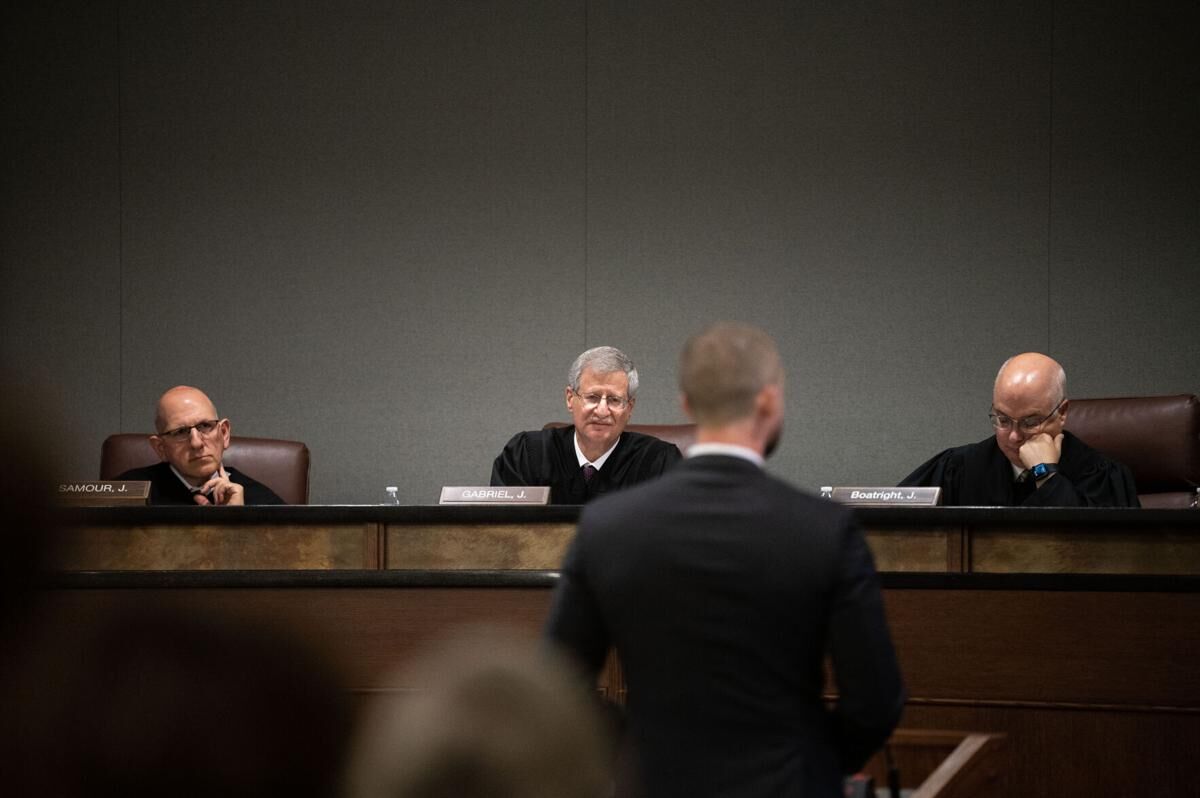
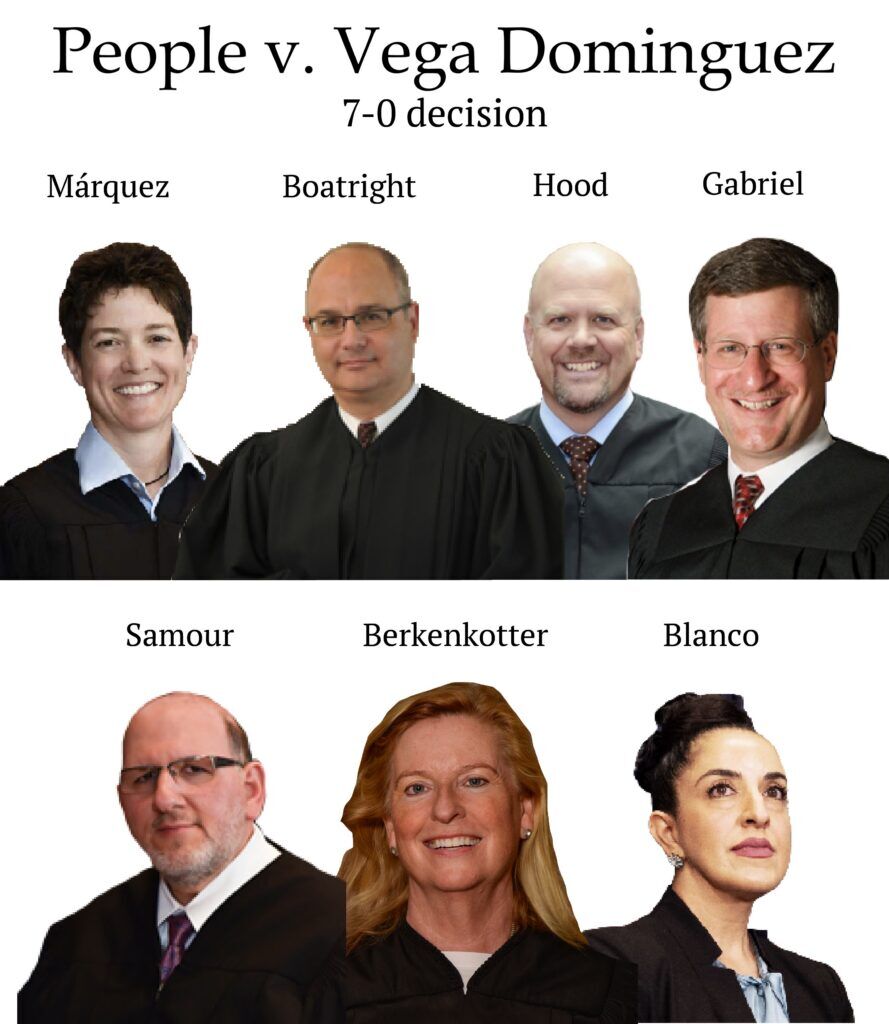
The Colorado Supreme Court declined to say on Monday whether a man’s conviction for an attempted child prostitution offense violated his rights under the state constitution, and only concluded that the absence of an obvious error meant his conviction should remain intact.
An El Paso County jury convicted Javier Vega Dominguez of two attempted child prostitution offenses, one of which carried a specific number of years in prison and the other resulted in a potential life sentence behind bars. The Court of Appeals previously concluded that, under Colorado’s equal protection guarantee, the fact that Vega Dominguez received two different sentences for the same underlying conduct violated his rights.
But in a May 11 opinion, the Supreme Court noted the alleged error had to be obvious at the time. Because the Court of Appeals acknowledged it was “extending the analysis” of earlier precedent to Vega Dominguez’s convictions, the Supreme Court determined there was no clear mistake that warranted reversal.
“In our view, even had the trial court erred in this regard, any error was not obvious,” wrote Justice Richard L. Gabriel.
Colorado courts have interpreted the constitutional guarantee of equal protection to forbid the state from creating two laws that criminalize identical conduct, but impose harsher consequences for one offense than the other. Under state law, patronizing a prostituted child involves a completed sex act or an agreement to perform such an act, with the potential for life in prison. Inducement of child prostitution, on the other hand, involves a person’s “word or action” to encourage a child’s prostitution.
In reviewing Vega Dominguez’s convictions for attempted patronizing and attempted inducement, a three-judge Court of Appeals panel looked at his arrangement via text message to pay a 15-year-old boy — who was actually an undercover detective — for sex acts. The judges concluded Vega Dominguez violated both laws in the same way: attempting to exchange money for sex. Yet, he was serving a possible life sentence for patronizing and only four years for inducement.
“We therefore conclude that Vega Dominguez’s conviction for attempted patronizing a prostituted child violates his right to equal protection,” wrote Judge Ted C. Tow III, adding that the violation was obvious in light of court precedent.
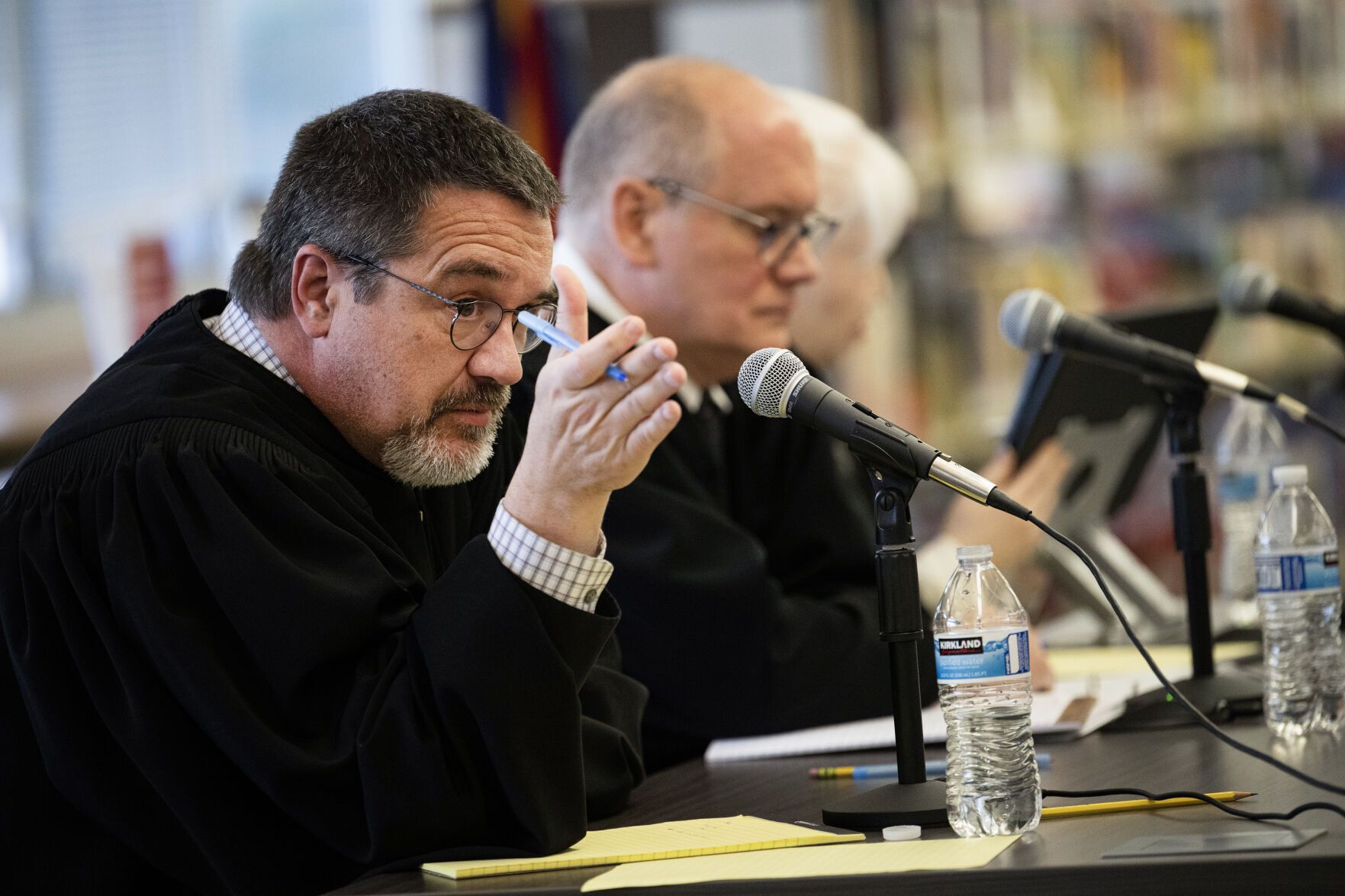
Senior Assistant Attorney General Jessica E. Ross argued to the Supreme Court that any error was not obvious, even if the laws theoretically prohibited the same conduct. Moreover, she cautioned against finding an equal protection violation because the effect is to constrain a prosecutor’s charging decisions and the legislature’s ability to define criminal offenses.
Colorado’s equal protection principle is “really narrowly focused on situations where the legislature has left up to the prosecutor no legislatively bound guidance for that decision,” Ross said.
Public defender Kamela Maktabi countered that, if two laws prohibit the same conduct and one carries a harsher punishment, “and there’s no distinction why one defendant gets a harsher sentence than the other, then I think it makes it more difficult for prosecutors to fulfill their mission of equal application of the law,” she said.
The Supreme Court ultimately declined to answer whether the dual convictions, in fact, violated Vega Dominguez’s right to equal protection. Instead, wrote Gabriel, the alleged, unobjected-to error needed to have been obvious through existing precedent.
“Here, no prior case had decided the question now before us on identical facts,” he wrote. “These distinctions demonstrate that any error by the trial court as to the equal protection issue (and we need not and do not opine that the trial court, in fact, erred here) did not contravene either a clear statutory command, a well-settled legal principle, or Colorado case law.”
The case is People v. Vega Dominguez.


U.S. Rep. Lauren Boebert’s son arrested, faces charges of sexual exploitation of minor
Matt Kyle
matt.kyle@denvergazette.com
Updated 26 minutes ago
U.S. Rep. Lauren Boebert’s son Tyler Jay Boebert has been arrested and accused of recording and sharing a video depicting himself having intercourse with a minor, according to court records. The case originated in Garfield County in Western Colorado and...

Adams County water district may proceed with cost-recovery lawsuit against Denver for contamination
Michael Karlik
michael.karlik@coloradopolitics.com
Updated 2 hours ago
A federal judge rejected Denver’s arguments last week for pausing or dismissing a lawsuit brought by an Adams County special district seeking to recover its costs for addressing water contamination as a result of Denver firefighting activities. In January, the...
Federal judge declines to dismiss First Amendment retaliation claim against prison official
Michael Karlik
michael.karlik@coloradopolitics.com
Updated 2 hours ago
A federal judge agreed last month that an incarcerated Native American woman may pursue her claim of First Amendment retaliation against a prison official who allegedly interfered with her religious exercise. Yvonne Peterson resided at Buena Vista Correctional Facility for...

Colorado’s troubled guardianship office pursues ‘cultural reset’
Marianne Goodland
marianne.goodland@coloradopolitics.com
Updated 8 hours ago
Colorado’s guardianship program, long criticized for mismanagement and high staff attrition, is undergoing a “cultural reset,” as its new director works to repair partnerships and prepare for a major expansion under recent legislation. Created by lawmakers in 2017, the Office...

Local party leaders, incoming judge among members of judicial performance commission that violated law
Michael Karlik
michael.karlik@coloradopolitics.com
Updated 2 days ago
A local Democratic leader and 2024 presidential elector. A legislative aide and leader in the Young Republicans. An incoming county court judge freshly appointed by the governor. They are among the eight members of the northeastern Colorado judicial performance commission...

Judge dismisses lawsuit seeking records from Colorado Democratic group
Marianne Goodland
marianne.goodland@coloradopolitics.com
Updated 3 days ago
A lawsuit seeking to obtain records from Democratic lawmakers affiliated with a caucus has been thrown out by a Denver District Court judge. On July 17, Judge Ericka Englert dismissed the April lawsuit filed by progressive activist Derrick Blanton, who...

Colorado Springs mother Deborah Nicholls’ murder conviction overturned
Nick Smith
nick-smith@coloradopolitics.com
Updated 4 days ago
A Colorado Springs mother convicted in 2008 of murdering her three children in a house fire might get a new trial after a judge ruled that prosecutors withheld key evidence that could have impacted the jury’s verdict. Deborah Nicholls, whose...
Colorado court overturns illegal $7,000 restitution order
Michael Karlik
michael.karlik@coloradopolitics.com
Updated 3 days ago
Colorado’s second-highest court overturned a Weld County defendant’s obligation to pay more than $7,000 in crime victim restitution on Thursday because a trial judge failed to issue a legally compliant restitution order at the time of sentencing. In Colorado, as...

Appeals court rejects former DougCo commissioner’s legal fee claim
Nicholas Fogleman
nicholas.fogleman@denvergazette.com
Updated 3 days ago
The Colorado Court of Appeals rejected a former Douglas County commissioner’s bid for reimbursement of attorney fees she incurred while responding to multiple investigations into her conduct. The dispute stemmed from a 2019 anonymous letter sent to county officials alleging...
Appeals court orders second look at Denver Water’s immunity for cyclist’s injury
Michael Karlik
michael.karlik@coloradopolitics.com
Updated 4 days ago
Colorado’s second-highest court ordered another look at a bicyclist’s negligence lawsuit against Denver Water on Thursday, concluding that a trial judge needed to evaluate the utility’s potential immunity using the state Supreme Court’s new guidance. Joseph A. “Joey” Scott alleged...
PREV
PREVIOUS

State Supreme Court to hold oral arguments, lawyers attend annual apellate event | COURT CRAWL
Welcome to Court Crawl, Colorado Politics’ roundup of news from the third branch of government. The state Supreme Court is holding oral arguments this week, plus lawyers and judges came together for the annual appellate conference to trade tips and hear about updates from the courts. Colorado Supreme Court news • The Supreme Court will hear […]

Colorado ethics panel finds probable cause in complaint against Democrat caucus leader
The colleagues of a Democrat unanimously concluded they have probable cause to believe she committed an ethical violation by mismanaging her party caucus’s funds as its co-chair. The House Ethics Committee was charged with examining a complaint from Rep. Marshall, D-Highlands Ranch, alleging that Rep. Mandy Lindsay, D-Aurora, mishandled and improperly used caucus funds for […]