

Federal judge hears request to halt ‘stewardship’ transfer of NCAR supercomputer
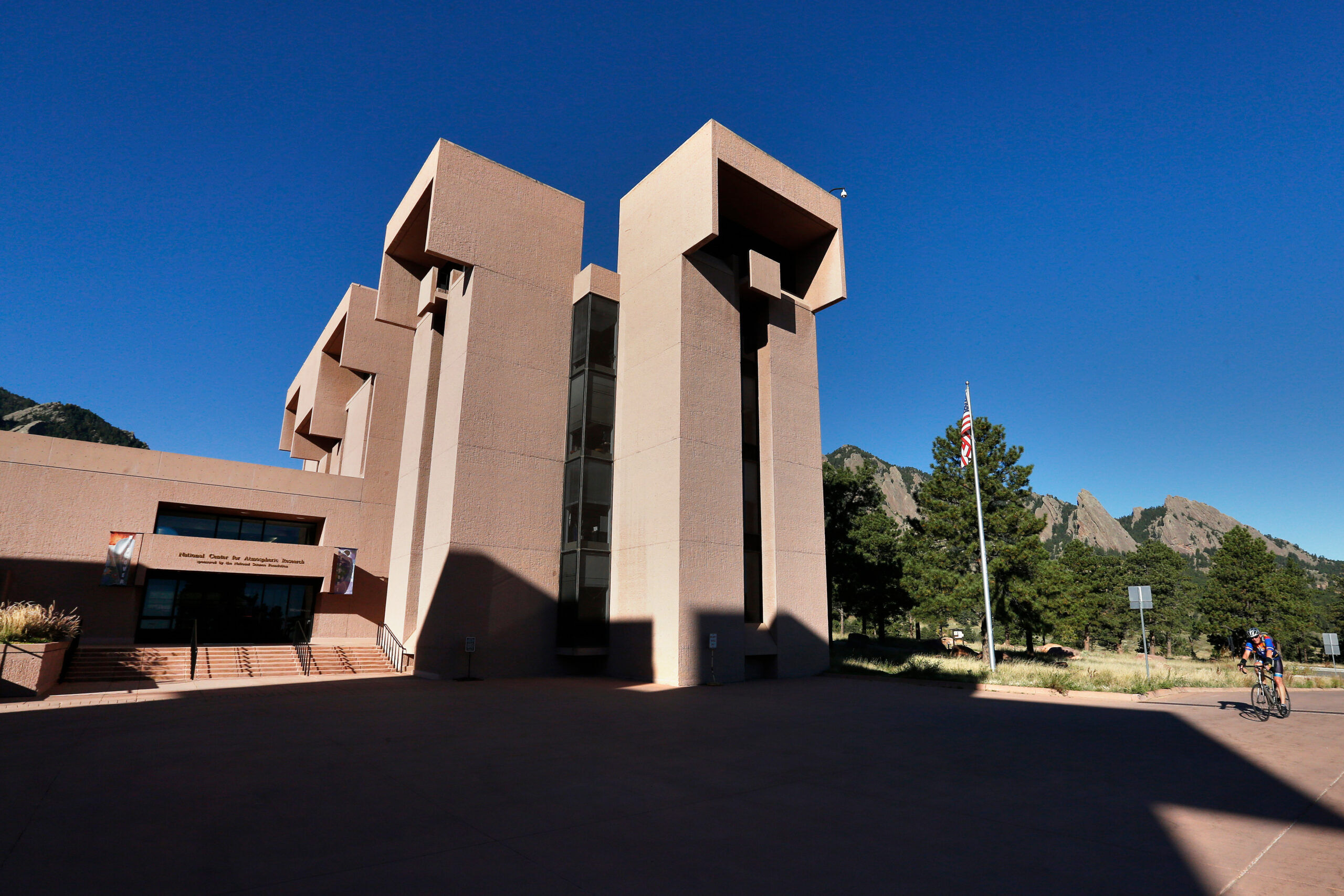
A federal judge sought to understand last week how the government possesses the authority to transfer “stewardship” of a research and forecasting supercomputer from the Boulder-based operator of the National Center for Atmospheric Research.
In the process, U.S. District Court Senior Judge R. Brooke Jackson raised questions about whether the decision is final, what “stewardship” of the Cheyenne-based computer entails, and whether NCAR and the government could amicably resolve the question without a court order.
“I’m just thinking how, if the United States and Iran can negotiate some resolution to the war that’s going on,” he said at a hearing, “it should be child’s play to negotiate a resolution of the operation and maintenance of a computer in Cheyenne, Wyoming. But you’ll never know unless you try.”
NCAR began in 1960 and employs 800 scientists, engineers, and support staff who are involved in weather research, monitoring, wildfire modeling, and other forecasting-related responsibilities. NCAR occupies a 450-acre site in Boulder, and also has a facility in Broomfield.
The University Corporation for Atmospheric Research, which is a group of U.S. colleges and universities, manages NCAR through agreements with the federal National Science Foundation.
On Dec. 17, Russell Vought, director of the U.S. Office of Management and Budget, posted on social media that NSF “will be breaking up” NCAR.
“This facility is one of the largest sources of climate alarmism in the country,” he wrote. “A comprehensive review is underway & any vital activities such as weather research will be moved to another entity or location.”
On Feb. 12, NSF grants and agreements officer Kapua S. Hatch informed NCAR’s director that “NSF has decided to transfer stewardship of the NCAR-Wyoming Supercomputer Center.” Days later, Steven E. Ellis, also with the NSF, clarified that the intent was to transfer “operations and maintenance activities” related to the supercomputer, but not research.
Ellis then spoke with NCAR leaders on March 11. According to those in the meeting, Ellis was asked why NSF was transferring stewardship. He replied, “This is a decision made” and “because NSF has said so.”
The government did not dispute his statements.
Less than one week later, UCAR sued in federal court, alleging NSF’s decision was arbitrary, had no legitimate rationale, and was situated within a larger governmental effort to retaliate against Colorado.
In seeking a preliminary injunction to block the stewardship transfer of the supercomputer, UCAR referred to a recent order from Jackson in a separate case involving an abrupt “pilot project” imposed on food assistance to Colorado households around the same time as Vought’s NCAR post.
“The following week, the Trump Administration launched a barrage of threats and actions designed, by all appearances, to punish Colorado: terminating $109 million in Department of Transportation funds, signaling the cancellation of $615 million in Department of Energy funds, announcing a plan to dismantle the National Center for Atmospheric Research in Boulder, and denying two requests from the State for disaster relief assistance,” wrote Jackson, a Barack Obama appointee.
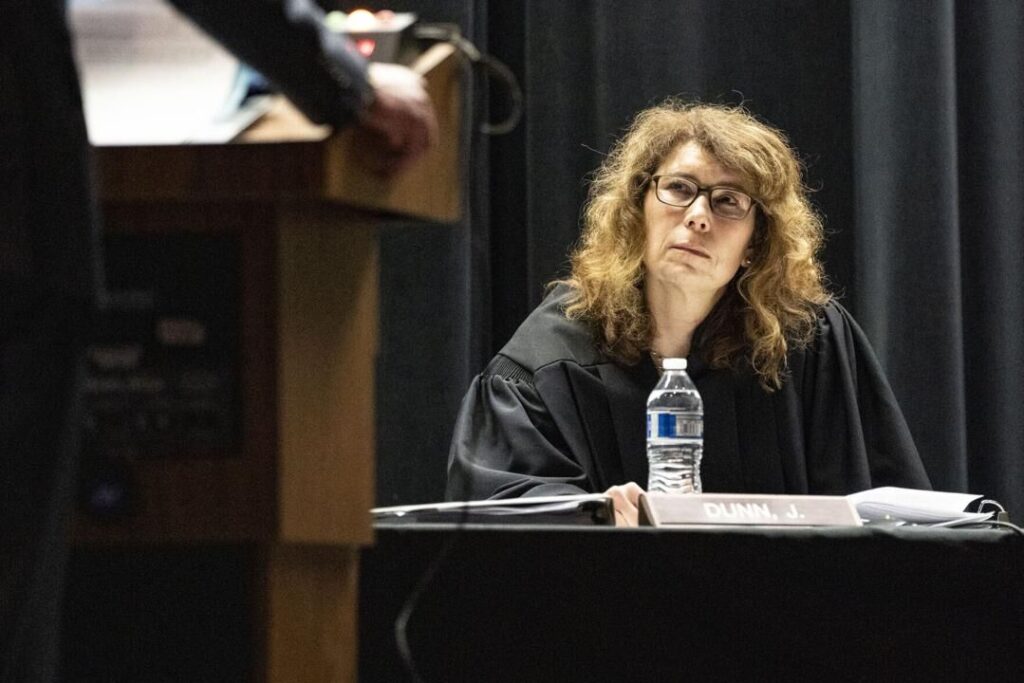
During the preliminary injunction hearing in the NCAR case, however, Jackson spent less time on the government’s motive than on the details of the stewardship transfer itself.
“What does ‘stewardship’ mean?” he wondered.
Michael M. Purpura, an attorney for UCAR, said that stewardship encompasses management, maintenance, and operations of the supercomputing center. He suggested that NSF lacked the authority to require a stewardship transfer.
“It’s one thing to say they didn’t follow the right procedures. They didn’t give notice. They didn’t give an opportunity to be heard,” said Jackson. “They can fix those things. That gives you a little time, but it doesn’t give you a pot of gold at the end. What’s really critical here, it seems to me, is what the rights of the parties are.”
Purpura said that the harm to NCAR, in the absence of an injunction, would be a “brain drain” of trained staff and the disruption of forecasting activities, which could pose a risk to the public.
“People have already left” because of the uncertainty, he said.
The NSF, meanwhile, denied that it made a final, reviewable decision to transfer stewardship of the supercomputer away from NCAR.
“Decisions are made all the time on a variety of topics. ‘Final agency action’ has a specific meaning,” said U.S. Department of Justice attorney Marianne F. Kies.
Jackson appeared skeptical and referenced the statements from NSF leaders suggesting that the transfer is a foregone conclusion.
“How can you say, without just out-and-out repudiating what your client’s spokespersons have said, that there isn’t final agency action?” he asked. “You’re saying there’s no final decision, no final agency action. How does anybody know when that occurs?”
Jackson also wondered where NSF had the authority to terminate UCAR and NCAR’s stewardship over the supercomputer. Kies responded that federal regulations permit NSF to terminate the parties’ cooperative agreement in whole or in part.
Jackson will issue a written order on the request for an injunction.
The case is University Corporation for Atmospheric Research v. National Science Foundation et al.

Trump’s 10th Circuit nominee recuses from cases against federal government without explanation
Michael Karlik
michael.karlik@coloradopolitics.com
Updated 11 hours ago
President Donald Trump’s nominee to fill a vacancy on the Denver-based federal appeals court recused himself without a clear explanation from nine cases against the executive branch while he was undergoing vetting by the White House this spring. U.S. District...
Adams County murder conviction reversed due to faulty jury instruction
Michael Karlik
michael.karlik@coloradopolitics.com
Updated 11 hours ago
Colorado’s second-highest court overturned an Adams County defendant’s murder conviction last month because the instruction provided to the jury about a trespasser’s right to use self-defense did not accurately reflect Colorado law. A person is justified in using force to...
Colorado court upholds murder conviction despite jury disobeying instructions
Michael Karlik
michael.karlik@coloradopolitics.com
Updated 1 day ago
Colorado’s second-highest court upheld an Arapahoe County defendant’s murder conviction last month, even though jurors found he was not the one who shot the victim and the evidence suggested he was not present for the shooting. A three-judge Court of...
Divided appeals court reverses conviction after judge declined to define ‘bludgeon’
Michael Karlik
michael.karlik@coloradopolitics.com
Updated 1 day ago
Colorado’s second-highest court reversed a Jefferson County defendant’s felony menacing conviction on Thursday, concluding that the trial judge’s failure to define “bludgeon” for jurors may have affected the outcome. A three-judge Court of Appeals panel divided in unusual ways in...
10th Circuit dismisses Tina Peters’ challenge to confinement as moot
Michael Karlik
michael.karlik@coloradopolitics.com
Updated 3 days ago
The Denver-based federal appeals court granted the state’s unopposed request on Wednesday to dismiss former Mesa County clerk Tina Peters’ challenge to her confinement as moot. Although Peters received a commutation of her prison sentence last month from Gov. Jared...
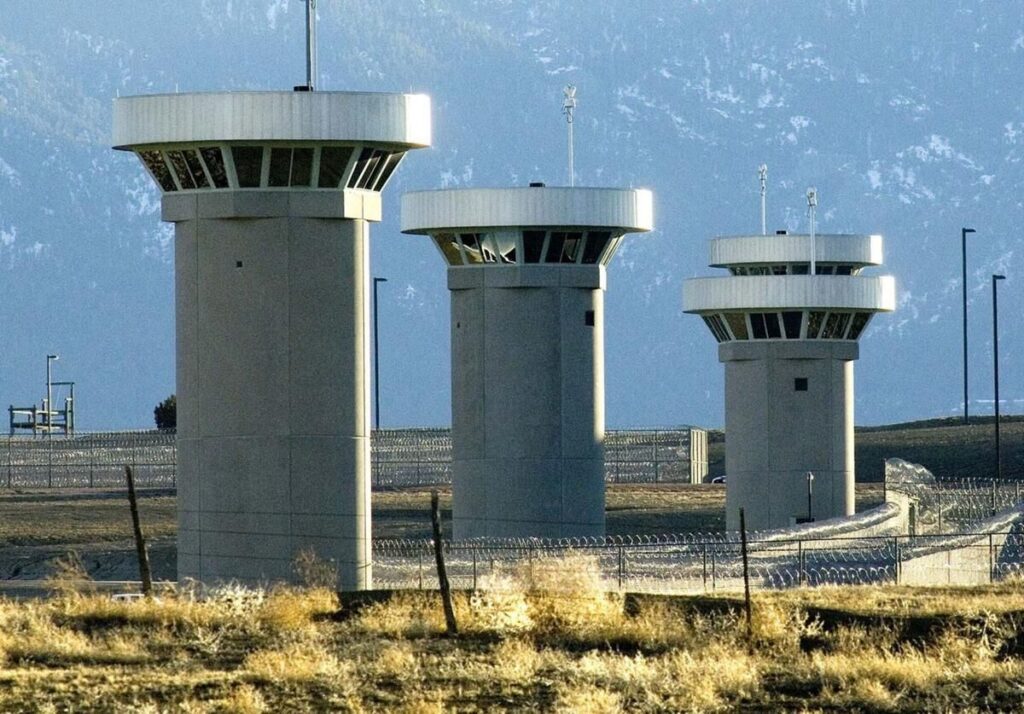
Federal judge declines to recuse from death penalty case after Supermax visit
Michael Karlik
michael.karlik@coloradopolitics.com
Updated 3 days ago
A federal judge declined to recuse herself last month from a death penalty case arising out of Colorado’s “Supermax” prison, finding that her tour of the facility earlier this year did not bias her decision-making. U.S. District Court Judge Charlotte...
Appeals court clarifies offense of impersonating a peace officer
Michael Karlik
michael.karlik@coloradopolitics.com
Updated 1 day ago
Colorado’s second-highest court clarified this month that a person commits the offense of impersonating a peace officer if they engage in “any conduct” while pretending to be law enforcement. In a case out of El Paso County, Richard James Coulier...
Colorado Supreme Court reverses 2 Chaffee County judges for imposing fee on habeas petitioner
Michael Karlik
michael.karlik@coloradopolitics.com
Updated 5 days ago
The Colorado Supreme Court rejected two separate appeals earlier this month from an incarcerated defendant seeking immediate release from prison, but concluded that two Chaffee County judges incorrectly required him to prepay filing fees for his cases. David J. Gottorff...
Weld County judge wrongly denied bail to murder defendant in gap between law change
Michael Karlik
michael.karlik@coloradopolitics.com
Updated 5 days ago
Colorado’s second-highest court ruled this month that a Weld County judge was wrong to deny bail to a murder defendant in the window between the state Supreme Court’s recognition of the right to bail and the voters’ subsequent overruling of...
Defendants acquitted by insanity are eligible for records-sealing, appeals court says
Michael Karlik
michael.karlik@coloradopolitics.com
Updated 4 days ago
Colorado’s second-highest court clarified last month that defendants who are found not guilty by reason of insanity are eligible to have their criminal records sealed from public view. Judges must seal criminal records if, among other things, a defendant is...
PREV
PREVIOUS

Colorado Gov. Polis faces intense lobbying blitz from DC-based groups over credit card 'swipe-fee' bill
Colorado’s long‑running fight over credit‑card swipe fees entered its final round Tuesday, when lawmakers sent a proposal to Gov. Jared Polis and rival industry coalitions immediately launched competing campaigns to sway his decision. The clash pits groups urging Polis to sign the bill — restaurants, hotels, breweries, liquor stores, small businesses, and big‑box retailers — […]
Judge tearing up during victim's testimony does not warrant new trial, appeals court says
Colorado’s second-highest court concluded on Thursday that an Arapahoe County judge’s visible display of emotion during a child victim’s testimony should not trigger a new trial for the defendant. A three-judge Court of Appeals panel found that defendant Philip Morgan had failed to show how the reaction by District Court Judge Ryan Stuart during trial […]