

As Colorado’s federal judges churn through immigration petitions, Domenico’s cases sit undecided
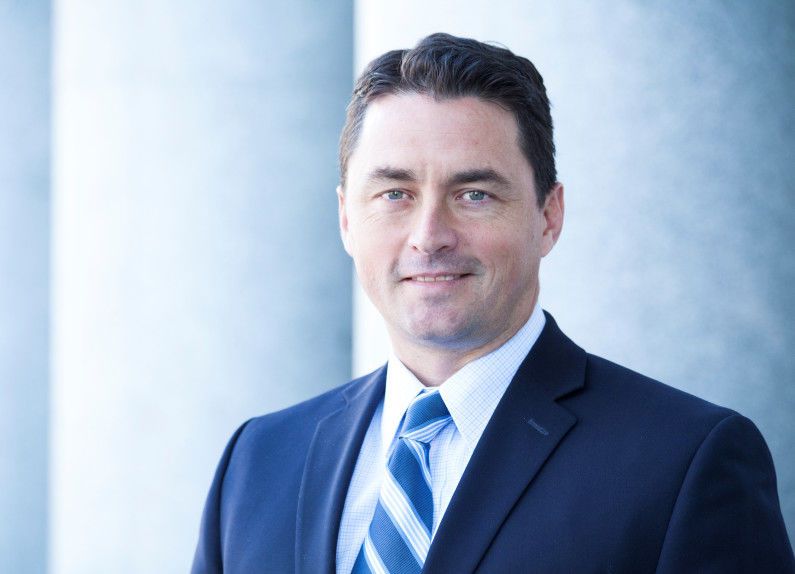
Colorado’s U.S. District Court judges have spent months pushing out decisions in hundreds of immigration detention cases and largely siding with detainees, but one judge has barely touched his caseload.
Chief Judge Daniel D. Domenico has only issued orders in roughly 20% of the cases assigned to him where a petitioner is seeking relief from allegedly unlawful immigration detention. Of those, he has granted far fewer petitions and taken much longer to act than his colleagues.
More than once, a lawyer has filed a request for a ruling or a temporary restraining order after prolonged inaction on a case. In one instance, Domenico recused himself two months after the case was teed up for an order, only for the newly assigned judge to quickly terminate the proceedings after learning that the government had deported the petitioner while awaiting a decision from Domenico.
“Delays in adjudication before the courts and the immigration agencies strip people of time they will never get back. The world moves around them while they are stuck in immigration prison limbo with no known end in sight,” said Laura Lunn, an immigration attorney in Colorado.
Colorado’s federal trial court is facing a flood of “habeas corpus” petitions from those in immigration detention. The most common allegation is that the government is improperly denying bond hearings to people who are eligible by law. Colorado’s judges, like the vast majority of their peers nationwide, have agreed with that argument.
As of this week, POLITICO reported that there have been 10,400 decisions nationwide finding unlawful detention, compared with only 1,200 siding with the government.
Colorado’s judges have largely ordered the government to hold bond hearings to determine whether a person is suitable for release while their immigration proceedings continue, but Senior Judge William J. Martínez recently warned that such hearings may be a “sham.” Consequently, he has chosen to release petitioners directly.
The volume of habeas litigation increased in Colorado after the government decided in September 2025 that its mandatory detention authority was broader than previously understood. The regional federal appeals courts have reached opposite conclusions on the issue, but all of Colorado’s trial judges, except for Domenico, have rejected the government’s argument.
Domenico’s outlier status
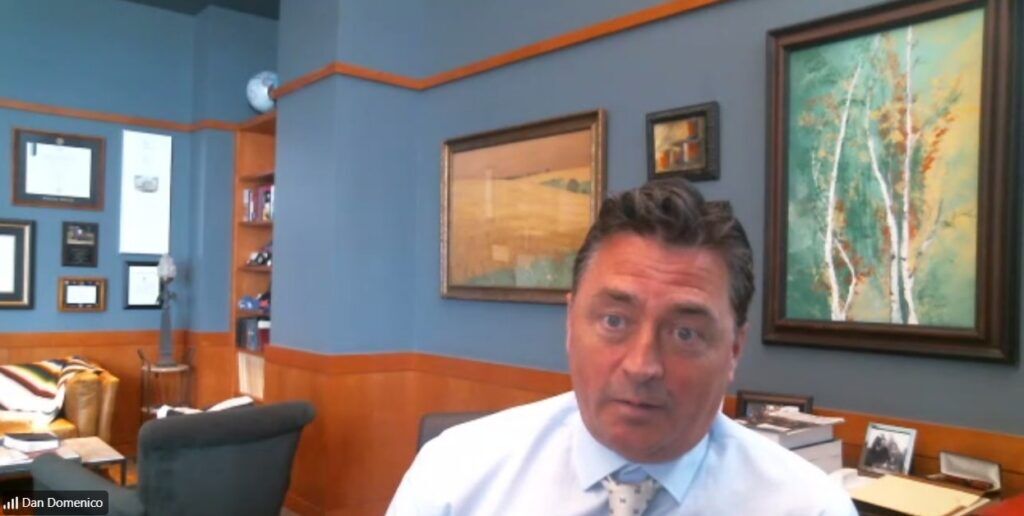
Colorado Politics looked at the habeas cases assigned to Domenico from September 2025 through April 2026. In total, there were 35. As of May 12, Domenico had issued orders resolving only seven of those cases. He granted two, denied four, and dismissed the final case after functionally denying the petition through his ruling on a temporary restraining order.
Domenico released three of his seven orders on May 11, one day after Colorado Politics contacted the court to share its statistics and invite Domenico to respond. Through the clerk, he declined to comment. The court did not otherwise dispute the findings.
That same day, President Donald Trump announced that Domenico would be his pick for a Colorado-based vacancy on the U.S. Court of Appeals for the 10th Circuit.
In looking at the habeas caseload for Domenico, who is a first-term Trump appointee, Colorado Politics compared him to four other district judges at the court:
- Martínez, a semi-retired senior judge and Barack Obama appointee
- Philip A. Brimmer, a George W. Bush appointee who was the chief judge before Domenico took over in March
- Charlotte N. Sweeney, a Joe Biden appointee
- S. Kato Crews, also a Biden appointee
With the exception of Martínez, the judges all were assigned a similar number of immigration habeas cases from September to April, around 49 each. Domenico, in contrast, received 35 cases.
Typically, once a district judge is assigned, they ask the government to respond to the petition. Individual judges’ protocols vary, with some judges affording the government as long as 30 days after the petitioner has served it with the filings. Sweeney, in contrast, gives the government three days to respond.
Often, the judges ruled on the underlying petitions immediately after receiving the government’s response. In some instances, the rulings have come on the same day. A handful of cases have not received a ruling due to voluntary dismissals or ongoing briefing.
Some factors can complicate the timeline. For instance, judges may require additional information or hold a hearing if they spot an issue that needs further explanation. Other times, the court will assign the petition directly to a magistrate judge, who is empowered to handle the case to its conclusion only with the consent of all parties. If the parties do not consent and a district judge is reassigned to the case, the magistrate judge’s response timeline may differ from the district judge’s typical, shorter schedule.
Finally, self-represented petitioners are first routed to Magistrate Judge Richard T. Gurley in Grand Junction, who screens the petitions and directs petitioners to make any necessary amendments before the case can be assigned for adjudication.
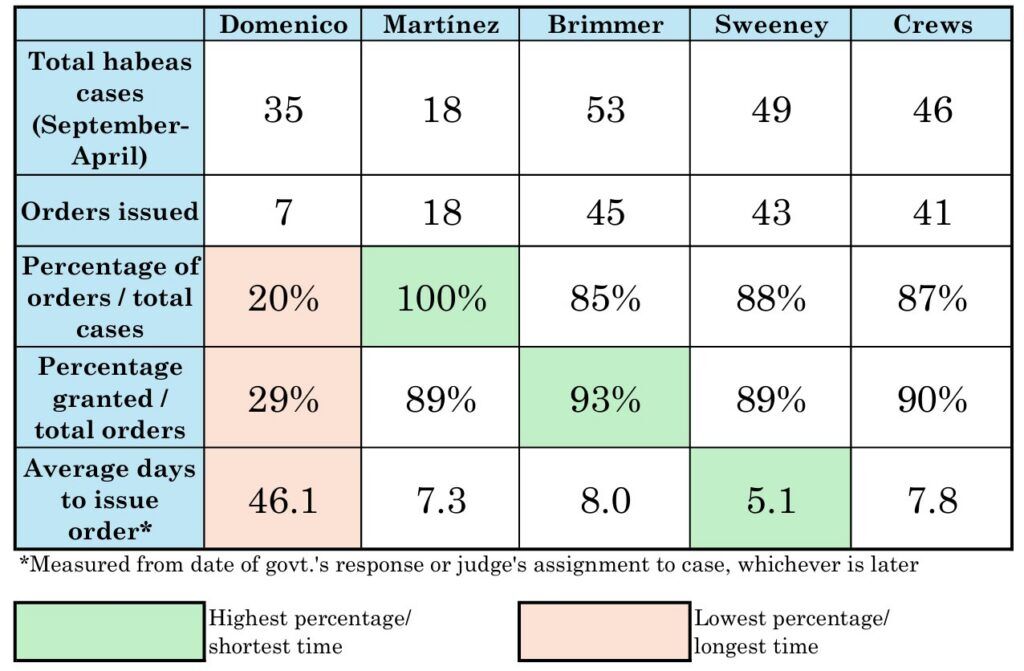
Of the judges surveyed, Sweeney was the fastest at issuing rulings, taking an average of five days from the filing of the government’s response or her assignment to the case, whichever came later. She has decided some cases in as little as eight days after their filing.
Martínez, Brimmer, and Crews trailed only slightly, usually taking between seven and eight days to release an order after the government’s response or their assignment to the case.
In cases where Domenico has ruled, he has taken an average of 46 days to hand down an order.
He also granted the petitioners’ release or a bond hearing in only 29% of those orders. Domenico’s percentage is far lower than the other judges, whose rates of granting petitions in whole or in part exceed 89%. That number is in line with the average that POLITICO found nationally.
He has also ruled on a far lower percentage of cases assigned to him. Martínez, in contrast, has released decisions in every habeas case assigned to him from September-April.
Waiting for a decision
Domenico’s backlog has historically been an issue at the court. Under a 1990 law mandating the disclosure of civil case motions that have been awaiting a decision for at least six months, Domenico at one point had the fourth-highest number of undecided motions in the country.
Only in the reporting period that ended March 31, 2024 did Domenico slash his motions backlog to the single digits. Since then, he has kept his number at zero.
Meanwhile, the delays in resolving habeas cases have caused petitioners to remain in custody and, in some instances, plead with Domenico for a resolution.
“During the entire period since the petition was filed and fully briefed, Petitioner has remained in civil immigration detention, with his liberty continuing to be restrained every day that a decision is pending,” wrote attorney Bernal Peter Ojeda on April 17, almost three months after filing his client’s petition.
On April 16, an attorney filed a motion for a temporary restraining order after her client’s petition had gone undecided since Dec. 11. The U.S. Attorney’s Office responded to argue that Domenico need not address the motion because he “can directly decide the issue by resolving the petition.”
Domenico has not ruled on either the motion or the underlying petition.

On Jan. 9, the government responded to a petition that had been filed nearly two months earlier. More than two months passed before Domenico issued an order recusing himself from the case. The court reassigned the petition to Sweeney, who immediately asked for an update on the underlying immigration proceedings.
“Undersigned counsel has been informed that Petitioner was removed from the United States on February 29, 2026, and returned to Colombia,” wrote Assistant U.S. Attorney Nicholas Deuschle.
Sweeney then terminated the case. The attorney for the petitioner did not respond to questions about whether the case might have ended differently had Domenico recused himself sooner.
Ojeda, one of the attorneys who filed a request for Domenico to act on a petition, said his client is “not pleased having to wait so long without end, knowing that many others in his same position did not have to wait that long.”
He said that, through his observations, some judges across the country have no experience with habeas petitions. Others are sympathetic to the government’s rationale for mandatory detention on ideological grounds, while still others delay their decision-making for unrelated reasons, Ojeda added.
“It is likely that Judge Domenico falls within one or more of the ones I described, but don’t know which one,” he said.
As of May 12, there were at least 24 habeas petitioners awaiting a decision from Domenico.

Federal judge dismisses ex-Colorado judicial discipline director’s conspiracy lawsuit
Michael Karlik
michael.karlik@coloradopolitics.com
Updated 6 hours ago
A federal judge dismissed a lawsuit from Colorado’s former judicial discipline director on Tuesday, finding that he failed to adequately state claims for conspiracy or constitutional violations. Christopher S.P. Gregory, who served as the executive director of the Colorado Commission on Judicial...
Federal judge allows retaliation claims to proceed against prison officials
Michael Karlik
michael.karlik@coloradopolitics.com
Updated 4 hours ago
A federal judge agreed last week that a man incarcerated at Sterling Correctional Facility had credibly alleged that employees retaliated against him for filing grievances, including by taking away his disability accommodations and turning off his electricity. Louis Peoples Jr.,...

U.S. Rep. Lauren Boebert’s son arrested, faces charges of sexual exploitation of minor
Matt Kyle
matt.kyle@denvergazette.com
Updated 1 day ago
U.S. Rep. Lauren Boebert’s son Tyler Jay Boebert has been arrested and accused of recording and sharing a video depicting himself having intercourse with a minor, according to court records. The case originated in Garfield County in Western Colorado and...
Adams County water district may proceed with cost-recovery lawsuit against Denver for contamination
Michael Karlik
michael.karlik@coloradopolitics.com
Updated 17 hours ago
A federal judge rejected Denver’s arguments last week for pausing or dismissing a lawsuit brought by an Adams County special district seeking to recover its costs for addressing water contamination as a result of Denver firefighting activities. In January, the...
Federal judge declines to dismiss First Amendment retaliation claim against prison official
Michael Karlik
michael.karlik@coloradopolitics.com
Updated 16 hours ago
A federal judge agreed last month that an incarcerated Native American woman may pursue her claim of First Amendment retaliation against a prison official who allegedly interfered with her religious exercise. Yvonne Peterson resided at Buena Vista Correctional Facility for...

Colorado’s troubled guardianship office pursues ‘cultural reset’
Marianne Goodland
marianne.goodland@coloradopolitics.com
Updated 1 day ago
Colorado’s guardianship program, long criticized for mismanagement and high staff attrition, is undergoing a “cultural reset,” as its new director works to repair partnerships and prepare for a major expansion under recent legislation. Created by lawmakers in 2017, the Office...
Local party leaders, incoming judge among members of judicial performance commission that violated law
Michael Karlik
michael.karlik@coloradopolitics.com
Updated 3 days ago
A local Democratic leader and 2024 presidential elector. A legislative aide and leader in the Young Republicans. An incoming county court judge freshly appointed by the governor. They are among the eight members of the northeastern Colorado judicial performance commission...
Judge dismisses lawsuit seeking records from Colorado Democratic group
Marianne Goodland
marianne.goodland@coloradopolitics.com
Updated 4 days ago
A lawsuit seeking to obtain records from Democratic lawmakers affiliated with a caucus has been thrown out by a Denver District Court judge. On July 17, Judge Ericka Englert dismissed the April lawsuit filed by progressive activist Derrick Blanton, who...
Colorado Springs mother Deborah Nicholls’ murder conviction overturned
Nick Smith
nick-smith@coloradopolitics.com
Updated 5 days ago
A Colorado Springs mother convicted in 2008 of murdering her three children in a house fire might get a new trial after a judge ruled that prosecutors withheld key evidence that could have impacted the jury’s verdict. Deborah Nicholls, whose...
Colorado court overturns illegal $7,000 restitution order
Michael Karlik
michael.karlik@coloradopolitics.com
Updated 4 days ago
Colorado’s second-highest court overturned a Weld County defendant’s obligation to pay more than $7,000 in crime victim restitution on Thursday because a trial judge failed to issue a legally compliant restitution order at the time of sentencing. In Colorado, as...
PREV
PREVIOUS

Bill on firearm barrel sales withdrawn after veto threat from Colorado governor
A bill that would require firearm barrels to be sold in person by a federally licensed firearms dealer was pulled by its sponsors, who said they were all but told that Gov. Jared Polis would veto the measure. Sponsored by Sen. Tom Sullivan, D‑Centennial, and Reps. Kyle Brown, D‑Louisville, and Meg Froelich, D‑Englewood, Senate Bill […]

AI's rapid growth spurs regulatory reaction in Colorado
The 2026 legislative session was marked by a major push to regulate artificial intelligence, a technology advancing at breakneck speed. Colorado is at the forefront of AI policy, becoming the first state to pursue regulation on “algorithmic discrimination” by passing a law in 2024. Supporters have lauded the legislation, saying it’s necessary to put guardrails […]