

Colorado justices consider whether man can be convicted for convincing mom to lie for him
There was no dispute that Michael Thomas Hupke asked his mother to lie to his parole officer on his behalf. Further, Hupke acknowledged Mesa County prosecutors could have charged him as an accomplice to his mother’s deceit, or for soliciting her to do it.
But Hupke maintained prosecutors could not do what they actually did: Charge Hupke directly with a felony for attempting to influence a public servant.
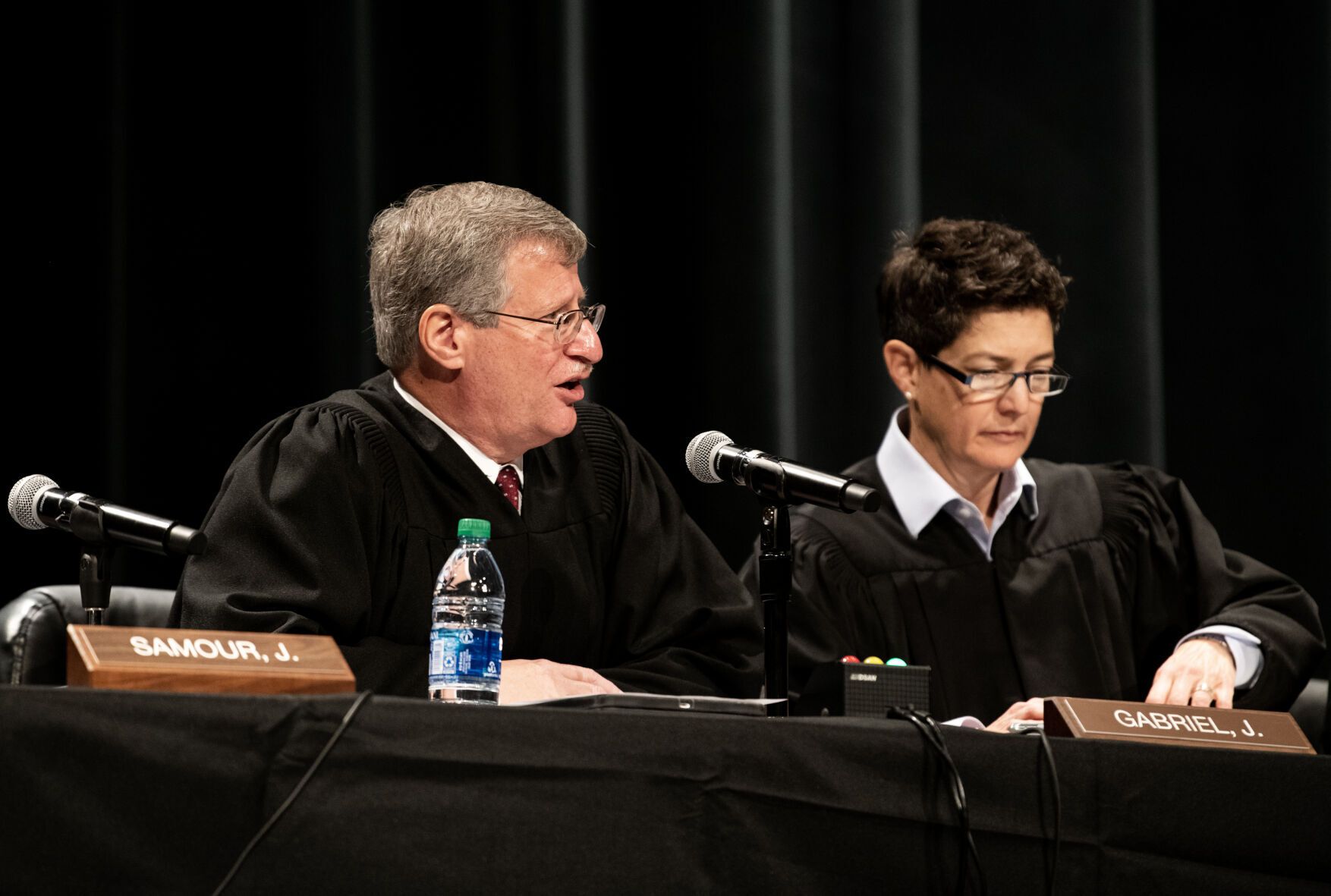
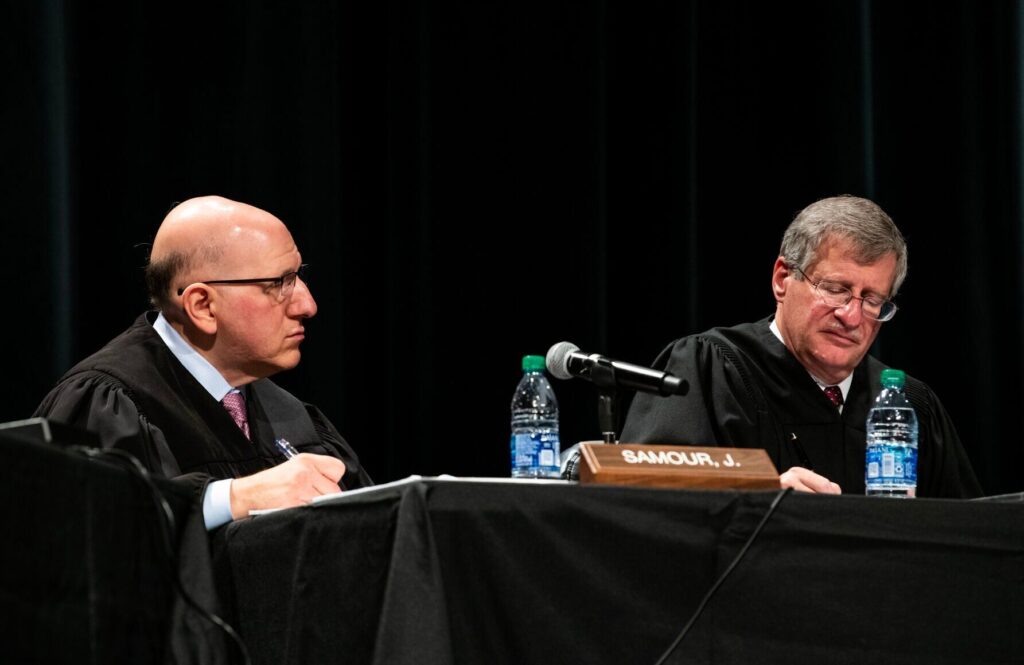
During oral arguments on Tuesday, some members of the Colorado Supreme Court expressed concern that a person’s request or suggestion to a third party could, under the government’s theory, be deemed criminal in various circumstances.
“What if, in this case, after the defendant spoke to his mom, she had decided, ‘You know what? I’m not gonna do it. I’m not gonna lie. I would get in trouble for doing that,'” said Justice Carlos A. Samour Jr. “Has the defendant still committed the crime of attempting to influence a public official?”

Hupke was on parole when law enforcement arrested him. In jail, Hupke talked to his mother over the phone, asking her to contact his parole officer about getting him released. However, Hupke’s parole terms required him to get permission from his parole officer before changing addresses, and Hupke had recently moved apartments without doing so.
Hupke, on the recorded jail call, asked his mother to tell the parole officer he was in the process of moving or was planning to move. He even suggested she “start crying.” Hupke’s mother proceeded to misrepresent the move to his parole officer.
A jury subsequently convicted Hupke of attempting to influence a public servant, a felony that requires the intent to alter a public official’s actions “by means of deceit.”
On appeal, Hupke challenged his conviction because he was not the one who deceived anybody. Rather, his mom did.
A Court of Appeals panel disagreed, believing the law criminalized the act of using “some sort of plan or method” to deceive.
“Thus, we conclude, contrary to Hupke’s argument, that the statute does not require that the offender commit the deception themself,” wrote Judge Rebecca R. Freyre.
To the Supreme Court, public defender Rachel Z. Geiman noted by analogy that a person can commit assault “by means of” a deadly weapon.
“A person doesn’t commit assault by means of a deadly weapon by handing a gun to his friend and saying, ‘Hey, go shoot that person,'” she said. “The friend has committed the assault. And the person who supplied the gun solicited or participated in that crime via complicity.”
“It seems to me the mother here was, on some level, an instrumentality of deception,” responded Justice Richard L. Gabriel.
But Hupke’s mother had her own free will to decide whether to convey the known lie, said Geiman. It would be a different scenario if Hupke asked his mother to convey information without also disclosing that it was false.
“If the third person doesn’t know that they are spreading misinformation,” she said, “it’s not the third party’s deceit. It’s the first person’s deceit.”
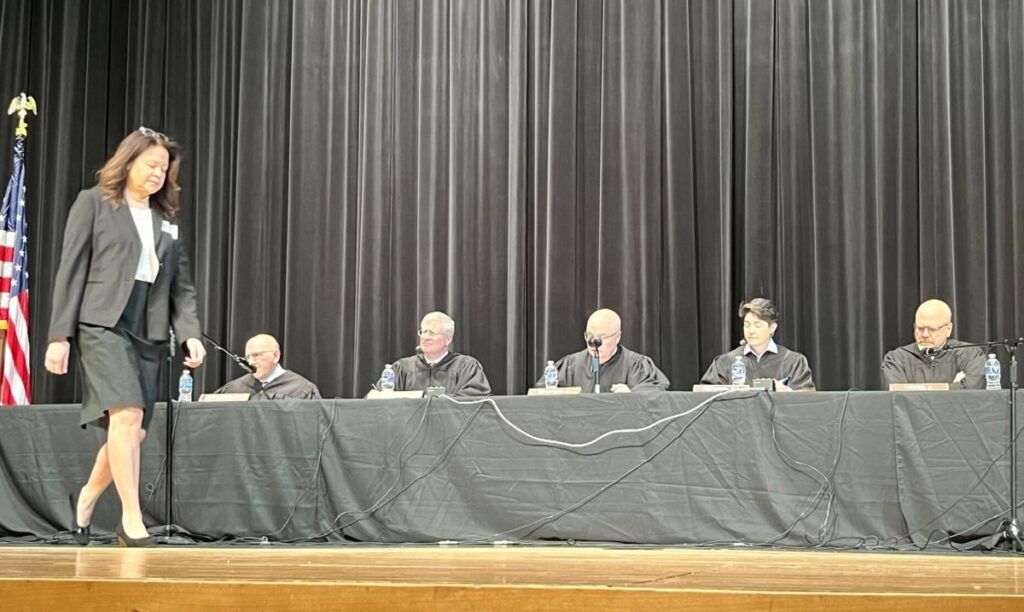
“Deceit can take lots of different forms,” said Chief Justice Monica M. Márquez. “If ultimately what’s happening here is there’s an attempt to influence a public servant by means of that deceit … it ought not to matter how that is accomplished as a method. Whether it’s in writing, or direct spoken word, or through an intermediary. It’s all deceit.”
However, the justices were also skeptical of the government’s position that even if the third party does not follow through with a known lie, the person who suggested the lie can be guilty of a felony. Samour raised the example of a passenger who suggests an intoxicated driver falsely tell police they only had one glass of wine, but the driver declines to do so.
“It’s not about a third party’s conduct. It’s the defendant’s conduct,” said Senior Assistant Attorney General William G. Kozeliski.
Márquez signaled her discomfort with charging someone directly for a failed attempt to get someone else to deceive a public servant.
“I’m a little concerned about the implications of your argument in situations where the message is never ultimately conveyed, and that’s what bothers me,” she said.
“Can you think of any other statute in which we’ve said a defendant is criminally liable for a third party’s conduct, other than solicitation or complicity?” asked Gabriel. “I couldn’t come up with one.”
Samour asked whether prosecutors could have charged Hupke’s mother with a crime for her own deception.
“I don’t want his mom prosecuted,” said Geiman, but the government could have chosen to construct a case in which Hupke was an accomplice in her crime.
“She is the one who actually committed these acts,” Geiman said.
Justice Melissa Hart was not present for the arguments, but Márquez said it is her “intent to participate in the decision.” The Supreme Court’s clerk did not immediately respond to a question about the reason for Hart’s absence.
The case is Hupke v. People.

Colorado justices weigh ‘extreme’ proposals for civil jury trial requests
Michael Karlik
michael.karlik@coloradopolitics.com
Updated 11 hours ago
Members of the Colorado Supreme Court grappled last week with two vastly different proposals for evaluating when it is appropriate for a civil litigant to ask for a jury trial, as opposed to a bench trial before a judge. The...
Colorado justices weigh ‘extreme’ proposals for civil jury trial requests
Michael Karlik
michael.karlik@coloradopolitics.com
Updated 8 hours ago
Members of the Colorado Supreme Court grappled last week with two vastly different proposals for evaluating when it is appropriate for a civil litigant to ask for a jury trial, as opposed to a bench trial before a judge. The...

10th Circuit reverses perjury conviction, warns prosecutors to watch their questioning
Michael Karlik
michael.karlik@coloradopolitics.com
Updated 8 hours ago
The Denver-based federal appeals court reversed a defendant’s perjury conviction last week, warning prosecutors that it is better to follow up on imprecise or unclear answers than to criminally charge a witness for their response. A jury convicted Lori Milliron...
10th Circuit rebuffs government, rules against shift to mandatory immigration detention
Michael Karlik
michael.karlik@coloradopolitics.com
Updated 14 hours ago
The Denver-based federal appeals court ruled on Tuesday against the government’s broad assertion of authority to keep people in immigration custody without the opportunity to demonstrate their suitability for release on bond. Although the regional appeals courts have reached different...

Appeals court revives tenants’ lawsuit over landlords’ illegal fee demands
Michael Karlik
michael.karlik@coloradopolitics.com
Updated 1 day ago
Colorado’s second-highest court revived a proposed class-action lawsuit against landlords and other entities last month, concluding that state law did not permit the practice of demanding that tenants pay attorney fees in certain eviction proceedings. In 2021, lawmakers enacted a...
Appeals court reverses Jeffco assault convictions due to omitted jury instruction
Michael Karlik
michael.karlik@coloradopolitics.com
Updated 1 day ago
Colorado’s second-highest court agreed last month that a Jefferson County defendant’s assault convictions could not stand because his jury should have been allowed to consider whether he used force against a bar patron to defend his girlfriend from inappropriate touching....
Colorado Supreme Court tosses man’s lawsuit over daughter’s traffic death
Michael Karlik
michael.karlik@coloradopolitics.com
Updated 1 day ago
The Colorado Supreme Court applied a confusing matrix of conditions and deadlines in state law to conclude on Monday that a man waited too long to sue after his daughter was rendered unconscious and later died from a vehicle accident....
U.S. Supreme Court upholds state laws banning transgender girls and women from school athletic teams
Nico Brambila
nico.brambila@denvergazette.com
Updated 1 day ago
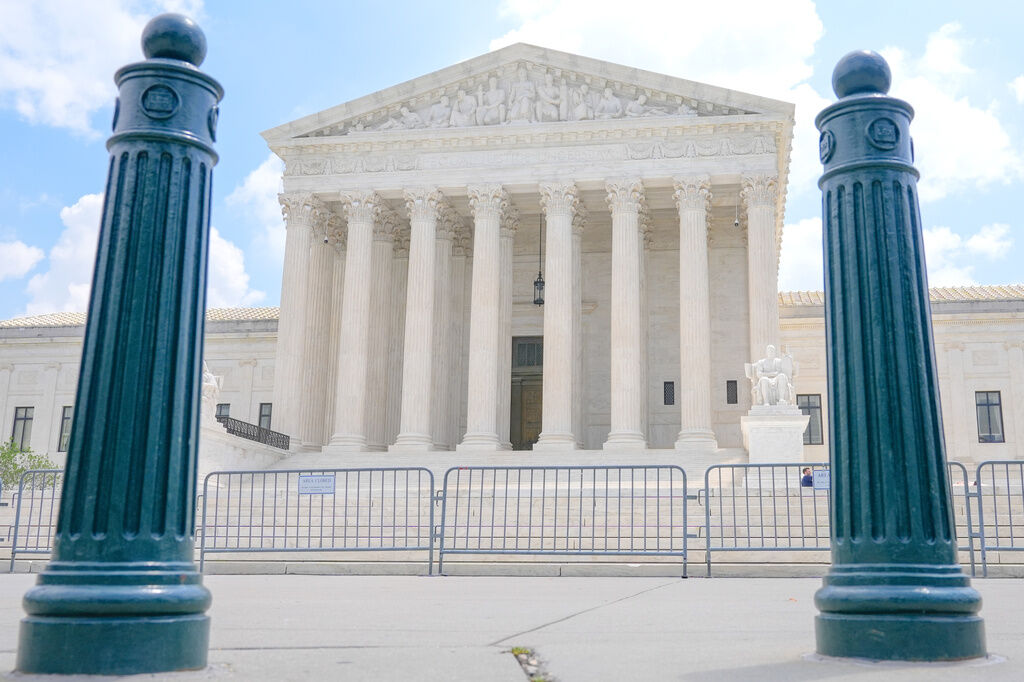
WASHINGTON • The U.S. Supreme Court on Tuesday upheld state laws barring transgender girls and women from playing on school athletic teams. The court’s conservative majority ruled that state bans in Idaho and West Virginia don’t violate the U.S. Constitution...
Colorado Supreme Court upholds child abuse convictions despite faulty jury instruction
Michael Karlik
michael.karlik@coloradopolitics.com
Updated 11 hours ago
The Colorado Supreme Court decided on Monday that a San Miguel County jury properly convicted a defendant of child abuse resulting in death, even though the instructions potentially allowed jurors to avoid finding that the child abuse resulted in death....
Colorado justices say group that spent $4M on ballot initiatives does not have to disclose donors
Michael Karlik
michael.karlik@coloradopolitics.com
Updated 3 days ago
The Colorado Supreme Court ruled on Monday that an organization that spent $4 million to advocate on ballot initiatives in the 2020 election is not required to disclose its donors and spending. The Supreme Court acknowledged that multiple factors suggested...
PREV
PREVIOUS

Colorado's recidivism rate has decreased significantly, but violent crime is up, new analysis claims
Changes to Colorado’s crime policies led to a significant decrease in recidivism in the state’s prisons, but lowering penalties for certain offenses also increased the number of violent crimes, according to a new analysis. In its report “The Reform Paradox: How Reduced Incarceration has Coincided with Rising Crime,” former Denver Police Chief Paul Pazen, along […]

Developer acquires vacant land for future Lone Tree neighborhood
A Colorado-based developer acquired 19 acres of land in northern Lone Tree, a move towards building hundreds more homes in a city already on pace for rapid growth. Lokal Homes, a Colorado home developer, acquired 19 acres of vacant land south of C-470 between Acres Green Drive and South Yosemite Street. The plan is a […]