

Couple’s notarized agreement did not create common law marriage, appeals court says
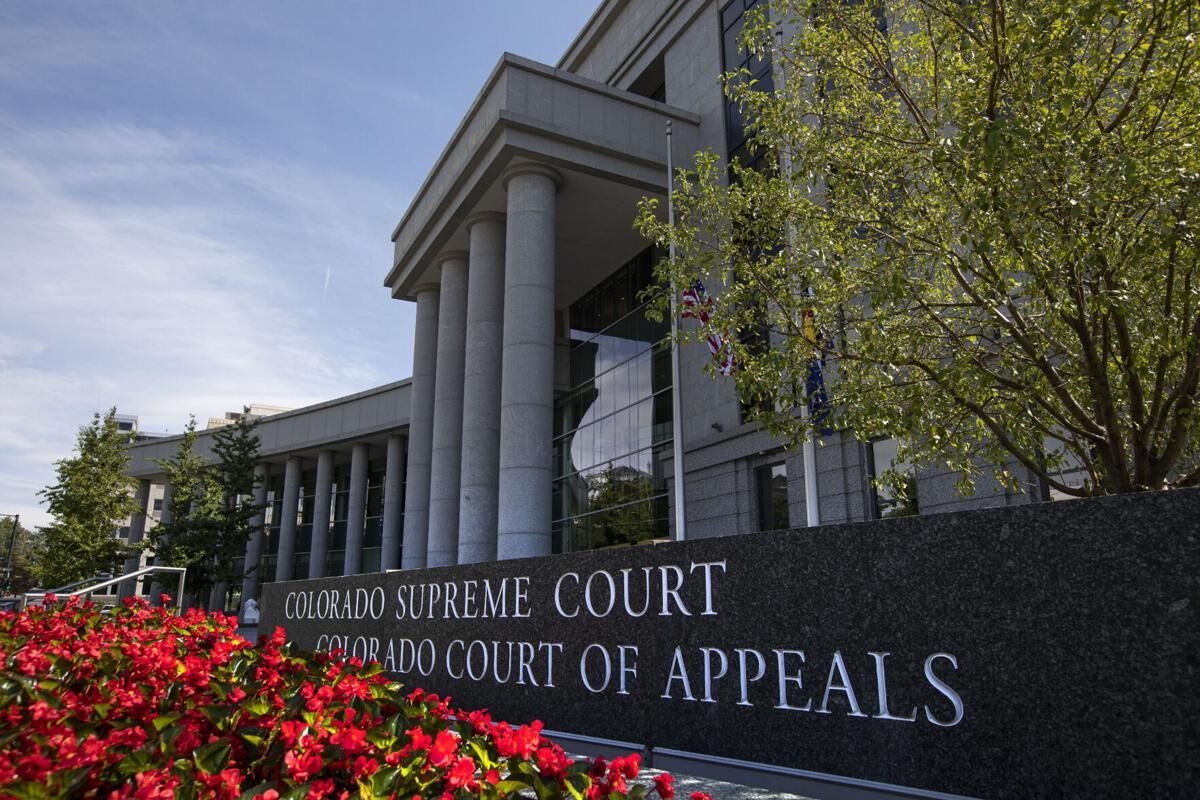
A Garfield County couple’s signed, notarized document attesting to their common law marriage does not mean they were actually married, Colorado’s second-highest court ruled last week.
In contrast to a formal, licensed marriage, Colorado recognizes common law marriages between two people who mutually agree to enter into a marriage and then engage in conduct reflecting that agreement.
Five years ago, the Colorado Supreme Court updated its framework for assessing whether a common law marriage exists and, therefore, whether it is subject to dissolution. The court identified factors that could indicate an intent to live in a marriage, including cohabitation, joint banking and credit accounts, joint ownership of property, and “symbols of commitment.”
In October 2022, Rochelle Hitchcock petitioned to dissolve the common law marriage between herself and Kurt Lundin. As evidence of a marriage, Hitchcock pointed to a document labeled “Affidavit of Common Law Marriage” signed by both parties in 2021.
“We have lived together continuously, in Colorado, as husband and wife from 9/16/16 to the present,” the document read. “We hold ourselves out to the community as husband and wife, consent to the marriage, cohabit and have a reputation in the community as being husband and wife.”
Hitchcock and Lundin also attested that their common law marriage would be “valid for all purposes” and “can only be terminated by death or divorce.” They signed it with a notary as a witness.
After a hearing in which then-Chief Judge John F. Neiley heard from several friends and family members of Hitchcock and Lundin, he concluded that no common law marriage existed.
Neiley explained that under the Supreme Court’s framework, there must be conduct furthering the marriage in addition to the affidavit itself. The witness testimony illustrated that several of Lundin’s friends and relatives did not believe the couple to be married, and the relationship was “essentially platonic rather than intimate.” There was no joint property and almost no joint finances.
As for the 2021 signed affidavit, the evidence showed that Hitchcock was concerned about her child’s insurance coverage ending in 2022. Getting coverage was “a big part of their decision” to sign the document, wrote Neiley, as the “only viable option” was to get the child on Lundin’s insurance.
Therefore, “the court finds under the totality of the circumstances, that the Affidavit does not reflect the mutual intent of the parties to become married under common law. Instead, the court finds that the Affidavit was used as a vehicle by the parties to obtain health insurance,” wrote Neiley in dismissing Hitchcock’s petition to dissolve the marriage.
Case: In the Marriage of Hitchcock
Decided: May 7, 2026
Jurisdiction: Garfield County
Ruling: 3-0
Judges: Craig R. Welling (author)
W. Eric Kuhn
Timothy J. Schutz (concurrence)
A three-judge Court of Appeals panel agreed that the purported common law marriage agreement did not establish a marriage on its own.
“To begin, we understand Hitchcock’s confusion, as the requirements for establishing a common law marriage are undoubtedly complex,” wrote Judge Craig R. Welling in the May 7 opinion, reiterating that such a marriage requires both mutual agreement and sharing a life as spouses.
“Here, however, the trial court assessed the parties’ conduct following their commencement of cohabitation in 2016 and following their execution of the affidavit in 2021, with the court concluding that the conduct during both of those critical timeframes didn’t support the existence of a common law marriage,” he wrote for himself and Judge W. Eric Kuhn.

Judge Timothy J. Schutz wrote separately. He stressed that no one was accusing Hitchcock and Lundin of committing fraud by signing the 2021 affidavit for health insurance purposes.
“But I also note that the parties’ failure to raise the potential fraud issue is predictable because if they had done so, they risked the trial court making a finding that one or both of them had committed fraud,” he wrote.
Instead, Schutz warned that the Supreme Court’s updated framework for establishing a common law marriage was a bizarre fit for the conduct in Hitchcock and Lundin’s case. Specifically, the Supreme Court had not contemplated a relationship with a signed, notarized affidavit committing both people explicitly to a common law marriage.
“Thus, the result we reach,” Schutz wrote, “tolerates a situation in which both parties achieved a financial benefit by making a sworn representation that at least Lundin knew to be false, because — according to his testimony — he did not intend to be married.”
He advocated for the Supreme Court to re-examine its framework to prevent potentially “fraud-adjacent” agreements between couples from being used as unchallenged evidence in future proceedings.
“Addressing the fraud-related issues would not only strengthen the foundations of common law and statutory marriages, it would also discourage fraudulent conduct,” Schutz concluded.
The case is In the Marriage of Hitchcock.


Colorado judge explores sanctions against DOJ, ICE for rearresting man 4 days after release on bond
Michael Karlik
michael.karlik@coloradopolitics.com
Updated 6 hours ago
A federal judge in Colorado is considering sanctions against the government after immigration agents rearrested a man four days after an immigration judge found him suitable for release on bond. On July 28, U.S. Magistrate Judge N. Reid Neureiter ordered...

Divided disciplinary panel censures Montezuma County judge after agreement reached
Michael Karlik
michael.karlik@coloradopolitics.com
Updated 13 hours ago
A disciplinary panel formally imposed a public censure, suspension, and further training on Montezuma County Court Judge Ian J. MacLaren on Tuesday by a 2-1 vote. Under constitutional Amendment H, which voters adopted in November 2024, MacLaren was set to...

Colorado’s Western Slope magistrate judges describe unique role in federal judiciary
Michael Karlik
michael.karlik@coloradopolitics.com
Updated 1 day ago
Two of Colorado’s federal judges stationed on the Western Slope spoke to lawyers on Wednesday about their unique roles, the ways their workloads differ, and the need for more criminal defense lawyers to take cases outside the Front Range. “Here...

Denver sues Philip Morris, other tobacco companies over cigarette butt litter
Deborah Grigsby
deborah.smith@denvergazette.com
Updated 3 hours ago
Denver is demanding that some of the biggest tobacco companies in the world pay for the cleanup of discarded cigarette butts on its streets, following a similar campaign that cities in other states have pursued. Denver’s lawsuit, filed this week...

Federal judge rules that request for bond hearing not necessary to challenge immigration detention
Michael Karlik
michael.karlik@coloradopolitics.com
Updated 1 day ago
A federal judge in Colorado ruled last week that it is not mandatory for a person to seek a bond hearing with an immigration judge before they challenge the lawfulness of their detention in federal court. For the past year,...

Boulder Valley School District introduces new policies following antisemitism lawsuit
Marissa Ventrelli
marissa.ventrelli@coloradopolitics.com
Updated 7 hours ago
The chief of Boulder Valley School unveiled new policies for the 2026-2027 school year following a lawsuit filed on behalf of a student alleging antisemitic harassment. In June, the Anti-Defamation League filed a federal civil rights complaint against the school...

Colorado NRA chapter seeks injunction against new gun‑training requirement
Marissa Ventrelli
marissa.ventrelli@coloradopolitics.com
Updated 11 hours ago
The Colorado chapter of the National Rifle Association is seeking an injunction to stop the state from enforcing a new law that took effect earlier this month. The new law requires anyone buying or selling certain firearms to first complete...
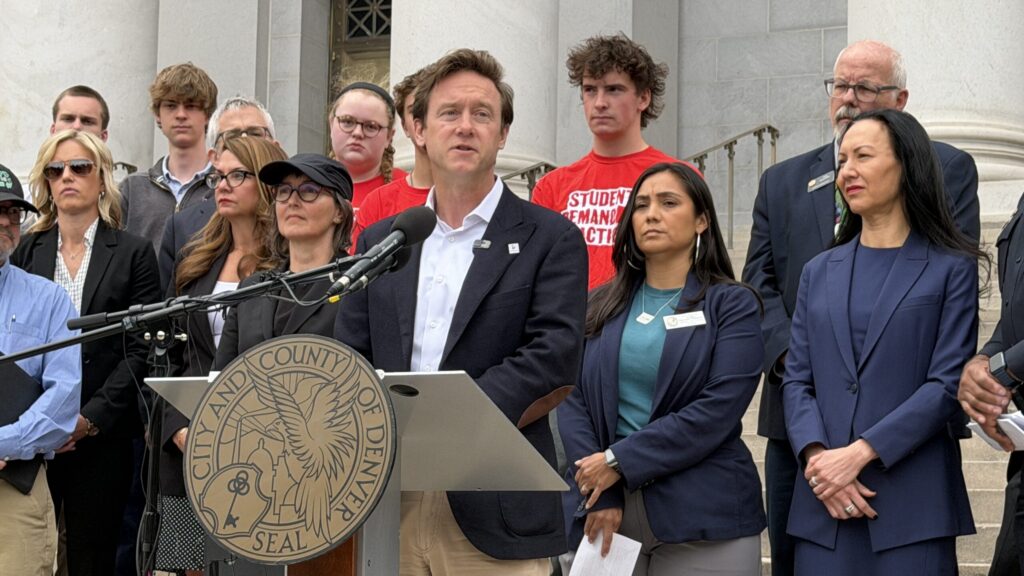
Denver moves to dismiss Trump challenge to ‘assault-style’ weapons ban
Deborah Grigsby
deborah.smith@denvergazette.com
Updated 5 hours ago
Denver has filed a motion to dismiss a lawsuit brought by the Trump administration challenging the city’s ban on “assault-style” weapons and magazines exceeding a 15-round capacity. The U.S. Department of Justice filed a suit in federal court in May,...
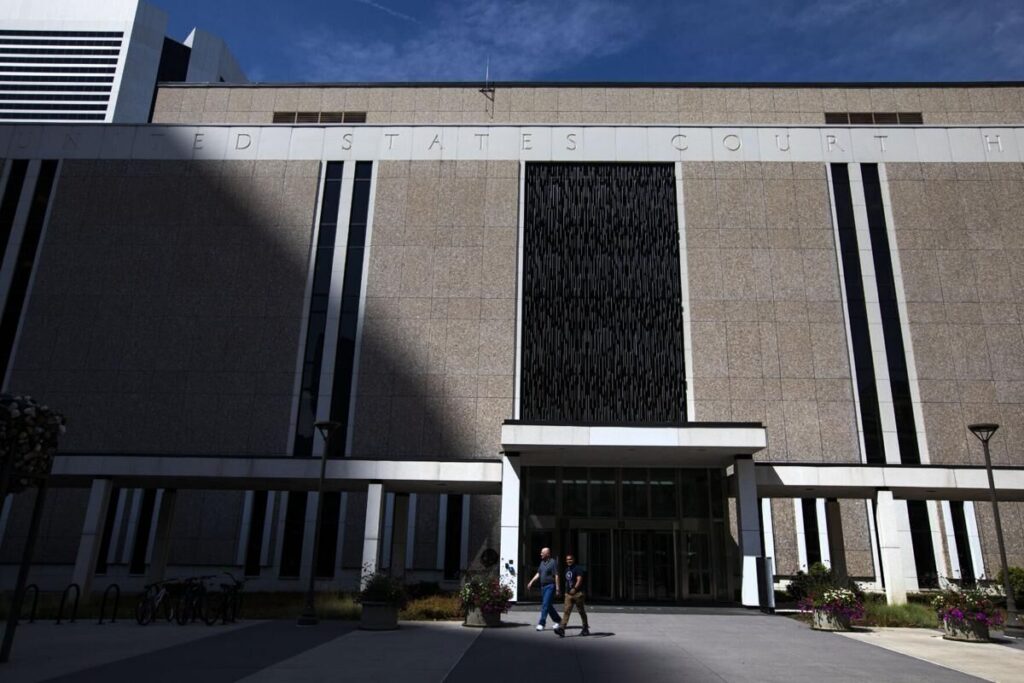
Federal judge dismisses ex-Colorado judicial discipline director’s conspiracy lawsuit
Michael Karlik
michael.karlik@coloradopolitics.com
Updated 2 days ago
A federal judge dismissed a lawsuit from Colorado’s former judicial discipline director on Tuesday, finding that he failed to adequately state claims for conspiracy or constitutional violations. Christopher S.P. Gregory, who served as the executive director of the Colorado Commission on Judicial...
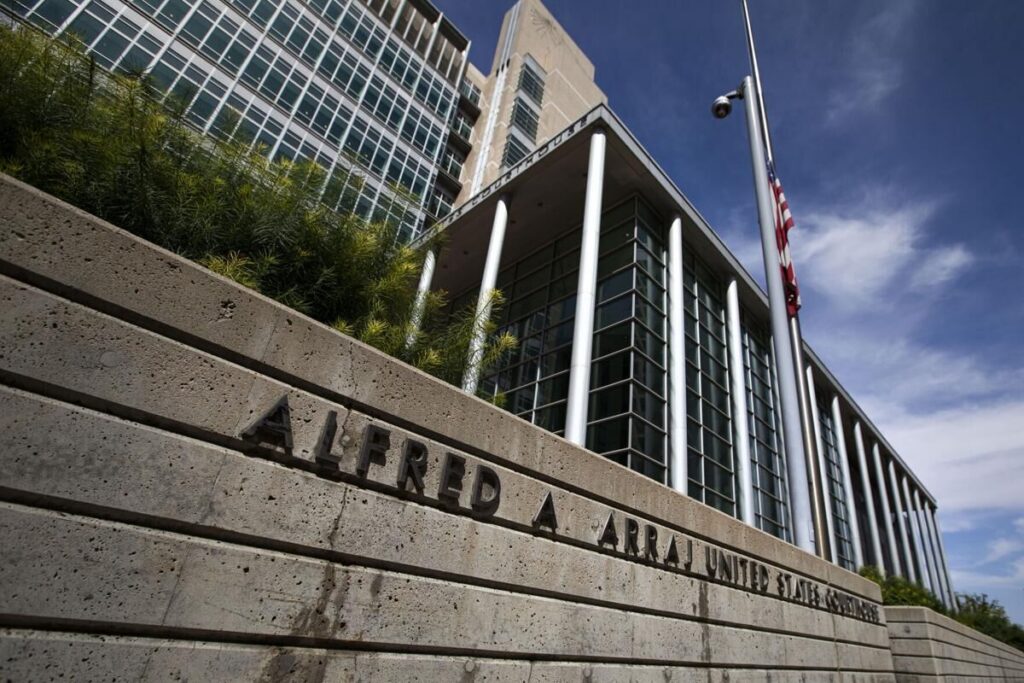
Federal judge allows retaliation claims to proceed against prison officials
Michael Karlik
michael.karlik@coloradopolitics.com
Updated 1 day ago
A federal judge agreed last week that a man incarcerated at Sterling Correctional Facility had credibly alleged that employees retaliated against him for filing grievances, including by taking away his disability accommodations and turning off his electricity. Louis Peoples Jr.,...
PREV
PREVIOUS

Colorado Democrat John Hickenlooper lands support from trio of local labor unions
Three local labor unions endorsed U.S. Sen. John Hickenlooper’s bid for reelection this week, calling the Colorado Democrat a proven champion of the state’s workers and their rights. Hickenlooper’s campaign announced endorsements on Tuesday from SMART Sheet Metal Workers Local 9, Pipefitters Local 208 and the Colorado Professional Fire Fighters Association. They joined the American […]

Gazette editor Jim Trotter inducted into the Denver Press Club Hall of Fame
The Denver Press Club on Saturday will induct Denver Gazette and The Gazette in Colorado Springs Associate Editor Jim Trotter into its Hall of Fame. “Jim Trotter is being inducted into the Denver Press Club Hall of Fame because of what he has done across 50 years in newsrooms, and what he has given to […]