

10th Circuit upholds child sex convictions of Fort Carson resident over evidence objections
The Denver-based federal appeals court upheld the convictions of a Fort Carson resident on Tuesday, concluding that the prosecution did not violate the rules governing the disclosure of evidence.
Mitchel Crow stood trial on seven counts of sexual abuse of a minor. A jury found him guilty on three counts, and he received a sentence of 168 months in prison.
Crow’s theory of defense was that he suffered from “sexsomnia,” a sleep disorder in which a person engages in sex acts during their sleep. He retained Clete A. Kushida, a Stanford University neurologist, as an expert. The government, in turn, relied on expert Michel Cramer Bornemann of Minneapolis. Each witness provided a report supporting or disputing the sexsomnia theory.
Prior to trial, U.S. District Court Senior Judge Raymond P. Moore permitted the experts to remain in the courtroom and listen to each other’s testimony.
During Kushida’s testimony, he spoke about the concepts of “secondary gain,” meaning Crow’s motive to claim sexsomnia, and “malingering,” meaning exhibiting false symptoms.
Before Bornemann testified, the prosecution notified Moore that the expert had “significant disagreement with the testimony he heard today,” more than could be captured by “a quick written summary.”
Moore initially brushed aside the concern.
“Once you have basically said, ‘We’re going to let this expert listen to that expert and this one listen to that one,’ it is hardly surprising to me that things start changing on the margins. So, buckle up, buttercup. Let’s go,” he said.
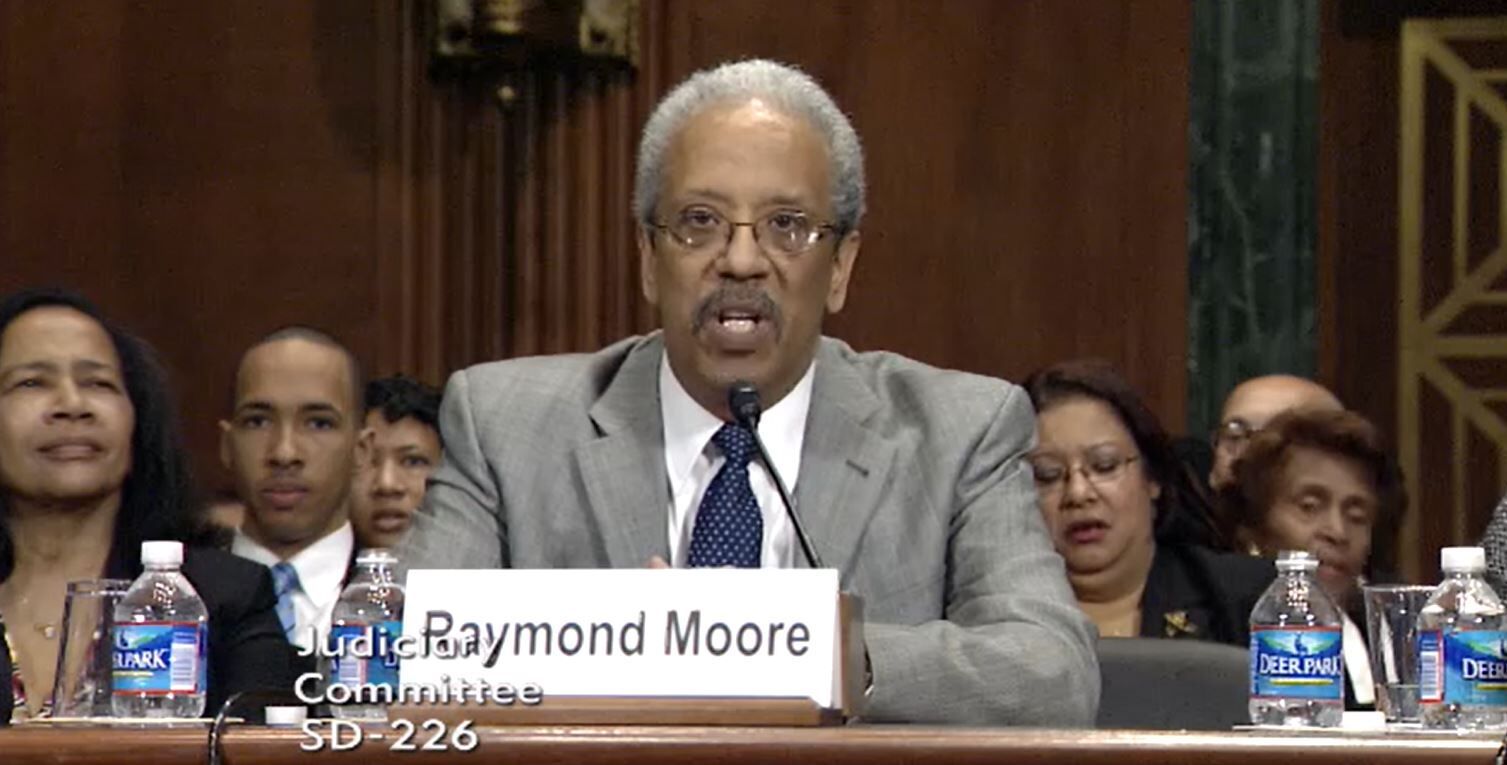
Public defender Timothy P. O’Hara, who later became a federal magistrate judge, cited the criminal rule requiring advance governmental disclosure of expert opinions. He asked Bornemann to put his opinion into typewritten form, and not the handwritten note he received from the prosecution.
Moore lost patience, warning that “we’re not doing this” because the jury’s “time is just being wasted, wasted, wasted.”
“You wanted a process where both experts sit in the room and listen to each other,” he said. “It is hardly a surprise to sit there and say that one expert listening to another hears something on the stand, and now disagrees with it. And that somehow that can be blocked by saying, ‘I didn’t get enough advanced notice.’ This is the bed that you both wanted to sleep in. That’s the bed you made. That’s the bed we’re all in. I’m not changing things.”
Moore ultimately gave O’Hara 20 minutes to speak with Bornemann, rather than the requested amount of 30 minutes to an hour. After O’Hara lodged another objection, Moore said he was not spending any more time on the issue.
“This witness’s entire testimony comes down to this: You don’t hunt 15-year-olds in your sleep,” he said. “There’s nothing about that that should be surprising to you. There’s nothing about that that requires all this additional time. There’s nothing about this that is in any way disadvantaging you or your client. It’s just simply lawyer recordkeeping.”
Case: United States v. Crow
Decided: May 19, 2026
Jurisdiction: U.S. District Court for Colorado
Ruling: 3-0
Judges: Robert E. Bacharach (author)
Jerome A. Holmes
Nancy L. Moritz
On appeal, Crow argued that Bornemann’s testimony improperly opined about malingering when his report did not address the subject at all. Therefore, Moore was incorrect to bar a more fulsome exploration of those opinions.
The government responded to argue that, under the circumstances, the disclosure rule was not implicated.
“Bornemann’s opinion was in response to Kushida’s opinion — expressed for the first time on the stand — that he did not think Crow was malingering. Under the fluid process agreed to by the parties, the government’s supplemental disclosure complied,” wrote Assistant U.S. Attorney Rajiv Mohan.
A three-judge panel of the U.S. Court of Appeals for the 10th Circuit agreed.
“This testimony about malingering hadn’t appeared in Dr. Kushida’s report. Because Mr. Crow hadn’t disclosed Dr. Kushida’s new opinion about malingering,” wrote Judge Robert E. Bacharach in the May 19 opinion, the rules “didn’t require the government to disclose before trial how Dr. Bornemann would counter these opinions.
“After all,” he continued, “how could the government have said how it would respond to opinions by Dr. Kushida that he himself hadn’t revealed?”
The case is United States v. Crow.


10th Circuit partially revives lawsuit over 2020 Denver protest injuries
Michael Karlik
michael.karlik@coloradopolitics.com
Updated 24 hours ago
The Colorado-based federal appeals court revived a man’s claims against Denver on Friday after concluding a trial judge resolved the case in the city’s favor without analyzing two of the three instances of alleged excessive force and other constitutional violations....
Federal judges find Colorado immigration judge violated several orders
Michael Karlik
michael.karlik@coloradopolitics.com
Updated 1 day ago
Multiple federal judges in Colorado have freed people from immigration custody after determining that one immigration judge violated their directives for properly conducting bond hearings. For nearly a year, Colorado’s U.S. District Court has faced a flood of “habeas corpus” petitions...
Misconduct complaints from ex-Colorado judicial discipline director dismissed against federal judges
Michael Karlik
michael.karlik@coloradopolitics.com
Updated 2 days ago
The administrative body for the Denver-based federal appeals court upheld a finding last week that misconduct complaints against Colorado’s chief federal trial judge and the chief appeals judge warranted dismissal and appeared to be a “litigation tactic” by the complaining...
First-ever Red Rocks naturalization ceremony draws most diverse group of new citizens
Michael Karlik
michael.karlik@coloradopolitics.com
Updated 1 day ago
Colorado’s federal trial court held its first-ever naturalization ceremony for nearly 300 new citizens on Thursday at Red Rocks Park and Amphitheatre. “We’re doing it to commemorate the 250th anniversary of the Declaration of Independence and the United States. Red...
Jeffco taxpayers could be on the hook for a possible child sex assault settlement
Matt Kyle
matt.kyle@denvergazette.com
Updated 1 day ago
Taxpayers may end up on the hook for a child sexual assault settlement, possibly worth up to $15 million, after Jeffco Public Schools failed to notify its insurance company in a timely manner about the case. The incident stems from...
10th Circuit finds no fair housing violation by Littleton landlord for worker’s alleged rape of tenant
Michael Karlik
michael.karlik@coloradopolitics.com
Updated 23 hours ago
The Denver-based federal appeals court concluded on Monday that Littleton’s housing authority could not be held liable for a maintenance worker’s alleged rape of a tenant, as the worker’s employment did not provide any special access to the victim. A...

Jeffco Public Schools sues Trump administration to protect funding after alleged transgender policies violation
Matt Kyle
matt.kyle@denvergazette.com
Updated 2 days ago
In the wake of several threats by the Trump administration to revoke federal funding, Jeffco Public Schools filed a lawsuit against the Department of Education seeking to protect that badly needed money. Jeffco has been under investigation by the DOE’s...
Denver detox center did not violate man’s rights with 10-hour hold, 10th Circuit says
Michael Karlik
michael.karlik@coloradopolitics.com
Updated 4 days ago
The Colorado-based federal appeals court concluded on Tuesday that Denver’s detoxification facility did not violate a man’s rights by holding him against his will for 10 hours until his blood alcohol content was projected to reach zero. Unusually, Brian Garrett’s...
Federal judge clarifies ex-GOP treasurer candidate’s burden to prove defamation claims
Michael Karlik
michael.karlik@coloradopolitics.com
Updated 4 days ago
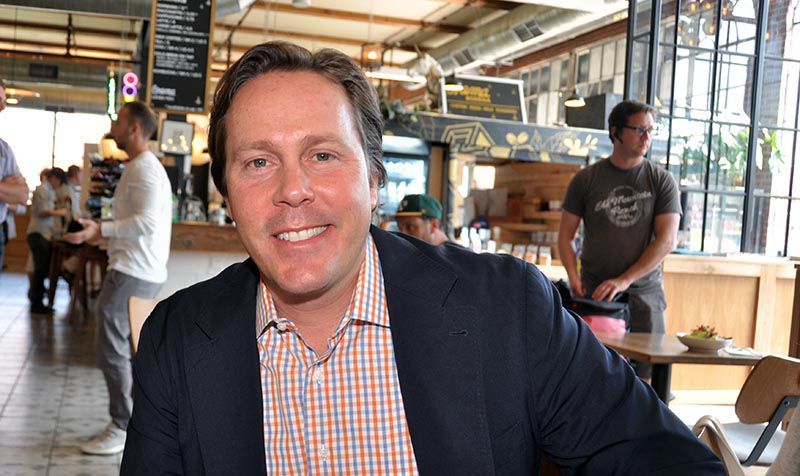
A federal judge clarified last week that businessman and former Republican statewide candidate Brian Watson will need to surmount a higher hurdle in proving his claim that a party guest’s alleged description of him as a “criminal” amounted to defamation....
Colorado board permits state to appeal injunction against arthritis drug price cap
Marissa Ventrelli
marissa.ventrelli@coloradopolitics.com
Updated 4 days ago
A Colorado board voted Friday to allow the Attorney General’s Office to fight an injunction against a price cap on a drug that treats arthritis. A U.S. district court judge had granted the company Amgen a preliminary injunction, temporarily blocking...
PREV
PREVIOUS
Business leaders see 'cracks' in Colorado, while governor insists state is 'competitive'
How does Colorado get back to the climate in the early 2000s, when there was collaboration between state government, companies and colleges and universities? That was the question posed to Gov. Jared Polis and a panel convened Tuesday by the Metro Denver Chamber of Commerce as part of its annual state of the state luncheon […]
Appeals court revives disability discrimination claim against Colorado attorney regulators
Colorado’s second-highest court reinstated a lawyer’s discrimination claim earlier this month against Colorado’s attorney regulation office, based upon its alleged failure to accommodate his disability during the bar exam. Michael Ozborn, a University of Denver law graduate, sued the Office of Attorney Regulation Counsel in June 2024. He alleged that he had multiple diagnoses that […]