

Federal judges find Colorado immigration judge violated several orders
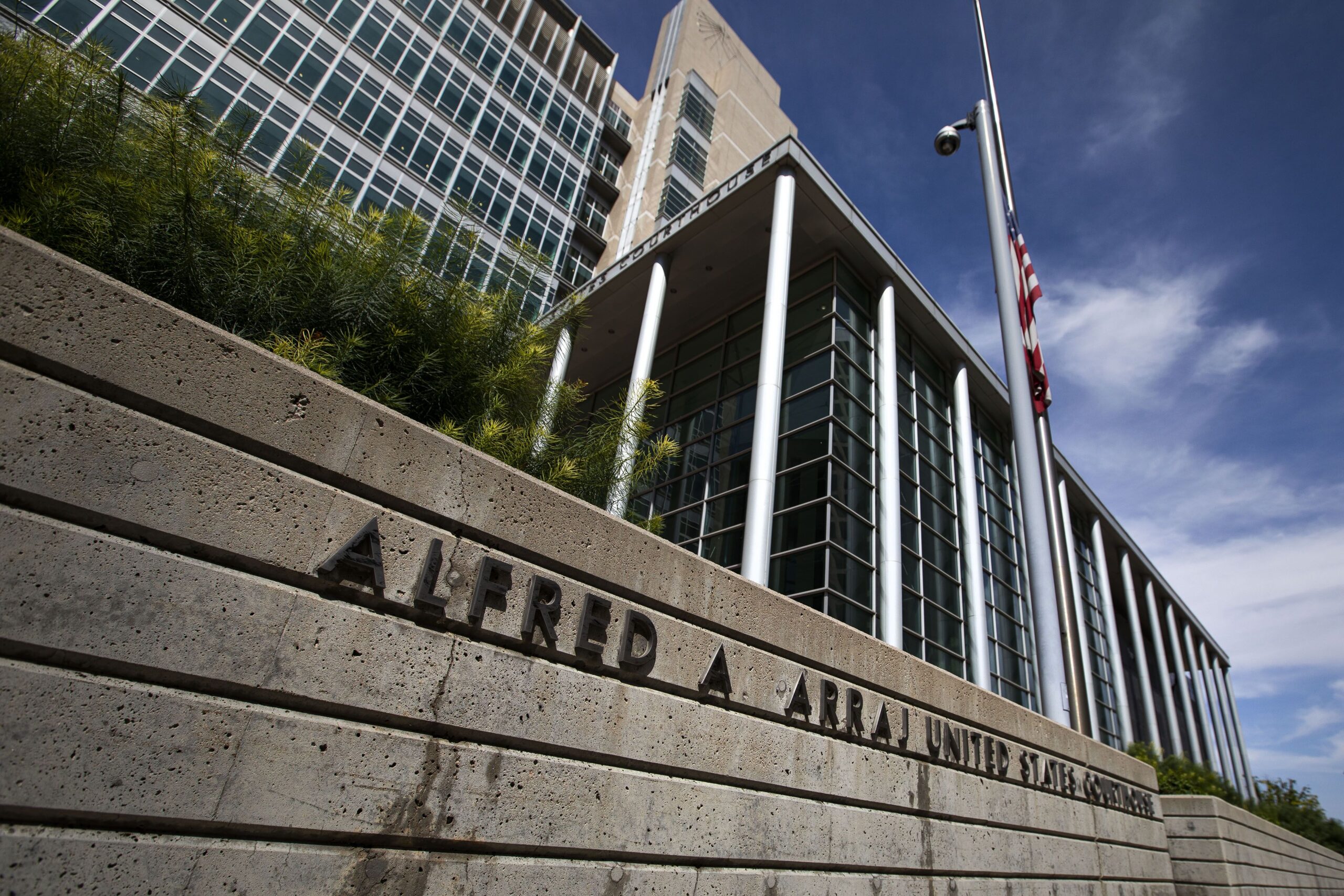
Multiple federal judges in Colorado have freed people from immigration custody after determining that one immigration judge violated their directives for properly conducting bond hearings.
For nearly a year, Colorado’s U.S. District Court has faced a flood of “habeas corpus” petitions from those in immigration detention. The most common allegation is that the government is improperly denying bond hearings to people who are eligible by law. Colorado’s judges have largely agreed with that argument, and the Denver-based federal appeals court recently handed down a binding interpretation of the law confirming that view.
However, that has not ended the legal battle. Federal judges, in granting habeas petitions, have typically placed the burden on the government to show that a person who is unlawfully detained ought to remain in custody while their immigration proceedings unfold. The U.S. Department of Homeland Security must show, and an immigration judge must find, the petitioner is a flight risk or a danger to the community to justify their continued confinement.
On at least four occasions in July, Colorado’s federal judges found that Bobbie C. Masters failed to follow their instructions.
“To be sure, Immigration Judge Masters conducted a bond hearing by the deadline ordered by this Court,” wrote Judge Regina M. Rodriguez on July 22. But “the Court agrees with Petitioner that Respondents did not satisfy their burden of proving by clear and convincing evidence that he is a danger to the community and that his bond hearing did not comply with the Court’s orders.”
Masters’ decision denying bond “neither mentions nor analyzes any of the evidence presented by Petitioner, leaving the distinct impression that nothing Petitioner presented was considered,” wrote Judge Gordon P. Gallagher on July 2.
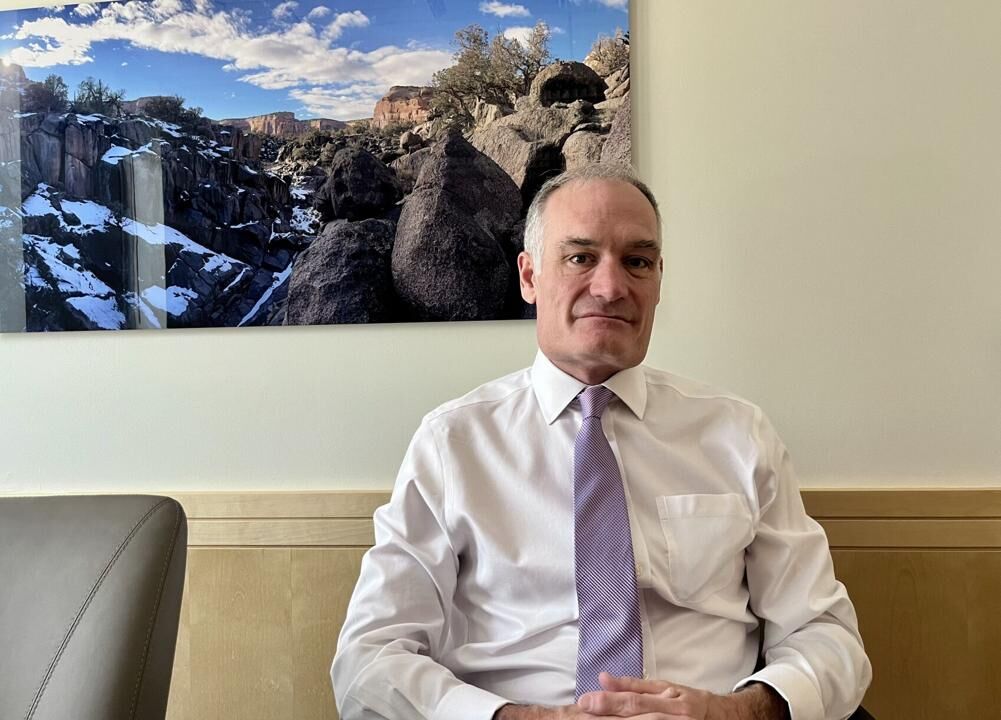
Immigration judges are executive branch employees within the U.S. Department of Justice. Colorado Politics requested comment from Masters through the Executive Office for Immigration Review, which oversees immigration courts. A spokesperson said the office “does not comment on immigration judge decision making.”
In 2022, then-U.S. Attorney General Merrick Garland appointed Masters as an immigration judge in Sterling, Va. According to her biography in the Justice Department’s announcement, she was a Denver immigration attorney in private practice between 2009-2016. She then worked for U.S. Immigration and Customs Enforcement in Nebraska and Louisiana.
Videos she made as an immigration attorney still exist online, including one in which she attests to her firm’s “incredibly high success rate” in obtaining legal status for clients. A handful of Yelp reviews from her clients are uniformly positive.
“Bobbie and her staff have been so helpful and always on top of everything that had to do with my husbands immigration case. I’m very glad I chose this law firm, they are very professional and always showed kindness and compassion throughout our case,” wrote one reviewer in 2016. “Bobbie is also always updated with new immigration laws or rules that may change and uses them if they apply to a case, she also is always available to answer questions when needed.”
However, an online database affiliated with Syracuse University has found that, as an immigration judge, Masters denies asylum applications at a rate that is more than 20 percentage points higher than immigration judges nationally and in Denver. And in July alone, federal judges took issue with her handling of bond hearings in at least four cases.

Speculation
On April 17, Gallagher ordered a bond hearing for a habeas petitioner, which Masters conducted two weeks later. Masters denied bond after concluding the petitioner presented a flight risk, based upon the petitioner’s appeal of a deportation decision that Masters believed had a “speculative likelihood” of success.
The petitioner’s lawyers turned to Gallagher and argued Masters relied upon speculation and ignored the petitioner’s compliance with all aspects of her asylum case to date.
“The government was required to prove flight risk through evidence. Instead, the decision relies largely upon assumptions regarding what may happen in future proceedings,” wrote attorney Inga Bergel.
Gallagher agreed that Masters conducted a “fundamentally unfair” hearing by failing to consider the evidence suggesting the petitioner was unlikely to flee.
“No great discourse on the evidence is required, but due process requires some review of the record,” he wrote, “and a resulting order should indicate at minimum that all evidence was considered.”
He ordered a redo of the bond hearing.
No proof of conviction
The same day as Gallagher’s order, Rodriguez ordered a bond hearing in another case, which Masters conducted on July 7. Masters heard testimony from the petitioner about his drunk driving arrest when he was 18, and she denied bond on the basis that he was a danger to the community.
“Respondent’s alleged disregard of the law and the community’s safety coupled with the inherently deadly consequences of drinking and driving,” she wrote, “render his DUI arrest and conviction severe enough that DHS has shown by clear and convincing evidence that the Respondent is a danger to the community.”
The man’s lawyers asked Rodriguez to intervene on the grounds that Masters made a clear mistake in finding the government met its burden of proof.
The petitioner “admitted to a DUI arrest, but there is no actual evidence of a conviction,” wrote attorney Jess Dawgert.
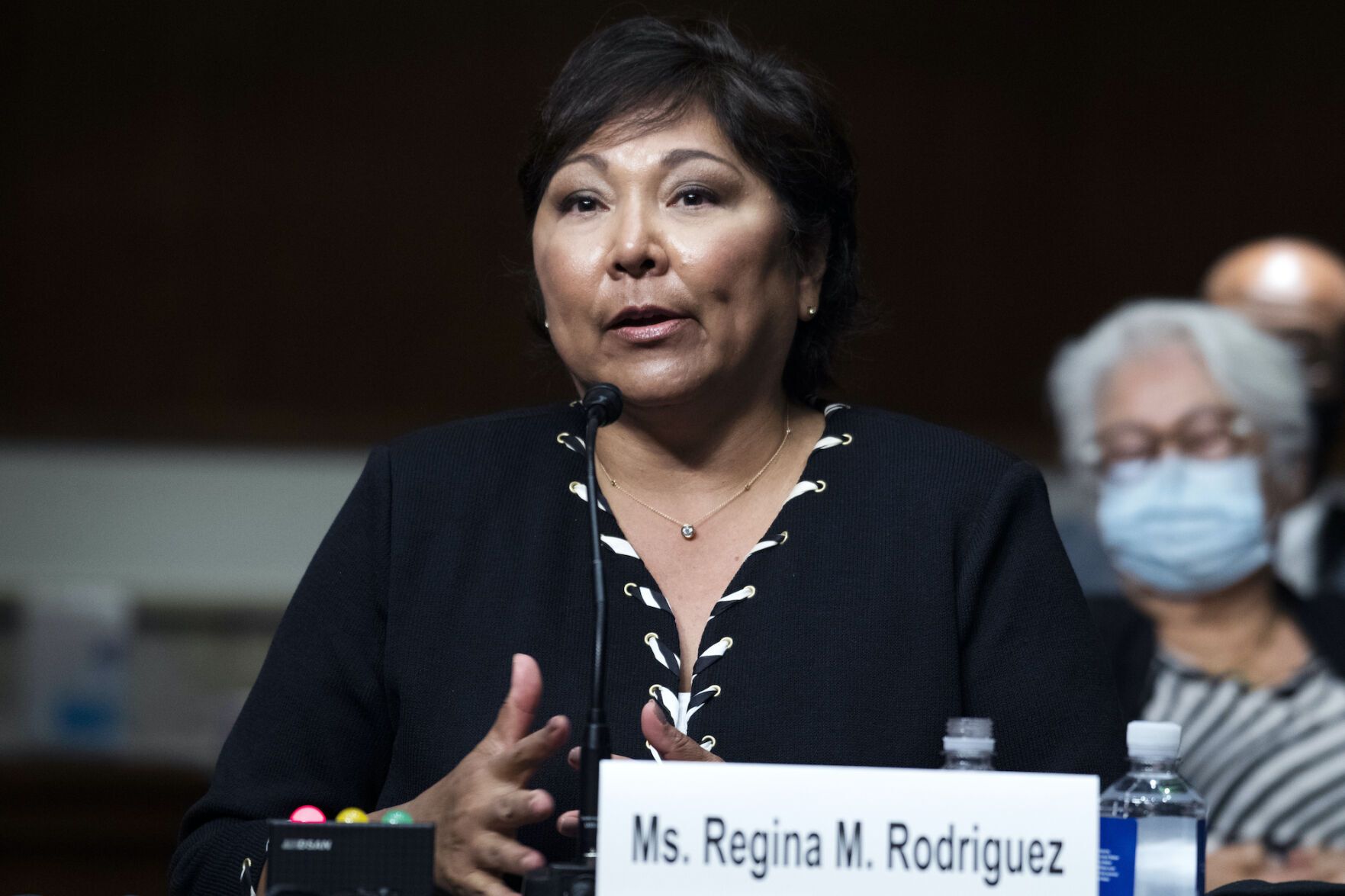
Rodriguez agreed that the circumstances of the DUI arrest were unclear and, contrary to what Masters wrote, there was “no evidence of an actual conviction.”
She ordered the petitioner’s immediate release.
Errors in documentation, questionable narrative
On May 5, Magistrate Judge N. Reid Neureiter ordered a bond hearing, which Masters held the following week. She determined the petitioner was dangerous and a flight risk based upon his criminal history and the narrative of his encounter with ICE agents.
“On April 23, 2026, when the Respondent was apprehended by ICE, he refused to cooperate with law enforcement, putting himself, bystanders, and officers at risk of harm,” she wrote. “The Respondent refused to exit his vehicle when directed by officers and continued to grip the steering wheel of the car. The officers found it necessary to break the driver side window, and the Respondent continued to grip the steering wheel refusing to cooperate with the law enforcement orders to exit the vehicle.”
However, the man’s attorney argued to Neureiter that Masters’ decision-making was flawed.
First, she relied upon the immigration arrest form, known as an I-213. The form contained several obvious factual errors.
For instance, the form stated the man was both 30 and 32 years old. He was actually 31. It stated the incorrect first name. It stated the incorrect last names. It said there was both a warrant signed by a supervisor and that there was no warrant. It misstated his home country. It stated he was not married and had no children. He had a wife and two children.
Masters’ decision “does not attempt to resolve — does not even address, in fact — any of the numerous and obvious irregularities,” Neureiter wrote on July 23. “This is especially significant because the IJ relied on this evidence in support of her conclusion that, based on Petitioner’s encounter with ICE agents as described in the I-213, Petitioner was dangerous and a flight risk.”
Moreover, the petitioner submitted evidence that Masters’ narrative of his arrest was questionable. The petitioner’s wife, who was in the car with their 3-year-old child, alleged that an unmarked car followed them, prompting her husband to stop at a Denver police station to ask for help. When police declined to intervene, the ICE agents cut off the car on the highway and yelled for the petitioner to exit the car.
“They yelled that they were going to electrocute him if he didn’t get out. That’s when they broke the window to open the door. They grabbed (the petitioner) and ripped his shirt. When (the 3-year-old) heard the window break and saw them grabbing their dad, she cried hard,” the petitioner’s wife wrote. “Another officer threatened to use the taser on me if I didn’t calm down.”
“Accordingly,” responded Neureiter, “the Court has little trouble concluding that the IJ did not adhere to the burden allocation required by this Court’s Order when she determined that Petitioner’s ‘most recent encounter with law enforcement poses that Respondent is not only a danger to community but also a risk of flight.’”
He ordered the man’s release.
Lack of evidence
Finally, on July 2, Rodriguez ordered a bond hearing for a petitioner, which Masters held five days later. The petitioner’s lawyer produced 61 pages about the woman’s role in the community, history of employment and filing taxes, and family ties. The government’s lawyer, speaking for one minute and nine seconds, solely relied upon the woman’s prior identity theft-related charges in Wyoming, which wound up being dismissed.
Masters found that the government had proven the woman’s dangerousness and flight risk, and she denied bond. She also cited an immigration judge’s prior rejection of the petitioner’s application, which the government’s lawyer did not rely upon when arguing against bond.
“The record is not clear as to whether DHS provided clear and convincing evidence that Petitioner is a danger or flight risk,” Rodriguez concluded in reviewing Masters’ order. “Therefore, the Court agrees with Petitioner that Respondents did not satisfy their burden.”
She ordered the petitioner’s release.


10th Circuit partially revives lawsuit over 2020 Denver protest injuries
Michael Karlik
michael.karlik@coloradopolitics.com
Updated 43 minutes ago
The Colorado-based federal appeals court revived a man’s claims against Denver on Friday after concluding a trial judge resolved the case in the city’s favor without analyzing two of the three instances of alleged excessive force and other constitutional violations....
Misconduct complaints from ex-Colorado judicial discipline director dismissed against federal judges
Michael Karlik
michael.karlik@coloradopolitics.com
Updated 21 hours ago
The administrative body for the Denver-based federal appeals court upheld a finding last week that misconduct complaints against Colorado’s chief federal trial judge and the chief appeals judge warranted dismissal and appeared to be a “litigation tactic” by the complaining...

First-ever Red Rocks naturalization ceremony draws most diverse group of new citizens
Michael Karlik
michael.karlik@coloradopolitics.com
Updated 2 hours ago
Colorado’s federal trial court held its first-ever naturalization ceremony for nearly 300 new citizens on Thursday at Red Rocks Park and Amphitheatre. “We’re doing it to commemorate the 250th anniversary of the Declaration of Independence and the United States. Red...

Jeffco taxpayers could be on the hook for a possible child sex assault settlement
Matt Kyle
matt.kyle@denvergazette.com
Updated 7 hours ago
Taxpayers may end up on the hook for a child sexual assault settlement, possibly worth up to $15 million, after Jeffco Public Schools failed to notify its insurance company in a timely manner about the case. The incident stems from...
10th Circuit finds no fair housing violation by Littleton landlord for worker’s alleged rape of tenant
Michael Karlik
michael.karlik@coloradopolitics.com
Updated 6 minutes ago
The Denver-based federal appeals court concluded on Monday that Littleton’s housing authority could not be held liable for a maintenance worker’s alleged rape of a tenant, as the worker’s employment did not provide any special access to the victim. A...

Jeffco Public Schools sues Trump administration to protect funding after alleged transgender policies violation
Matt Kyle
matt.kyle@denvergazette.com
Updated 1 day ago
In the wake of several threats by the Trump administration to revoke federal funding, Jeffco Public Schools filed a lawsuit against the Department of Education seeking to protect that badly needed money. Jeffco has been under investigation by the DOE’s...
Denver detox center did not violate man’s rights with 10-hour hold, 10th Circuit says
Michael Karlik
michael.karlik@coloradopolitics.com
Updated 3 days ago
The Colorado-based federal appeals court concluded on Tuesday that Denver’s detoxification facility did not violate a man’s rights by holding him against his will for 10 hours until his blood alcohol content was projected to reach zero. Unusually, Brian Garrett’s...

Federal judge clarifies ex-GOP treasurer candidate’s burden to prove defamation claims
Michael Karlik
michael.karlik@coloradopolitics.com
Updated 3 days ago
A federal judge clarified last week that businessman and former Republican statewide candidate Brian Watson will need to surmount a higher hurdle in proving his claim that a party guest’s alleged description of him as a “criminal” amounted to defamation....
Colorado board permits state to appeal injunction against arthritis drug price cap
Marissa Ventrelli
marissa.ventrelli@coloradopolitics.com
Updated 3 days ago
A Colorado board voted Friday to allow the Attorney General’s Office to fight an injunction against a price cap on a drug that treats arthritis. A U.S. district court judge had granted the company Amgen a preliminary injunction, temporarily blocking...

Federal judge rejects constitutional claims, ‘expressions of hatred’ by Club Q defendant
Michael Karlik
michael.karlik@coloradopolitics.com
Updated 4 days ago
A federal judge rejected a defendant’s claims that he received constitutionally ineffective assistance of counsel while facing federal hate crime and firearms charges for murdering five people at a Colorado Springs LGBTQ nightclub in 2022. Anderson Lee Aldrich is serving...
PREV
PREVIOUS

Q&A with Mike Pence | Former vice president says GOP’s populist turn from conservatism isn’t permanent
Former Vice President Mike Pence says he’s concerned that the Republican Party has taken a populist turn away from bedrock conservative principles during President Donald Trump’s second term, but he believes the party will return to its roots when Trump passes the torch to the GOP’s next nominee in 2028. It’s important, as attention turns […]

10th Circuit partially revives lawsuit over 2020 Denver protest injuries
The Colorado-based federal appeals court revived a man’s claims against Denver on Friday after concluding a trial judge resolved the case in the city’s favor without analyzing two of the three instances of alleged excessive force and other constitutional violations. For the past six years, plaintiffs have litigated several lawsuits arising from the demonstrations that […]