

Appeals court revives disability discrimination claim against Colorado attorney regulators
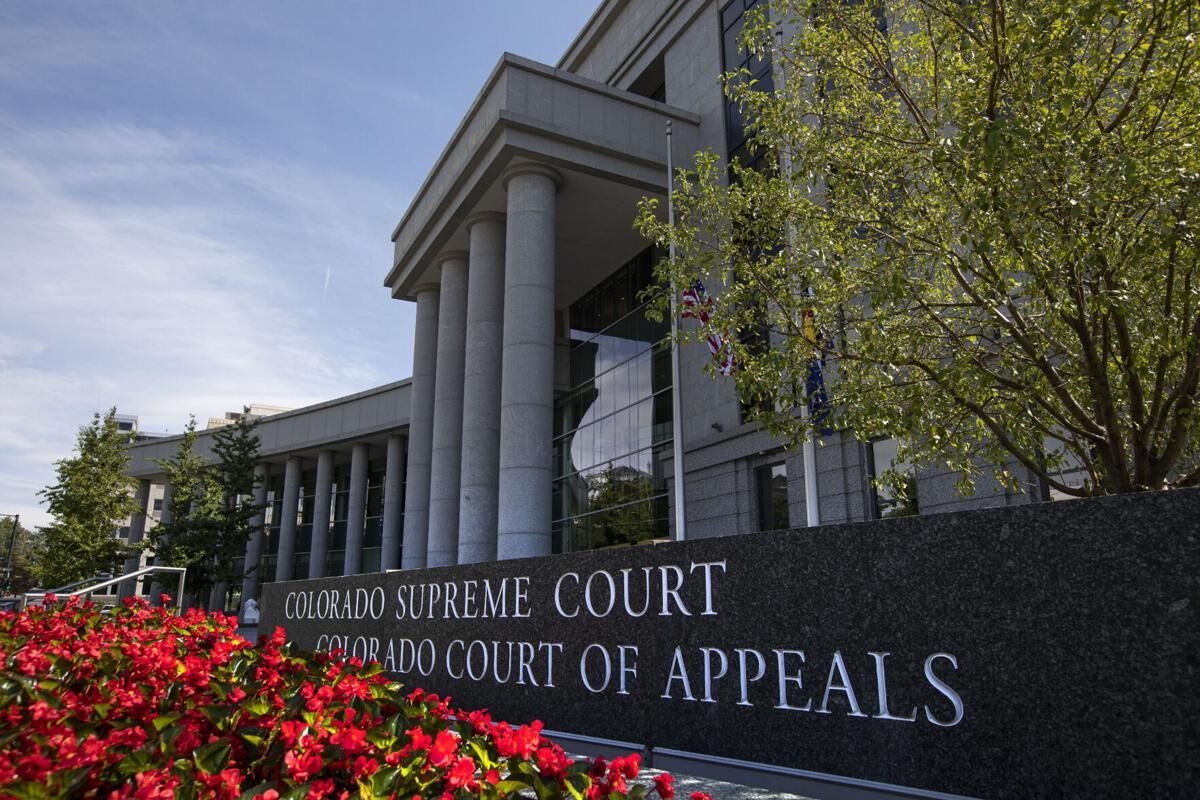
Colorado’s second-highest court reinstated a lawyer’s discrimination claim earlier this month against Colorado’s attorney regulation office, based upon its alleged failure to accommodate his disability during the bar exam.
Michael Ozborn, a University of Denver law graduate, sued the Office of Attorney Regulation Counsel in June 2024. He alleged that he had multiple diagnoses that qualified him as a person with a disability, and DU accommodated him accordingly during his schooling.
Ozborn had applied to OARC for disability accommodations on the July bar exam, seeking extra time, breaks, and a distraction-free environment. OARC denied the request. Ozborn appealed, but OARC once again denied the request for accommodations.
After he filed suit, OARC reversed itself and largely granted his request. By that time, Ozborn was “in a diminished emotional state” from the accommodations process and felt unprepared to sit for the July exam. He ultimately took the bar exam in February 2025 and passed it.
In late 2024, OARC moved to dismiss Ozborn’s lawsuit, which he had amended in September to include two more claims under the Colorado Anti-Discrimination Act: retaliation and future discrimination, in addition to his existing disability discrimination claim.
Denver District Court Judge J. Eric Elliff dismissed the lawsuit. Ozborn’s original complaint was “filed upon the denial of his accommodations,” Elliff wrote, but OARC ultimately gave Ozborn the accommodations he was seeking.
“Plaintiff’s frustration is understandable as he only received his accommodations after filing this action,” added Elliff, but Ozborn had not experienced an injury at the time he filed his amended complaint.
A three-judge Court of Appeals panel disagreed with Elliff’s analysis.
Case: Ozborn v. Office of Attorney Regulation Counsel
Decided: May 7, 2026
Jurisdiction: Denver
Ruling: 3-0
Judges: Jaclyn Casey Brown (author)
Rebecca R. Freyre
Timothy J. Schutz
“When Ozborn filed the original complaint, he alleged that he was entitled to accommodations and had been denied those accommodations in violation of CADA,” wrote Judge Jaclyn Casey Brown in the May 7 opinion. The existence of an amended complaint “does not mean we reassess standing as of the date of the later complaint.”
At the time of his original filing, Ozborn “plainly stated a claim for discrimination,” Brown continued. Moreover, Ozborn sought the penalties established by state law, as well as damages for the alleged violation, not simply a court order requiring OARC to accommodate him.
While it was no longer necessary to order OARC to approve any accommodations, “we fail to see, and OARC does not explain, why the other requested forms of relief cannot be afforded if Ozborn is able to prove the wrongful denial of his request for accommodations and his resulting damages,” Brown wrote.
She added that it was not clear that Ozborn’s refusal to accept OARC’s eventual accommodations doomed his claim, as Ozborn had alleged the process left him unprepared to take the July 2024 exam.
The panel declined to reinstate Ozborn’s remaining claims of retaliation and future discrimination. Brown noted that OARC accommodated Ozborn on the February 2025 exam without incident.
OARC had no comment on the decision.
“We believe the decision reinforces that public entities cannot avoid judicial review of discrimination by changing course after a lawsuit is filed,” said attorney Spencer Kontnik, who represents Ozborn. “This case has always been about ensuring that qualified individuals with disabilities receive fair and lawful consideration of accommodation requests, particularly in the context of high-stakes professional licensing examinations.”
The Colorado Supreme Court adopted new rules in March 2025 governing accommodations for the bar exam, despite criticism about the level of proof applicants would still need to provide for their disability. At the time, Kontnik told Colorado Politics that the rules were “a step in the right direction,” but they did not change attorney regulators’ ability to rely on their own experts to deny accommodations.
“This rule change won’t have much of an impact in these cases,” he said.
The case is Ozborn v. Colorado Supreme Court Office of Attorney Regulation Counsel.

Schoolchildren’s presence at child sex-related trial did not harm Arapahoe County defendant, appeals court says
Michael Karlik
michael.karlik@coloradopolitics.com
Updated 2 days ago
Colorado’s second-highest court decided on Thursday that the presence of a group of schoolchildren on the first day of a child sexual exploitation trial did not violate an Arapahoe County defendant’s constitutional right to a fair trial. Prosecutors charged Jerry...
Appeals court cites week-old Colorado law to reinstate child neglect case at child, father’s request
Michael Karlik
michael.karlik@coloradopolitics.com
Updated 1 day ago
Colorado’s second-highest court invoked a new state law for the first time on Thursday and reinstated a child neglect case that both the child and her father wished to reopen. House Bill 1227 took effect on Aug. 12, reversing a...
Colorado Supreme Court names William Hood as next chief justice
Michael Karlik
michael.karlik@coloradopolitics.com
Updated 3 days ago
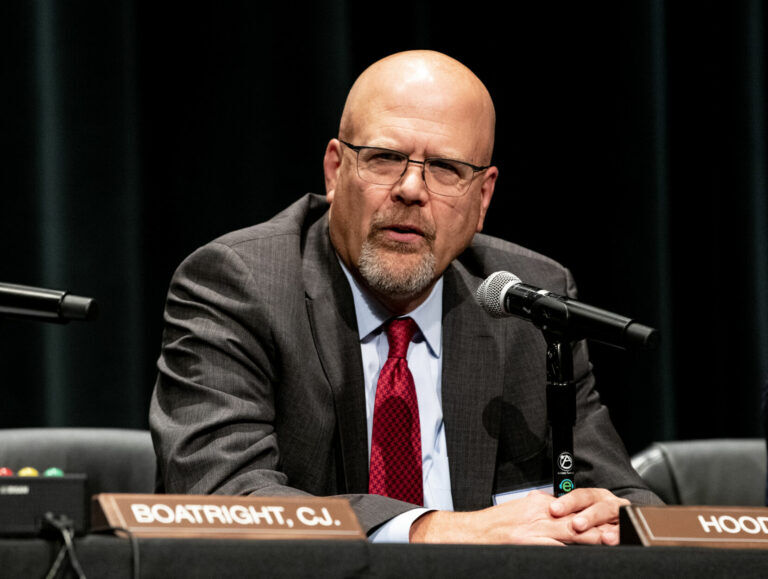
The Colorado Supreme Court has selected Justice William W. Hood III to be the next chief justice, the judicial branch announced on Friday. Hood will succeed Chief Justice Monica M. Márquez, who took over the role in July 2024. “I...
Family of slain Lakewood teacher releases statement as murder suspect makes first court appearance
Matt Kyle
matt.kyle@denvergazette.com
Updated 26 minutes ago
Patrick Theodore Barnett, the Lakewood man accused of killing his wife, a Jeffco Public Schools art teacher, made his first court appearance Friday morning as his wife’s family looked on. The status conference hearing was held before District Court Judge...
Appeals court upholds Park County trophy hunting conviction
Michael Karlik
michael.karlik@coloradopolitics.com
Updated 3 days ago
Colorado’s second-highest court clarified on Thursday that a defendant may stand convicted under the state’s trophy hunting laws if he abandons a bear carcass but returns later to remove the meat. Under Colorado law, it is a felony to detach...

Judge grants partial injunction to GEO in fight against state health inspection law
Kyla Pearce
kyla.pearce@gazette.com
Updated 4 days ago
A judge ruled Thursday that The GEO Group does not have to follow parts of a new state law requiring more frequent health and safety inspections at the U.S. Immigration and Customs Enforcement processing center in Aurora. Under the order...
Parker man faces 20 years to life for serial sexual assaults
Nicholas Fogleman
nicholas.fogleman@denvergazette.com
Updated 4 days ago
A 25-year-old Parker man who sexually assaulted three women in 2025 pleaded guilty Wednesday and will serve 20 years to life in prison. Javier Rodriguez-Andrade pleaded guilty to charges stemming from three sexual assaults involving women ages 19 to 24. ...
Divided appeals court upholds warrantless DNA collection in Colorado cold case, cautions of government overreach
Michael Karlik
michael.karlik@coloradopolitics.com
Updated 4 days ago
Colorado’s second-highest court upheld the warrantless collection of a suspect’s DNA from a discarded soda can as constitutional on Thursday, while warning about potential abuse of DNA privacy in the absence of further guardrails. By 2-1, a three-judge Court of...
Man charged in Northglenn homicide of wife
Matt Kyle
matt.kyle@denvergazette.com
Updated 4 days ago
A man has been formally charged with murder and burglary relating to a homicide last week in Northglenn. Alexei Munive-Rodriguez, 48, was arrested Sunday after he was at large following the homicide, which occurred Friday. Police were dispatched around 10:30...
10th Circuit grants immunity to officers for fatal Manitou Springs shooting
Michael Karlik
michael.karlik@coloradopolitics.com
Updated 3 days ago
The Denver-based federal appeals court ruled on Wednesday that responding officers from Manitou Springs and El Paso County cannot be held constitutionally liable for shooting and killing a man after a 20-minute standoff. Wilford Deweese allegedly pulled out a gun...
PREV
PREVIOUS
10th Circuit upholds child sex convictions of Fort Carson resident over evidence objections
The Denver-based federal appeals court upheld the convictions of a Fort Carson resident on Tuesday, concluding that the prosecution did not violate the rules governing the disclosure of evidence. Mitchel Crow stood trial on seven counts of sexual abuse of a minor. A jury found him guilty on three counts, and he received a sentence […]

Congressional panel probes Denver, Boulder over ICE cooperation limits
A congressional panel is reviewing Denver and Boulder’s policies, alleging that these cities, along with other “sanctuary” jurisdictions, are declining to cooperate with federal immigration authorities, the body announced Wednesday. Rep. Jim Jordan, R-Ohio, who chairs the U.S. House Judiciary Committee, issued letters to the district attorneys, sheriffs and police chiefs of Denver and Boulder, […]