

Colorado legislature overrules 2 state Supreme Court decisions about child neglect, visitation
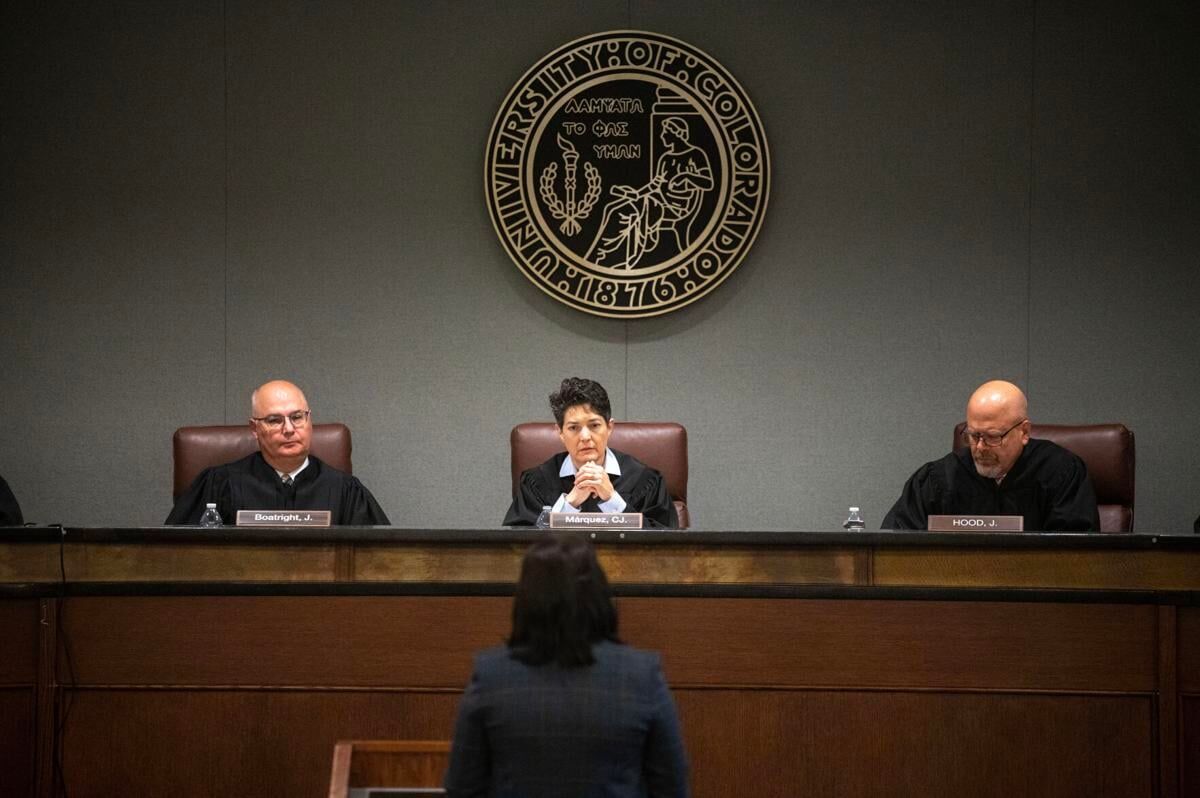
Colorado lawmakers have overruled a recent pair of state Supreme Court decisions, adopting the dissenting justices’ points of view in cases involving grandparent visitation rights and the ability of children to oppose a county’s decision to withdraw a neglect case.
The recently enacted legislation addressed two split decisions that the Supreme Court released within days of each other in June 2025.
In re the Parental Responsibilities of K.M.S. involved the murder-suicide deaths of two parents in Delta County. The maternal grandparents adopted the couple’s children, while the paternal grandparents sought visitation rights. The question for the Supreme Court was whether, in light of their own child’s death, the paternal grandparents were still a “grandparent,” which state law defines as someone “who is the parent of a child’s father or mother.”
By 4-3, the majority concluded they were not. The maternal grandparents were the children’s new, adoptive mother and father. The paternal grandparents, in turn, were not their parents and could not seek visitation rights.
“Therefore, we determine that the statute’s plain language imposes a temporal limitation, restricting ‘grandparent’ to one who is a grandparent at the time the petition for visitation is filed,” wrote Justice Brian D. Boatright.
Justice Maria E. Berkenkotter, writing in dissent, disagreed that a grandparent whose child is deceased stops being the grandparent to their grandchildren, even after the adoption is final.
“That is not to take anything away from the adoptive parent, who is also a parent. It’s simply that the relationship between the parent who died and the child who survived transcends time in a way our language reflects,” she argued. “We refer, for example, to our deceased family members even if they died decades ago as ‘my father’ and ‘my mother,’ not ‘my former father’ and ‘my former mother.’”
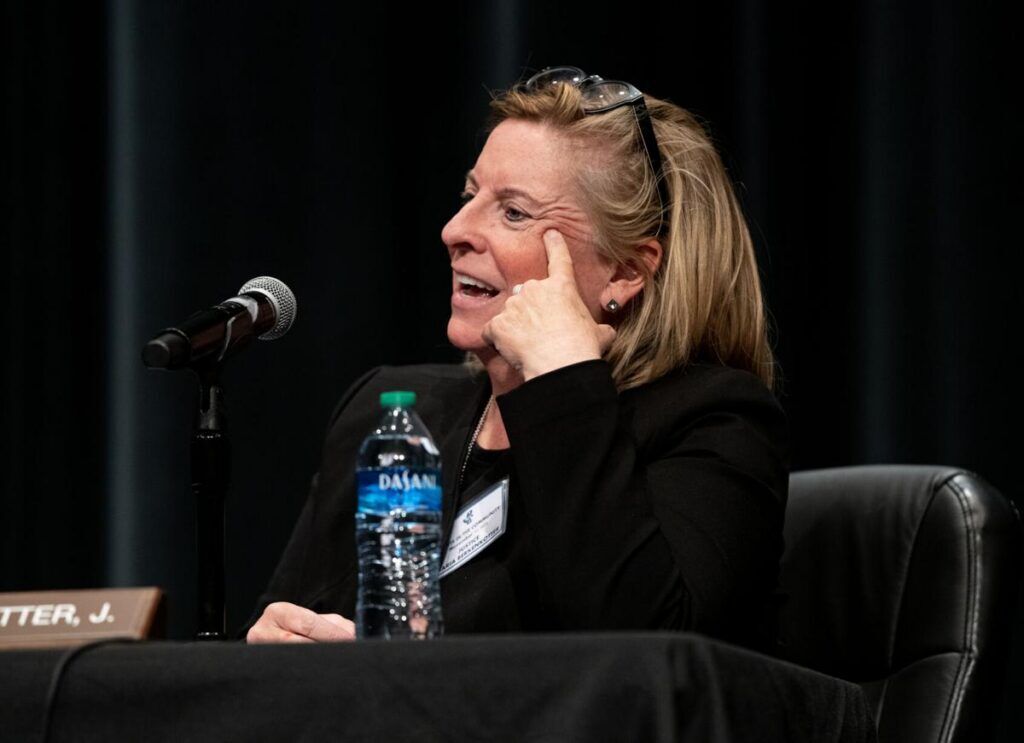
House Bill 1314 amended the definition of “grandparent” to encompass someone “who is or, if the child’s father or mother is deceased, was the parent of a child’s father or mother.”
“This bill fixes that error (by the Supreme Court) by amending the definition of grandparents in state law,” Sen. Tony Exum, D-Colorado Springs, told a Senate committee in April.
“This is a common-sense holding. I think anybody who’s a grandparent would want to still be considered a grandparent, and we would think that they’re still a grandparent if their child passes away,” said Melanie Jordan of the Office of Respondent Parents’ Counsel. “It was a very close decision, 4-3. I think the three-person minority in this opinion would likely support this change.”
The bill passed the House of Representatives by 46-18 in April, and the Senate by 29-6 on May 6. It awaits the governor’s signature.
The second decision, People in the Interest of R.M.P., addressed what should happen after a county moves to dismiss the child neglect allegations against a parent. A Denver judge, relying on decades-old precedent, held a hearing to determine if there was evidence supporting the original allegations of neglect, and ultimately allowed the case to proceed despite the county’s attempted dismissal.
By 6-1, the Supreme Court concluded that was incorrect. Chief Justice Monica M. Márquez wrote that the government alone is authorized to pursue child welfare cases, and permitting individual parties to litigate cases would result in a “weaponized family court system.”
“Allowing a child (or any non-state party) to override the State’s determination that a petition should be dismissed would be analogous to allowing the victim of a crime to prevent the district attorney from dismissing a criminal case,” she wrote. “Colorado law does not confer such a right.”
Justice Richard L. Gabriel dissented, arguing that the question was whether the government may “unilaterally” dismiss a child welfare case without a judge providing oversight about the correctness of that decision. He believed the answer was no, and felt the trial judge acted appropriately by deciding if there was evidence supporting the initial allegations.
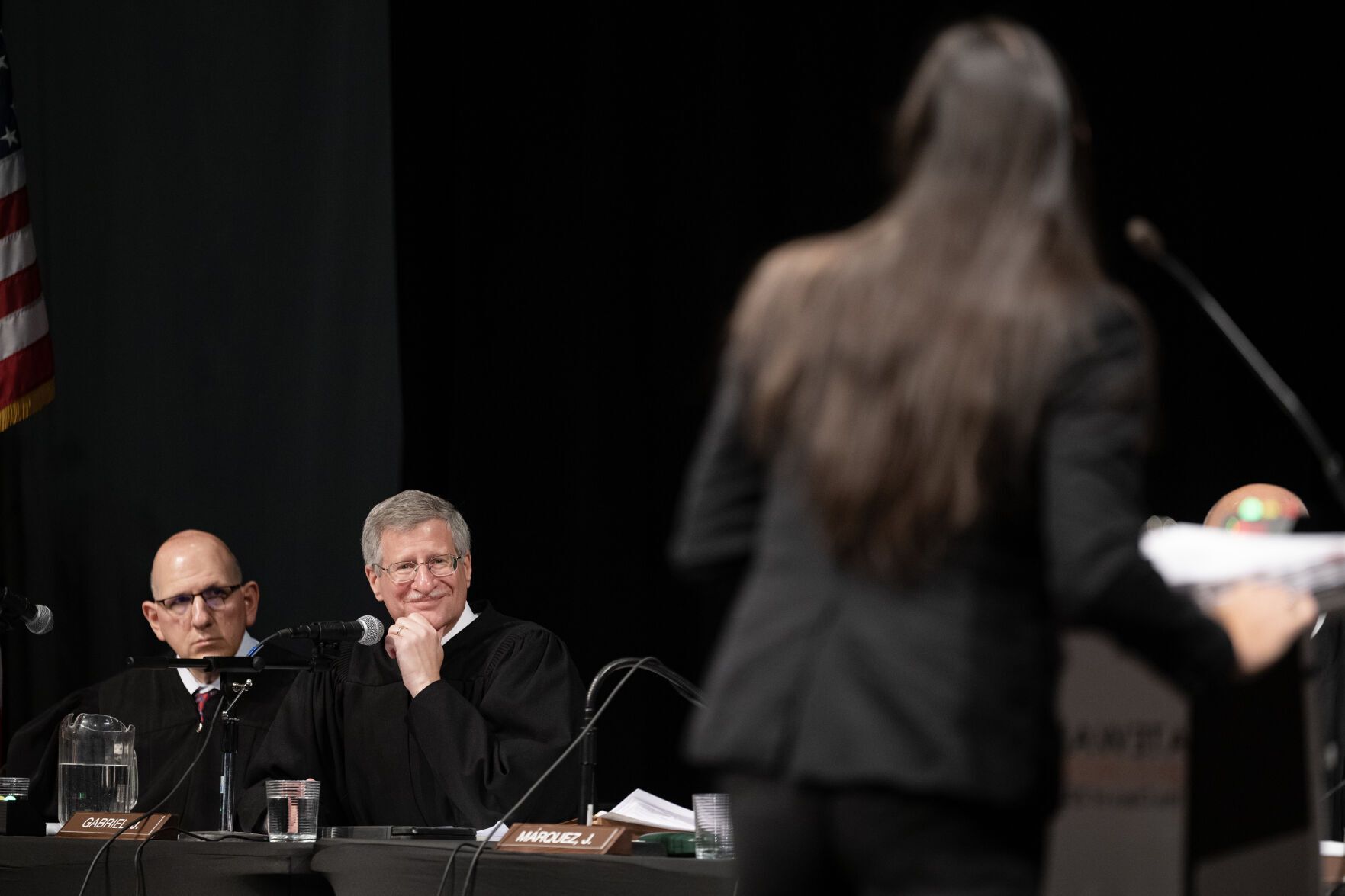
The sponsors of House Bill 1227 originally proposed that a child, through their counsel or “guardian ad litem,” could continue to pursue the case if they objected to the county’s dismissal. After amendments, however, the final bill restored the procedure Gabriel endorsed: Requiring judges to hold a hearing to determine if the county has “a reasonable basis” to dismiss the case following an objection from the child’s legal representative.
“We do believe the amendments that were ultimately made in the House have significantly improved this bill, and appreciate that the bill now allows an opportunity for all parties to be heard prior to dismissal, including both parents and children,” Chris Henderson, executive director of the Office of the Child’s Representative, told a Senate committee.
Richard Polk, the father of the child in the R.M.P. case, testified against the bill. He called it an attempt to “defy what the Colorado Supreme Court has already decided.”
Polk’s son “was not old enough to truly direct legal strategy. In my case, this attorney advocated for my child to access large sums of money, open bank accounts, pursue income, and his positions were not in any way aligned with his best interests,” Polk said.
“This is a simple fix. It is incredibly important. It protects the child and has nothing to do with parental rights,” Rep. Lindsay Gilchrist, D-Denver, told the House in advocating for passage.
The House approved the bill by 45-18 in April, and the Senate followed suit by 28-7 on May 6. It also awaits the governor’s signature.
If signed into law, one justice’s views are reflected in both of the changes — Gabriel, who dissented in each case.

Schoolchildren’s presence at child sex-related trial did not harm Arapahoe County defendant, appeals court says
Michael Karlik
michael.karlik@coloradopolitics.com
Updated 1 day ago
Colorado’s second-highest court decided on Thursday that the presence of a group of schoolchildren on the first day of a child sexual exploitation trial did not violate an Arapahoe County defendant’s constitutional right to a fair trial. Prosecutors charged Jerry...
Appeals court cites week-old Colorado law to reinstate child neglect case at child, father’s request
Michael Karlik
michael.karlik@coloradopolitics.com
Updated 1 day ago
Colorado’s second-highest court invoked a new state law for the first time on Thursday and reinstated a child neglect case that both the child and her father wished to reopen. House Bill 1227 took effect on Aug. 12, reversing a...
Colorado Supreme Court names William Hood as next chief justice
Michael Karlik
michael.karlik@coloradopolitics.com
Updated 2 days ago
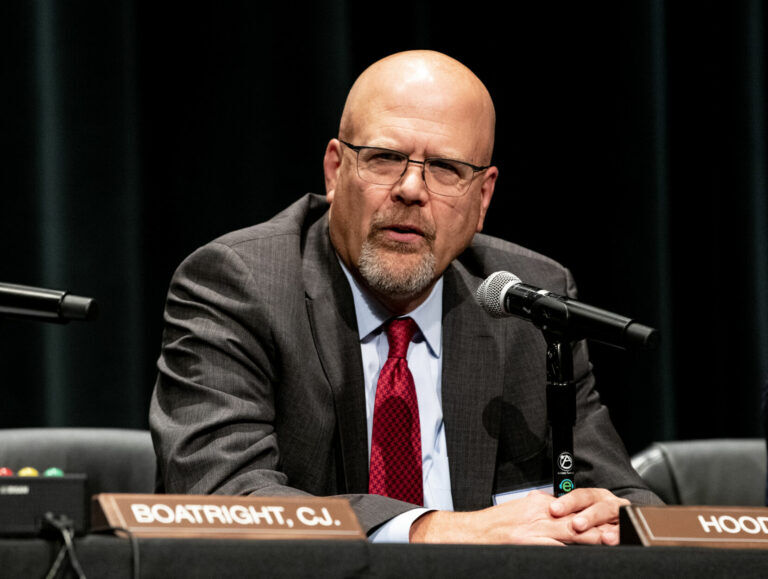
The Colorado Supreme Court has selected Justice William W. Hood III to be the next chief justice, the judicial branch announced on Friday. Hood will succeed Chief Justice Monica M. Márquez, who took over the role in July 2024. “I...

Appeals court upholds Park County trophy hunting conviction
Michael Karlik
michael.karlik@coloradopolitics.com
Updated 2 days ago
Colorado’s second-highest court clarified on Thursday that a defendant may stand convicted under the state’s trophy hunting laws if he abandons a bear carcass but returns later to remove the meat. Under Colorado law, it is a felony to detach...
Judge grants partial injunction to GEO in fight against state health inspection law
Kyla Pearce
kyla.pearce@gazette.com
Updated 3 days ago
A judge ruled Thursday that The GEO Group does not have to follow parts of a new state law requiring more frequent health and safety inspections at the U.S. Immigration and Customs Enforcement processing center in Aurora. Under the order...

Parker man faces 20 years to life for serial sexual assaults
Nicholas Fogleman
nicholas.fogleman@denvergazette.com
Updated 3 days ago
A 25-year-old Parker man who sexually assaulted three women in 2025 pleaded guilty Wednesday and will serve 20 years to life in prison. Javier Rodriguez-Andrade pleaded guilty to charges stemming from three sexual assaults involving women ages 19 to 24. ...
Divided appeals court upholds warrantless DNA collection in Colorado cold case, cautions of government overreach
Michael Karlik
michael.karlik@coloradopolitics.com
Updated 3 days ago
Colorado’s second-highest court upheld the warrantless collection of a suspect’s DNA from a discarded soda can as constitutional on Thursday, while warning about potential abuse of DNA privacy in the absence of further guardrails. By 2-1, a three-judge Court of...
Man charged in Northglenn homicide of wife
Matt Kyle
matt.kyle@denvergazette.com
Updated 3 days ago
A man has been formally charged with murder and burglary relating to a homicide last week in Northglenn. Alexei Munive-Rodriguez, 48, was arrested Sunday after he was at large following the homicide, which occurred Friday. Police were dispatched around 10:30...

10th Circuit grants immunity to officers for fatal Manitou Springs shooting
Michael Karlik
michael.karlik@coloradopolitics.com
Updated 3 days ago
The Denver-based federal appeals court ruled on Wednesday that responding officers from Manitou Springs and El Paso County cannot be held constitutionally liable for shooting and killing a man after a 20-minute standoff. Wilford Deweese allegedly pulled out a gun...
10th Circuit rejects invitation for full-court review of tax-avoidance case
Michael Karlik
michael.karlik@coloradopolitics.com
Updated 4 days ago
The Denver-based federal appeals court declined to reconsider the standards for holding entities liable for their tax-avoidance schemes, with a majority of judges voting against full-court review on Monday. In April, a three-judge panel of the U.S. Court of Appeals...
PREV
PREVIOUS

Aurora eyes raising taxes to pay for infrastructure projects
Aurora voters could decide this November whether to raise sales taxes for the first time since 1993 to help pay for infrastructure, transportation and public safety improvements. The city’s Infrastructure Task Force recommended that the City Council approve a bond program supported by sales and use tax increases to fund Build Up Aurora projects. On […]

Colorado Democrats formally rebuke Gov. Jared Polis for shortening Tina Peters' prison sentence
The Colorado Democratic Party on Wednesday formally censured Democratic Gov. Jared Polis for reducing the prison sentence of Tina Peters, the former Mesa County clerk convicted of election-related felonies, and barred the term-limited governor from speaking or appearing as an honored guest at party functions until further notice. Nearly 90% of the Democrats’ state central […]