

Federal judges’ responses vary to immigration authorities’ disregard of orders
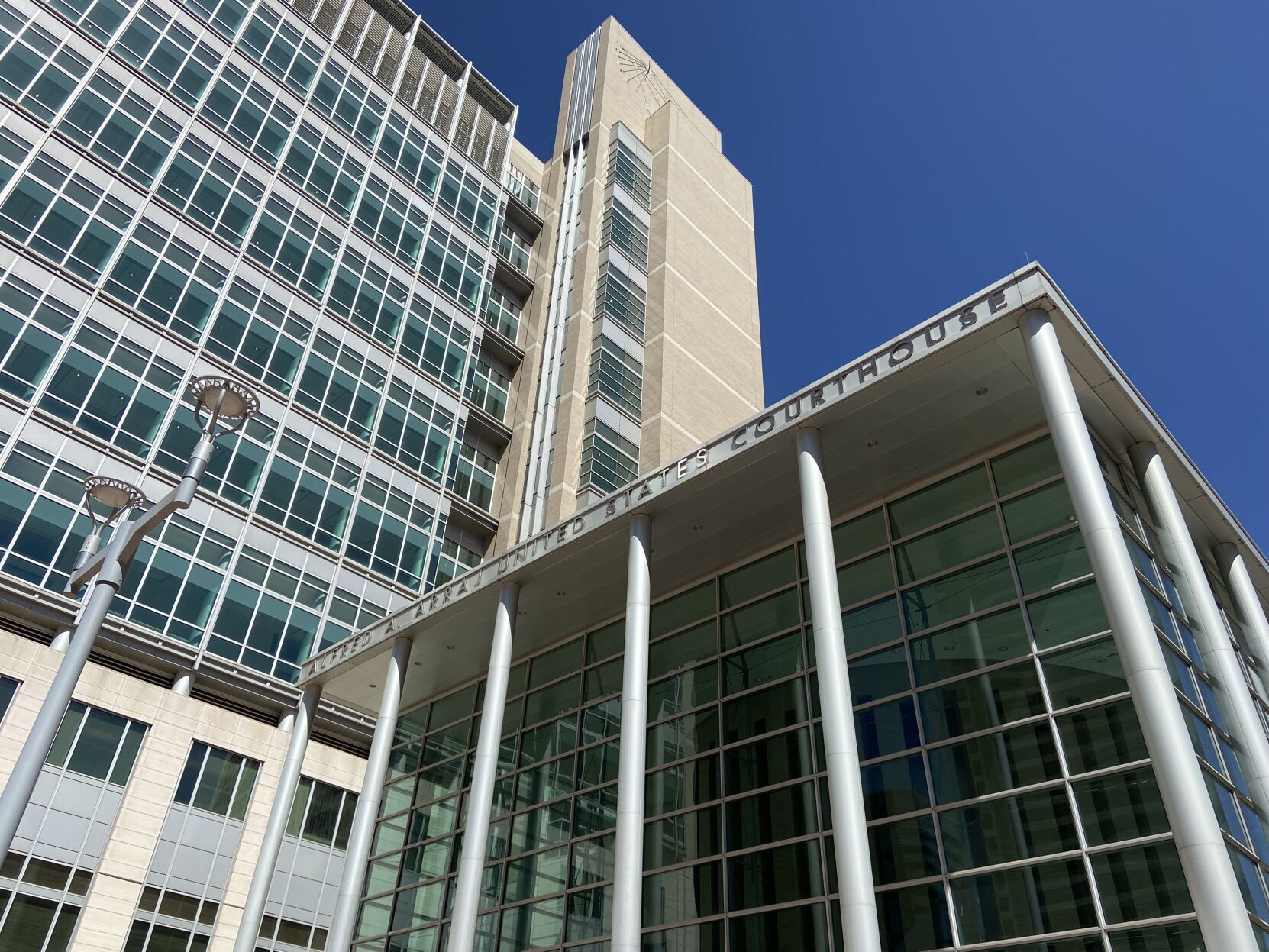
Colorado’s U.S. District Court judges have responded in recent days to the government’s violations of, or unclear compliance with, their orders in immigration detention cases, resulting in directives to immediately free the petitioners.
“I’m just struggling to understand how he was removed from the United States even though (the government acknowledges) he could not be removed,” Judge Nina Y. Wang said on a May 21 call in response to the government’s deportation of a petitioner to Nigeria in contravention of her order.
Colorado’s federal trial court is facing a flood of “habeas corpus” petitions from those in immigration detention. The most common allegation is that the government is improperly denying bond hearings to people who are eligible by law. Colorado’s judges, like the vast majority of their peers nationwide, have generally agreed with that argument.
Earlier this month, POLITICO reported that there were 10,400 decisions nationwide finding unlawful detention, compared with only 1,200 siding with the government. Senior Judge William J. Martínez recently warned that immigration bond hearings may be a “sham,” and Senior Judge R. Brooke Jackson has agreed that the evidence supports that conclusion.
This week, two separate federal judges addressed the problematic rulings of one immigration judge.
On May 19, Judge Charlotte N. Sweeney immediately released a habeas petitioner after she originally ordered last month that he receive a bond hearing to determine his suitability for release while his immigration proceedings unfolded. In her original order, Sweeney specified that the government would have to demonstrate by “clear and convincing evidence” that the man was either a flight risk or a danger to the community.

Days later, the petitioner’s attorney characterized the bond hearing before Immigration Judge Bobbie C. Masters as a “kangaroo court.” Sweeney agreed that Masters did not follow her order. Specifically, when Masters determined the man’s release would present an “unacceptable flight risk,” she relied on a birth certificate for the man’s daughter and his “little incentive to appear for future immigration proceedings,” based on Masters’ own speculation about his likelihood of remaining in the country.
“Problems plague this analysis and its outcome. First, this order neglects numerous evidentiary submissions provided by Petitioner,” wrote Sweeney, referring to the man’s mortgage, employment, and single-parent status, all suggesting he was not a flight risk.
“Compounding this error is the IJ’s speculation as to whether Petitioner could secure relief from removal,” she continued. “Virtually all of the record went unacknowledged in the IJ’s bond memorandum and finding that bond denial was warranted. Each of these errors, standing alone, presents a constitutional infirmity. The same is true when considering them together. As such, Respondents are wrong to argue the bond memorandum is in ‘accord with this Court’s order’ or due process.”
That same day, Chief Magistrate Judge Scott T. Varholak convened a hearing in his courtroom to respond to another allegation that Masters disobeyed his order in a different case. As did Sweeney, Varholak ordered an immigration judge to hold a bond hearing at which the government would have to prove by clear and convincing evidence that the petitioner should remain in custody.
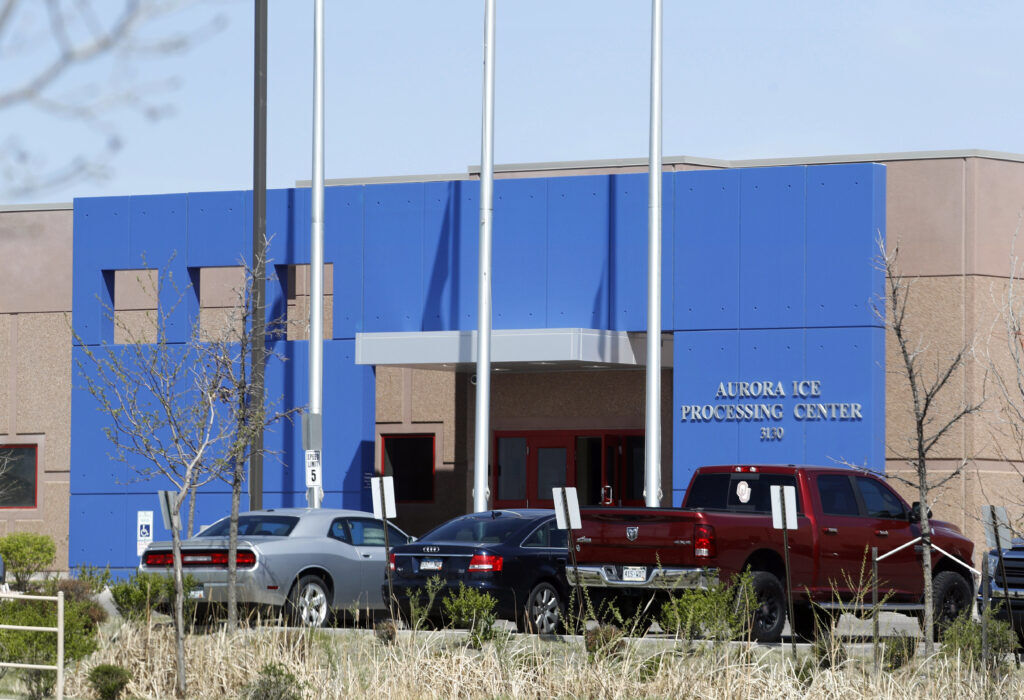
In the audio of the bond hearing, the U.S. Department of Homeland Security’s attorney acknowledged he had no argument that the petitioner was dangerous. He briefly suggested that an untimely asylum application was proof of flight risk.
The petitioner’s attorney countered with letters of support from friends and family, the existence of a “reliable and credible sponsor,” a different active immigration application, and his length of residence in the U.S.
She also referenced Varholak’s order and the government’s burden of proof.
“The court finds the respondent is an extreme flight risk and no bond amount will mitigate that,” said Masters immediately after the attorney stopped speaking. She then relied on arguments the government’s attorney did not raise.
Varholak was troubled by the ruling.
“Had the government come in and said nothing, we’d have the same result. And so, how is that clear and convincing evidence? The judge did not rely on a single thing the government either presented or argued,” Varholak said. “And I don’t require perfection out of the immigration court, but you’d think that somewhere, we’d see the judge use those words, ‘clear and convincing.’ And the judge doesn’t.”
Nonetheless, “I’m not sure it’s clear that my order either was or wasn’t” complied with, he continued.
Varholak ultimately ordered another bond hearing in front of a different immigration judge.
Finally, Wang encountered multiple problems with her cases.
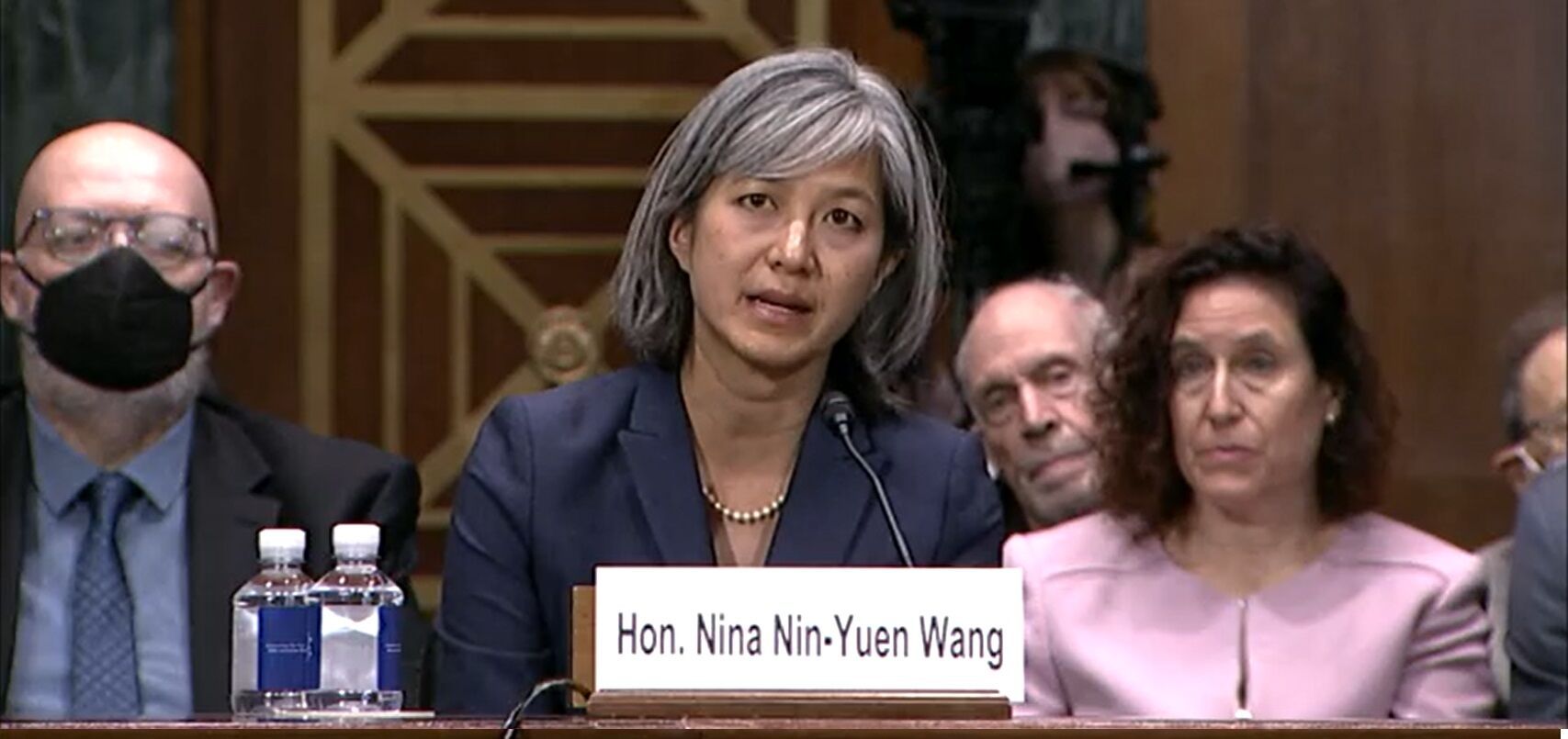
On May 15, she directly released a man after previously ordering a bond hearing at which an unnamed immigration judge ignored the government’s burden of proof. Wang reasoned that the man’s “due process rights were violated again at the deficient bond hearing. The Court sees no reason to order another bond hearing — and risk a third constitutional violation — and prolong the detention that this Court has already determined is unlawful.”
That same day, she decided to release another man whom the government unlawfully arrested without a warrant.
“To hold otherwise would simply turn a blind eye to the irreparable harms of unlawful conduct that reverberate well beyond the warrantless arrests,” she wrote.
In a third decision, also on May 15, Wang further found that U.S. Immigration and Customs Enforcement’s disregard of its own regulations amounted to a due process violation, triggering another man’s release.
Finally, during the call on Thursday about the man deported to Nigeria despite an order requiring him to remain in Colorado while his habeas case unfolded, ICE representative Sean Christner acknowledged that “a hold was not put on there (the man’s file). It just was missed.”
Wang characterized the government’s actions as an “inexcusable mistake” in “ignoring” her order.

Wrongfully deported man to be returned to U.S., Colorado federal judge orders
Michael Karlik
michael.karlik@coloradopolitics.com
Updated 1 day ago
Colorado’s chief federal judge took the extraordinary step of directing the government on Tuesday to do everything it can to return a man it deported in violation of his order. At the same time, Colorado’s chief magistrate judge has set...
Denver murder, assault convictions reversed due to faulty jury instructions
Michael Karlik
michael.karlik@coloradopolitics.com
Updated 2 hours ago
Colorado’s second-highest court reversed a defendant’s convictions for murder and assault last week after concluding a Denver judge incorrectly omitted key jury instructions that could have affected the verdict and sentencing. Stephen C. Swainson fatally stabbed Israel Casillas in downtown...
‘Understand people for who they are’: 2 federal judges talk about compassion in courtroom
Michael Karlik
michael.karlik@coloradopolitics.com
Updated 17 hours ago
Before taking the bench in 2022, U.S. District Court Judge Charlotte N. Sweeney was an employment discrimination attorney. While the cases could be emotionally charged, they were different from the criminal proceedings she is now handling. “It wasn’t necessarily affecting...

Denver murder conviction reversed for incomplete self-defense instruction
Michael Karlik
michael.karlik@coloradopolitics.com
Updated 3 days ago
Colorado’s second-highest court reversed a defendant’s murder conviction last week because a Denver judge gave an incomplete instruction to the jury about the man’s right to self-defense. Donald R. Gonzales and Gary McLaughlin met up in a Capitol Hill parking...
Colorado lawmaker, House leaders named in workplace-retaliation lawsuit
Marianne Goodland
marianne.goodland@coloradopolitics.com
Updated 3 days ago
A former legislative aide has filed a lawsuit alleging she was mistreated, illegally directed to perform campaign work and harmed by a House leadership structure she charged was fragmented, politicized and ineffective at protecting employees. The lawsuit, filed by Jennifer...
Federal judge hears arguments about Colorado’s 3-day gun purchase waiting period
Michael Karlik
michael.karlik@coloradopolitics.com
Updated 3 days ago
A federal judge heard arguments on Monday about the constitutionality of a 2023 Colorado law that generally imposes a three-day waiting period on firearm purchases after the initiation of a background check. The test that the U.S. Supreme Court created...
Colorado Supreme Court intervenes in Weld County prosecution dismissed due to Missy Woods misconduct
Michael Karlik
michael.karlik@coloradopolitics.com
Updated 3 days ago
The Colorado Supreme Court ordered a Weld County trial judge last week to respond to the district attorney’s claim that he improperly dismissed a criminal case because of “outrageous” conduct by the Colorado Bureau of Investigation. Daniel Lee Eatinger stood...
Schoolchildren’s presence at child sex-related trial did not harm Arapahoe County defendant, appeals court says
Michael Karlik
michael.karlik@coloradopolitics.com
Updated 6 days ago
Colorado’s second-highest court decided on Thursday that the presence of a group of schoolchildren on the first day of a child sexual exploitation trial did not violate an Arapahoe County defendant’s constitutional right to a fair trial. Prosecutors charged Jerry...
Appeals court cites week-old Colorado law to reinstate child neglect case at child, father’s request
Michael Karlik
michael.karlik@coloradopolitics.com
Updated 6 days ago
Colorado’s second-highest court invoked a new state law for the first time on Thursday and reinstated a child neglect case that both the child and her father wished to reopen. House Bill 1227 took effect on Aug. 12, reversing a...
Colorado Supreme Court names William Hood as next chief justice
Michael Karlik
michael.karlik@coloradopolitics.com
Updated 21 hours ago
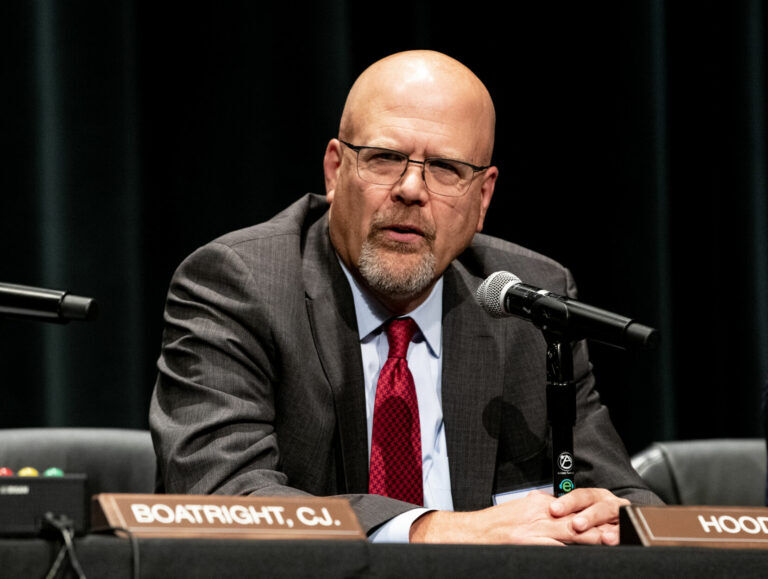
The Colorado Supreme Court has selected Justice William W. Hood III to be the next chief justice, the judicial branch announced on Friday. Hood will succeed Chief Justice Monica M. Márquez, who took over the role in July 2024. “I...
PREV
PREVIOUS
Colorado Supreme Court ditches debt collection case
The Colorado Supreme Court declined to rule on Friday in a case questioning the procedure a creditor may use to obtain records from entities related to a debtor, in which the court initially expressed its interest. Joel Farkas is liable for a $41.2 million debt, and the creditor, VP Fruition Holdings LLC, issued a half-dozen […]

Federal judge green-lights jury visit to Aurora detention center in forced-labor lawsuit
A federal judge granted a request on Thursday to have jurors visit the privately run U.S. Immigration and Customs Enforcement detention center in Aurora as part of an upcoming civil trial over alleged forced labor practices. U.S. District Court Senior Judge John L. Kane said he wanted the “best possible trial,” and initially postponed his […]