Federal judge green-lights jury visit to Aurora detention center in forced-labor lawsuit
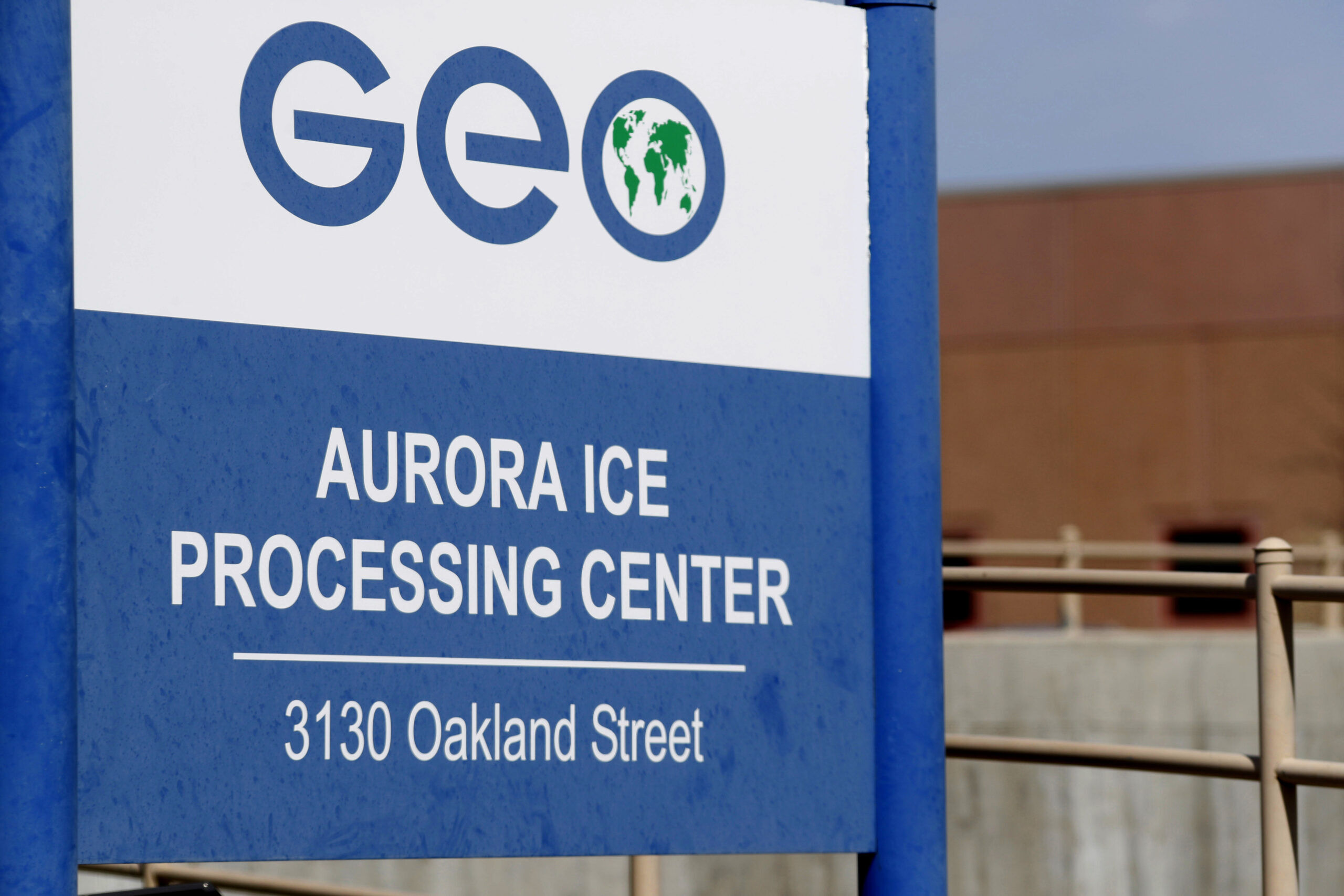
A federal judge granted a request on Thursday to have jurors visit the privately run U.S. Immigration and Customs Enforcement detention center in Aurora as part of an upcoming civil trial over alleged forced labor practices.
U.S. District Court Senior Judge John L. Kane said he wanted the “best possible trial,” and postponed his decision until he visited the facility with the lawyers last month. Although he granted the request, Kane imposed conditions on the jurors’ visit to ensure that they would not be exposed to extraneous information that could influence their decision.
The class-action lawsuit, which has been pending since 2014, alleges that the facility’s operator, GEO Group, Inc., violated the federal Trafficking Victims Protection Act by requiring detainees to clean not just their personal space, but the common areas of the detention center under threat of solitary confinement. Those actions allegedly ran afoul of the law’s prohibition on knowingly coercing labor out of another person through serious harm or threats of serious harm.
The plaintiff detainees also alleged GEO Group unjustly enriched itself by paying them only $1 per day through a “voluntary” labor program.
After Kane green-lit the case for trial in October 2022, GEO Group appealed his determination that it was not immune from being sued, arguing the company’s contract with ICE required it to implement the challenged practices. The case wound up in front of the U.S. Supreme Court, which ruled earlier this year that Kane’s determination was not subject to an immediate appeal before trial.
While GEO Group was continuing to appeal the case in 2024, the plaintiffs’ lawyers filed a motion with Kane to authorize jurors to see the detention center in person.
“It is one thing to hear a description of solitary confinement, or even expert testimony about its effects; it is another to actually experience the dark, cramped confines of a solitary confinement cell and imagine what it would be like to be confined inside it or to be threatened with such a sanction,” wrote the attorneys. “With respect to Plaintiffs’ unjust enrichment claims predicated on the $1/day Voluntary Work Program, a viewing of the areas where this work was performed (e.g. the laundry and kitchen facilities) will allow the jury to better appreciate the extent of the benefit GEO received from that labor.”
They added that ICE did not oppose the request, so long as jurors went through security and background checks.
GEO Group opposed the move, pointing to logistical concerns and the existence of other evidence depicting the facility.
“This case is about whether various tasks that Plaintiffs completed were the product of forced labor or otherwise constituted labor that unjustly enriched GEO. This case is not about the conditions of confinement,” wrote the company’s lawyers.
Two days before the May 21 hearing, ICE changed its position on the plaintiffs’ request. It cited the visit that Kane made on April 21.
“Based on that experience, ICE opposes a jury view because of the disruption bringing the jury through the GEO facility would cause,” wrote Assistant U.S. Attorney Timothy B. Jafek.
Kane observed at the hearing that ICE provided no elaboration about how his visit was disruptive.
“From my point of view, GEO was fully in charge of our visit to the facility — from how many people could join us to the specific locations that were seen, and the order in which we visited the locations and the time spent in each,” he said. “Moreover, although our visit occurred a month ago, ICE waited until 36 hours before oral argument on plaintiffs’ motion to explain to plaintiffs it was changing positions.”
Kane said ICE’s change came “too late in time and without sufficient justification.”
Andrew H. Turner, an attorney for the plaintiffs, told Kane that allowing jurors to see the detention center is crucial because of the conflicting testimony they would hear from witnesses. For example, one detainee said he spent time in solitary confinement counting pebbles in the cinder blocks and crying. The warden, meanwhile, said that people “like to go back there for the peace and quiet.”
“Ther jury should observe for itself and make its own determination,” Turner said.
Adrienne Scheffey, an attorney for GEO Group, argued that pictures, diagrams, and video would all be acceptable substitutes to visiting the facility. She cautioned that the operations would be affected by a group tour, as would the potential fairness of the trial. For instance, jurors could hear stray remarks that would be difficult to capture on the record, or encounter protests outside.
“Not everything is self-explanatory. We would have to have an agreed-upon script for whoever walks you through,” Scheffey said. “There would have to be a full narration and that could cause a significant amount of work for us to try and agree upon that.”
Kane acknowledged the various factors at play, but ultimately ruled that jurors should be able to see the GEO facility with precautions. Kane, a Jimmy Carter appointee, noted that he visited a state prison during a 1979 trial over conditions of confinement.
“Viewing the facility may ultimately save time and eliminate the need for cumulative evidence. Most importantly, it will better enable the jury to evaluate the credibility of the witness testimony,” he said.
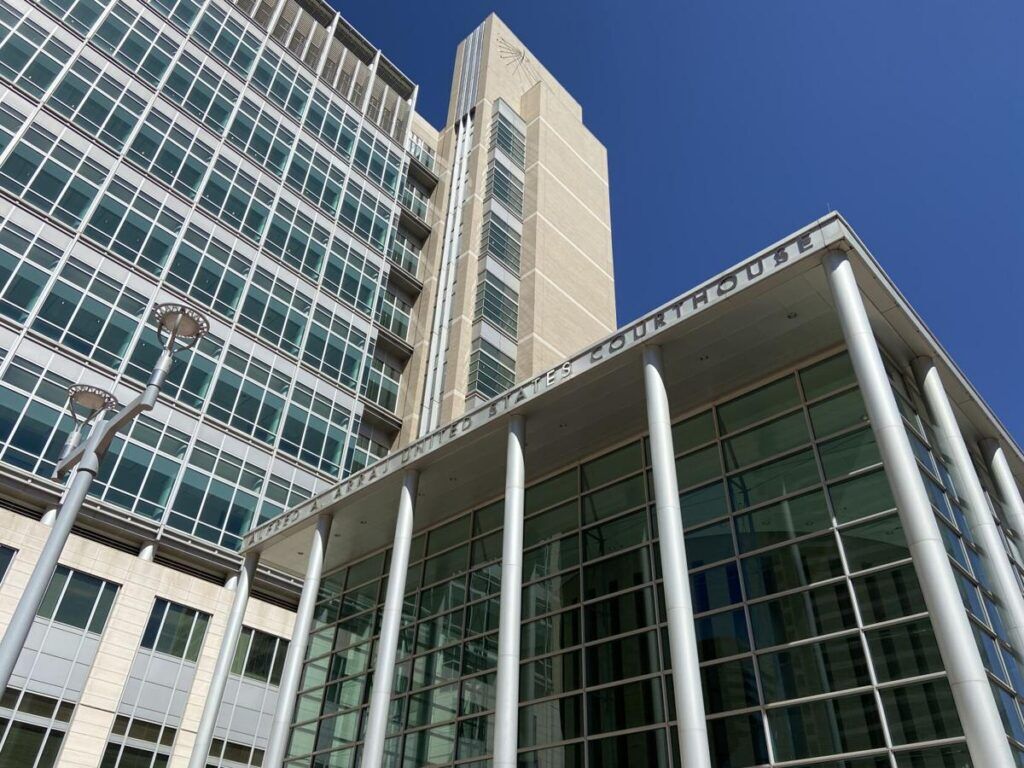
Kane said the jurors will visit unoccupied spaces, if possible, and staff will not communicate with them after the security screening. He also indicated he would keep the date and time of the visit hidden to minimize the possibility of protests. However, he added that protests routinely occur at the courthouse, which jurors also see.
Finally, he said the jurors will receive background checks — but by the U.S. Marshals Service and not by ICE.
He directed the parties to agree on rules, a list of locations to visit, a timeline, and relevant questions for jury selection.
The three-week trial is scheduled to begin on Nov. 2.
The case is Menocal et al. v. The GEO Group, Inc.

Appeals court reinstates murder case despite ex-DA Linda Stanley’s conduct
Michael Karlik
michael.karlik@coloradopolitics.com
Updated 2 hours ago
Colorado’s second-highest court reinstated the murder and child abuse charges on Thursday against a Fremont County defendant, reasoning that the former district attorney’s misconduct did not warrant dismissal of the charges. A judge previously dismissed the criminal case against defendant...
Aggravated robbery charge reinstated after El Paso County judge misunderstood requirements
Michael Karlik
michael.karlik@coloradopolitics.com
Updated 3 hours ago
Colorado’s second-highest court reinstated an El Paso County defendant’s aggravated robbery charge on Thursday after concluding that a trial judge misunderstood the requirement for a person to be “then and there so armed.” Allegedly, Mark Alan Ambrose walked out of...
Colorado legislature overrules 2 state Supreme Court decisions about child neglect, visitation
Michael Karlik
michael.karlik@coloradopolitics.com
Updated 10 hours ago
Colorado lawmakers have overruled a recent pair of state Supreme Court decisions, adopting the dissenting justices’ points of view in cases involving grandparent visitation rights and the ability of children to oppose a county’s decision to withdraw a neglect case....
Colorado federal judge speaks about judicial innovation, leadership
Michael Karlik
michael.karlik@coloradopolitics.com
Updated 21 hours ago
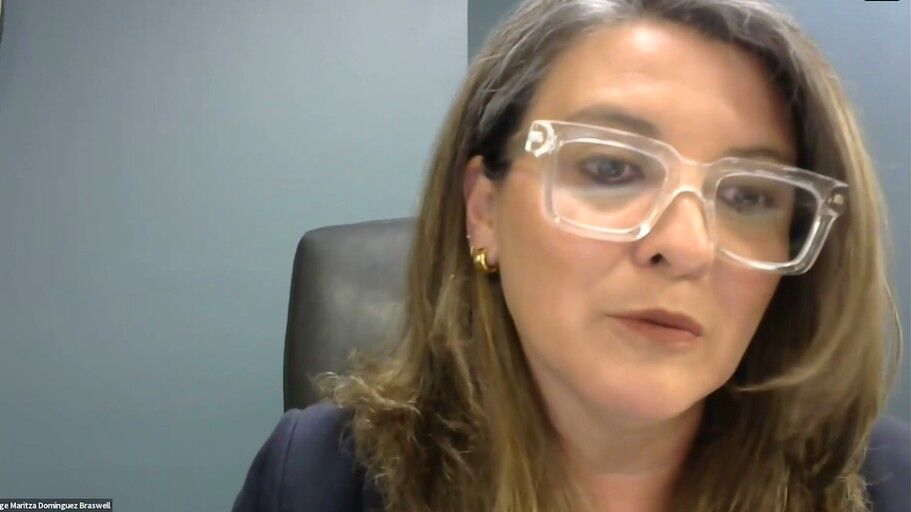
U.S. Magistrate Judge Maritza Dominguez Braswell spoke on a virtual panel of judges last week about innovation and leadership in the judiciary, touching on her experiences before and during her time on the bench. “When I was at the (attorney...
Appeals court revives disability discrimination claim against Colorado attorney regulators
Michael Karlik
michael.karlik@coloradopolitics.com
Updated 1 day ago
Colorado’s second-highest court reinstated a lawyer’s discrimination claim earlier this month against Colorado’s attorney regulation office, based upon its alleged failure to accommodate his disability during the bar exam. Michael Ozborn, a University of Denver law graduate, sued the Office...
10th Circuit upholds child sex convictions of Fort Carson resident over evidence objections
Michael Karlik
michael.karlik@coloradopolitics.com
Updated 1 day ago
The Denver-based federal appeals court upheld the convictions of a Fort Carson resident on Tuesday, concluding that the prosecution did not violate the rules governing the disclosure of evidence. Mitchel Crow stood trial on seven counts of sexual abuse of...
Appeals court overturns convictions after judge improperly accepted facts as undisputed
Michael Karlik
michael.karlik@coloradopolitics.com
Updated 2 days ago
Colorado’s second-highest court reversed a defendant’s convictions and 12-year prison sentence earlier this month after an El Paso County judge did not require prosecutors to prove key facts that were subject to dispute after all. Prosecutors charged Noel Lavertt King...
Jeffco murder conviction overturned due to improper evidence
Michael Karlik
michael.karlik@coloradopolitics.com
Updated 3 days ago
Colorado’s second-highest court reversed a defendant’s convictions for murder and aggravated robbery earlier this month, finding that a Jefferson County judge allowed evidence that improperly suggested the man had “bad character” for possessing guns generally. Under the rules for criminal...

Daniel Domenico nominated for 10th Circuit, state Supreme Court hears arguments | COURT CRAWL
Michael Karlik
michael.karlik@coloradopolitics.com
Updated 3 days ago
Welcome to Court Crawl, Colorado Politics’ roundup of news from the third branch of government. Colorado’s chief federal trial judge is the choice for an upcoming vacancy on the Denver-based federal appeals court, plus the state Supreme Court heard oral...
Man who asked mom to lie to parole officer can stand convicted, Colorado Supreme Court decides
Michael Karlik
michael.karlik@coloradopolitics.com
Updated 1 day ago
Attempting to influence a public servant is a crime that can include a defendant’s use of a third party to convey false information, the Colorado Supreme Court decided on Monday. There was no dispute that Michael Thomas Hupke asked his...