

Colorado Supreme Court to evaluate test for alimony after remarriage
The Colorado Supreme Court announced this week that it will evaluate whether divorcing spouses must explicitly agree that alimony payments from one partner to the other will continue after one person remarries, or whether a “clear implication” will suffice.
The purpose of alimony, known in Colorado as “spousal maintenance,” is to assist spouses who cannot be financially self-sufficient immediately after their divorce — for example, if one partner earns significantly more than the other. Colorado law allows judges to order spousal maintenance, which can terminate under certain circumstances like death or remarriage.
The law cautions that the termination of payments upon the receiving partner’s remarriage can be overridden if the spouses have “otherwise agreed in writing.” However, the state’s Court of Appeals has shifted the standard repeatedly for what an agreement in writing requires.
Christopher Clay Clark and Jessica Kay Clark divorced in 2022. Representing themselves in court, they signed an agreement indicating Christopher Clark would pay Jessica Clark $108,000 in spousal maintenance over six years. They checked a box indicating the terms “are contractual in nature and shall not be modified in the future.” They also handwrote a stipulation that the spousal maintenance “may not be modified or terminated.”
A year later, Jessica Clark remarried. Christopher Clark allegedly stopped making payments as a result. Jessica Clark sought to hold him in contempt, which he countered with a motion to terminate the monthly payments.
Mesa County District Court Judge Craig P. Henderson described a back-and-forth in the case law over how specific a separation agreement must be to override the legal provision that spousal maintenance terminates upon remarriage. In 1971, the Court of Appeals believed an “express statement” was necessary for payments to continue. In 1981, a different appellate panel concluded an explicit reference was not necessary. In 2001, a panel determined the “presence of a nonmodification clause” was enough to keep payments going even after remarriage.
Then, with the 2021 decision of In the Marriage of Cerrone, an appellate panel concluded a separation agreement needs to have “express” language allowing payments to continue. Otherwise, state law will automatically terminate the paying spouse’s obligation.
Henderson believed the Clarks’ agreement satisfied that standard, and ordered Christopher Clark’s payments to continue.
A three-judge Court of Appeals panel agreed with that outcome, but retreated to the earlier standard that required agreements to provide for post-remarriage alimony “expressly or by clear implication.”
Judge Grant T. Sullivan wrote separately to ask the Supreme Court to set a standard once and for all, especially for the three-quarters of domestic relations litigants who are unrepresented.
“As this case illustrates,” he wrote, the appellate court’s “divergent interpretations will inevitably lead to inconsistent outcomes in similar cases, contrary to the General Assembly’s stated intent.”

The Supreme Court will decide how specific an agreement must be to override the default termination upon remarriage.
The case is In the Marriage of Clark.
Who is a ‘landowner?’
The Supreme Court also narrowly turned down another Court of Appeals decision about the scope of the term “landowner.”
A contractor was repairing the roof of a Colorado Springs Walgreens store when the manager reported a smell inside. The roofing crew responded by turning off two HVAC units. Later, the manager again reported smelling exhaust in the store. The roofing crew shut down the remaining HVAC units and stopped using their generator.
Five Walgreens employees sought medical attention for carbon monoxide poisoning due to elevated gas levels in the store. Three of them sued the roofing contractor and subcontractor for negligence.
A trial judge sided with the defendants, finding the plaintiffs’ claims were governed instead by the Premises Liability Act, which applies to landowners. A landowner is someone who is “legally responsible for the condition of real property or for the activities conducted or circumstances existing on real property.” The plaintiffs disputed that conclusion, arguing the roofing company had no responsibility for the interior of the store, where the injuries happened.
A Court of Appeals panel agreed that the roofing company was a “landowner” by virtue of the contracts to repair the roof.
There is “nothing in the statute that imposes a physical proximity requirement,” wrote Sullivan.
The plaintiffs turned to the Supreme Court, arguing the decision conflicted with the court’s own precedent. Further, any premises liability claim was very similar to a negligence claim, and they should have been allowed to amend their complaint accordingly.
The Colorado Trial Lawyers Association also urged the Supreme Court to hear the case, noting the Court of Appeals’ logic meant that contractors working on the top floor of a skyscraper would be a “landowner” for the whole building, or contractors repairing a barn on a 100-acre property would be a “landowner” for the entire parcel.
The court rejected the appeal on April 6. Justices William W. Hood III and Carlos A. Samour Jr. would have taken the case, falling one vote short of the threshold to hear the appeal.
The case is Macomber et al. v. Nations Roof LLC et al.
The missed deadline
Finally, the Supreme Court intervened in an ongoing Denver civil case.
Javier De Leon Cabral sued the Chan Law Firm, which he had previously hired for an immigration case. He alleged his lawyers missed a filing deadline and he received a deportation order as a result. If not for their negligence, De Leon Cabral alleged that he would have received a work authorization and would not have suffered damages.
In March, the defendants’ lawyers moved to block De Leon Cabral’s claim for lost wages, plus his experts’ testimony. His expert disclosures were due by Feb. 9, but De Leon Cabral’s lawyers blew past that deadline. They acknowledged they “miscalendared” the date, and had even cited the wrong date in court with no correction from the judge or the defense attorneys.
During an April 16 hearing, District Court Judge Erick F.H. Englert acknowledged the defense was not responsible for overseeing the plaintiff’s compliance.
But “when a party brings this kind of motion to my attention, my question is, well, you know, did you lie in wait, waiting for the other side to kind of screw up? Did you reach out and say, ‘Hey, by the way, it seems like you missed this deadline?'” she said. “It doesn’t put you in good light in this courtroom when you’re then asking for such dramatic relief.”
Nonetheless, Englert granted the request to block De Leon Cabral’s pursuit of lost wages and his experts’ testimony. She believed she had “very limited options in terms of remedies,” and declined to postpone the trial.
De Leon Cabral appealed to the Supreme Court, arguing Englert should have considered less-drastic alternatives before changing the scope of his case in a major way.
On May 20, the Supreme Court ordered Englert and the defendants to respond.
The case is De Leon Cabral v. Chan Law Firm PC et al.

Retired Colorado appeals judge speaks about civic advocacy, SCOTUS
Michael Karlik
michael.karlik@coloradopolitics.com
Updated 5 hours ago
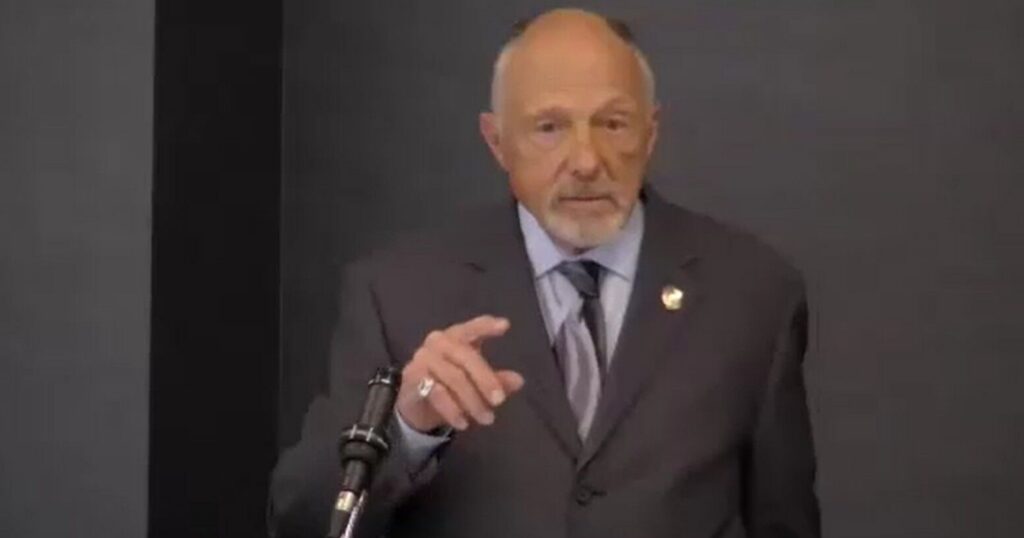
Retired state Court of Appeals Judge Russell Carparelli offered mild critiques of the U.S. Supreme Court earlier this month as he spoke about the rule of law, and urged lawyers to “get in the game” by advocating in the political...

Federal judge green-lights jury visit to Aurora detention center in forced-labor lawsuit
Michael Karlik
michael.karlik@coloradopolitics.com
Updated 17 hours ago
A federal judge granted a request on Thursday to have jurors visit the privately run U.S. Immigration and Customs Enforcement detention center in Aurora as part of an upcoming civil trial over alleged forced labor practices. U.S. District Court Senior...
Appeals court reinstates murder case despite ex-DA Linda Stanley’s conduct
Michael Karlik
michael.karlik@coloradopolitics.com
Updated 22 hours ago
Colorado’s second-highest court reinstated the murder and child abuse charges on Thursday against a Fremont County defendant, reasoning that the former district attorney’s misconduct did not warrant dismissal of the charges. A judge previously dismissed the criminal case against defendant...
Aggravated robbery charge reinstated after El Paso County judge misunderstood requirements
Michael Karlik
michael.karlik@coloradopolitics.com
Updated 23 hours ago
Colorado’s second-highest court reinstated an El Paso County defendant’s aggravated robbery charge on Thursday after concluding that a trial judge misunderstood the requirement for a person to be “then and there so armed.” Allegedly, Mark Alan Ambrose walked out of...
Colorado legislature overrules 2 state Supreme Court decisions about child neglect, visitation
Michael Karlik
michael.karlik@coloradopolitics.com
Updated 1 day ago
Colorado lawmakers have overruled a recent pair of state Supreme Court decisions, adopting the dissenting justices’ points of view in cases involving grandparent visitation rights and the ability of children to oppose a county’s decision to withdraw a neglect case....

Colorado federal judge speaks about judicial innovation, leadership
Michael Karlik
michael.karlik@coloradopolitics.com
Updated 2 days ago
U.S. Magistrate Judge Maritza Dominguez Braswell spoke on a virtual panel of judges last week about innovation and leadership in the judiciary, touching on her experiences before and during her time on the bench. “When I was at the (attorney...
Appeals court revives disability discrimination claim against Colorado attorney regulators
Michael Karlik
michael.karlik@coloradopolitics.com
Updated 2 days ago
Colorado’s second-highest court reinstated a lawyer’s discrimination claim earlier this month against Colorado’s attorney regulation office, based upon its alleged failure to accommodate his disability during the bar exam. Michael Ozborn, a University of Denver law graduate, sued the Office...

10th Circuit upholds child sex convictions of Fort Carson resident over evidence objections
Michael Karlik
michael.karlik@coloradopolitics.com
Updated 2 days ago
The Denver-based federal appeals court upheld the convictions of a Fort Carson resident on Tuesday, concluding that the prosecution did not violate the rules governing the disclosure of evidence. Mitchel Crow stood trial on seven counts of sexual abuse of...
Appeals court overturns convictions after judge improperly accepted facts as undisputed
Michael Karlik
michael.karlik@coloradopolitics.com
Updated 3 days ago
Colorado’s second-highest court reversed a defendant’s convictions and 12-year prison sentence earlier this month after an El Paso County judge did not require prosecutors to prove key facts that were subject to dispute after all. Prosecutors charged Noel Lavertt King...
Jeffco murder conviction overturned due to improper evidence
Michael Karlik
michael.karlik@coloradopolitics.com
Updated 4 days ago
Colorado’s second-highest court reversed a defendant’s convictions for murder and aggravated robbery earlier this month, finding that a Jefferson County judge allowed evidence that improperly suggested the man had “bad character” for possessing guns generally. Under the rules for criminal...
PREV
PREVIOUS

Tulsi Gabbard resigns as director of national intelligence, citing her husband's health
WASHINGTON (AP) — Tulsi Gabbard resigned as President Donald Trump’s director of national intelligence on Friday, saying she needed to step away as her husband battles cancer. She is the fourth Cabinet official to depart during Trump’s second term. In her resignation letter, which she posted on social media, Gabbard said she told Trump of […]

Colorado governor signs bipartisan law to close gaps in competency-to-stand-trial system
Gov. Jared Polis has signed a bipartisan bill that closes gaps in Colorado’s criminal justice system for people whose charges are dismissed after they are found incompetent to stand trial. “This is a major step forward to keep Coloradans and our communities safe,” said Polis. “It is not right for someone who is a serious […]