

Colorado Supreme Court ditches debt collection case
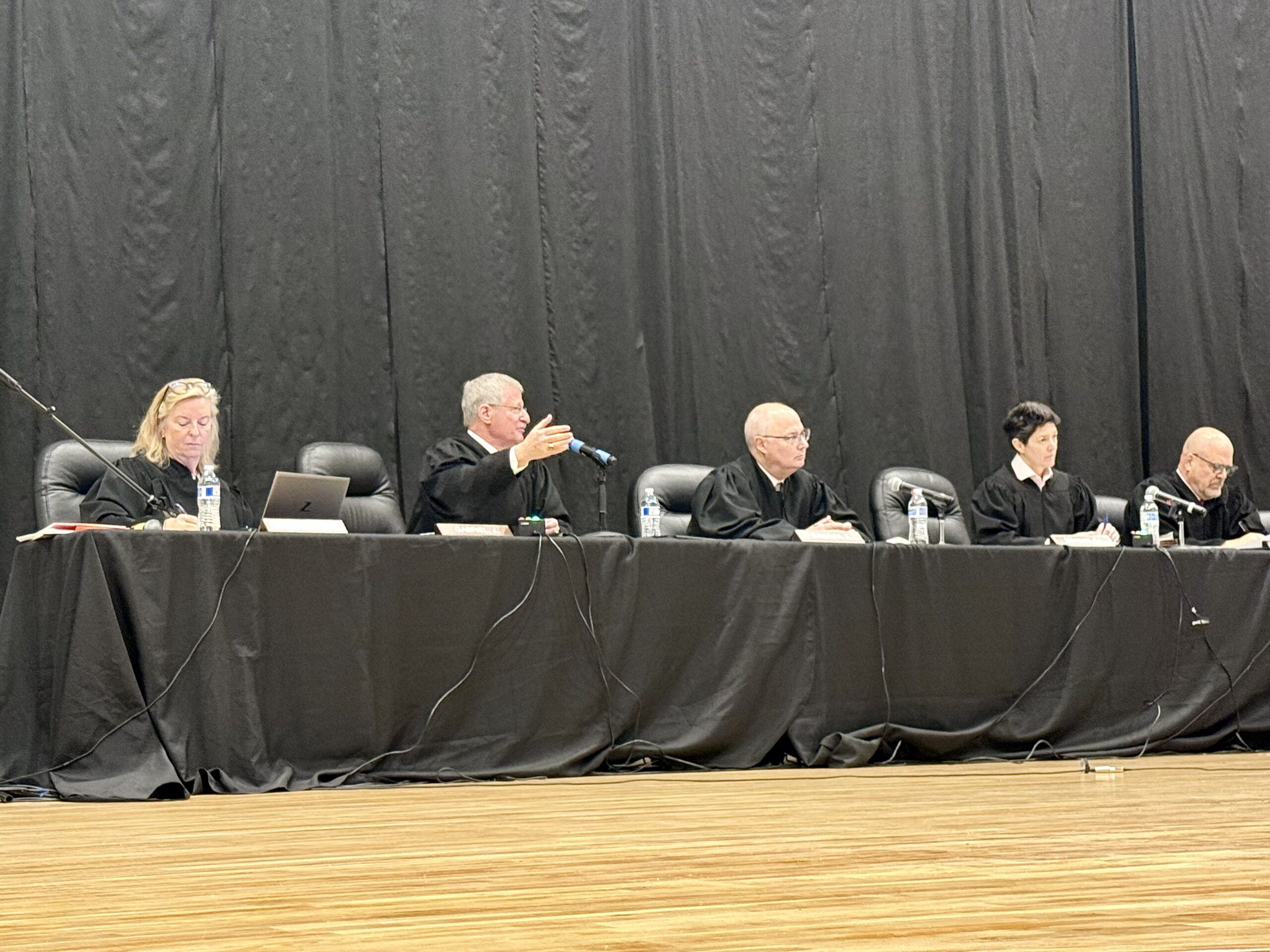
The Colorado Supreme Court declined to rule on Friday in a case questioning the procedure a creditor may use to obtain records from entities related to a debtor, in which the court initially expressed its interest.
Joel Farkas is liable for a $41.2 million debt, and the creditor, VP Fruition Holdings LLC, issued a half-dozen subpoenas to organizations financially affiliated with Farkas.
Farkas moved to void those requests for information. He argued that, under the civil rules, VP Fruition Holdings first had to provide “proof to the satisfaction of the court, that any person has property of, or is indebted to” Farkas.
“Not only does VP Fruition indiscriminately shotgun subpoenas to Farkas’ banks, phone company, and landlord; it demands that these nonparties produce thousands of documents that contain private and proprietary information about the financials and business operations of an untold number of other nonparties that VP Fruition has no conceivable legal right to obtain,” his attorneys wrote.
Denver District Court Judge Ericka F.H. Englert agreed with Farkas, finding the subpoenas did not comply with the rule, which was the “exclusive procedure” for obtaining information from third parties about someone who has been found liable for a debt.
VP Fruition Holdings turned to the Supreme Court, arguing it was illogical to require proof of the financial relationship between a debtor and associated entities at the outset.
“Without access to documents uniquely within the possession of the nonparties Petitioner wishes to subpoena, Petitioner cannot uncover evidence of Debtor’s fraudulent transfers or use of alter egos or otherwise trace Debtor’s assets, and is therefore substantially hindered in its ability to enforce its judgment,” wrote attorney Patrick Gillette.
On March 12, the Supreme Court ordered Farkas to respond to VP Fruition Holdings’ petition. Farkas replied that VP Fruition Holdings never attempted to satisfy the requirements of the rule.
“If the documents Petitioner seeks are as integral to its recovery efforts as it claims, Petitioner should have no trouble explaining to the district court why it believes the nonparties at issue have possession of Respondent’s assets or are otherwise indebted to him,” wrote attorney Sarah L. Hartley.
She added that, with interest on the debt accruing even after the judgment, VP Fruition Holdings did not need the Supreme Court’s intervention. It would receive compensation after going through the regular appellate process, which weighs against immediate Supreme Court review.
In an unsigned May 22 order, the Supreme Court dismissed VP Fruition Holdings’ petition without elaboration and returned the case to Englert.
The case is VP Fruition Holdings LLC v. Farkas.

Wrongfully deported man to be returned to U.S., Colorado federal judge orders
Michael Karlik
michael.karlik@coloradopolitics.com
Updated 1 day ago
Colorado’s chief federal judge took the extraordinary step of directing the government on Tuesday to do everything it can to return a man it deported in violation of his order. At the same time, Colorado’s chief magistrate judge has set...
Denver murder, assault convictions reversed due to faulty jury instructions
Michael Karlik
michael.karlik@coloradopolitics.com
Updated 58 minutes ago
Colorado’s second-highest court reversed a defendant’s convictions for murder and assault last week after concluding a Denver judge incorrectly omitted key jury instructions that could have affected the verdict and sentencing. Stephen C. Swainson fatally stabbed Israel Casillas in downtown...
‘Understand people for who they are’: 2 federal judges talk about compassion in courtroom
Michael Karlik
michael.karlik@coloradopolitics.com
Updated 16 hours ago
Before taking the bench in 2022, U.S. District Court Judge Charlotte N. Sweeney was an employment discrimination attorney. While the cases could be emotionally charged, they were different from the criminal proceedings she is now handling. “It wasn’t necessarily affecting...

Denver murder conviction reversed for incomplete self-defense instruction
Michael Karlik
michael.karlik@coloradopolitics.com
Updated 3 days ago
Colorado’s second-highest court reversed a defendant’s murder conviction last week because a Denver judge gave an incomplete instruction to the jury about the man’s right to self-defense. Donald R. Gonzales and Gary McLaughlin met up in a Capitol Hill parking...
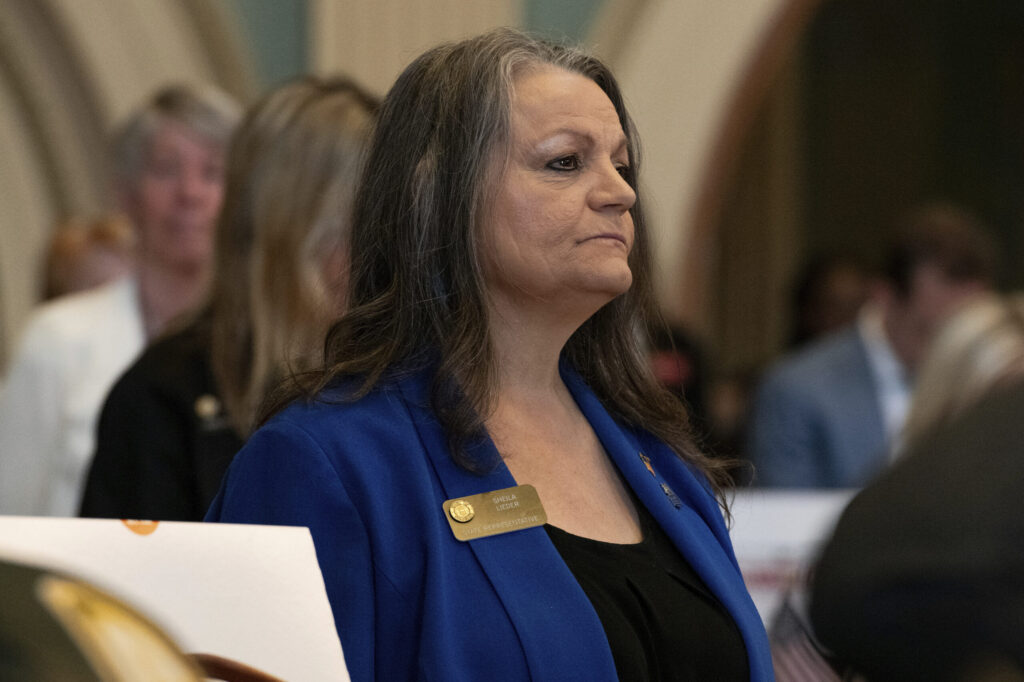
Colorado lawmaker, House leaders named in workplace-retaliation lawsuit
Marianne Goodland
marianne.goodland@coloradopolitics.com
Updated 3 days ago
A former legislative aide has filed a lawsuit alleging she was mistreated, illegally directed to perform campaign work and harmed by a House leadership structure she charged was fragmented, politicized and ineffective at protecting employees. The lawsuit, filed by Jennifer...
Federal judge hears arguments about Colorado’s 3-day gun purchase waiting period
Michael Karlik
michael.karlik@coloradopolitics.com
Updated 3 days ago
A federal judge heard arguments on Monday about the constitutionality of a 2023 Colorado law that generally imposes a three-day waiting period on firearm purchases after the initiation of a background check. The test that the U.S. Supreme Court created...
Colorado Supreme Court intervenes in Weld County prosecution dismissed due to Missy Woods misconduct
Michael Karlik
michael.karlik@coloradopolitics.com
Updated 3 days ago
The Colorado Supreme Court ordered a Weld County trial judge last week to respond to the district attorney’s claim that he improperly dismissed a criminal case because of “outrageous” conduct by the Colorado Bureau of Investigation. Daniel Lee Eatinger stood...
Schoolchildren’s presence at child sex-related trial did not harm Arapahoe County defendant, appeals court says
Michael Karlik
michael.karlik@coloradopolitics.com
Updated 6 days ago
Colorado’s second-highest court decided on Thursday that the presence of a group of schoolchildren on the first day of a child sexual exploitation trial did not violate an Arapahoe County defendant’s constitutional right to a fair trial. Prosecutors charged Jerry...
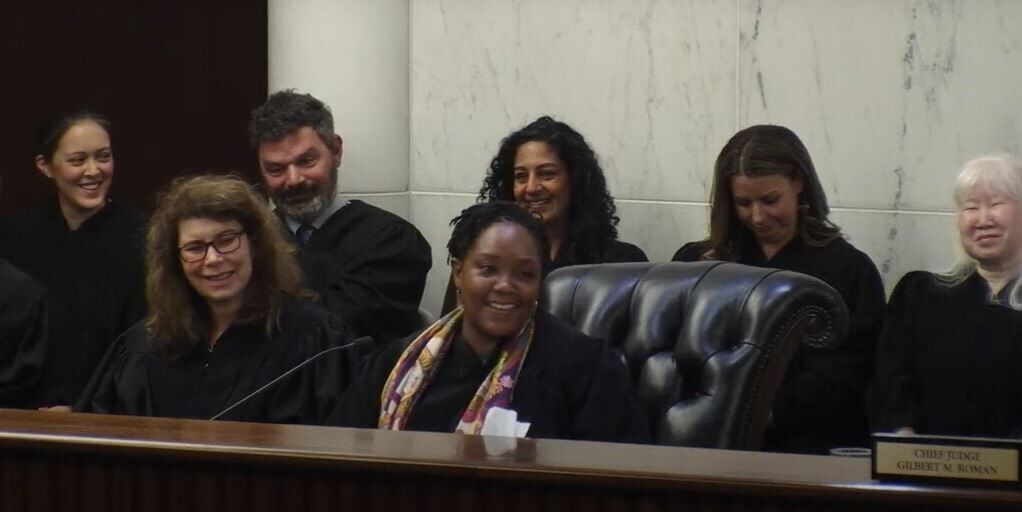
Appeals court cites week-old Colorado law to reinstate child neglect case at child, father’s request
Michael Karlik
michael.karlik@coloradopolitics.com
Updated 5 days ago
Colorado’s second-highest court invoked a new state law for the first time on Thursday and reinstated a child neglect case that both the child and her father wished to reopen. House Bill 1227 took effect on Aug. 12, reversing a...
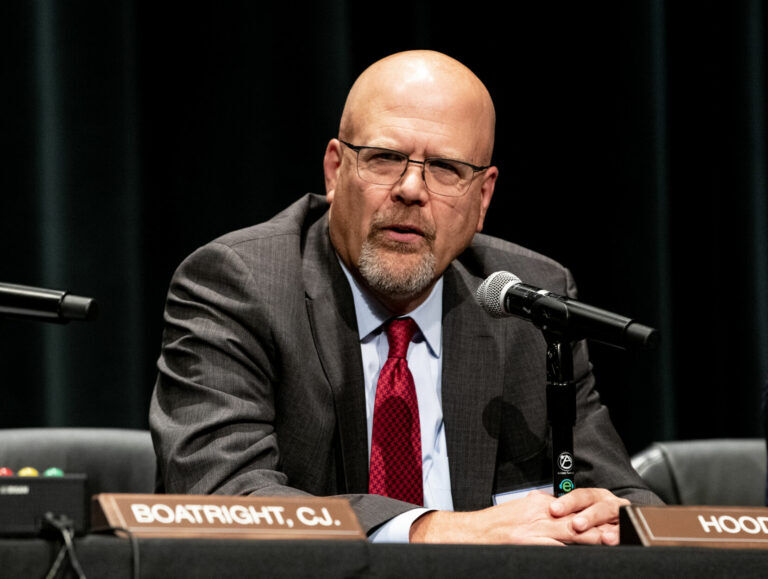
Colorado Supreme Court names William Hood as next chief justice
Michael Karlik
michael.karlik@coloradopolitics.com
Updated 20 hours ago
The Colorado Supreme Court has selected Justice William W. Hood III to be the next chief justice, the judicial branch announced on Friday. Hood will succeed Chief Justice Monica M. Márquez, who took over the role in July 2024. “I...
PREV
PREVIOUS

Trump administration releases $40 million for Colorado water project
The Trump administration on Friday released $40 million, clearing the way for a water district and its partners to finish funding the purchase of some of the state’s most senior Colorado River water rights, Gov. Jared Polis announced. Federal funding for the Shoshone water rights owned by Public Service Company, a division of Xcel Energy, […]

Federal judges' responses vary to immigration authorities' disregard of orders
Colorado’s U.S. District Court judges have responded in recent days to the government’s violations of, or unclear compliance with, their orders in immigration detention cases, resulting in directives to immediately free the petitioners. “I’m just struggling to understand how he was removed from the United States even though (the government acknowledges) he could not be […]