

Teen defendant properly transferred from youth detention to jail, Colorado justices conclude
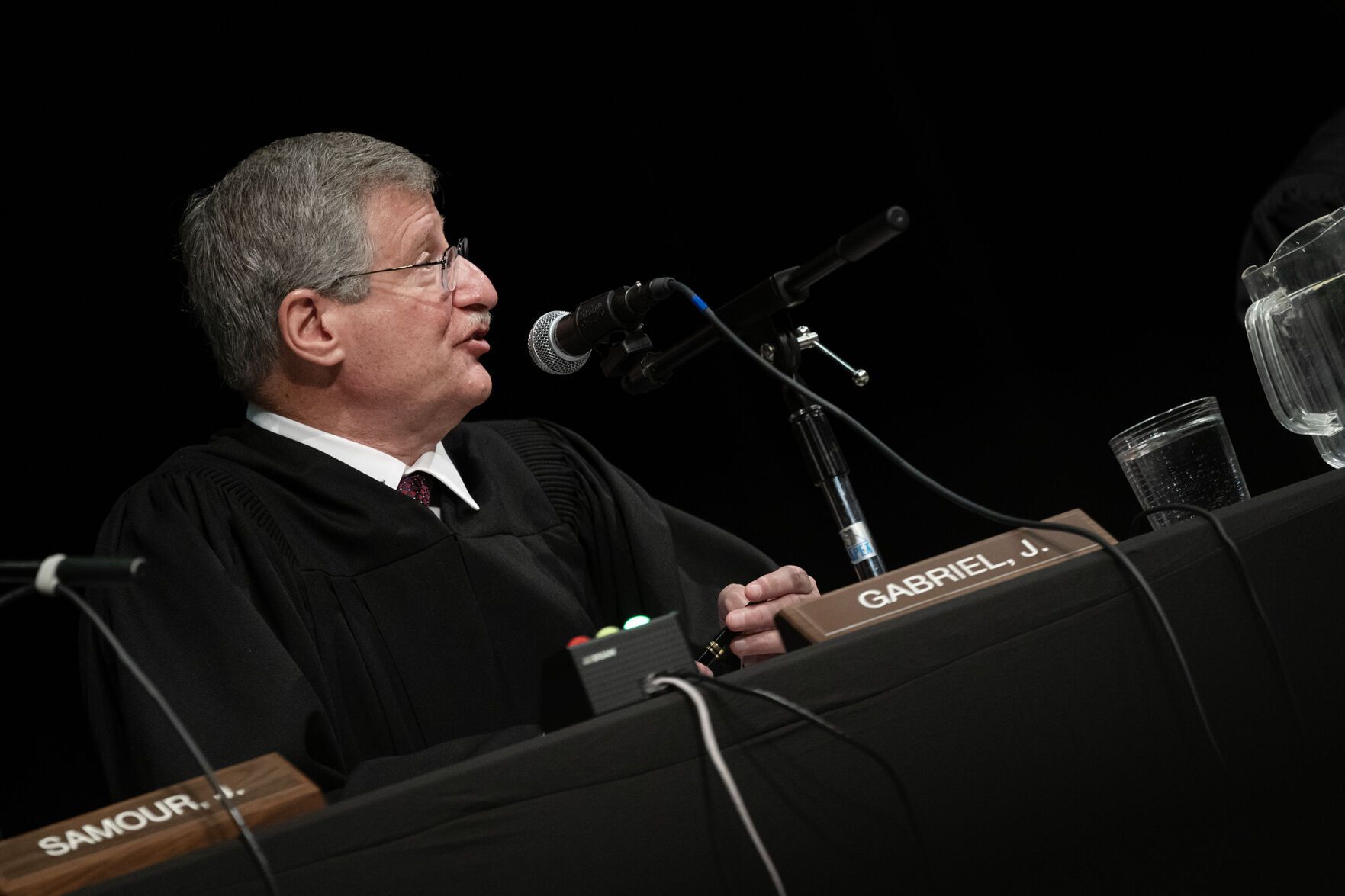
Colorado law required the transfer of a teenage murder suspect from youth detention to the county jail when he turned 18, the state Supreme Court ruled last week.
Prosecutors have accused Issac James Lawrence of killing a younger boy and attempting to kill his mother in Durango. Lawrence is being tried as an adult but was initially held in the Division of Youth Services while awaiting trial.
When he turned 18, authorities transferred Lawrence to jail. The defense objected, arguing that trial judges have the discretion to keep defendants like Lawrence in pretrial youth custody.
At a November hearing, Chief Judge Kim S. Shropshire acknowledged she previously declined to transfer a juvenile defendant, who was then serving a sentence, to the county jail once he turned 18. However, she believed she was obligated to allow Lawrence’s transfer, absent “a different opinion from a higher court.”
The public defender’s office turned to the Supreme Court, arguing there is no automatic transfer for a juvenile defendant who is “developmentally close to childhood and is already embedded in (Division of Youth Services) programming.” The office also pointed to Shropshire’s differential treatment of Lawrence, who was in custody pretrial, and the other juvenile defendant, who was serving a sentence.
“The youth with a more recent (criminal) history that resulted in a commitment sentence remains in DYS; a youth with no such history is pulled out and put in an adult jail, with every risk and harm that comes therewith. Timing becomes destiny,” wrote Lawrence’s attorneys.
They asked that, if the Supreme Court finds that state law requires a transfer for defendants like Lawrence, the justices declare the law unconstitutional in Lawrence’s circumstances.
In a June 1 opinion, the Supreme Court rejected the defense’s arguments.
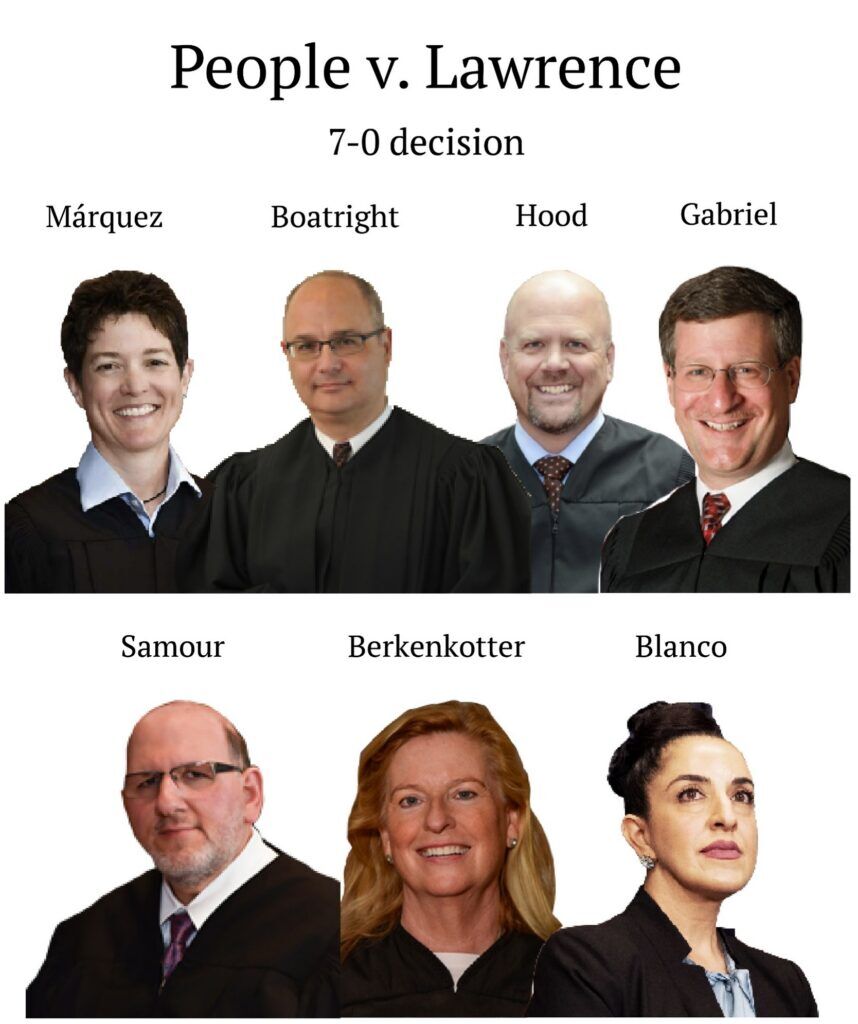
“Lawrence was properly transferred to the county jail when he turned eighteen years old. Any arguments as to the perceived harshness of the result of applying the statute’s express language are better made to our General Assembly,” wrote Justice Richard L. Gabriel.
He elaborated that child defendants prosecuted in either juvenile or district court “must be detained in the county jail” when they are 18 or older, as the law requires.
“Accordingly, as the district court found, the statute afforded it no discretion, and Lawrence was required to be detained in the county jail,” wrote Gabriel.
Turning to the allegation that Shropshire violated Lawrence’s right to equal protection under the law by allowing a different teenage defendant to remain in youth custody, the Supreme Court found that Lawrence was not in an identical position.
The other defendant was serving a youth sentence when prosecutors charged him as an adult for murder. When he turned 18, the prosecution sought to transfer him to the county jail. Shropshire declined, partly relying on a different legal provision authorizing juvenile defendants to serve sentences in youth detention until age 21.
Without deciding whether Shropshire was correct, Gabriel noted that those circumstances were different from Lawrence’s. Therefore, it was not a violation of Lawrence’s equal protection rights to treat the two defendants differently.
The case is People v. Lawrence.

Federal judge green-lights civil trial against ex-Fort Collins DUI officer
Michael Karlik
michael.karlik@coloradopolitics.com
Updated 1 day ago
A federal judge ruled on Thursday that Fort Collins’ former “DUI officer” will face a civil trial for allegedly investigating a motorist for impaired driving without any reasonable suspicion to do so. In recent years, several people arrested by Officer...

Colorado Supreme Court suspends Mesa County judge pending misconduct investigation
Michael Karlik
michael.karlik@coloradopolitics.com
Updated 7 hours ago
The Colorado Supreme Court suspended Mesa County Court Judge Michael J. Grattan on Thursday amid a misconduct investigation. The court’s Sept. 10 order gave Grattan 21 days to explain why his paid suspension should not continue through the end of...
Colorado Supreme Court changes course, dismisses case about special district bonds
Michael Karlik
michael.karlik@coloradopolitics.com
Updated 7 hours ago
The Colorado Supreme Court declined on Friday to decide a dispute between a large-scale Commerce City development and the various districts financing it, after initially showing interest in the ongoing case. Colorado has roughly 2,800 special districts, which are local...
10th Circuit tosses GEO Group’s pretrial appeal in human trafficking lawsuit
Michael Karlik
michael.karlik@coloradopolitics.com
Updated 2 days ago
The Denver-based federal appeals court dismissed an attempt by The GEO Group on Wednesday to appeal a trial judge’s non-existent decision two months before the company is scheduled to face a civil trial over alleged trafficking violations at the Aurora...
Denver sues Trump to block armed ICE agents from polling sites
Deborah Grigsby
deborah.smith@denvergazette.com
Updated 2 days ago
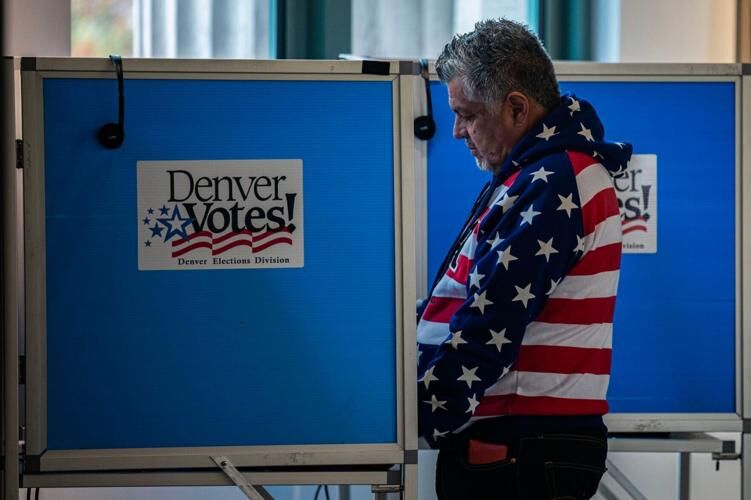
The city of Denver, along with several groups, sued the Trump administration Thursday, seeking to block U.S. Immigration and Customs Enforcement officers who are armed from polling sites during the upcoming midterm elections. In fact, there are no official orders...

Federal judge takes no action against ICE in Colorado after hearing about mistakes, not ‘blatant violations’
Michael Karlik
michael.karlik@coloradopolitics.com
Updated 5 hours ago
A federal judge declined to take action against U.S. Immigration and Customs Enforcement on Thursday after hearing that a pattern of alleged lawbreaking amounted to mistakes and a misunderstanding of the government’s position in court. For nearly a year, Colorado’s...

Colorado doctors, dentists challenge state law on gender‑transition services in new federal lawsuit
Marissa Ventrelli
marissa.ventrelli@coloradopolitics.com
Updated 2 hours ago
A group of Christian doctors and dentists has filed a federal lawsuit challenging a Colorado law they say requires them to provide gender‑transition services that conflict with their religious and ethical beliefs. The lawsuit, filed by the Christian Medical and...
Federal judge directs plaintiff to revise complaint alleging Denver officers’ constitutional violations
Michael Karlik
michael.karlik@coloradopolitics.com
Updated 5 hours ago
A federal judge directed a plaintiff to revise his allegations on Wednesday to more precisely state what two Denver officers and the city itself allegedly did to violate his constitutional rights by facilitating his prosecution for murder until prosecutors dropped...

Lawsuit challenges Douglas County commissioners’ ballot actions
Nicholas Fogleman
nicholas.fogleman@denvergazette.com
Updated 2 days ago
A new lawsuit against Douglas County commissioners seeks to invalidate the board’s intervention in efforts to expand the commission from three members to five and restore the original ballot language approved by more than 20,000 petition signers. The suit marks...
Federal judge explores new sanctions against ex-Colorado judicial discipline director
Michael Karlik
michael.karlik@coloradopolitics.com
Updated 8 hours ago
A federal judge on Wednesday directed Colorado’s former judicial discipline director, for the third time this year, to explain why she should not sanction him for his latest conduct in his litigation against the state’s judiciary. Christopher S.P. Gregory, who served...
PREV
PREVIOUS

Douglas County moves to tighten rules on electric scooters, off-road vehicles
Douglas County commissioners advanced an ordinance Tuesday that would significantly expand regulation of electric scooters and off-highway vehicles, citing safety concerns and gaps in state law. The proposed measure, introduced by the Douglas County Sheriff’s Office, would raise fines for violations from the current $50 under state law to a range of $250 to $1,000. […]

Colorado Supreme Court declines to loosen requirements for insurance company defendants
The Colorado Supreme Court declined last week to reconsider its longstanding expectations for insurance company defendants, and agreed that an insurer failed to properly raise its defenses against a policyholder’s breach-of-contract lawsuit. When an insured driver has an accident with someone who is uninsured, they may obtain benefits under their own insurance policy for the […]