

10th Circuit appoints ex-Colorado solicitor general to argue issue after federal government declines
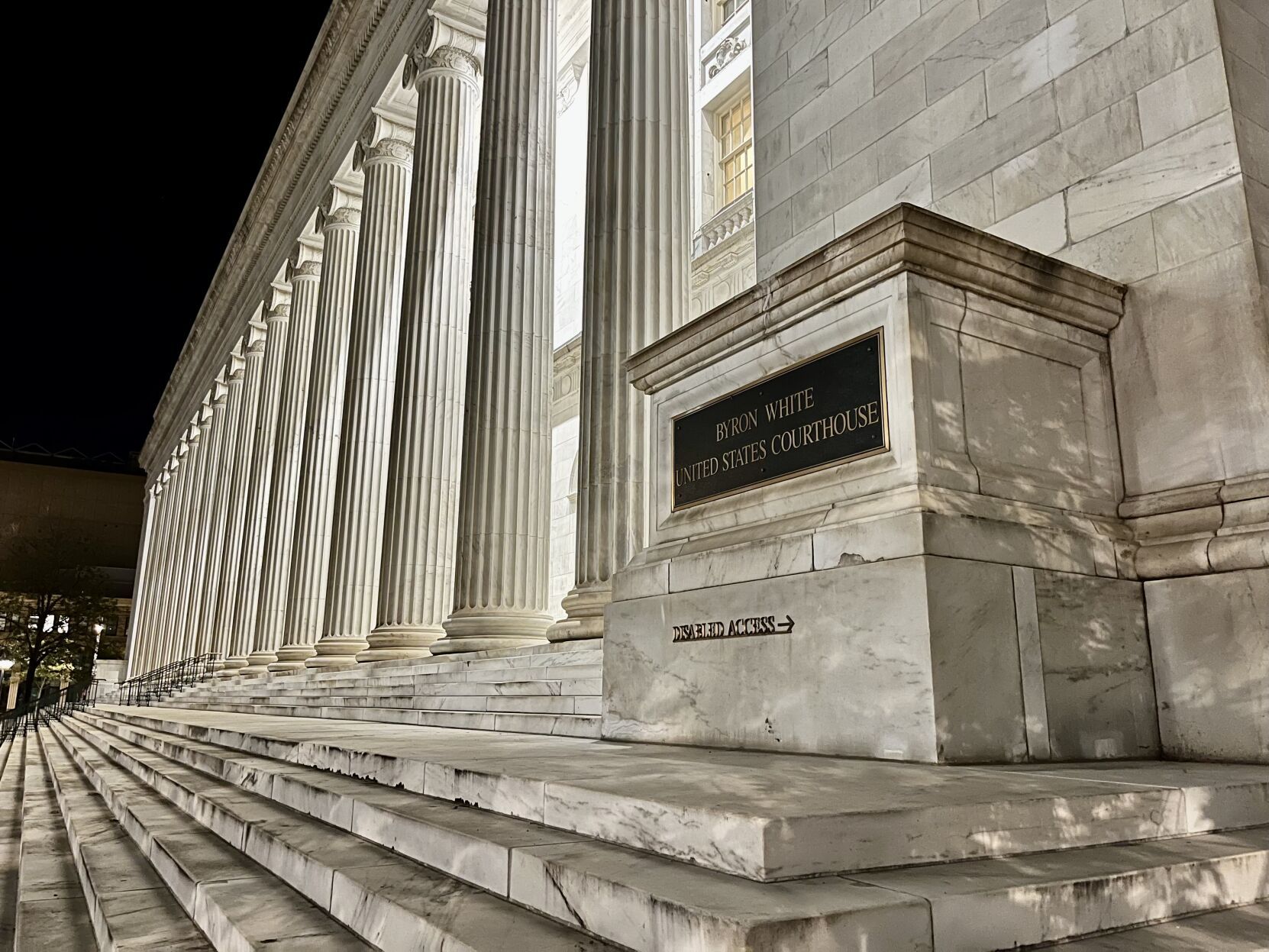
The Denver-based federal appeals court took the unusual step earlier this month of appointing an attorney to independently argue a key issue in a criminal sentencing appeal after the government indicated it would not contest the defendant’s view of the law.
The case of Malachi Mathias Moon Seals out of Colorado was already in the uncommon position of receiving “en banc” review, meaning consideration by all judges on the U.S. Court of Appeals for the 10th Circuit. The original appellate opinion, like the vast majority of decisions, was issued by a three-judge panel until the circuit voted to initiate full-court review last month.
Moon Seals initially received a probationary sentence after pleading guilty to multiple federal offenses. He then immediately violated the terms of his probation, prompting a trial judge to impose a prison term.
In October, a 10th Circuit panel upheld Moon Seals’ new sentence, but acknowledged the trial judge did not follow the framework laid out in a 2022 opinion.
Under that precedent, United States v. Moore, sentencing a federal defendant anew after his probation violation must occur in two steps. First, a judge must reimpose the sentence for the underlying crime, without regard to events that occurred since the probation began. Second, the judge adds an increment to the sentence for the probation violation.
Since then, multiple 10th Circuit judges signaled their skepticism about the two-step process. Judge Gregory A. Phillips, who authored the Moore decision plus the original panel decision for Moon Seals, dedicated a concurring opinion in Moon Seals’ case to defending his interpretation of the sentencing law, potentially to ward off full-court review.
However, that attempt failed in January, when a majority of the judges agreed to examine his two-step sentencing procedure and possibly overrule it.
Then, on Feb. 2, the U.S. Department of Justice wrote to the 10th Circuit. While the government remains interested in defending Moon Seals’ sentence for other reasons, it “has determined that it will not defend Moore’s two-step approach,” explained attorney Ethan A. Sachs.
Three days later, the 12 judges who will be hearing the case issued an order stating that, to their understanding, the government was effectively siding with Moon Seals’ view of the two-step process. The court otherwise instructed the government to submit a brief on the other questions it posed about resentencing probation violators.
Finally, on Feb. 9, the 10th Circuit changed course. It announced that it was appointing Frederick R. Yarger, a former solicitor general of Colorado, to argue the propriety of the two-step framework as an “amicus curiae,” meaning “friend of the court.”
“The court has determined that the en banc proceedings in this matter would benefit from full adversarial presentation,” the 10th Circuit wrote. “Mr. Yarger is not appointed to represent any party to this appeal.”
The court added that it intends to hear oral arguments at its scheduled May session.
The case is United States v. Moon Seals.


10th Circuit partially revives lawsuit over 2020 Denver protest injuries
Michael Karlik
michael.karlik@coloradopolitics.com
Updated 10 hours ago
The Colorado-based federal appeals court revived a man’s claims against Denver on Friday after concluding a trial judge resolved the case in the city’s favor without analyzing two of the three instances of alleged excessive force and other constitutional violations....

Federal judges find Colorado immigration judge violated several orders
Michael Karlik
michael.karlik@coloradopolitics.com
Updated 11 hours ago
Multiple federal judges in Colorado have freed people from immigration custody after determining that one immigration judge violated their directives for properly conducting bond hearings. For nearly a year, Colorado’s U.S. District Court has faced a flood of “habeas corpus” petitions...

Misconduct complaints from ex-Colorado judicial discipline director dismissed against federal judges
Michael Karlik
michael.karlik@coloradopolitics.com
Updated 1 day ago
The administrative body for the Denver-based federal appeals court upheld a finding last week that misconduct complaints against Colorado’s chief federal trial judge and the chief appeals judge warranted dismissal and appeared to be a “litigation tactic” by the complaining...

First-ever Red Rocks naturalization ceremony draws most diverse group of new citizens
Michael Karlik
michael.karlik@coloradopolitics.com
Updated 12 hours ago
Colorado’s federal trial court held its first-ever naturalization ceremony for nearly 300 new citizens on Thursday at Red Rocks Park and Amphitheatre. “We’re doing it to commemorate the 250th anniversary of the Declaration of Independence and the United States. Red...
Jeffco taxpayers could be on the hook for a possible child sex assault settlement
Matt Kyle
matt.kyle@denvergazette.com
Updated 16 hours ago
Taxpayers may end up on the hook for a child sexual assault settlement, possibly worth up to $15 million, after Jeffco Public Schools failed to notify its insurance company in a timely manner about the case. The incident stems from...
10th Circuit finds no fair housing violation by Littleton landlord for worker’s alleged rape of tenant
Michael Karlik
michael.karlik@coloradopolitics.com
Updated 10 hours ago
The Denver-based federal appeals court concluded on Monday that Littleton’s housing authority could not be held liable for a maintenance worker’s alleged rape of a tenant, as the worker’s employment did not provide any special access to the victim. A...

Jeffco Public Schools sues Trump administration to protect funding after alleged transgender policies violation
Matt Kyle
matt.kyle@denvergazette.com
Updated 2 days ago
In the wake of several threats by the Trump administration to revoke federal funding, Jeffco Public Schools filed a lawsuit against the Department of Education seeking to protect that badly needed money. Jeffco has been under investigation by the DOE’s...
Denver detox center did not violate man’s rights with 10-hour hold, 10th Circuit says
Michael Karlik
michael.karlik@coloradopolitics.com
Updated 3 days ago
The Colorado-based federal appeals court concluded on Tuesday that Denver’s detoxification facility did not violate a man’s rights by holding him against his will for 10 hours until his blood alcohol content was projected to reach zero. Unusually, Brian Garrett’s...

Federal judge clarifies ex-GOP treasurer candidate’s burden to prove defamation claims
Michael Karlik
michael.karlik@coloradopolitics.com
Updated 3 days ago
A federal judge clarified last week that businessman and former Republican statewide candidate Brian Watson will need to surmount a higher hurdle in proving his claim that a party guest’s alleged description of him as a “criminal” amounted to defamation....
Colorado board permits state to appeal injunction against arthritis drug price cap
Marissa Ventrelli
marissa.ventrelli@coloradopolitics.com
Updated 4 days ago
A Colorado board voted Friday to allow the Attorney General’s Office to fight an injunction against a price cap on a drug that treats arthritis. A U.S. district court judge had granted the company Amgen a preliminary injunction, temporarily blocking...
PREV
PREVIOUS

Greeley voters halt landmark development project
GREELEY – The landscape-altering Cascadia development project has been put on ice, according to unofficial results of a city referendum on the project Tuesday. The proposed development would have included an 8,600-seat multiuse arena and ice center that would be home to the Colorado Eagles, a minor-league affiliate of the Colorado Avalanche; a full-service conference hotel; an indoor waterpark, and housing developments spanning […]

Colorado lawmakers want to crack down on sports betting companies
A coalition of legislators has introduced a bill that backers said would help combat sports gambling addiction, particularly among children. Colorado voters approved Proposition DD in 2019, legalizing sports betting statewide. The majority of the state’s sports betting revenue goes to the Colorado Water Plan Grant Program, which funds water conservation, storage, and supply projects. […]