

Denver murder conviction reversed for incomplete self-defense instruction

Colorado’s second-highest court reversed a defendant’s murder conviction last week because a Denver judge gave an incomplete instruction to the jury about the man’s right to self-defense.
Donald R. Gonzales and Gary McLaughlin met up in a Capitol Hill parking lot one night in May 2021 for a sexual encounter in Gonzales’ car. According to Gonzales’ testimony at trial, he noticed his phone and money from the center console were missing after McLaughlin departed. Gonzales exited to find McLaughlin, and McLaughlin allegedly lunged at Gonzales and began hitting him with a cell phone.
Gonzales pulled his gun and fatally shot McLaughlin. He then grabbed his money and phone from the ground and fled the scene.
Prosecutors charged Gonzales with first-degree murder. Gonzales asserted that he acted in self-defense and his lawyer proposed a self-defense jury instruction that mirrored Colorado law. Specifically, Gonzales would have been authorized to use deadly force if he believed McLaughlin was about to use unlawful force against him and he believed he would be seriously injured or killed.
The proposed instruction also noted that Gonzales was justified in using deadly force if McLaughlin committed, or was about to commit, robbery or assault.
District Court Judge Ericka F.H. Englert declined to include the last portion in the jury instructions, calling it “redundant” and a source of “potential confusion for the jurors.”
She added that there was insufficient evidence that McLaughlin committed or was about to commit robbery or assault. Even though Gonzales testified that McLaughlin stole his possessions, “the time between that theft and the incident when Mr. Gonzales shot the gun after confronting (McLaughlin) behind the car … does not amount to robbery.”
Jurors convicted Gonzales of second-degree murder and he received a 38-year prison sentence.
On appeal, Gonzales argued that he was entitled to the complete self-defense instruction if “some credible evidence” supported the theory that McLaughlin did, or was about to, assault or rob him. He noted that, contrary to Englert’s description, a person can commit robbery by using force to retain property already taken.
The evidence at trial could establish that McLaughlin “knowingly took Gonzales’ money and phone from his presence. After McLaughlin left Gonzales’ car, Gonzales pursued McLaughlin within twenty seconds and found him nearby. McLaughlin then hit Gonzales with a deadly weapon — a phone — to retain control over the money and phone,” wrote public defender Julia Chamberlain.
Case: People v. Gonzales
Decided: August 20, 2026
Jurisdiction: Denver
Ruling: 3-0
Judges: Matthew D. Grove (author)
Christina F. Gomez
Pax L. Moultrie
A three-judge Court of Appeals panel agreed that the jury should have been allowed to evaluate whether Gonzales legitimately used force in response to an assault or robbery.
“The linchpin of Gonzales’s defense was that McLaughlin took his phone and money and then, when confronted, attacked Gonzales with a ‘solid object’ in an effort to retain it,” wrote Judge Matthew D. Grove in the Aug. 20 opinion. “Depending on the jury’s assessment of Gonzales’s credibility, there is a real possibility that it would have applied the (omitted) instruction had the court included it.”
The panel ordered a new trial.
The case is People v. Gonzales.

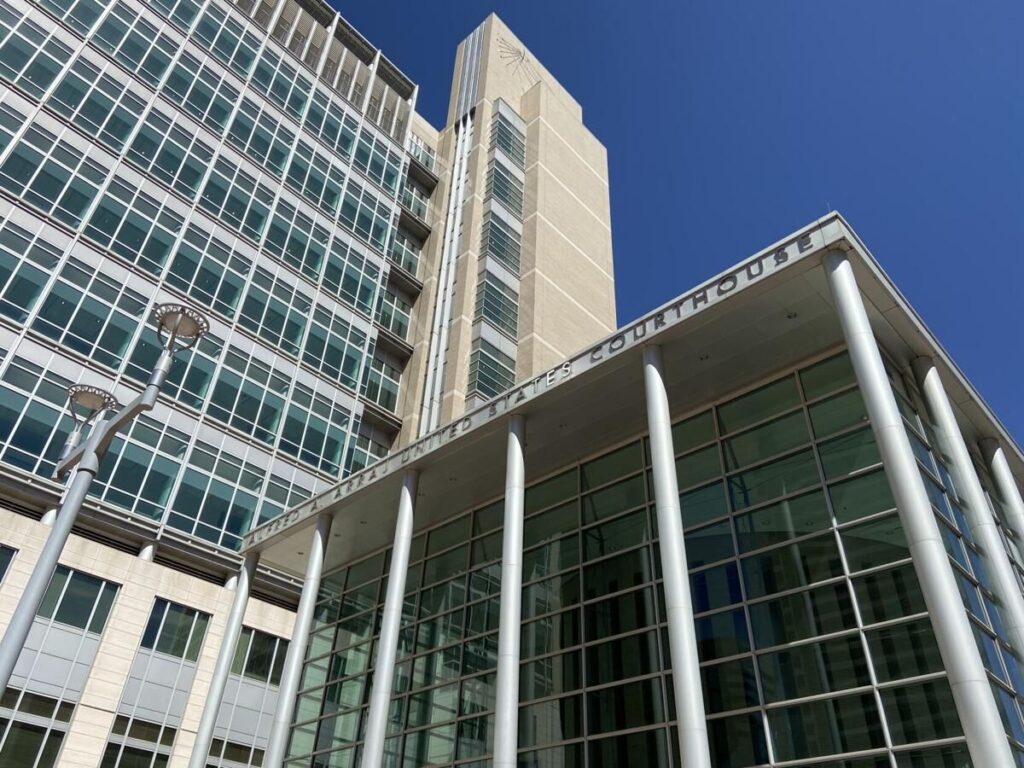
Colorado’s chief federal judge orders return of wrongfully deported man, second judge to explore ‘series’ of violations
Michael Karlik
michael.karlik@coloradopolitics.com
Updated 9 hours ago
Colorado’s chief federal judge took the extraordinary step of directing the government on Tuesday to do everything it can to return a man it deported in violation of his order. At the same time, Colorado’s chief magistrate judge has set...
Denver murder, assault convictions reversed due to faulty jury instructions
Michael Karlik
michael.karlik@coloradopolitics.com
Updated 8 hours ago
Colorado’s second-highest court reversed a defendant’s convictions for murder and assault last week after concluding a Denver judge incorrectly omitted key jury instructions that could have affected the verdict and sentencing. Stephen C. Swainson fatally stabbed Israel Casillas in downtown...
‘Understand people for who they are’: 2 federal judges talk about compassion in courtroom
Michael Karlik
michael.karlik@coloradopolitics.com
Updated 15 hours ago
Before taking the bench in 2022, U.S. District Court Judge Charlotte N. Sweeney was an employment discrimination attorney. While the cases could be emotionally charged, they were different from the criminal proceedings she is now handling. “It wasn’t necessarily affecting...
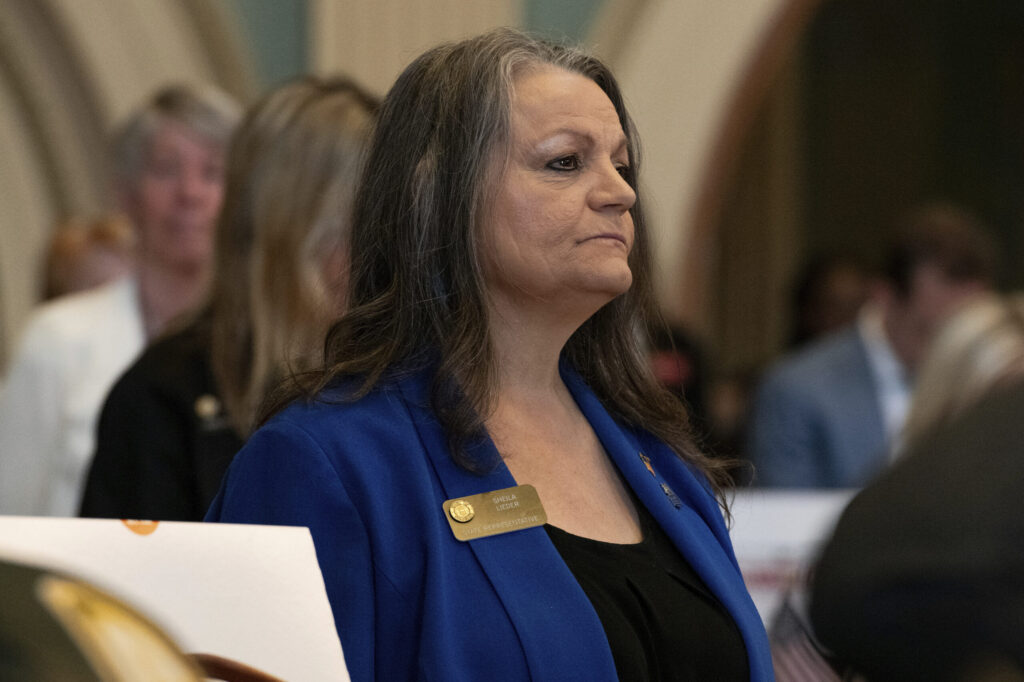
Colorado lawmaker, House leaders named in workplace-retaliation lawsuit
Marianne Goodland
marianne.goodland@coloradopolitics.com
Updated 1 day ago
A former legislative aide has filed a lawsuit alleging she was mistreated, illegally directed to perform campaign work and harmed by a House leadership structure she charged was fragmented, politicized and ineffective at protecting employees. The lawsuit, filed by Jennifer...
Federal judge hears arguments about Colorado’s 3-day gun purchase waiting period
Michael Karlik
michael.karlik@coloradopolitics.com
Updated 2 days ago
A federal judge heard arguments on Monday about the constitutionality of a 2023 Colorado law that generally imposes a three-day waiting period on firearm purchases after the initiation of a background check. The test that the U.S. Supreme Court created...
Colorado Supreme Court intervenes in Weld County prosecution dismissed due to Missy Woods misconduct
Michael Karlik
michael.karlik@coloradopolitics.com
Updated 1 day ago
The Colorado Supreme Court ordered a Weld County trial judge last week to respond to the district attorney’s claim that he improperly dismissed a criminal case because of “outrageous” conduct by the Colorado Bureau of Investigation. Daniel Lee Eatinger stood...
Schoolchildren’s presence at child sex-related trial did not harm Arapahoe County defendant, appeals court says
Michael Karlik
michael.karlik@coloradopolitics.com
Updated 4 days ago
Colorado’s second-highest court decided on Thursday that the presence of a group of schoolchildren on the first day of a child sexual exploitation trial did not violate an Arapahoe County defendant’s constitutional right to a fair trial. Prosecutors charged Jerry...
Appeals court cites week-old Colorado law to reinstate child neglect case at child, father’s request
Michael Karlik
michael.karlik@coloradopolitics.com
Updated 4 days ago
Colorado’s second-highest court invoked a new state law for the first time on Thursday and reinstated a child neglect case that both the child and her father wished to reopen. House Bill 1227 took effect on Aug. 12, reversing a...
Colorado Supreme Court names William Hood as next chief justice
Michael Karlik
michael.karlik@coloradopolitics.com
Updated 5 days ago
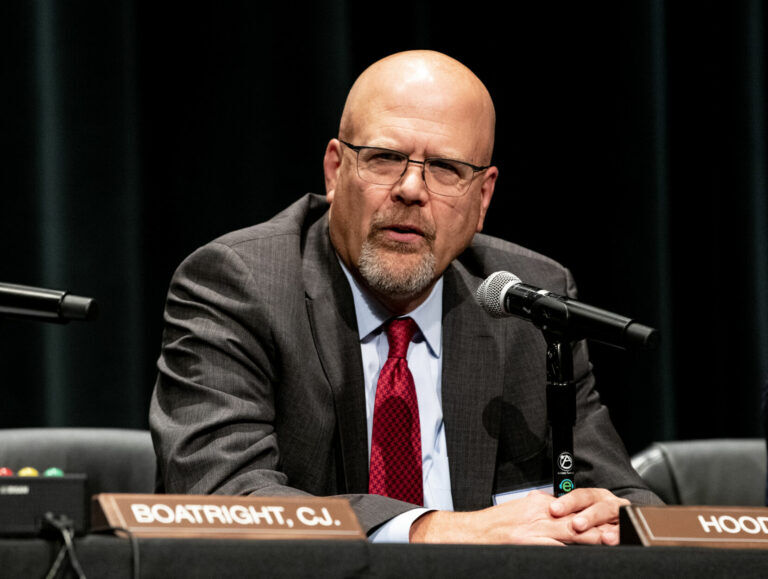
The Colorado Supreme Court has selected Justice William W. Hood III to be the next chief justice, the judicial branch announced on Friday. Hood will succeed Chief Justice Monica M. Márquez, who took over the role in July 2024. “I...
Family of slain Lakewood teacher releases statement as murder suspect makes first court appearance
Matt Kyle
matt.kyle@denvergazette.com
Updated 3 days ago
Patrick Theodore Barnett, the Lakewood man accused of killing his wife, a Jeffco Public Schools art teacher, made his first court appearance Friday morning as his wife’s family looked on. The status conference hearing was held before District Court Judge...
PREV
PREVIOUS

Colorado lawmaker, House leaders named in workplace-retaliation lawsuit
A former legislative aide has filed a lawsuit alleging she was mistreated, illegally directed to perform campaign work and harmed by a House leadership structure she charged was fragmented, politicized and ineffective at protecting employees. The lawsuit, filed by Jennifer Chick, names Littleton Democratic Rep. Sheila Lieder, House Speaker Julie McCluskie of Dillon and House […]

Aurora City Council considers stricter food truck regulations
The Aurora City Council is considering passing laws to limit the number of food trucks on properties in the city and how and when they operate. Councilmember Angela Lawson, who sponsored the ordinance, said she understands the importance of food trucks but has seen compliance issues and overcrowding. To address the issues, city staff are […]