Colorado Supreme Court intervenes in Weld County prosecution dismissed due to Missy Woods misconduct
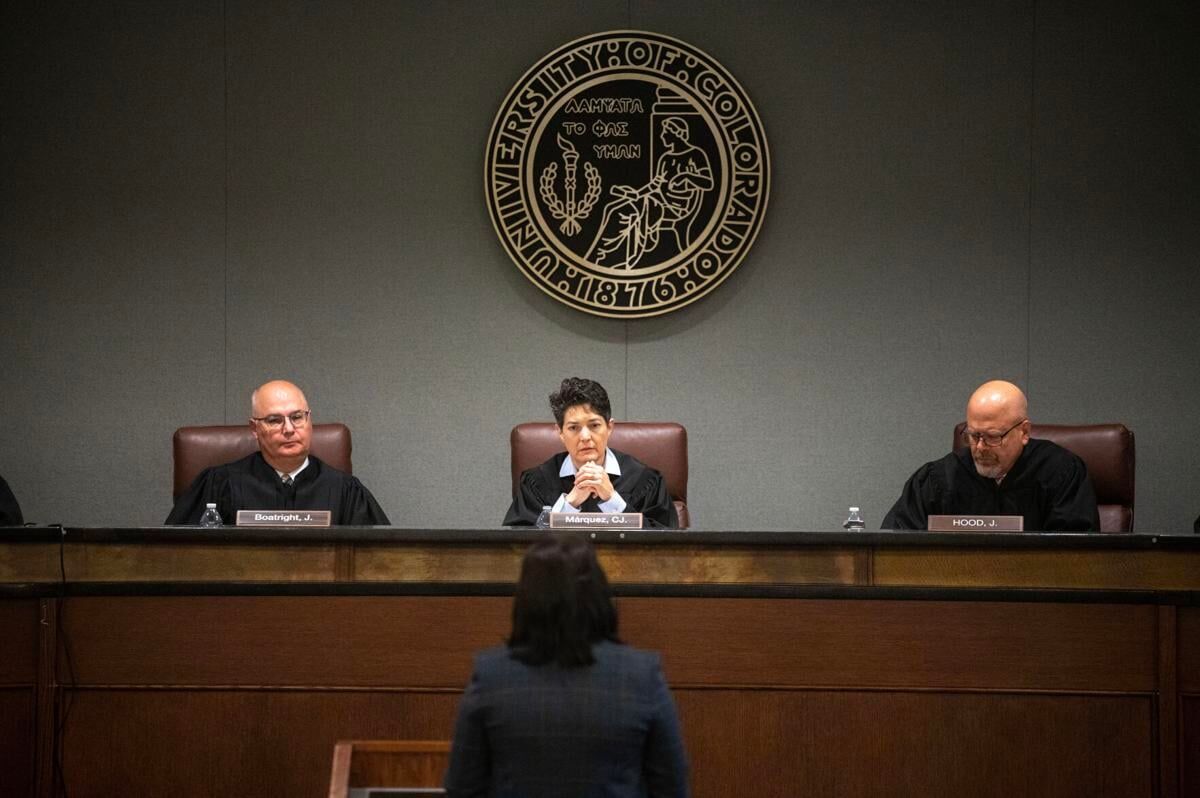
The Colorado Supreme Court ordered a Weld County trial judge last week to respond to the district attorney’s claim that he improperly dismissed a criminal case because of “outrageous” conduct by the Colorado Bureau of Investigation.
Daniel Lee Eatinger stood accused of sexual assault on a child dating to July 2018. Prosecutors sought Eatinger’s arrest in 2020, following DNA testing that matched his profile to evidence collected from the victim. Law enforcement extradited him to Colorado in 2024.
By that time, the CBI had performed an internal investigation into longtime DNA analyst Yvonne “Missy” Woods. In 2024, the agency revealed that its highly reputed employee had been deleting, altering and manipulating findings in criminal cases for years.
Jefferson County prosecutors charged her in January 2025 with 102 felony counts in connection with her actions. After pleading guilty in June to one felony count each of cybercrime, perjury, forgery and attempting to influence a public servant, she now faces up to 16 years in prison.
On Aug. 2, weeks before Eatinger’s scheduled trial, District Court Judge Vincente G. Vigil dismissed Eatinger’s case due to “outrageous government conduct” implicating Eatinger’s constitutional right to due process. Vigil wrote that his conclusion was not based solely on the actions of Woods, who performed DNA analysis in Eatinger’s case. Instead, he faulted CBI for ignoring reports about Woods’ misconduct as early as 2014.
“The management at CBI at best fostered a workplace culture where case processing numbers were prioritized over rigorous technical oversight, and at worst actively sought to shield Ms. Woods, a favored employee, from having her deficient work product come to light,” he wrote. “It is beyond dispute that the unprecedented scope and breadth of the Woods DNA scandal has left a dark mark on the history of Colorado justice.”
Noting that outrageous government conduct violates “fundamental fairness and is shocking to the universal sense of justice,” Vigil acknowledged that only one appellate case in Colorado had upheld a trial judge’s finding of outrageous conduct. That case from 1991 involved La Plata County law enforcement fabricating a criminal case with a fictional, undercover defendant in order to entrap an unaware defense attorney into accepting weapons for services.
“If CBI had properly acted when made aware of Ms. Woods’ conduct, this would not be outrageous government conduct; rather, it would be an agency acting in the way we expect a government agency to act: monitoring to ensure its employees are acting to professional standards and addressing the issue when they are not,” Vigil wrote. “But the fact of the matter is that Ms. Woods chose to become a cancer within the Colorado Bureau of Investigations, and that agency chose first to ignore, then place a bandage on the tumor until it could no longer be hidden from public view.”
The Weld County District Attorney’s Office quickly sought the Supreme Court’s intervention, arguing that it did everything correctly once Woods’ misconduct came to light.
“Defendant’s case was audited and determined not to be an affected case with an anomaly. There were no alterations, deletions, or manipulations in Woods’ work in this case; Woods’ work in this case remains untainted in any way post-review,” wrote prosecutors, adding that the office also performed testing of new DNA samples with a different analyst and with a defense expert present.
Those additional steps “provide assurance that the initial testing in this case by Woods was reliable despite malfeasance she committed in unrelated cases,” the office wrote.
Finally, the prosecution argued that Vigil’s decision to “send a message” was inappropriate without any analysis of how, specifically, the CBI’s actions negatively affected Eatinger.
Even if other defendants in the more-than-1,000 cases affected by Woods’ misconduct demonstrate harm to their cases, “they cannot obtain the same drastic remedy the district court gifted to Eatinger. This lottery ticket approach to justice is manifestly unreasonable, arbitrary, and unfair,” the prosecution concluded.
In an Aug. 19 order, the Supreme Court directed Vigil to respond to the district attorney’s arguments.
The case is People v. Eatinger.
Reporter Jenny Deam contributed to this article.

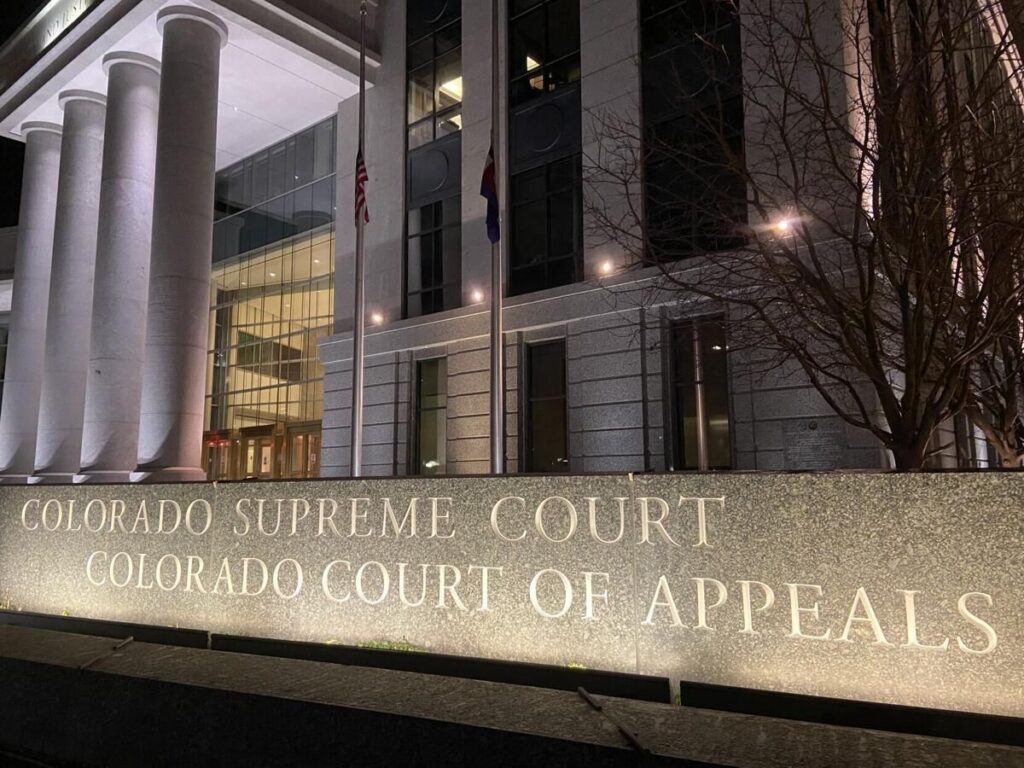
Schoolchildren’s presence at child sex-related trial did not harm Arapahoe County defendant, appeals court says
Michael Karlik
michael.karlik@coloradopolitics.com
Updated 2 days ago
Colorado’s second-highest court decided on Thursday that the presence of a group of schoolchildren on the first day of a child sexual exploitation trial did not violate an Arapahoe County defendant’s constitutional right to a fair trial. Prosecutors charged Jerry...
Appeals court cites week-old Colorado law to reinstate child neglect case at child, father’s request
Michael Karlik
michael.karlik@coloradopolitics.com
Updated 2 days ago
Colorado’s second-highest court invoked a new state law for the first time on Thursday and reinstated a child neglect case that both the child and her father wished to reopen. House Bill 1227 took effect on Aug. 12, reversing a...
Colorado Supreme Court names William Hood as next chief justice
Michael Karlik
michael.karlik@coloradopolitics.com
Updated 3 days ago
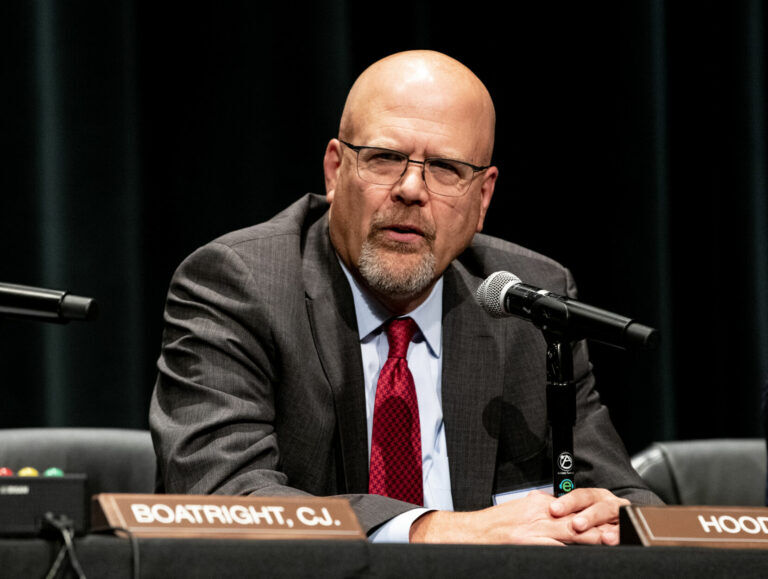
The Colorado Supreme Court has selected Justice William W. Hood III to be the next chief justice, the judicial branch announced on Friday. Hood will succeed Chief Justice Monica M. Márquez, who took over the role in July 2024. “I...

Family of slain Lakewood teacher releases statement as murder suspect makes first court appearance
Matt Kyle
matt.kyle@denvergazette.com
Updated 3 hours ago
Patrick Theodore Barnett, the Lakewood man accused of killing his wife, a Jeffco Public Schools art teacher, made his first court appearance Friday morning as his wife’s family looked on. The status conference hearing was held before District Court Judge...

Appeals court upholds Park County trophy hunting conviction
Michael Karlik
michael.karlik@coloradopolitics.com
Updated 3 days ago
Colorado’s second-highest court clarified on Thursday that a defendant may stand convicted under the state’s trophy hunting laws if he abandons a bear carcass but returns later to remove the meat. Under Colorado law, it is a felony to detach...

Judge grants partial injunction to GEO in fight against state health inspection law
Kyla Pearce
kyla.pearce@gazette.com
Updated 4 days ago
A judge ruled Thursday that The GEO Group does not have to follow parts of a new state law requiring more frequent health and safety inspections at the U.S. Immigration and Customs Enforcement processing center in Aurora. Under the order...

Parker man faces 20 years to life for serial sexual assaults
Nicholas Fogleman
nicholas.fogleman@denvergazette.com
Updated 4 days ago
A 25-year-old Parker man who sexually assaulted three women in 2025 pleaded guilty Wednesday and will serve 20 years to life in prison. Javier Rodriguez-Andrade pleaded guilty to charges stemming from three sexual assaults involving women ages 19 to 24. ...
Divided appeals court upholds warrantless DNA collection in Colorado cold case, cautions of government overreach
Michael Karlik
michael.karlik@coloradopolitics.com
Updated 4 days ago
Colorado’s second-highest court upheld the warrantless collection of a suspect’s DNA from a discarded soda can as constitutional on Thursday, while warning about potential abuse of DNA privacy in the absence of further guardrails. By 2-1, a three-judge Court of...
Man charged in Northglenn homicide of wife
Matt Kyle
matt.kyle@denvergazette.com
Updated 4 days ago
A man has been formally charged with murder and burglary relating to a homicide last week in Northglenn. Alexei Munive-Rodriguez, 48, was arrested Sunday after he was at large following the homicide, which occurred Friday. Police were dispatched around 10:30...
10th Circuit grants immunity to officers for fatal Manitou Springs shooting
Michael Karlik
michael.karlik@coloradopolitics.com
Updated 3 days ago
The Denver-based federal appeals court ruled on Wednesday that responding officers from Manitou Springs and El Paso County cannot be held constitutionally liable for shooting and killing a man after a 20-minute standoff. Wilford Deweese allegedly pulled out a gun...