Divided appeals court upholds vehicle theft conviction despite unclear origin of car’s value
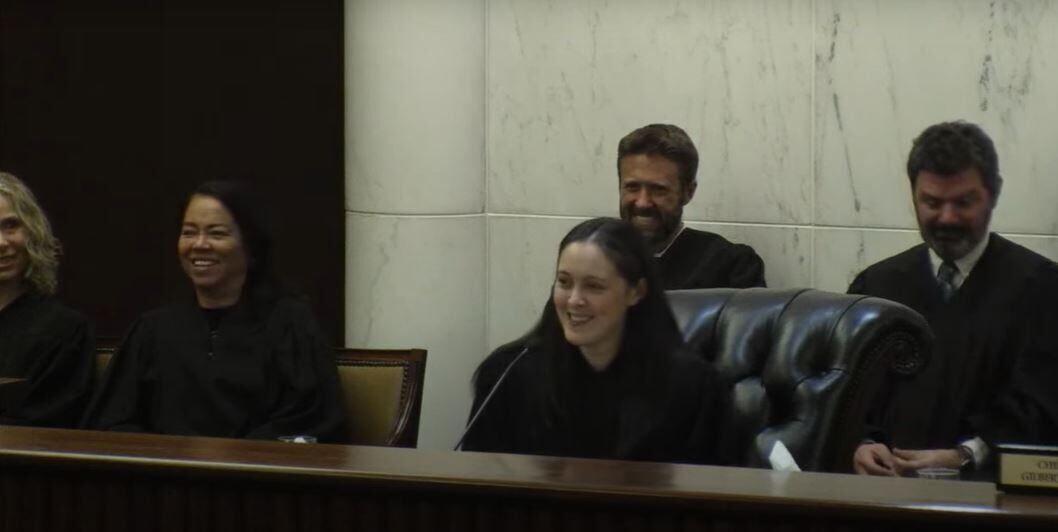
Colorado’s second-highest court upheld a defendant’s conviction for aggravated motor vehicle theft last week, even though it was unclear how the Thorton Police Department estimated the value of the stolen car.
Officer Marc Faivre encountered Ashley Shelee Gibbens-Martinez in a stolen Kia Sorento in a parking lot. There was visible damage to the door and the ignition, but Gibbens-Martinez maintained that an acquaintance had just let her borrow the car.
At trial, the prosecution did not argue that Gibbens-Martinez stole the Kia, but only that she knew she was operating a stolen car.
The severity of the crime was tethered at the time to the value of the vehicle, with $20,000 being the dividing line between a class 5 and a class 6 felony.
Adams County jurors heard from the vehicle’s owner that the original purchase price was $56,000 several years earlier. Faivre testified about a Kelley Blue Book estimate placing the Kia’s value somewhere between $22,000 and $25,000, based on the year, make, and model.
The prosecution acknowledged that Faivre did not generate the estimate, and it was unclear who did. The defense argued that Kelley Blue Book estimates require many variables beyond the basic ones captured in the report.
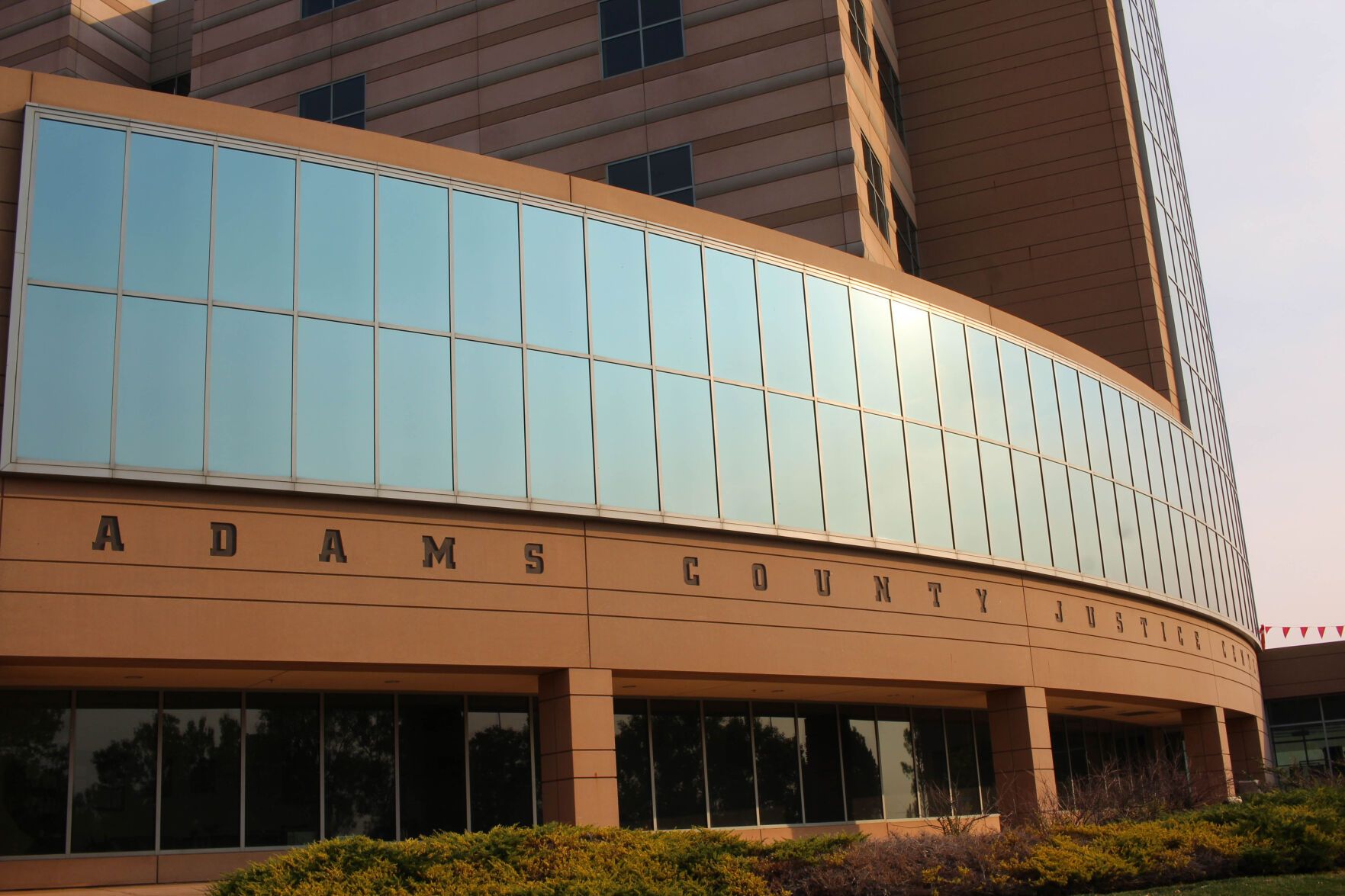
Then-District Court Judge Robert W. Kiesnowski Jr. allowed the prosecution to use the estimate. Jurors convicted Gibbens-Martinez for theft of a car whose value exceeded $20,000.
On appeal, the defense argued that the Kelley Blue Book report was inadmissible as evidence because no one could speak to its creation.
“Officer Faivre did not create the valuation, nor did he testify as to the name or role of the individual who did. He did not testify that he personally observed anyone create the valuation. Indeed, he did not even testify that he had seen the valuation prior to taking the stand,” wrote public defender Andrew Vierra. Faivre was allowed to “simply read off a sheet of paper he may have never seen before.”
By 2-1, a three-judge Court of Appeals panel disagreed.
Case: People v. Gibbens-Martinez
Decided: September 3, 2026
Jurisdiction: Adams County
Ruling: 2-1
Judges: Craig R. Welling (author)
Steve Bernard
Katharine E. Lum (dissent)
Faivre’s testimony about the basic characteristics of the car “was sufficient, albeit minimally, to authenticate the report,” wrote Judge Craig R. Welling for himself and Judge Steve Bernard in a Sept. 3 opinion.
Welling added that the defense could have cast doubt on the accuracy of the estimate at trial.
“For example, if Gibbens-Martinez was concerned that the condition of the car was worse than what was used to generate the report — which would have meant that the value of the stolen car was lower than what was reflected in the report — she could have asked what condition of the car the report was based on or if the report accounted for the condition Officer Faivre found the car in, including the damage to the driver’s side door and ignition,” Welling wrote. “She didn’t cross-examine Officer Faivre about this or any of the concerns she raises about the reliability of the report to establish the value of the stolen car.”
The panel’s majority also determined the estimate did not violate Gibbens-Martinez’s constitutional right to confront the witnesses against her.
Judge Katharine E. Lum disagreed, believing Faivre’s testimony was insufficient to establish the report was an authentic piece of evidence.
“While I acknowledge that the bar for authentication is low, it is not, in my view, this low,” she wrote. “If the majority’s opinion is the rule, then all that is required to authenticate a document is for a witness who has apparently never seen it before to testify about what it ‘appears to be’ based on nothing more than reading the document itself. That effectively makes any document self-authenticating, which is particularly troubling in an age when AI-generated evidence has created unprecedented authentication challenges for courts.”
Lum added that the Kelley Blue Book report likely affected the verdict because it enabled jurors to determine more precisely whether the $20,000 threshold for the more serious felony was crossed. She would have ordered a resentencing for Gibbens-Martinez on the less severe felony or allowed prosecutors to try Gibbens-Martinez again.
The case is People v. Gibbens-Martinez.

Disgraced ex CBI analyst Missy Woods sentenced to prison in DNA scandal
Jenny Deam
jenny.deam@gazette.com
Updated 14 minutes ago
A Jefferson County district court judge on Tuesday sentenced a disgraced former Colorado Bureau of Investigation DNA analyst to a decade in prison. Jefferson County District Judge Andrew Poland sentenced Yvonne “Missy” Woods to 10 years on the most serious...

Parenting from prison: Inmates hope to be present in their children’s lives, while physically absent
Marianne Goodland
marianne.goodland@coloradopolitics.com
Updated 1 hour ago
The room was decorated with balloons, the tables sparking bright with colors as the smell of pizza and cake wafted through the air. As did music. This was, after all, a father-daughter dance. Except this was not a typical father-daughter...
Appeals court confirms Colorado judges can compel electronic records from out of state
Michael Karlik
michael.karlik@coloradopolitics.com
Updated 2 days ago
Colorado’s second-highest court clarified on Thursday that judges are empowered to compel out-of-state companies to produce electronic records under state law. El Paso County jurors convicted Mischa Jargowsky on three counts of money laundering and one violation of Colorado’s organized...
10th Circuit upholds finding of no racial discrimination against family at Denver Chili’s
Michael Karlik
michael.karlik@coloradopolitics.com
Updated 4 days ago
The Denver-based federal appeals court agreed on Wednesday that a Black plaintiff failed to show that a Chili’s manager’s request for her family to provide valid payment at the outset of their meal amounted to racial discrimination. Markesha Futrell-Smith filed...
Appeals court reinstates Mesa County defendant’s request for DNA testing under new Colorado law
Michael Karlik
michael.karlik@coloradopolitics.com
Updated 5 days ago
Colorado’s second-highest court revived a Mesa County defendant’s petition for DNA testing in his three-decade-old attempted murder case on Thursday, concluding that a trial judge wrongly interpreted a recent Colorado law in dismissing the request outright. Jurors convicted Billy Joe...
Appeals court reverses Denver juvenile’s conviction due to improper expert testimony
Michael Karlik
michael.karlik@coloradopolitics.com
Updated 3 days ago
Colorado’s second-highest court reversed a juvenile defendant’s conviction for unlawful sexual contact on Thursday after an expert witness’s testimony improperly suggested the child victim was telling the truth. The defendant, identified as S.H-S., was around 16 years old when he...

Judge orders home confinement for Barry Morphew
Dennis Huspeni
dennis.huspeni@gazette.com
Updated 5 days ago
An Alamosa County district judge has ordered home confinement for Barry Morphew, who is accused of murdering his wife. Barry Morphew, 59, faces a first-degree murder charge in the death of his wife, Suzanne Morphew, who disappeared Mother’s Day weekend...
Appeals court says jury does not need to view porn to determine if it’s ‘obscene’
Michael Karlik
michael.karlik@coloradopolitics.com
Updated 3 days ago
Colorado’s second-highest court ruled for the first time on Thursday that a jury does not always need to view pornographic material to determine if it meets the criteria for obscenity. Mesa County jurors found Shayla Ann Simpson guilty of child...
10th Circuit disagrees Sterling officer had no basis to arrest motorist who lacked insurance details
Michael Karlik
michael.karlik@coloradopolitics.com
Updated 6 days ago
The Denver-based federal appeals court disagreed on Tuesday with a trial judge’s decision to bar evidence from a pat-down search from being used against a defendant. Federal prosecutors obtained an indictment of Jorge Sigala-Baray for being a felon in possession of a...
Colorado Springs officers’ tasing, threats prompt federal judge to block use of suspect’s statements
Michael Karlik
michael.karlik@coloradopolitics.com
Updated 6 days ago
A federal judge blocked the government last month from using some of a defendant’s statements as evidence, reasoning that the defendant made them involuntarily as Colorado Springs officers tased him five times and one officer threatened to kill him. Officers...