

Federal judge takes no action against ICE in Colorado after hearing about mistakes, not ‘blatant violations’
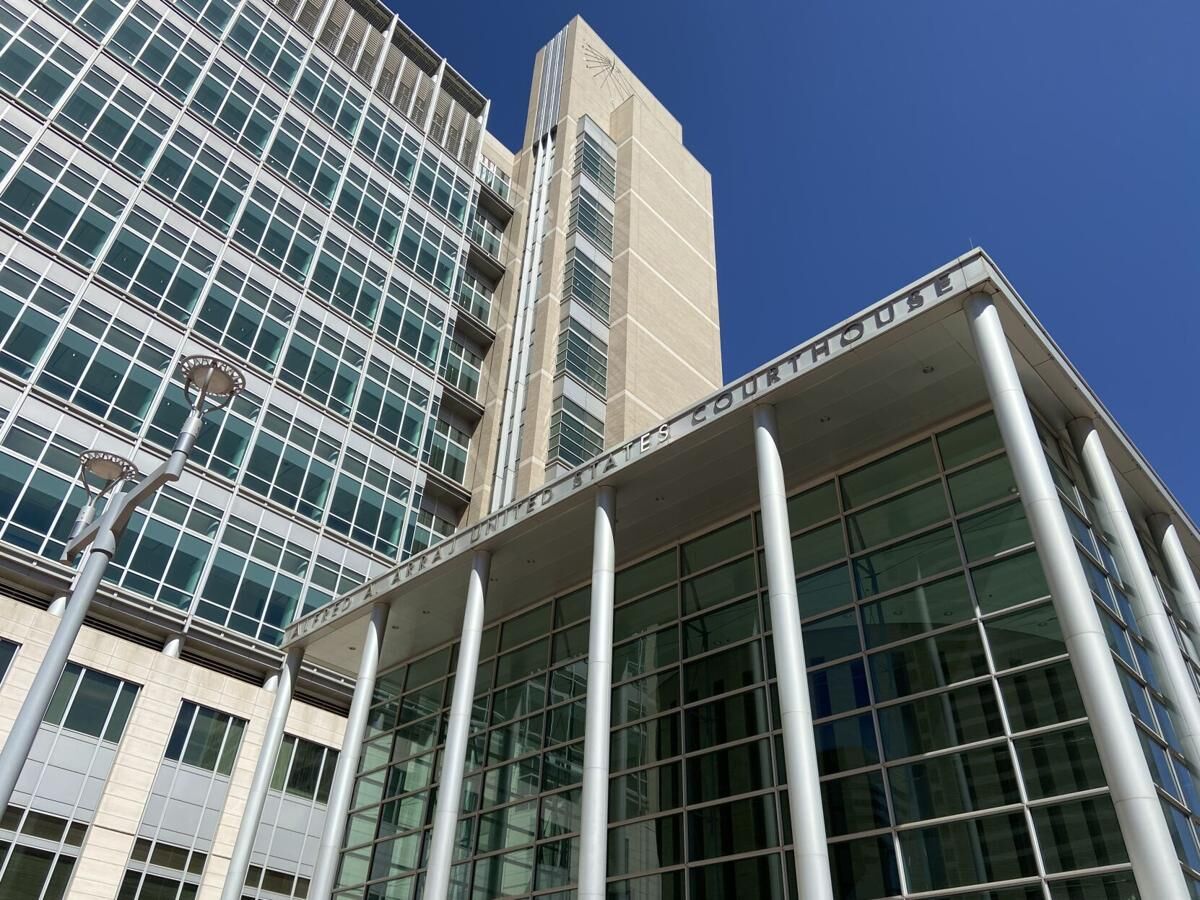
A federal judge declined to take action against U.S. Immigration and Customs Enforcement on Thursday after hearing that a pattern of alleged lawbreaking amounted to mistakes and a misunderstanding of the government’s position in court.
For nearly a year, Colorado’s U.S. District Court has faced a flood of “habeas corpus” petitions from those in immigration detention. The most common allegation is that the government is improperly denying bond hearings to people who are eligible by law. Colorado’s judges largely agreed with that argument, and the Denver-based federal appeals court handed down a binding interpretation of the law in June confirming that view.
Chief U.S. Magistrate Judge Scott T. Varholak, in releasing three habeas petitioners in recent weeks, directed the government to appear for a Sept. 10 hearing to address ICE’s “apparent repeated violation of the law.”
“This case presents one in a series of cases in which (the U.S. Department of Homeland Security) appears to have simply ignored the law and detained an individual in violation of the law. The United States has not — and apparently cannot — defend that decision,” Varholak wrote in one order, referring to the now-standard practice of Colorado’s U.S. Attorney’s Office to not argue in opposition to wrongful detention claims.
However, after the government submitted additional materials, Varholak acknowledged at the hearing that the evidence painted a different picture of ICE’s actions at the time of arrest.
“My concern when I set this hearing was that I had an undisputed record at that time because the government had not filed a responsive brief (disputing) that each of these three individuals were arrested without a warrant existing, and without promptly thereafter obtaining a warrant,” Varholak said. “It appears that, in each of these cases, the reality is that warrants were either existing beforehand or obtained shortly thereafter. There may be (procedural) issues. But it’s not the blatant violation of the law that had concerned me.”
Each of the three habeas cases that Varholak handled had raised allegations of an unlawful warrantless arrest under slightly different circumstances.
In one case, a man from the Congo who had been living in Denver was arrested during a scheduled immigration check-in. ICE obtained an administrative warrant at 9:02 a.m., and the arrest form indicated the arrest happened three minutes later.
In the second case, a citizen of Venezuela who lived in Boulder was arrested after ICE agents surveilled him and chased him from his vehicle.
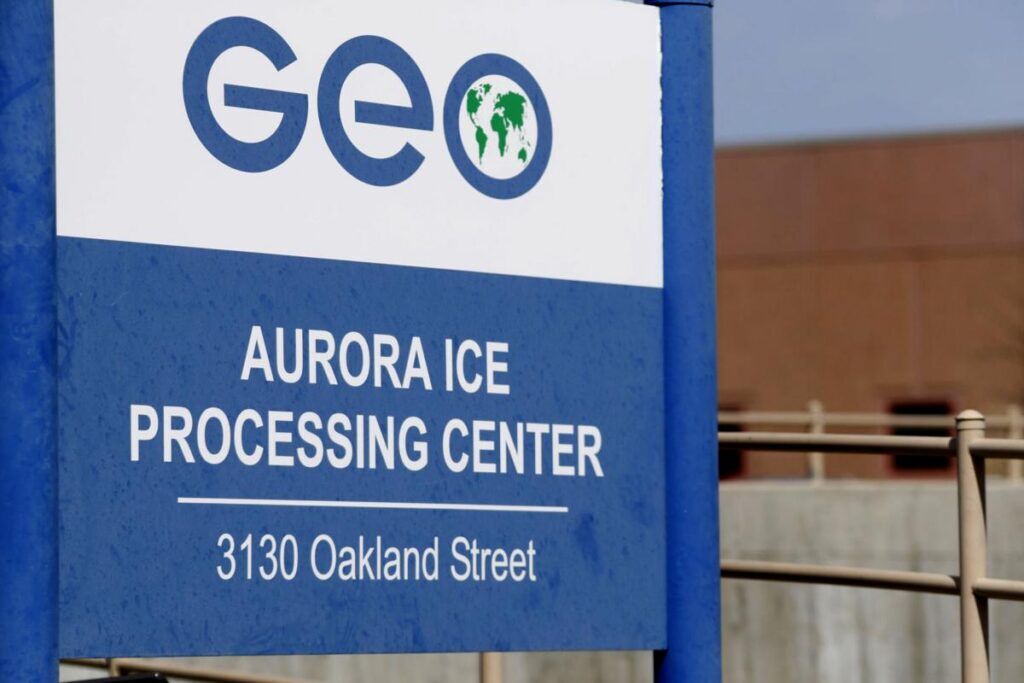
In the third case, ICE apprehended a native of Honduras in Florida during a roadside stop, and held him in custody in Aurora.
For all three instances, Assistant U.S. Attorney Andrew Soler provided the standard response that the government was “not submitting a brief in opposition to the Petition detailing the facts and circumstances of this case.”
Varholak, in turn, interpreted the government to not be contesting the allegations of unlawful, warrantless arrest across the cases.
Leading up to the hearing, ICE lawyer and Special Assistant U.S. Attorney Anh Weinberg provided documentation around the circumstances of each arrest. She acknowledged that, in the case of the petitioner from Florida, a warrant was issued several days after the man’s arrest.
While the government was not arguing that the later-issued warrant necessarily rendered the initial arrest lawful, “the fuller record does not support treating Petitioner’s entire period of pre-habeas custody as one in which DHS simply proceeded indefinitely without issuing a warrant, making a custody determination, or providing access to administrative custody review,” wrote Weinberg.
As for the U.S. Attorney’s Office’s practice of declining to argue in opposition to petitions for bond hearings, that “litigation choice” did not establish that ICE unlawfully arrested the petitioners without warrants, she added.
Attorneys for the petitioners were also present at the hearing, where they disputed some aspects of how ICE handled their clients’ arrests and the procurement of warrants. However, Varholak said the new information alleviated his concerns about “what appeared to be lawless action.”
“I don’t know that there’s anything further, as a result, that needs to be done in these. I have ordered all three of these petitioners to be released, and it appears that that has happened,” he said. “It’s one thing to make a mistake. We’re all human. We all make mistakes. What I was seeing in the course of a day and a half … on the record before me at that time, was blatant violations of the law. It does not appear that is, in fact, what occurred here.”
Varholak added that he took no issue with the U.S. Attorney’s Office’s decision to generally abstain from arguing against bond hearings.
“If you don’t believe you can justify continued detention, he said, “you have an ethical obligation not to argue for continued detention.”
Separately, U.S. Magistrate Judge N. Reid Neureiter is considering whether to sanction ICE for rearresting a man days after an immigration judge released him on bond. Weinberg has similarly provided Neureiter with additional information about the circumstances of the man’s arrest and has argued that sanctioning the government would be improper. Neureiter has not yet issued a decision.

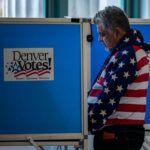
Denver sues Trump to block armed ICE agents from polling sites
Deborah Grigsby
deborah.smith@denvergazette.com
Updated 34 minutes ago
The City of Denver, along with several immigrant rights groups, sued the Trump administration Thursday, seeking to block armed U.S. Immigration and Customs Enforcement officers from polling sites during the upcoming midterm elections. The suit, filed in the U.S. District...
Colorado doctors, dentists challenge state law on gender‑transition services in new federal lawsuit
Marissa Ventrelli
marissa.ventrelli@coloradopolitics.com
Updated 39 minutes ago
A group of Christian doctors and dentists has filed a federal lawsuit challenging a Colorado law they say requires them to provide gender‑transition services that conflict with their religious and ethical beliefs. The lawsuit, filed by the Christian Medical and...
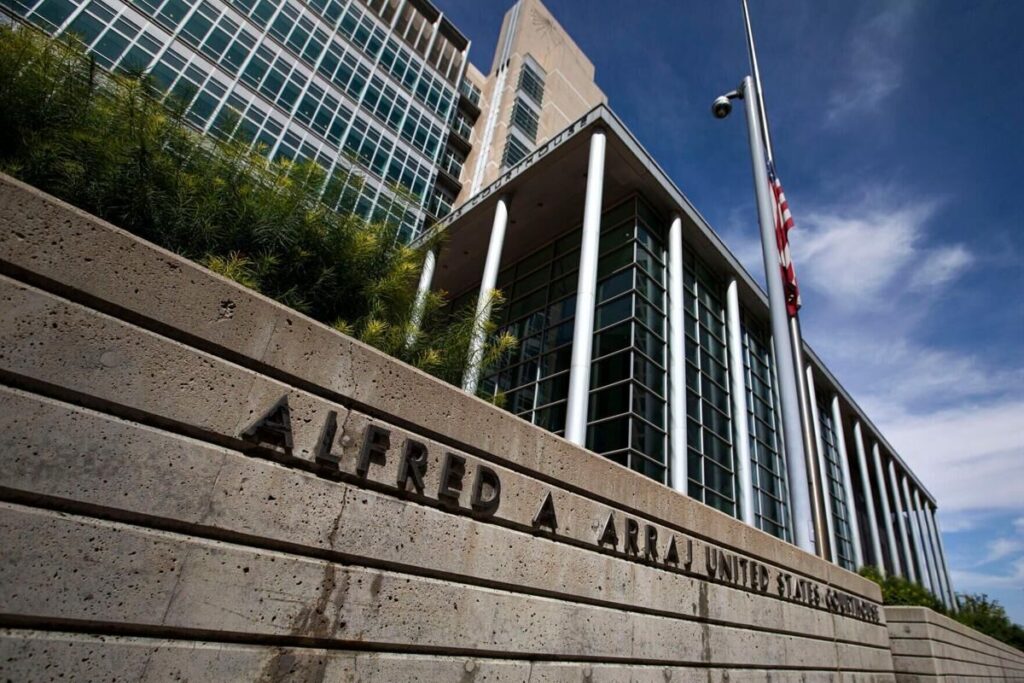
Federal judge directs plaintiff to revise complaint alleging Denver officers’ constitutional violations
Michael Karlik
michael.karlik@coloradopolitics.com
Updated 20 hours ago
A federal judge directed a plaintiff to revise his allegations on Wednesday to more precisely state what two Denver officers and the city itself allegedly did to violate his constitutional rights by facilitating his prosecution for murder until prosecutors dropped...
Lawsuit challenges Douglas County commissioners’ ballot actions
Nicholas Fogleman
nicholas.fogleman@denvergazette.com
Updated 4 hours ago
A new lawsuit against Douglas County commissioners seeks to invalidate the board’s intervention in efforts to expand the commission from three members to five and restore the original ballot language approved by more than 20,000 petition signers. The suit marks...
Federal judge explores new sanctions against ex-Colorado judicial discipline director
Michael Karlik
michael.karlik@coloradopolitics.com
Updated 1 day ago
A federal judge on Wednesday directed Colorado’s former judicial discipline director, for the third time this year, to explain why she should not sanction him for his latest conduct in his litigation against the state’s judiciary. Christopher S.P. Gregory, who served...
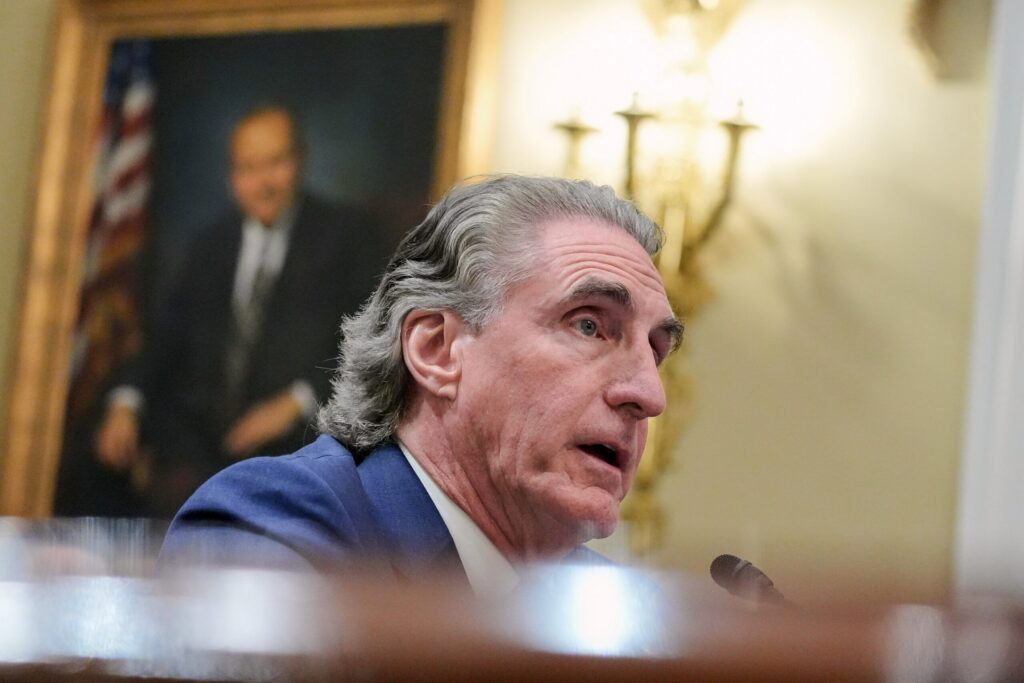
Colorado joins lawsuit challenging changes to Endangered Species Act
Marissa Ventrelli
marissa.ventrelli@coloradopolitics.com
Updated 23 hours ago
Colorado once more joined a coalition of states challenging the Trump administration — this time on proposed rules regarding the Endangered Species Act. The pair of lawsuits challenge new rules made under Interior Secretary Doug Burgum, who earlier said the...
10th Circuit orders second look at immunity for Kiowa County deputy over fatal vehicle crash
Michael Karlik
michael.karlik@coloradopolitics.com
Updated 22 hours ago
The Denver-based federal appeals court directed a trial judge on Tuesday to further analyze whether a Kiowa County deputy and the sheriff’s office may be sued for a fatal vehicle collision. The Colorado Governmental Immunity Act generally shields government entities and public...
Colorado justices to hear appeal in Kendrick Castillo death lawsuit, ‘fugitive’ rule
Michael Karlik
michael.karlik@coloradopolitics.com
Updated 36 minutes ago
The Colorado Supreme Court announced on Tuesday that it will decide whether it was proper to dismiss a lawsuit over the 2019 shooting death of Kendrick Castillo after the defendants paid the maximum amount of damages available to Castillo’s parents,...
Federal judge dismisses Douglas County’s challenge to collective bargaining law
Nicholas Fogleman
nicholas.fogleman@denvergazette.com
Updated 1 day ago
A federal judge dismissed claims brought by the Douglas County Board of Commissioners alleging that a state law granting county employees the right to organize and join labor unions violates free speech protections and conflicts with federal labor law. Douglas...
Arapahoe County judge’s frustration with defense lawyer not grounds for new trial
Michael Karlik
michael.karlik@coloradopolitics.com
Updated 2 days ago
Colorado’s second-highest court decided last week that an Arapahoe County judge’s repeated rebukes of a defense attorney and orders to “be quiet” did not rise to the level of bias or a violation of the defendant’s due process rights. A...
PREV
PREVIOUS
Colorado doctors, dentists challenge state law on gender‑transition services in new federal lawsuit
A group of Christian doctors and dentists has filed a federal lawsuit challenging a Colorado law they say requires them to provide gender‑transition services that conflict with their religious and ethical beliefs. The lawsuit, filed by the Christian Medical and Dental Associations and Button Family Practice of Cañon City, alleges that certain portions of Colorado’s […]
Denver sues Trump to block armed ICE agents from polling sites
The City of Denver, along with several immigrant rights groups, sued the Trump administration Thursday, seeking to block armed U.S. Immigration and Customs Enforcement officers from polling sites during the upcoming midterm elections. The suit, filed in the U.S. District Court in Washington, D.C., leans heavily on 18 U.S.C. 592, an older federal law which […]