

Colorado Supreme Court recognizes right to self-defense in workplace

The Colorado Supreme Court recognized on Monday that there is a right to self-defense in the workplace for which employers may not terminate workers so long as they lawfully exercise that right.
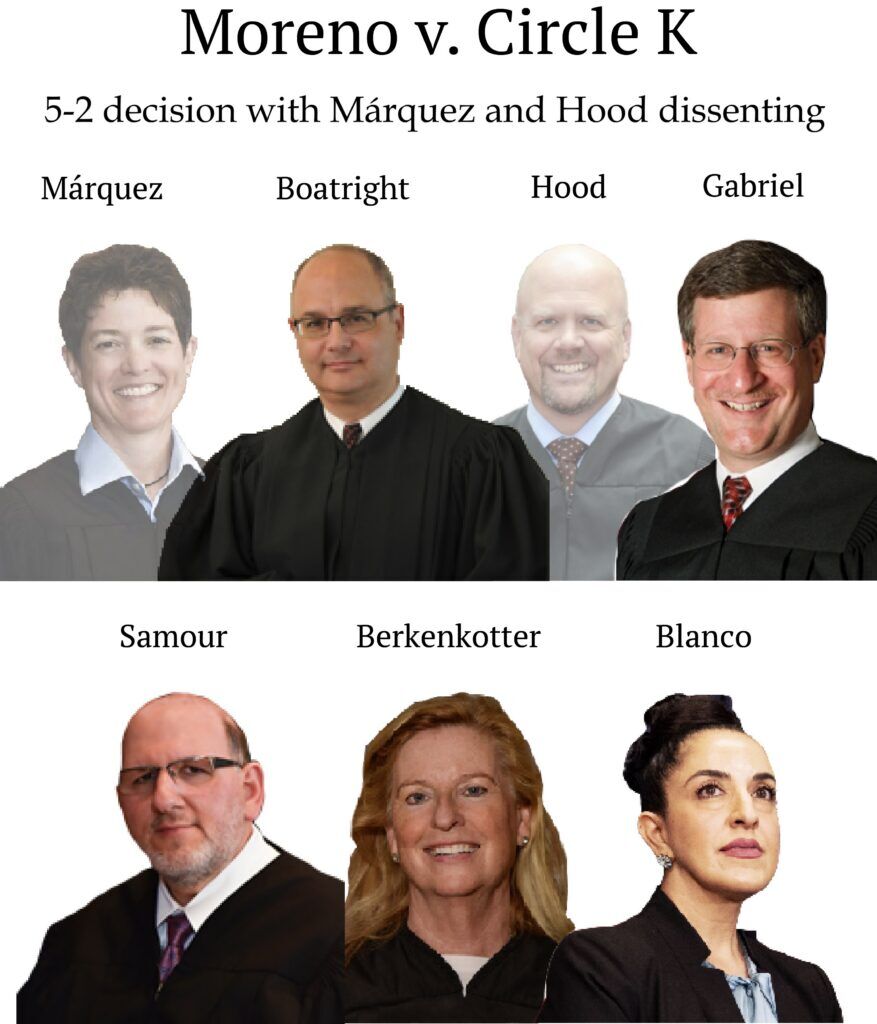
The court’s majority in the 5-2 decision cautioned that its holding was narrow, but that the history and importance of self-defense meant the right does not disappear “simply because a person enters the workplace.”
“The employment relationship should not be used to strip workers of the ordinary legal privileges every person possesses. The right to self-defense has never been cabined by role or location,” wrote Justice Maria E. Berkenkotter in the June 15 opinion. “It is a unique, essential, and inalienable right that exists for workers, students, retirees, and the unemployed alike. It allows people to protect themselves in their homes, schools, houses of worship, and workplaces under very specifically defined circumstances.”
Chief Justice Monica M. Márquez dissented, disagreeing that private employers must recognize the right to self-defense. She also questioned whether the right was job-related.
“Although the majority acknowledges that rights conferred by the constitution constrain only state action, its reasoning means that after today, a privateemployer may not lawfully terminate an at-will employee for conduct related to the exercise of any inalienable constitutional right — even if the employee’s conduct plainly violates the employer’s policies,” Márquez wrote for herself and Justice William W. Hood III.
The lawsuit by Mary Ann Moreno against her former employer, convenience store operator Circle K, reached the state’s highest court in an unusual way. Moreno is litigating in federal court for wrongful termination, but her claim hinges upon whether Colorado law protects an employee from being fired for using self-defense in the workplace.
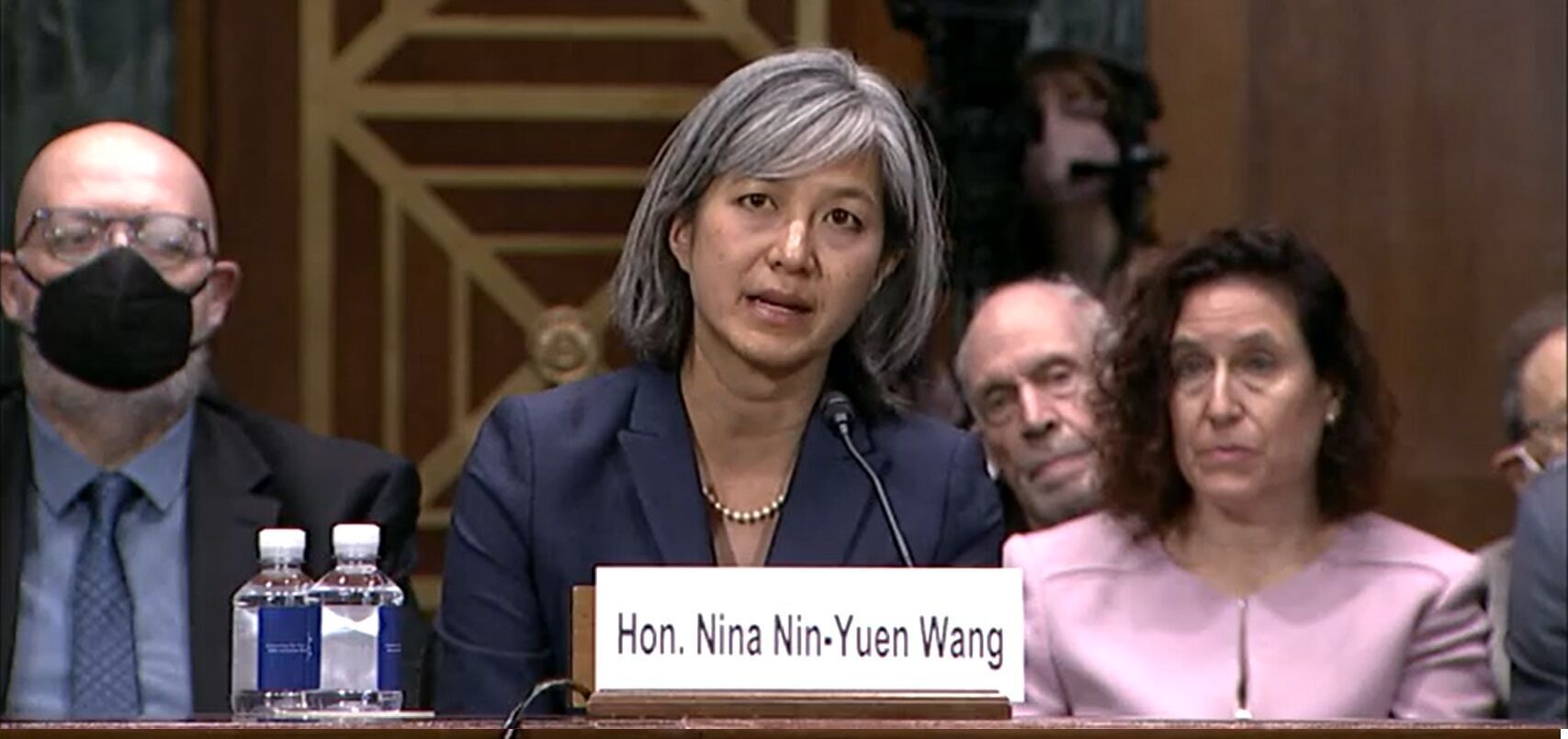
While U.S. District Court Judge Nina Y. Wang acknowledged she had the power to interpret unclear legal terrain, she felt “most comfortable” with Colorado’s highest court defining the limits of state law. Last year, Wang asked the Supreme Court to step in, reasoning that if no right to self-defense existed for the workplace, Moreno’s case would likely not reach a jury.
Moreno was behind the register at a Westminster Circle K store when a man holding two hunting knives asked if she could give him cigarettes for free. In Moreno’s telling of the October 2020 encounter, the robber attacked her while she was trapped behind the counter, prompting her to defend herself. In the process, she made contact with her assailant.
After reviewing the security footage, Circle K managers did not believe Moreno acted in self-defense. Instead, she stepped toward the shoplifter and briefly grabbed his arm and shirt as he reached for the merchandise. Those actions violated the company’s “Don’t Chase or Confront” policy for shoplifters, leading to Circle K terminating her employment.
Moreno alleged Circle K terminated her in violation of Colorado’s public policy — namely, the state’s recognition of a right to self-defense. Initially, Wang sided with Circle K, finding that Colorado law did not support the idea that an at-will employee may not be fired for exercising self-defense in the workplace.
After the Denver-based federal appeals court returned the case to Wang for a second look, she believed jurors could find that Moreno was using self-defense. However, if they did, it raised the question Wang initially attempted to answer: Does Colorado law prohibit employers from firing someone for using self-defense in the workplace?
Moreno asked her to invite the state Supreme Court to answer the question using a process known as “certification.” Wang agreed to certify the question.
Moreno’s attorneys argued Colorado’s constitutional right to self-defense should naturally extend to workplaces, especially considering recent mass shootings at schools, movie theaters, supermarkets and nightclubs.
“Where I’m really struggling is to find a clear legislative expression of public policy that ties this right to self-defense to your right as an employee,” said Márquez during oral arguments. “I imagine Circle K would say that’s the whole reason we want our employees not to engage: We want them to disengage and to stay away from these types of confrontations.”

Thomas W. Carroll, representing Circle K, maintained that employers should have the ability to impose limits on an employee’s exercise of self-defense in the absence of any clear state policy. He argued that any recognition of self-defense in the workplace should include a duty to retreat and not cover an employee’s defense of a third party or of property.
“We don’t need people jumping from behind the counter to stop someone from stealing a six-pack of beer,” he said.
Berkenkotter emphasized in the majority opinion that the court was not deciding whether Moreno’s actions constituted self-defense, or even whether Circle K’s policy prohibited her from using self-defense. Instead, the majority found that Colorado’s recognition of a right to self-defense from pre-statehood days, combined with its impact, means Colorado employers are prohibited from discharging employees who exercise it lawfully.
“It makes no sense to suggest that everyone has an inalienable right to defend themselves if faced with imminent danger, unless they are at work,” wrote Berkenkotter. “Rather, the right follows the employee from home to work and back and everywhere in between.”
Márquez, in dissent, argued that Circle K’s policy does not prohibit employees from using self-defense. She further suggested that employees who exercise other constitutional rights in violation of workplace policies — for example, brandishing a concealed weapon at a shoplifter — cannot be terminated under the majority’s logic.
“I also fear that the practical implications of today’s ruling will tie employers’ hands and ultimately undermine workplace safety,” she wrote.
The case is Moreno v. Circle K Stores, Inc.

10th Circuit partially revives lawsuit over 2020 Denver protest injuries
Michael Karlik
michael.karlik@coloradopolitics.com
Updated 8 hours ago
The Colorado-based federal appeals court revived a man’s claims against Denver on Friday after concluding a trial judge resolved the case in the city’s favor without analyzing two of the three instances of alleged excessive force and other constitutional violations....
Federal judges find Colorado immigration judge violated several orders
Michael Karlik
michael.karlik@coloradopolitics.com
Updated 9 hours ago
Multiple federal judges in Colorado have freed people from immigration custody after determining that one immigration judge violated their directives for properly conducting bond hearings. For nearly a year, Colorado’s U.S. District Court has faced a flood of “habeas corpus” petitions...
Misconduct complaints from ex-Colorado judicial discipline director dismissed against federal judges
Michael Karlik
michael.karlik@coloradopolitics.com
Updated 1 day ago
The administrative body for the Denver-based federal appeals court upheld a finding last week that misconduct complaints against Colorado’s chief federal trial judge and the chief appeals judge warranted dismissal and appeared to be a “litigation tactic” by the complaining...

First-ever Red Rocks naturalization ceremony draws most diverse group of new citizens
Michael Karlik
michael.karlik@coloradopolitics.com
Updated 10 hours ago
Colorado’s federal trial court held its first-ever naturalization ceremony for nearly 300 new citizens on Thursday at Red Rocks Park and Amphitheatre. “We’re doing it to commemorate the 250th anniversary of the Declaration of Independence and the United States. Red...
Jeffco taxpayers could be on the hook for a possible child sex assault settlement
Matt Kyle
matt.kyle@denvergazette.com
Updated 14 hours ago
Taxpayers may end up on the hook for a child sexual assault settlement, possibly worth up to $15 million, after Jeffco Public Schools failed to notify its insurance company in a timely manner about the case. The incident stems from...
10th Circuit finds no fair housing violation by Littleton landlord for worker’s alleged rape of tenant
Michael Karlik
michael.karlik@coloradopolitics.com
Updated 8 hours ago
The Denver-based federal appeals court concluded on Monday that Littleton’s housing authority could not be held liable for a maintenance worker’s alleged rape of a tenant, as the worker’s employment did not provide any special access to the victim. A...

Jeffco Public Schools sues Trump administration to protect funding after alleged transgender policies violation
Matt Kyle
matt.kyle@denvergazette.com
Updated 2 days ago
In the wake of several threats by the Trump administration to revoke federal funding, Jeffco Public Schools filed a lawsuit against the Department of Education seeking to protect that badly needed money. Jeffco has been under investigation by the DOE’s...
Denver detox center did not violate man’s rights with 10-hour hold, 10th Circuit says
Michael Karlik
michael.karlik@coloradopolitics.com
Updated 3 days ago
The Colorado-based federal appeals court concluded on Tuesday that Denver’s detoxification facility did not violate a man’s rights by holding him against his will for 10 hours until his blood alcohol content was projected to reach zero. Unusually, Brian Garrett’s...

Federal judge clarifies ex-GOP treasurer candidate’s burden to prove defamation claims
Michael Karlik
michael.karlik@coloradopolitics.com
Updated 3 days ago
A federal judge clarified last week that businessman and former Republican statewide candidate Brian Watson will need to surmount a higher hurdle in proving his claim that a party guest’s alleged description of him as a “criminal” amounted to defamation....
Colorado board permits state to appeal injunction against arthritis drug price cap
Marissa Ventrelli
marissa.ventrelli@coloradopolitics.com
Updated 4 days ago
A Colorado board voted Friday to allow the Attorney General’s Office to fight an injunction against a price cap on a drug that treats arthritis. A U.S. district court judge had granted the company Amgen a preliminary injunction, temporarily blocking...
PREV
PREVIOUS

Colorado Supreme Court heads toward summer recess, newest justice authors first opinion | COURT CRAWL
Welcome to Court Crawl, Colorado Politics’ roundup of news from the third branch of government. The state Supreme Court is in the process of releasing a large batch of opinions as it heads toward its summer recess in July, plus the newest justice authored her first opinion for the court. Colorado Supreme Court news • The […]

Colorado justices walk back appeals court's expansion of rezoning via ballot box
The Colorado Supreme Court ruled on Monday that rezonings of planned-unit developments cannot occur through a vote at the ballot box, reversing an appellate decision that found such changes were fair game for a popular vote. In contrast to traditional, or “Euclidean,” zoning, which separates land uses by type, planned-unit developments are based on negotiated […]