

Colorado justices walk back appeals court’s expansion of rezoning via ballot box
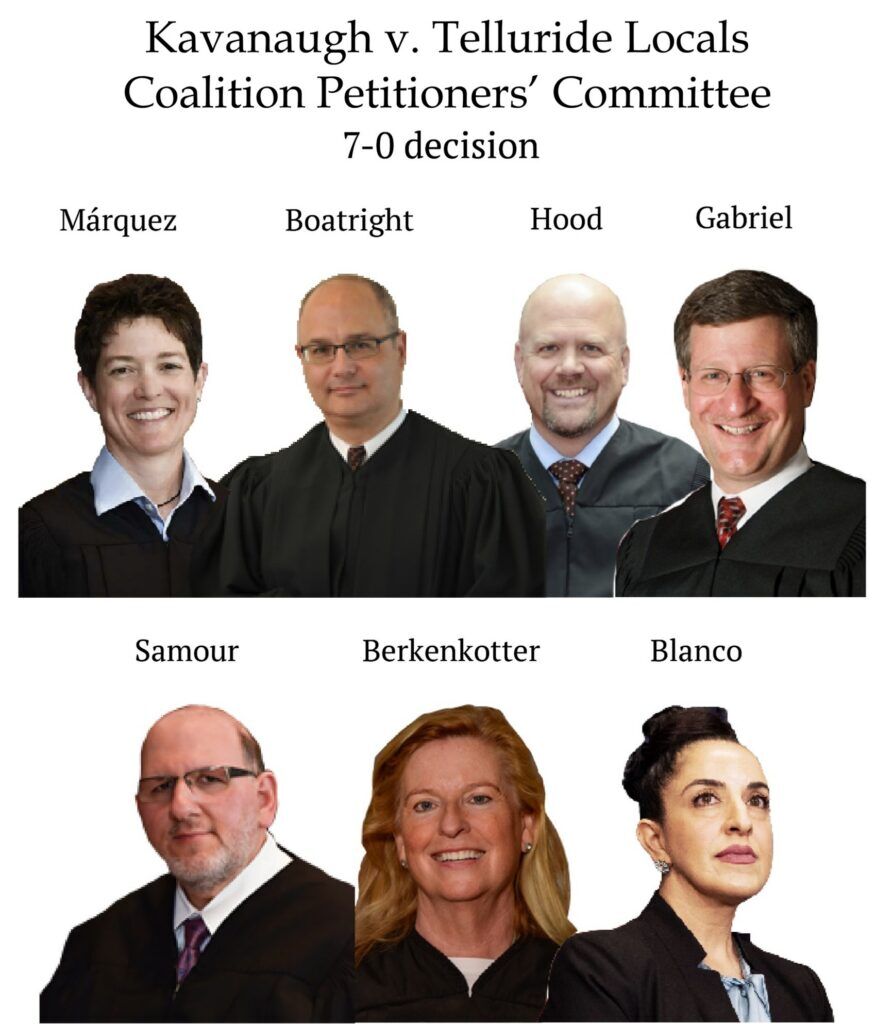
The Colorado Supreme Court ruled on Monday that rezonings of planned-unit developments cannot occur through a vote at the ballot box, reversing an appellate decision that found such changes were fair game for a popular vote.
In contrast to traditional, or “Euclidean,” zoning, which separates land uses by type, planned-unit developments are based on negotiated agreements specifying the types of land uses within a defined area. The Supreme Court held in 1981 that traditional zoning and rezoning decisions are legislative in nature and therefore subject to ballot initiatives.
But what about changes to PUDs after the plan is approved?
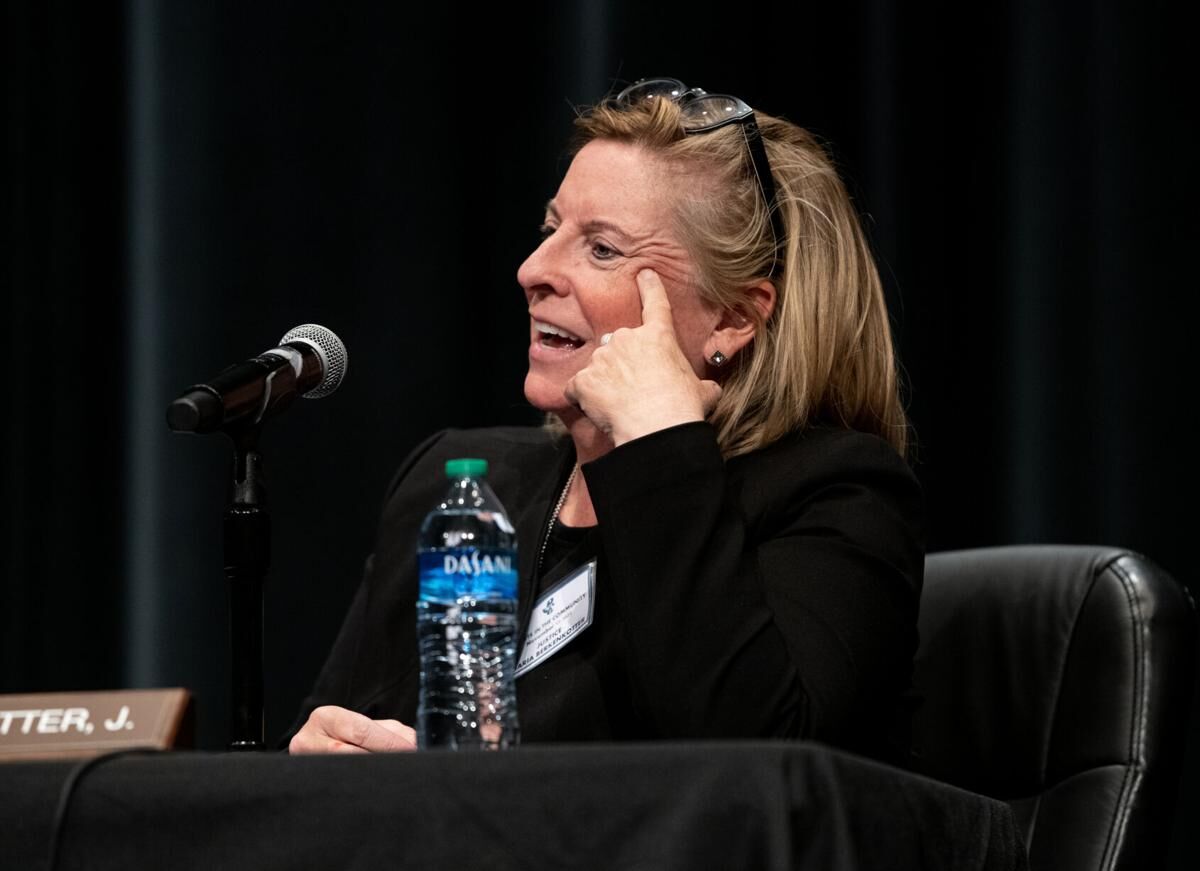
“To be sure, a PUD is a form of zoning,” wrote Justice Maria E. Berkenkotter in the June 15 opinion. But in the face of a proposal to change a parcel of open space to housing, “the initiative process is not equipped to address the complex assessments required by the Town’s enabling ordinance, such as how to best mitigate geologic hazard areas and high groundwater tables or how to maintain transportation linkage for adjacent properties.”
The case from Telluride centers on an area in the Butcher Creek PUD known as “Lot A,” an open space that owner Brighton Properties seeks to rezone to permit affordable housing. The town rejected a proposed ballot initiative to that effect, claiming that an amendment to the 30-year-old PUD agreement needed the homeowners’ approval.
Brighton Properties sued the town clerk, seeking a declaration that it is legally permitted to pursue rezoning through a ballot initiative.
Acknowledging court precedent that labeled zoning a legislative act normally subject to the initiative process, then-District Court Judge Mary E. Deganhart believed Brighton Properties’ case was “more complex than the simple rezoning of a single parcel.” After a trial, she sided against Brighton Properties, concluding the land-use designation for Lot A could not be changed without the consent of the lot owners.
Brighton Properties appealed, arguing that if original zoning decisions are legislative, so are rezoning decisions. Deganhart’s interpretation of the law meant all PUDs would become “a refuge” from citizen-initiated rezoning measures, the developer noted.
A three-judge Court of Appeals panel sided with the developer, holding that both zoning and rezoning decisions are legislative actions within the initiative process. However, the panel declined to answer whether the legal rights of the other lot owners were implicated, deeming it an issue to be addressed if the initiative ultimately passed.
“If the ordinance is adopted, the other lot owners may assert whatever rights they believe they possess to challenge the validity of the ordinance on its merits,” wrote then-Judge Anthony J. Navarro.
Telluride, in appealing to the Supreme Court, received support from the Colorado Municipal League, which argued “substantial public resources are wasted” in conducting a rezoning vote, only for neighboring property owners to later invalidate the results by asserting their own rights. The league also noted zoning decisions made by localities are quasi-judicial and apply facts to legal criteria — which does not happen in a popular election.
“What’s to stop the electorate from undoing the entire PUD?” wondered Chief Justice Monica M. Márquez during oral arguments.
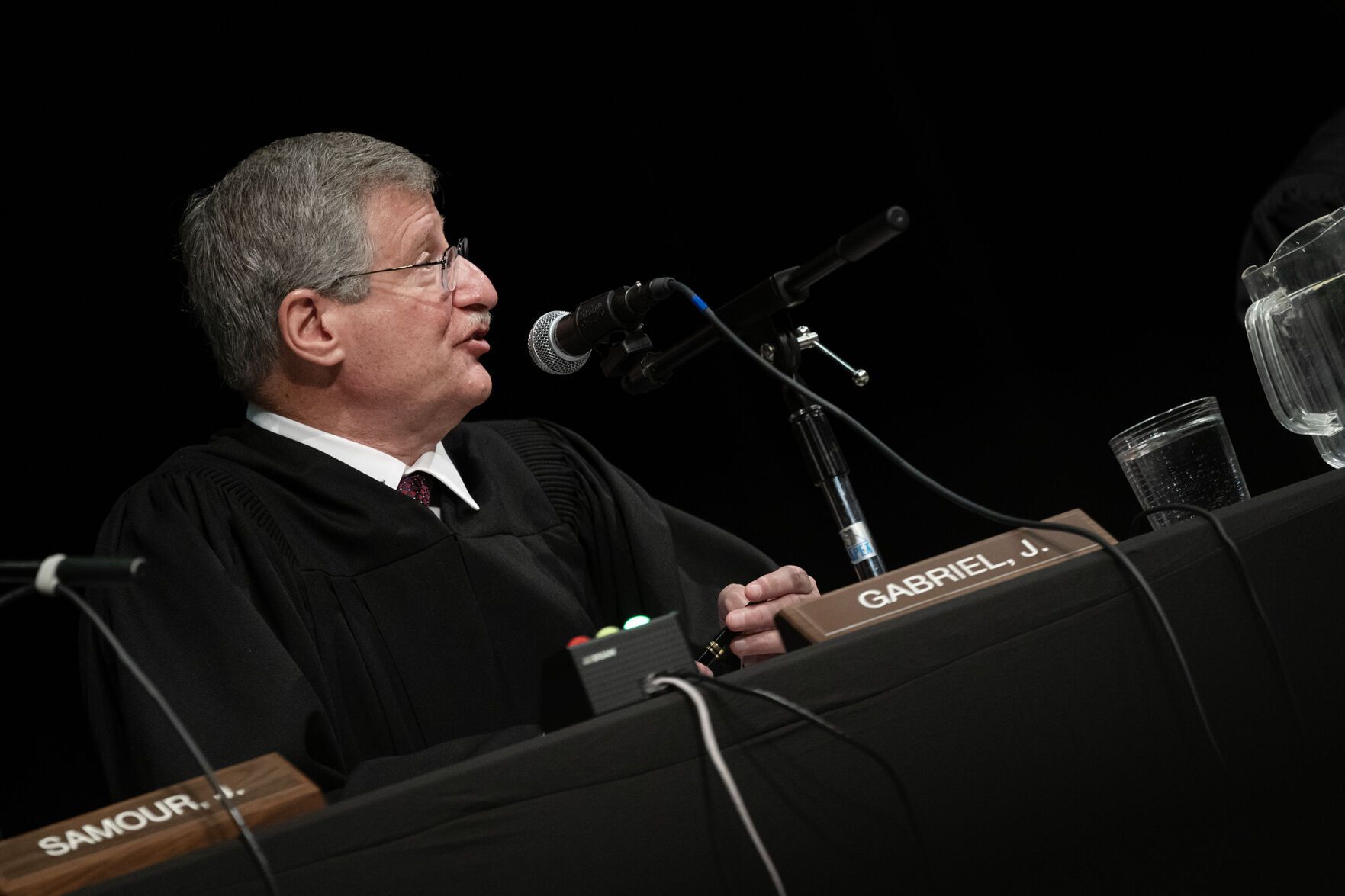
“This feels like somewhat of a ‘hostile zoning’,” added Justice Richard L. Gabriel.
Brighton Properties’ attorney, Patricia A. Mellen, said it is possible to educate voters about the technical aspects of a rezoning, and there was no reason to limit their rights when a rezoning initiative happens to focus on a PUD.
“It is simply a different means to an end. It’s a valid option for a party to seek a ballot initiative in the same way it is to seek approval through the town itself,” she said.
But the justices saw a distinction between a local government’s adoption of “broad public policy” through an original PUD ordinance and the “administrative power” it exercises to carry out those goals in a development.
“The Town reviewed the application based on case-specific considerations that require specialized knowledge,” wrote Berkenkotter. “By attempting to override the proper procedure to amend the PUD Agreement, Brighton invaded the Town’s administrative authority.”
The case is Kavanaugh v. Telluride Locals Coalition Petitioners’ Committee et al.


Colorado State Shooting Association files constitutional challenge to firearms dealer law
Marissa Ventrelli
marissa.ventrelli@coloradopolitics.com
Updated 26 minutes ago
The Colorado State Shooting Association, the state’s branch of the National Rifle Association, has filed a lawsuit challenging a recently signed law expanding regulations for firearms dealers. House Bill 26-1126 clarifies that firearms dealers must hold both a federal and...

Colorado Supreme Court recognizes right to self-defense in workplace
Michael Karlik
michael.karlik@coloradopolitics.com
Updated 1 hour ago
The Colorado Supreme Court recognized on Monday that there is a right to self-defense in the workplace for which employers may not terminate workers so long as they lawfully exercise that right. The court’s majority in the 5-2 decision cautioned...

Colorado Supreme Court heads toward summer recess, newest justice authors first opinion | COURT CRAWL
Michael Karlik
michael.karlik@coloradopolitics.com
Updated 2 hours ago
Welcome to Court Crawl, Colorado Politics’ roundup of news from the third branch of government. The state Supreme Court is in the process of releasing a large batch of opinions as it heads toward its summer recess in July, plus...
Colorado justices say insurers may access policyholders’ medical info in denied-benefits litigation
Michael Karlik
michael.karlik@coloradopolitics.com
Updated 1 day ago
The Colorado Supreme Court declined on Monday to expand its narrow prohibition on insurance companies accessing policyholders’ medical information, clarifying that a dispute over an insurer’s bad-faith decision to deny benefits is the only situation where a company is limited...
Colorado Supreme Court declines to loosen requirements for insurance company defendants
Michael Karlik
michael.karlik@coloradopolitics.com
Updated 2 days ago
The Colorado Supreme Court declined last week to reconsider its longstanding expectations for insurance company defendants, and agreed that an insurer failed to properly raise its defenses against a policyholder’s breach-of-contract lawsuit. When an insured driver has an accident with...

Teen defendant properly transferred from youth detention to jail, Colorado justices conclude
Michael Karlik
michael.karlik@coloradopolitics.com
Updated 1 day ago
Colorado law required the transfer of a teenage murder suspect from youth detention to the county jail when he turned 18, the state Supreme Court ruled last week. Prosecutors have accused Issac James Lawrence of killing a younger boy and attempting to...
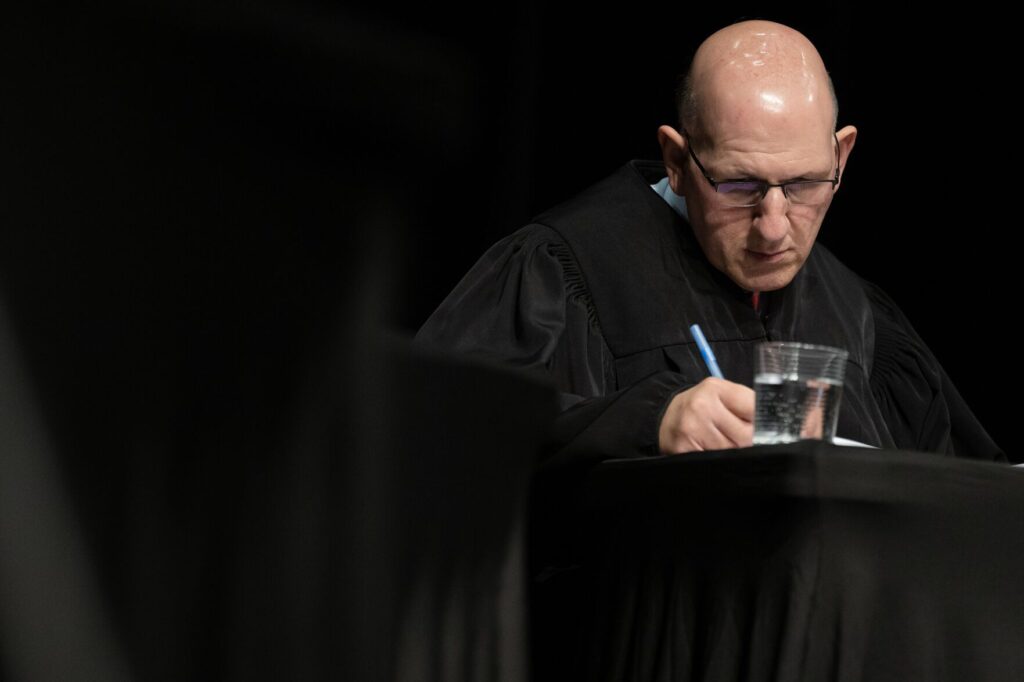
Divided Colorado Supreme Court finds parental anonymity in ‘safe haven’ law
Michael Karlik
michael.karlik@coloradopolitics.com
Updated 2 days ago
Parents who surrender their newborns under Colorado’s “safe haven” law are entitled to anonymity and confidentiality in any subsequent adoptive proceedings involving the child, the state Supreme Court ruled on June 8. Colorado’s law, like its counterparts across the country,...
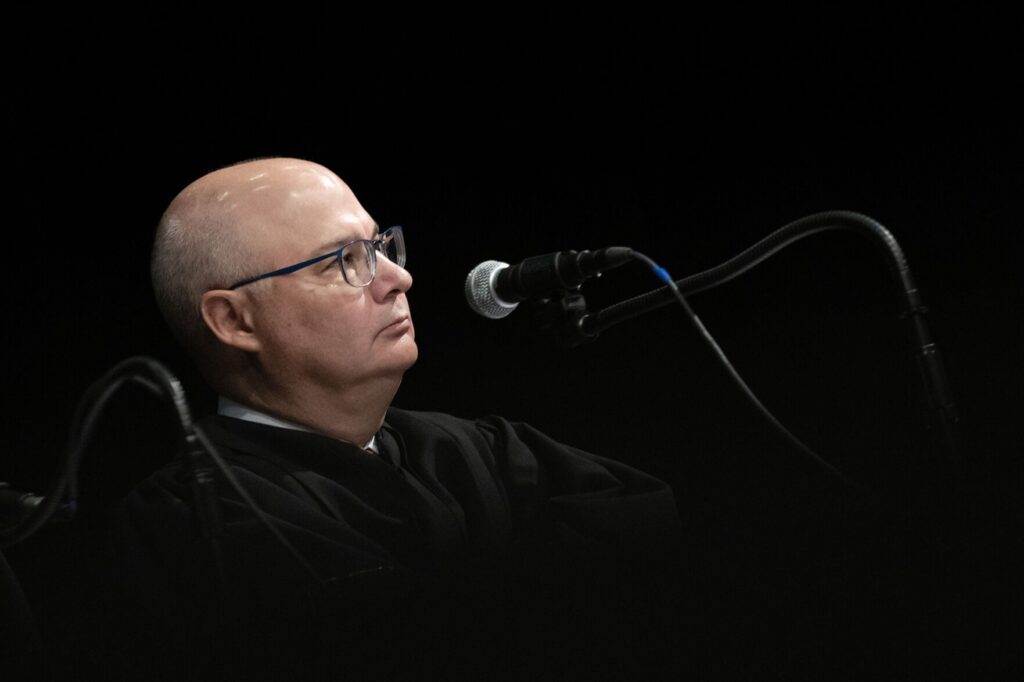
Safe2Tell tip, corroborated details provided grounds to search backpack, Colorado justices rule
Michael Karlik
michael.karlik@coloradopolitics.com
Updated 2 days ago
The Colorado Supreme Court decided this month that a tip submitted through the state’s confidential school safety system, plus a Douglas County administrator’s corroboration of some details, provided reasonable suspicion to search a student’s backpack for drugs. Someone submitted a...
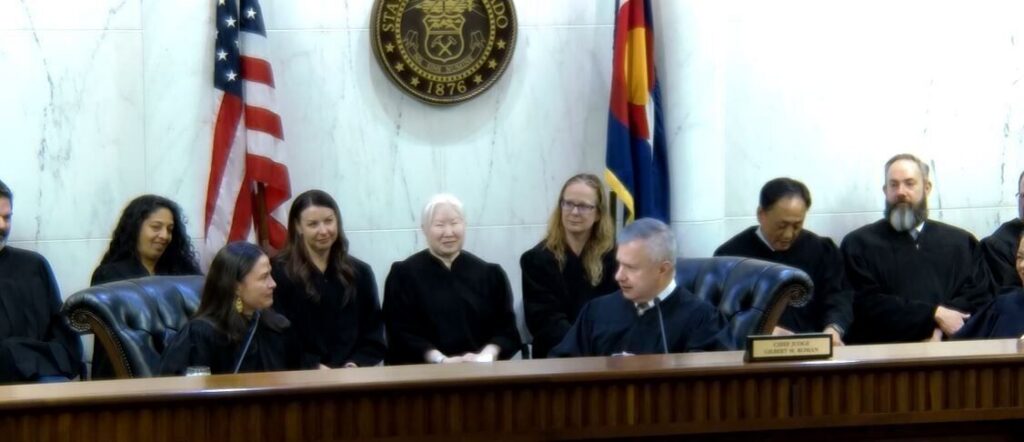
Appeals court finds opening in Colorado Supreme Court’s framework for child neglect cases
Michael Karlik
michael.karlik@coloradopolitics.com
Updated 4 days ago
Colorado’s second-highest court squeezed through an opening last week in a controversial state Supreme Court decision from 2025, concluding that the justices had not prohibited a child’s legal representative from being the one to request termination of parental rights in...
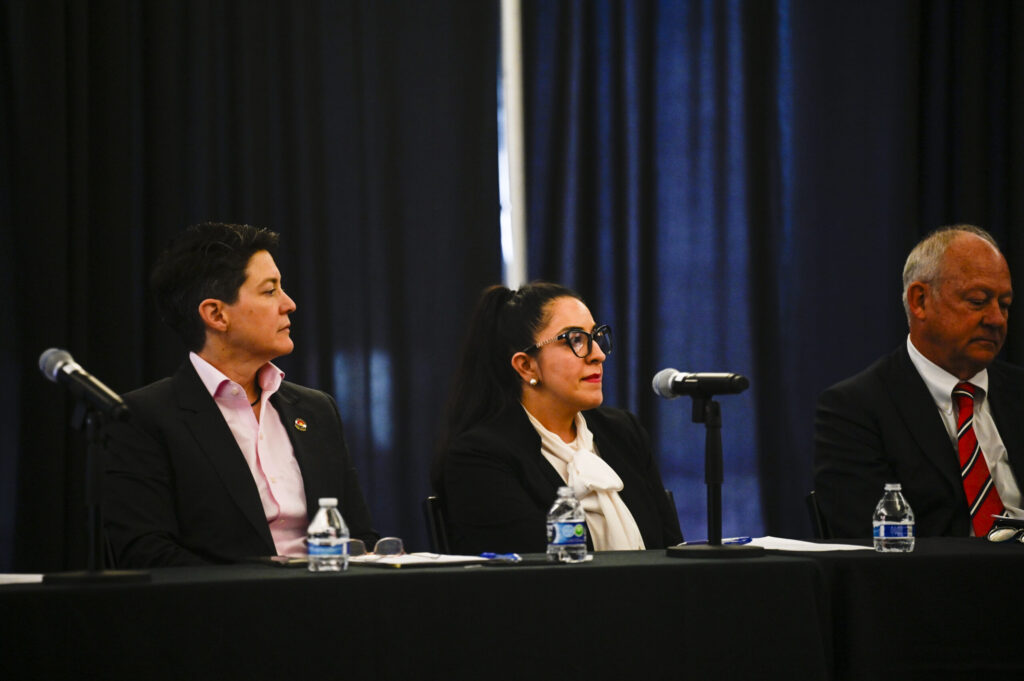
Colorado Supreme Court upholds police search of car based on arm movements
Michael Karlik
michael.karlik@coloradopolitics.com
Updated 2 days ago
The Colorado Supreme Court decided last week that Denver officers’ search of a vehicle was constitutional, based on their perception of the occupants’ arm movements that a trial judge found to not be credible. Officers Keegan Grubb and Richard Eberharter...
PREV
PREVIOUS

Colorado Supreme Court recognizes right to self-defense in workplace
The Colorado Supreme Court recognized on Monday that there is a right to self-defense in the workplace for which employers may not terminate workers so long as they lawfully exercise that right. The court’s majority in the 5-2 decision cautioned that its holding was narrow, but that the history and importance of self-defense meant the […]

House Ethics Committee frustrated as Colorado Rep. Joseph refuses to appear without a subpoena
The Colorado House Ethics Committee voted unanimously Monday to subpoena Rep. Junie Joseph, D‑Boulder, to appear at its June 23 hearing on the complaint involving Rep. Mandy Lindsay, D‑Aurora. Committee members made clear they were frustrated at having to take that step and delivered sharp criticism of Joseph. Attorneys for both lawmakers told the committee […]