

Appeals court revives tenants’ lawsuit over landlords’ illegal fee demands

Colorado’s second-highest court revived a proposed class-action lawsuit against landlords and other entities last month, concluding that state law did not permit the practice of demanding that tenants pay attorney fees in certain eviction proceedings.
In 2021, lawmakers enacted a process by which tenants facing eviction can “cure” their delinquent payments. After a landlord has provided notice of nonpayment and after they file an eviction case, the tenant may pay “all amounts due according to the notice, as well as any rent that remains due” up until there is a final court judgment. If that happens, the judge must dismiss the case.
But could “all amounts due” include a demand that the tenant their landlord’s attorney fees for bringing the eviction case?
No, concluded a three-judge Court of Appeals panel, because Colorado prohibits the shifting of fees in only one direction.
“The fees provision requires a tenant to pay her landlord’s attorney fees as a condition of exercising the statutory right to cure once an (eviction) action is filed — it does not contemplate a situation in which the tenant’s fees could be shifted to the landlord if the default is cured before the court enters an order,” wrote Judge Matthew D. Grove in the May 28 opinion.
Case: Woodruff v. Tschetter Sulzer P.C.
Decided: May 28, 2026
Jurisdiction: Denver
Ruling: 3-0
Judges: Matthew D. Grove (author)
Jerry N. Jones
Timothy J. Schutz
In 2023, seven plaintiffs filed suit alleging a similar sequence of events. They signed a lease obligating them to pay “our current attorney’s fees and court costs” if they opted to cure their nonpayment before the conclusion of an eviction case. They all fell behind on rent, cured their nonpayment, and faced a demand for their landlords’ attorney fees, usually between $300 and $500.
The plaintiffs sued Cornerstone Apartment Services, RedPeak Properties, Echelon Property Group, and Asset Living. They also named as defendants the Colorado Apartment Association and the law firm known at the time as Tschetter Sulzer, which advertised itself as “Colorado’s #1 Eviction Law Firm.”
Among other things, the plaintiffs pointed to a provision of state law prohibiting leases from containing a “one-way, fee-shifting clause that awards attorney fees and court costs only to one party.” A related law prohibits either landlords or tenants from recovering their costs of an eviction case unless the lease agreement allows “for either party to obtain attorney fees.”
In a series of 2024 orders, Denver District Court Judge Sarah B. Wallace dismissed the plaintiffs’ theft, deceptive trade practices, and related claims. She noted that, during the 2023 legislative session, lawmakers revised the law to specify that any rental agreement with an attorney fees provision is only valid for a “prevailing party in a court dispute” after a judge determines who the prevailing party is.
The question in the class-action lawsuit, Wallace wrote, was whether Colorado law between 2021 and 2023 prohibited the defendants from requiring tenants to pay the landlord’s attorney fees in an eviction case after they cured their nonpayment.
“Plaintiffs argue, without citation to any case law, that the law in Colorado is that a litigant in Colorado can never collect fees from an opponent unless it has secured a court order awarding fees and costs. Under the facts of this case, the relevant lease provisions permit the Defendants to collect attorneys’ fees incurred when filing an (eviction) action,” she concluded.
After the plaintiffs asked her to reconsider, Wallace declined.
Under the plaintiffs’ view, “a tenant could regularly (even monthly) fail to pay their rent such that a landlord would have to file (an eviction), and so long as the tenant exercised their right to cure, the landlord would have no ability to ever collect” the filing costs from the tenant, she wrote. “This reading of the statute is non-sensical. If the legislature’s intent was to prevent landlords from assessing attorneys’ fees and court costs against a tenant in every instance, it would have stated so clearly.”
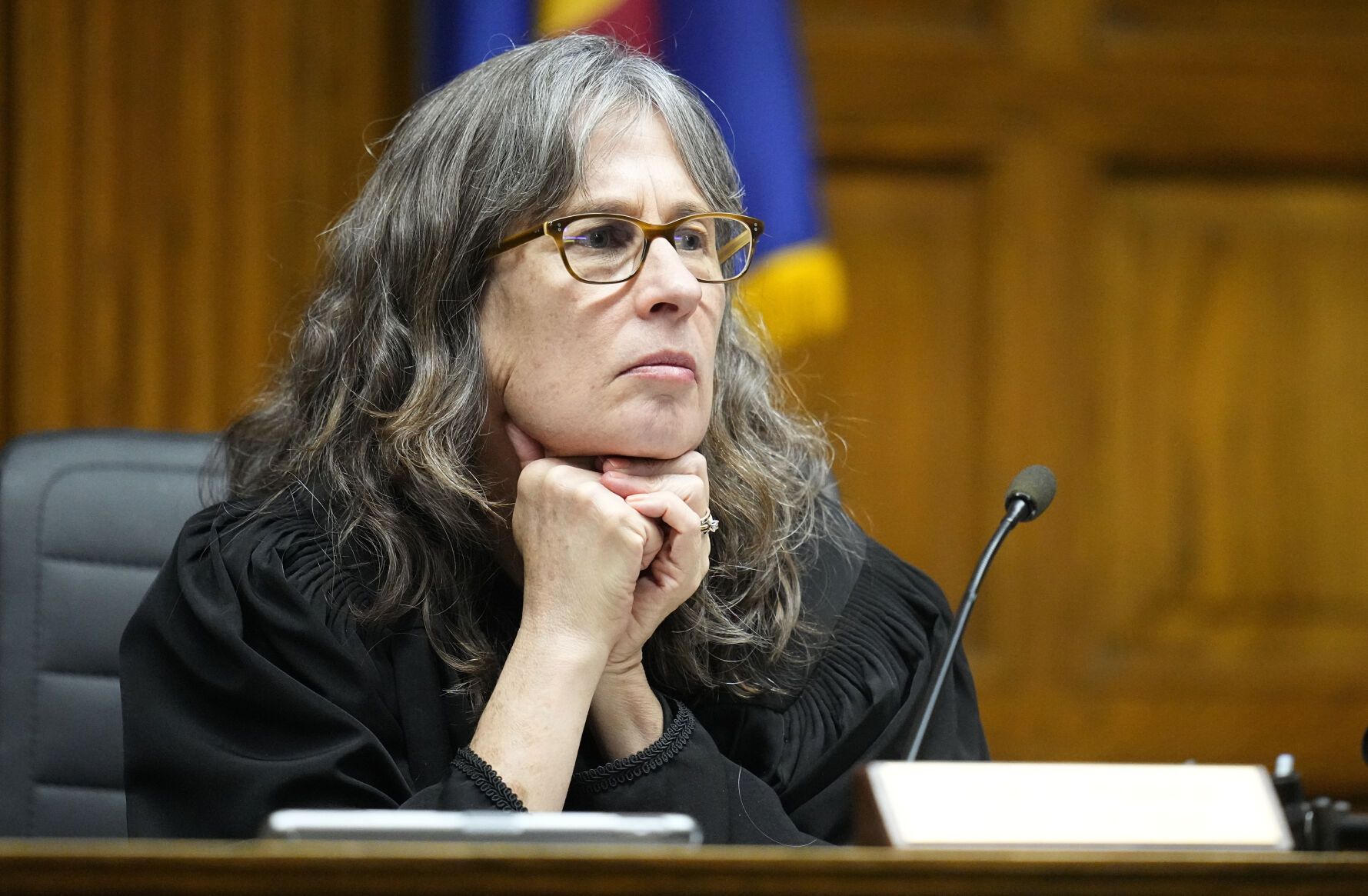
The plaintiffs appealed to the Court of Appeals, arguing that the demand for landlord attorney fees violated the state’s public policy.
“Many tenants who miss a rent payment can, if given a couple weeks, gather enough money to cure, yet cannot come up with another $300-$500 for Fees — a significant percentage of a month’s rent,” wrote the plaintiffs’ attorneys. “And if they can, it may well affect their ability to make their next rent payment, thus subjecting them to another eviction action.”
Tschetter Sulzer acknowledged that state legislators had since clarified the law to specify the conditions for recovering fees.
“Before the statute was amended, however, it did not bar landlords from being reimbursed for their fees and costs when a default was cured without trial or judgment, so that the challenged practice was neither ‘illegal’ nor ‘fraudulent,’” the firm’s attorneys wrote.
The Court of Appeals panel disagreed.
“Contrary to the district court’s understanding of the statute, we conclude that the fees provision is precisely what (the law) prohibits,” wrote Grove. “It flatly prohibits a lease from including a ‘one-way, fee-shifting clause’.”
He acknowledged Wallace’s concerns about the costs landlords incur in paying attorneys to draft and file eviction complaints. Yet, tenants may also need to pay fees if they consult an attorney.
“Nonetheless, neither the district court in its order nor the defendants on appeal offer any cogent reason why such fees incurred by the tenant would not be ‘shiftable,’” Grove wrote.
The panel returned the case to Wallace to address the defendants’ other arguments.
The case is Woodruff et al. v. Tschetter Sulzer, P.C. et al.

Schoolchildren’s presence at child sex-related trial did not harm Arapahoe County defendant, appeals court says
Michael Karlik
michael.karlik@coloradopolitics.com
Updated 4 hours ago
Colorado’s second-highest court decided on Thursday that the presence of a group of schoolchildren on the first day of a child sexual exploitation trial did not violate an Arapahoe County defendant’s constitutional right to a fair trial. Prosecutors charged Jerry...
Appeals court cites week-old Colorado law to reinstate child neglect case at child, father’s request
Michael Karlik
michael.karlik@coloradopolitics.com
Updated 1 day ago
Colorado’s second-highest court invoked a new state law for the first time on Thursday and reinstated a child neglect case that both the child and her father wished to reopen. House Bill 1227 took effect on Aug. 12, reversing a...
Colorado Supreme Court names William Hood as next chief justice
Michael Karlik
michael.karlik@coloradopolitics.com
Updated 1 day ago
The Colorado Supreme Court has selected Justice William W. Hood III to be the next chief justice, the judicial branch announced on Friday. Hood will succeed Chief Justice Monica M. Márquez, who took over the role in July 2024. “I...

Appeals court upholds Park County trophy hunting conviction
Michael Karlik
michael.karlik@coloradopolitics.com
Updated 1 day ago
Colorado’s second-highest court clarified on Thursday that a defendant may stand convicted under the state’s trophy hunting laws if he abandons a bear carcass but returns later to remove the meat. Under Colorado law, it is a felony to detach...

Judge grants partial injunction to GEO in fight against state health inspection law
Kyla Pearce
kyla.pearce@gazette.com
Updated 2 days ago
A judge ruled Thursday that The GEO Group does not have to follow parts of a new state law requiring more frequent health and safety inspections at the U.S. Immigration and Customs Enforcement processing center in Aurora. Under the order...

Parker man faces 20 years to life for serial sexual assaults
Nicholas Fogleman
nicholas.fogleman@denvergazette.com
Updated 2 days ago
A 25-year-old Parker man who sexually assaulted three women in 2025 pleaded guilty Wednesday and will serve 20 years to life in prison. Javier Rodriguez-Andrade pleaded guilty to charges stemming from three sexual assaults involving women ages 19 to 24. ...
Divided appeals court upholds warrantless DNA collection in Colorado cold case, cautions of government overreach
Michael Karlik
michael.karlik@coloradopolitics.com
Updated 2 days ago
Colorado’s second-highest court upheld the warrantless collection of a suspect’s DNA from a discarded soda can as constitutional on Thursday, while warning about potential abuse of DNA privacy in the absence of further guardrails. By 2-1, a three-judge Court of...

Man charged in Northglenn homicide of wife
Matt Kyle
matt.kyle@denvergazette.com
Updated 2 days ago
A man has been formally charged with murder and burglary relating to a homicide last week in Northglenn. Alexei Munive-Rodriguez, 48, was arrested Sunday after he was at large following the homicide, which occurred Friday. Police were dispatched around 10:30...

10th Circuit grants immunity to officers for fatal Manitou Springs shooting
Michael Karlik
michael.karlik@coloradopolitics.com
Updated 2 days ago
The Denver-based federal appeals court ruled on Wednesday that responding officers from Manitou Springs and El Paso County cannot be held constitutionally liable for shooting and killing a man after a 20-minute standoff. Wilford Deweese allegedly pulled out a gun...
10th Circuit rejects invitation for full-court review of tax-avoidance case
Michael Karlik
michael.karlik@coloradopolitics.com
Updated 3 days ago
The Denver-based federal appeals court declined to reconsider the standards for holding entities liable for their tax-avoidance schemes, with a majority of judges voting against full-court review on Monday. In April, a three-judge panel of the U.S. Court of Appeals...
PREV
PREVIOUS

Xcel franchise renewal clears first Denver City Council committee hurdle
More than $180 million a year in franchise fees, infrastructure relocation savings and undergrounding funds would continue flowing to Denver under a proposed 20-year franchise agreement with Xcel Energy. It cleared a major City Council hurdle Tuesday, while adding new shareholder-funded bill assistance and requirements for neighborhood-compatible substation design. The current agreement, in place since […]

10th Circuit rebuffs government, rules against shift to mandatory immigration detention
The Denver-based federal appeals court ruled on Tuesday against the government’s broad assertion of authority to keep people in immigration custody without the opportunity to demonstrate their suitability for release on bond. Although the regional appeals courts have reached different conclusions on the subject, the U.S. Court of Appeals for the 10th Circuit decided the […]