

Colorado–Nebraska water clash heads to US Supreme Court as canal fight intensifies
The U.S. Supreme Court on Monday agreed to hear Nebraska’s lawsuit against Colorado over the Perkins County canal, a move that advances a legal dispute likely to take years to resolve.
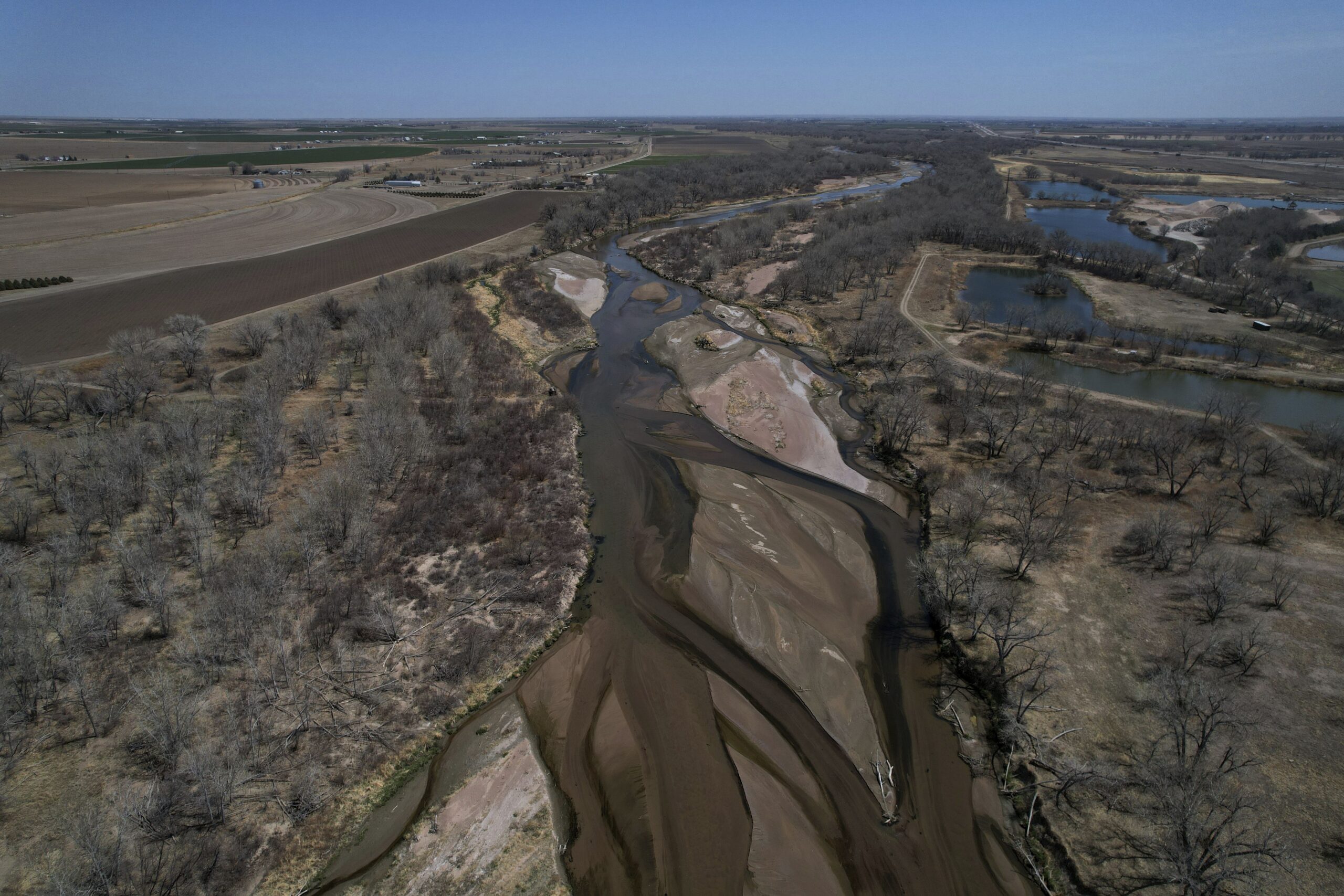
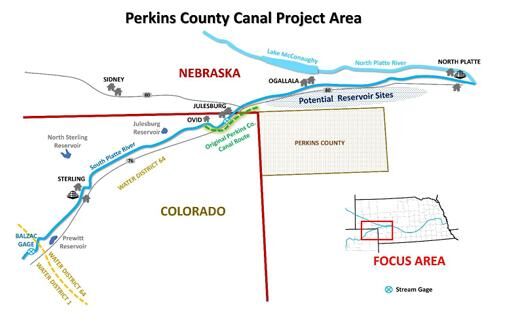
The proposed Perkins County canal would run through land owned by six Colorado landowners in Sedgwick County before crossing into Perkins County in Nebraska. Those landowners have refused to sell, prompting Nebraska to first seek a ruling in lower courts that would grant it eminent domain authority over the Colorado properties.
That one state would attempt to use eminent domain to seize land in another is unprecedented, Colorado Attorney General Phil Weiser said.
In a statement Monday, Weiser said, “Colorado is complying with the South Platte River Compact and not interfering with Nebraska’s efforts to build the Perkins County Canal. Today’s court decision merely opens the door for Nebraska to bring its claims against Colorado. Nebraska’s burden to prove those claims is incredibly high, and we will vigorously defend Colorado’s full entitlements under the compact.”
The history of the proposed canal dates back more than 100 years, to the compact between Colorado and Nebraska regarding water from the South Platte River.
Article VI of the compact states that Nebraska can divert 500 cubic feet per second during the non-irrigation season, as well as any additional available flows, into the canal. The non-irrigation season runs from Oct. 15 to April 1.
Nebraska has already invested $500 million in the project, with an expected total cost exceeding $628 million.
The 1923 compact allows Nebraska to build the canal, using eminent domain, and to seek it in federal court if necessary.
Nebraska’s position
Nebraska argues in its filings that Colorado’s water administration system fails to comply with the compact and that Colorado is violating the agreement in ways that harm Nebraska. The motion filed last October claims Colorado has allowed uses of South Platte River water not authorized under the compact — uses junior to Nebraska’s 1897 irrigation rights.
That overuse, Nebraska’s motion said, stole up to 1.3 million acre-feet of water, and caused “one of [the compact’s] principal beneficiaries to discontinue water service to its users in 2022 and suffer extended periods of surface water deficiency.”
The six Colorado landowners received letters from Nebraska last year, with a deadline of April 17, 2025, to decide whether to sell their land or face an eminent domain land grab.
The landowners rejected the request.
The five-page response from their attorney stated that the diversion would dry up 30,000 to 60,000 acres of land that rely on groundwater for all or part of their irrigation supply, resulting in property damage of up to $270,000 in Sedgwick, Logan, and Washington counties.
“These figures do not account for the potential impact on over 40 municipal wells supplying water to residents, businesses, parks, schools, hospitals and fire stations in Northern Colorado,” according to attorney Donald Ostrander from the Englewood-based law firm of Hamre, Rodriguez, Ostrander & Prescott, PC.
On July 16, 2025, Nebraska filed a lawsuit against Colorado with the U.S. Supreme Court. Nebraska then withdrew its offer to purchase the land — and its threat of eminent domain — on July 28, noting that any Supreme Court action could affect condemnation proceedings. The case has been awaiting a Supreme Court decision ever since.
On Monday, the high court granted Nebraska its motion and gave Colorado 30 days to file an answer.
Yet to be resolved is how the court will handle a brief filed in May by the U.S. Solicitor General, whom the justices invited last year to submit a friend-of-the-court brief opinion.
The Supreme Court on Monday simply asked Colorado to file a response, without narrowing its scope to align with the solicitor general’s recommendations.
James Eklund, former director of the Colorado Water Conservation Board and now a water attorney with Taft, said Colorado will have to address all of Nebraska’s claims. Still, he noted, the state can lean heavily on the solicitor general’s arguments when crafting its response.
The brief recommended that the court reject all but one of Nebraska’s claims and asked that it limit its scope to a single issue: violation of Article IV of the compact.
The solicitor general’s brief noted that during the irrigation season, from April 1 to Oct. 15, Article IV of the compact grants Nebraska priority over certain Colorado users to 120 cubic feet per second of water from the South Platte.
The rest of the year, Article VI allows Nebraska to obtain a right to the South Platte’s waters by building the Perkins County Canal, “a project Nebraska has long contemplated but only recently begun pursuing in earnest.”
The brief said the court should grant leave to file Nebraska’s Article IV claim and refer that claim to a special master.
A claim that one state has deprived another of water it is entitled to under a compact is a quintessential case for this court’s original jurisdiction. And because Nebraska’s challenge is purely factual, that claim is best addressed by a special master.”
A special master is usually an independent third party appointed by the court to investigate. They often “play crucial roles in original jurisdiction cases decided by the Supreme Court, especially in disputes involving state boundaries,” according to Cornell’s Legal Information Institute.
For the Perkins canal lawsuit, the special master would use the facts to write an opinion with proposed legal findings.
The rest of the claims, including the off-irrigation season claim under Article VI, should be dismissed, the brief said.
The brief noted Nebraska’s claim that Colorado obstructed its efforts to build the canal, but the complaint doesn’t provide any evidence to support that claim. “Instead, it points to innocuous criticisms and promises to defend Colorado landowners that do not plausibly injure Nebraska, much less violate the Compact,” the brief explained.
The rest of Nebraska’s claims under Article VI are not “ripe,” the brief said, because the state has only recently begun the process to build the canal, and permits and construction are still years away.
The second claim the solicitor general’s brief recommended for rejection is on Article VIII of the compact.
That section says Colorado officials have a “duty” to fulfill the compact “without necessity of enactment of special statutes for such purposes by the General Assembly of the State of Colorado.”
Nebraska claimed Colorado has allowed for augmentation plans – when water from one source replaces water being used by another source – that are too complex and not subject to objective verification, and that, the brief said, prevents the compact from being “self-executing.”
That’s an “untenable” reading of the compact and should be rejected, the brief stated.

U.S. Supreme Court upholds state laws banning transgender girls and women from school athletic teams
The Associated Press
the-associated-press@coloradopolitics.com
Updated 6 hours ago
WASHINGTON • The U.S. Supreme Court on Tuesday upheld state laws barring transgender girls and women from playing on school athletic teams. The court’s conservative majority ruled that state bans in Idaho and West Virginia don’t violate the U.S. Constitution...

Colorado voters head to the polls today — check here for regular updates
Colorado Politics
colorado-politics@coloradopolitics.com
Updated 10 hours ago
Colorado voters head to the polls today to pick primary winners that will vie for statewide offices in November, the result of which would determine the direction of the state in the coming years. At stake are the parties’ nominees...
Energy secretary says U.S. must grow capacity, lower price during Colorado visit
Mark Samuelson Special to The Denver Gazette
mark.samuelson@denvergazette.com
Updated 7 hours ago
As a heatwave in the U.S. and Europe punctuated widespread calls for recommitments to solar and other “renewable” sources, U.S. Secretary of Energy Chris Wright doubled down on America’s current policy, telling a Thornton crowd on Monday that energy goals...
Gov. Polis asks residents not to use fireworks as wildfires burn
Rachael Wright, Special to Colorado Politics
rachael.wright@coloradopolitics.com
Updated 23 hours ago
While Gov. Jared Polis said he will not issue a statewide fire ban, Colorado’s top political leader urged residents against using fireworks as the country heads into the July 4 weekend. “We are encouraging the people of Colorado to exercise...

3 firefighters who died fighting Snyder Mesa fire identified; one once worked as a snowmaker in Vail
Rachael Wright, Special to Colorado Politics
rachael.wright@coloradopolitics.com
Updated 21 hours ago
Federal authorities on Monday identified the three firefighters who died responding to the Knowles Fire at the Colorado-Utah border, one of whom once worked for a resort in Vail. Across Colorado, several fires are burning, with zero containment in what...
Colorado, Utah mourn after 3 firefighters killed in wildfires
Nicholas Fogleman
nicholas.fogleman@denvergazette.com
Updated 2 days ago
Gov. Jared Polis on Sunday mourned the deaths of three firefighters killed while battling a wildfire on the Colorado-Utah border, calling the loss a tragedy for the state and the firefighting community. The firefighters died Saturday while responding to a...
Crank challenger Jessica Killin signs on to new centrist Democratic group’s ‘Promise to America’
Ernest Luning
ernest.luning@coloradopolitics.com
Updated 23 hours ago
Jessica Killin, one of the Democrats running in Tuesday’s primary for the chance to challenge U.S. Rep. Jeff Crank in Colorado’s 5th Congressional District, joined with more than a dozen incumbent Democratic lawmakers and candidates this week signing on to...
Trump administration warns Jeffco Public Schools it will lose federal funding over transgender issue
Matt Kyle
matt.kyle@denvergazette.com
Updated 1 day ago
The U.S. Department of Education on Friday warned Jeffco Public Schools it has 10 days to correct alleged Title IX violations over the Colorado district’s transgender policy or lose federal funding. The Notice of Impending Action is the latest development...
Who’s spending in Colorado to get your vote?
Marianne Goodland
marianne.goodland@coloradopolitics.com
Updated 3 days ago
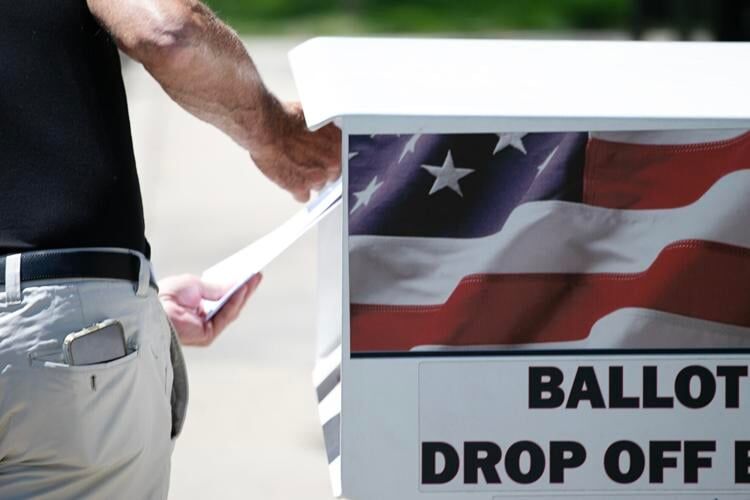
Groups that raise unlimited amounts of money have spent about $20 million in May and June to try and influence Colorado voters’ choices in the upcoming June 30 primaries. By law, these groups cannot coordinate with the candidates they support....
Elbert County takes transmission dispute with Xcel to court
Scott Weiser
scott.weiser@gazette.com
Updated 1 day ago
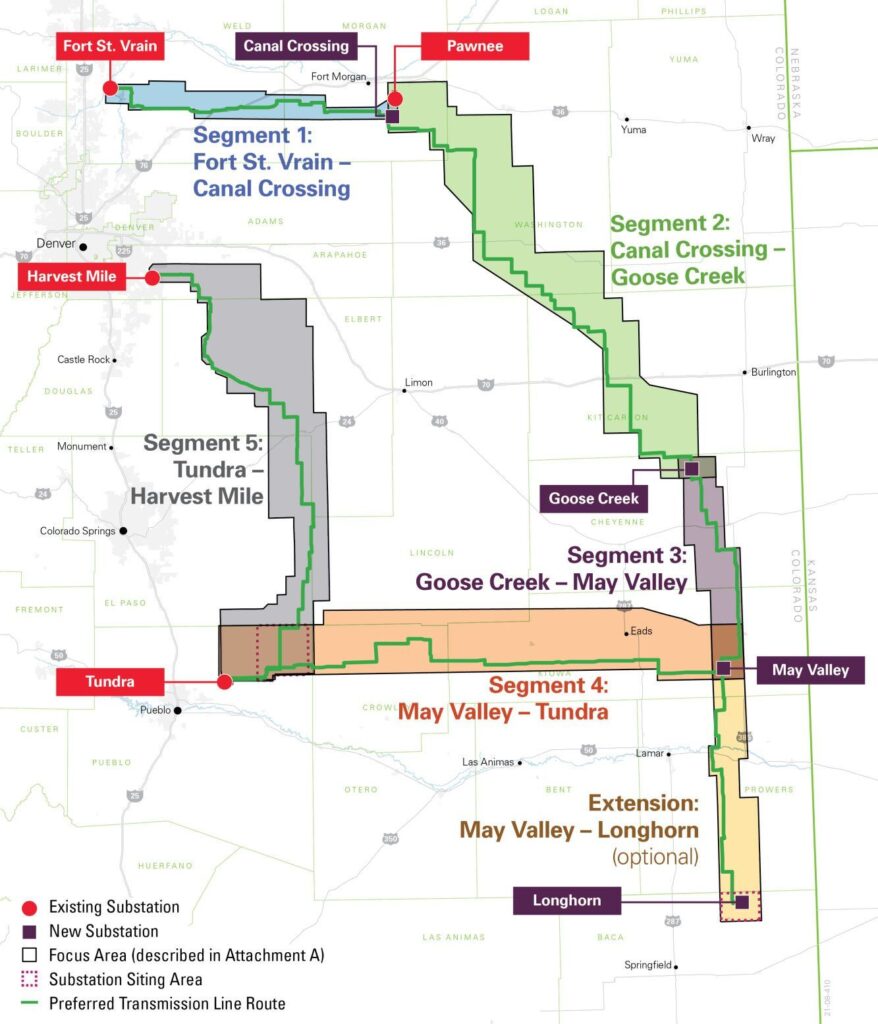
Elbert County filed a lawsuit in Elbert County District Court to challenge the state’s approval of Xcel Energy’s preferred route for a major transmission line, marking the latest escalation in a dispute over how much weight local land-use decisions should...
PREV
PREVIOUS

Supreme Court rules states can count late-arriving mailed ballots, rejecting Trump-led challenge
WASHINGTON (AP) — The Supreme Court on Monday ruled that states can count ballots that arrive after Election Day, a persistent target of President Donald Trump. The 5-4 decision rejected a Republican-led attack on laws in more than half the states and the District of Columbia that permit mailed ballots to arrive and be counted […]

Colorado justices say group that spent $4M on ballot initiatives does not have to disclose donors
The Colorado Supreme Court ruled on Monday that an organization that spent $4 million to advocate on ballot initiatives in the 2020 election is not required to disclose its donors and spending. The Supreme Court acknowledged that multiple factors suggested Unite for Colorado was a group whose “major purpose” was ballot issue advocacy. However, because […]