

Colorado justices say group that spent $4M on ballot initiatives does not have to disclose donors
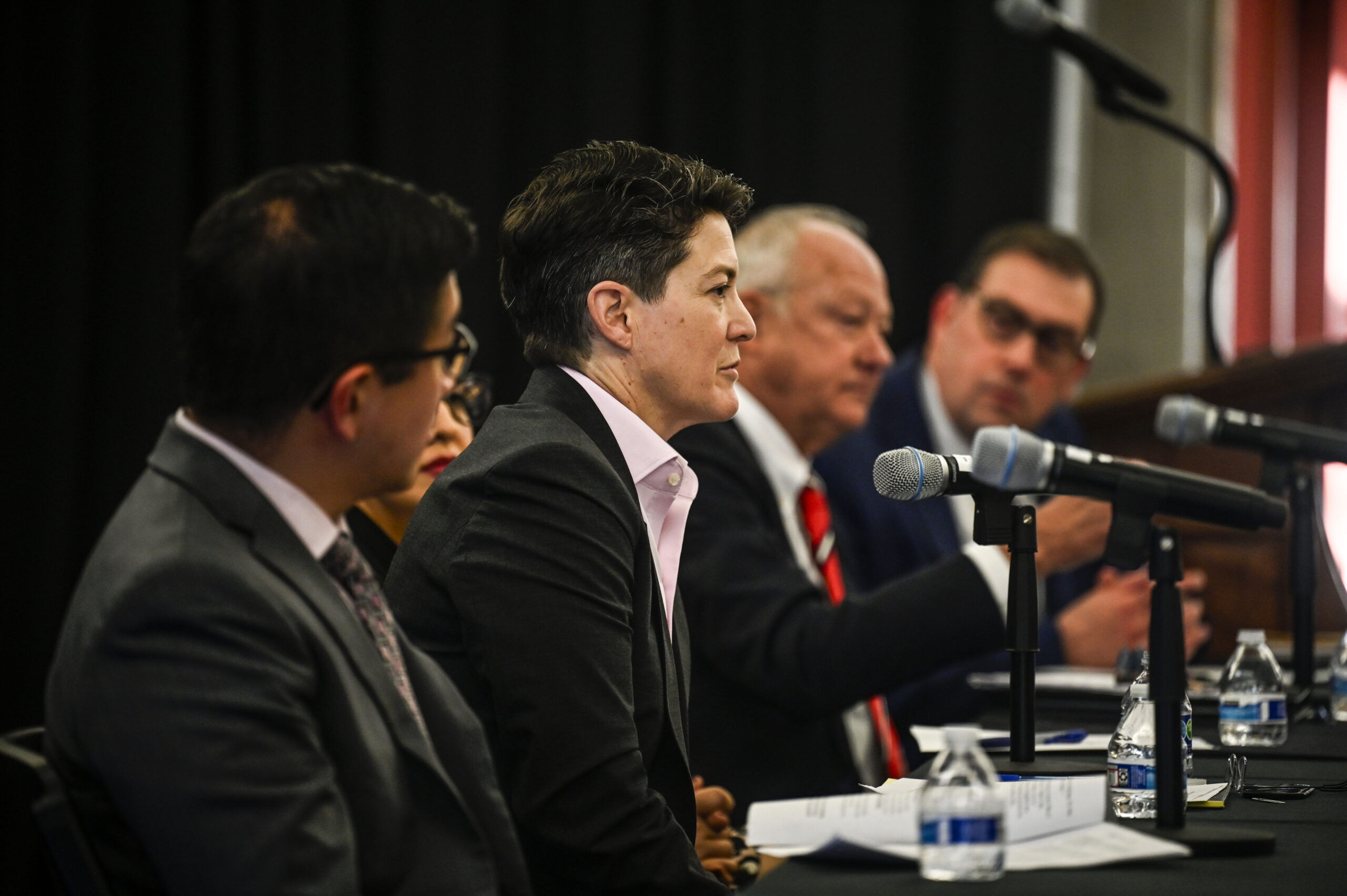
The Colorado Supreme Court ruled on Monday that an organization that spent $4 million to advocate on ballot initiatives in the 2020 election is not required to disclose its donors and spending.
The Supreme Court acknowledged that multiple factors suggested Unite for Colorado was a group whose “major purpose” was ballot issue advocacy. However, because Unite for Colorado only spent 23% of its total money on ballot initiatives, its “low percentage of overall spending on ballot issue advocacy” exempted it from disclosure requirements.
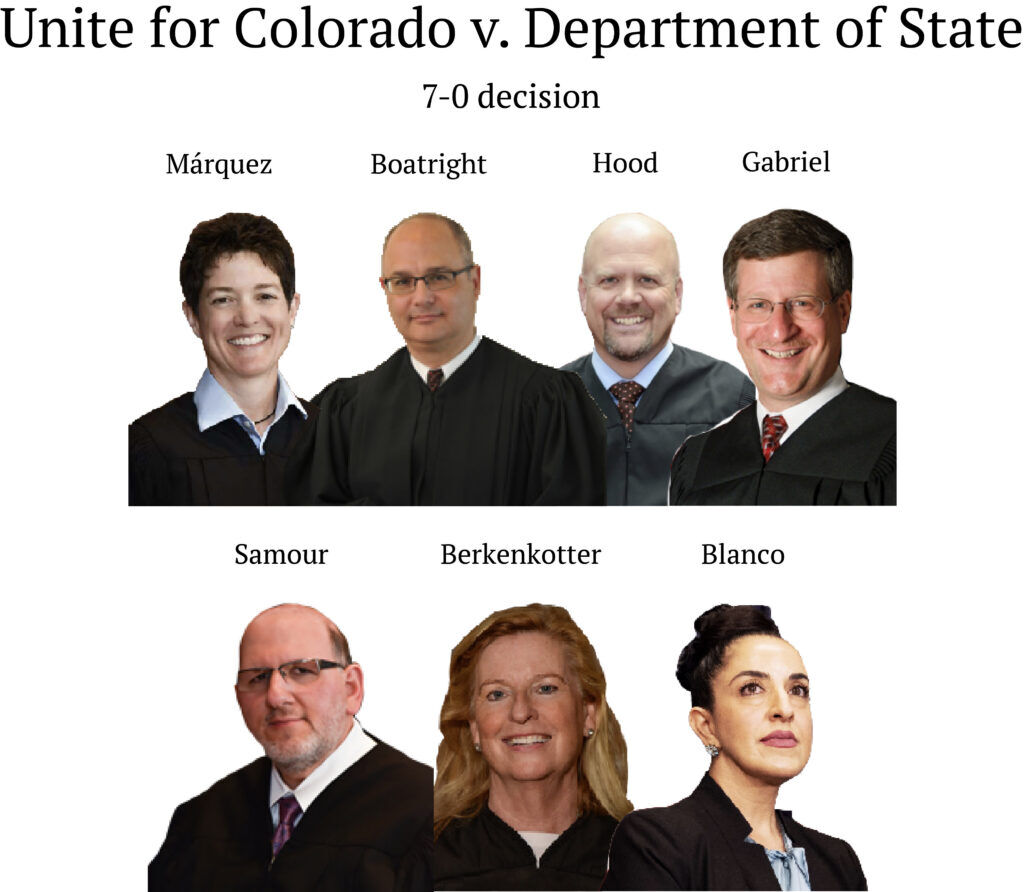
“Spending less than a quarter of all expenditures on ballot issue advocacy does not reflect a major purpose because it does not reflect a considerable or principal amount of an organization’s overall spending,” wrote Chief Justice Monica M. Márquez in the June 29 opinion, adding that it was a “close call.”
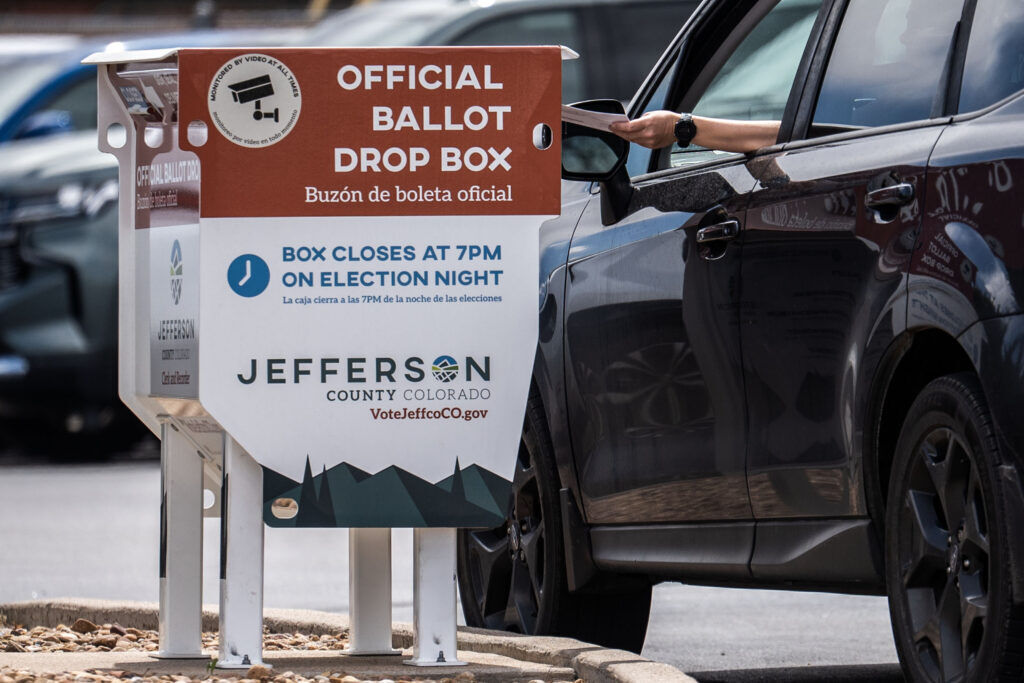
Unite for Colorado spent roughly $17 million during 2020. Among other things, the group funded signature gathering and advertising for three ballot measures, taking the conservative position on each.
However, Unite for Colorado attracted a campaign finance complaint, alleging it failed to register as an issue committee. Issue committees must register with the state if they spend over $200 on any ballot initiative and if their “major purpose” is ballot issue advocacy. Spending and donor disclosure requirements apply for committees that spend in excess of $5,000.
Under the legal standard in place at the time, Colorado’s deputy secretary of state determined Unite for Colorado’s major purpose was ballot issue advocacy. He ordered Unite for Colorado to pay a $40,000 fine and required it to disclose its contributions and expenditures from early 2020 onward.
Unite for Colorado challenged that determination, and then-Denver District Court Judge David H. Goldberg agreed with the group. Goldberg noted Colorado’s campaign finance law referred to spending on “a ballot issue.” Although Unite for Colorado spent nearly a quarter of its money on ballot issue advocacy, it spent 10% or less on each of the three individual measures.
The Colorado Secretary of State’s Office appealed, and a three-judge Court of Appeals panel reinstated the deputy secretary’s decision. Weighing the circumstances, the panel reasoned the group’s $4 million aggregate expenditure required it to register as an issue committee.
“We conclude that Unite is precisely the type of organization that the people of Colorado envisioned” in enacting campaign finance regulations, wrote Judge Terry Fox.
While the Unite for Colorado complaint was being litigated, the General Assembly passed a forward-looking law that clarified how much an organization must spend on ballot measures relative to its total funds in order to have a major purpose of ballot issue advocacy. Under that framework, enacted in 2022, Unite for Colorado’s expenditure on the three initiatives — 23% of its total spending — would not have qualified.
During oral arguments, the government argued that it was still important to get an answer in the case.
“It has been five years since these millions of dollars of advocacy were run and voters still have no idea who funded it,” said Assistant Solicitor General Peter G. Baumann. “Voters have told us they have an interest in this activity and, as an institutional matter, the (secretary of state’s) office has an interest in not saying, ‘Good fight. We think you’re an issue committee, but we’re gonna let you get away with it this time and move on.’”
Some members of the court were worried about the upshot of siding with Unite for Colorado. Specifically, an organization could avoid the transparency required of issue committees if it were so wealthy that its expenditures on ballot initiatives were relatively small in comparison.
“Part of what my concern is with your position is that whenever the organization can become so large and have such a high financial amount, that nothing’s ever a major purpose,” said Justice Brian D. Boatright.
Márquez added the result would be even starker if, as Unite for Colorado suggested, courts could only look at a group’s spending on a single ballot initiative.
“Let’s say you have an organization that has $100 million. It spends 100% of that $100 million on specific ballot initiatives, but $10 million on each of 10 ballot initiatives,” she said. “So, 10% here, 10% here, 10% here — collectively spends 100% of its spending on those kind of initiatives. Under your argument, that entity would not qualify as an issue committee.”
“Correct,” responded attorney Jason R. Dunn. “The right way to frame it is: They spent 10% on one (initiative) and then 90% on a bunch of other things that don’t matter.”
Ultimately, the Supreme Court embraced the Court of Appeals’ understanding that it is proper to look at a single group’s spending in the aggregate, and not on individual ballot initiatives. Moreover, a “holistic, case-by-case assessment of an organization’s creation, spending, and ballot campaign-related activities” is the way to determine whether the major purpose is ballot issue advocacy, added Márquez.
While multiple factors suggested that Unite for Colorado had a major purpose of ballot issue advocacy, the court ultimately believed that the relatively low level of ballot issue spending, $4 million out of $17 million, did not push Unite for Colorado into the category of groups required to disclose contributions and expenditures.
“Unite did not have a major purpose of ballot issue advocacy during the 2020 election cycle. Therefore, it was not an issue committee,” Márquez wrote.
The case is Unite for Colorado v. Colorado Department of State et al.

Federal judge green-lights excessive force, retaliation claims for trial against Fort Collins officers
Michael Karlik
michael.karlik@coloradopolitics.com
Updated 10 hours ago
A federal judge green-lit a jury trial last week against multiple Fort Collins police officers on claims that they used excessive force on one man who was standing unarmed in his underwear, and retaliated against another man for exercising his...

10th Circuit revives wage violation lawsuit against Papa John’s operator
Michael Karlik
michael.karlik@coloradopolitics.com
Updated 6 hours ago
The Denver-based federal appeals court on Tuesday reinstated a former Papa John’s delivery driver’s lawsuit alleging violations of federal and state wage law. Steve Mighell worked for one month at a Denver Papa John’s location in summer 2023. He alleged...
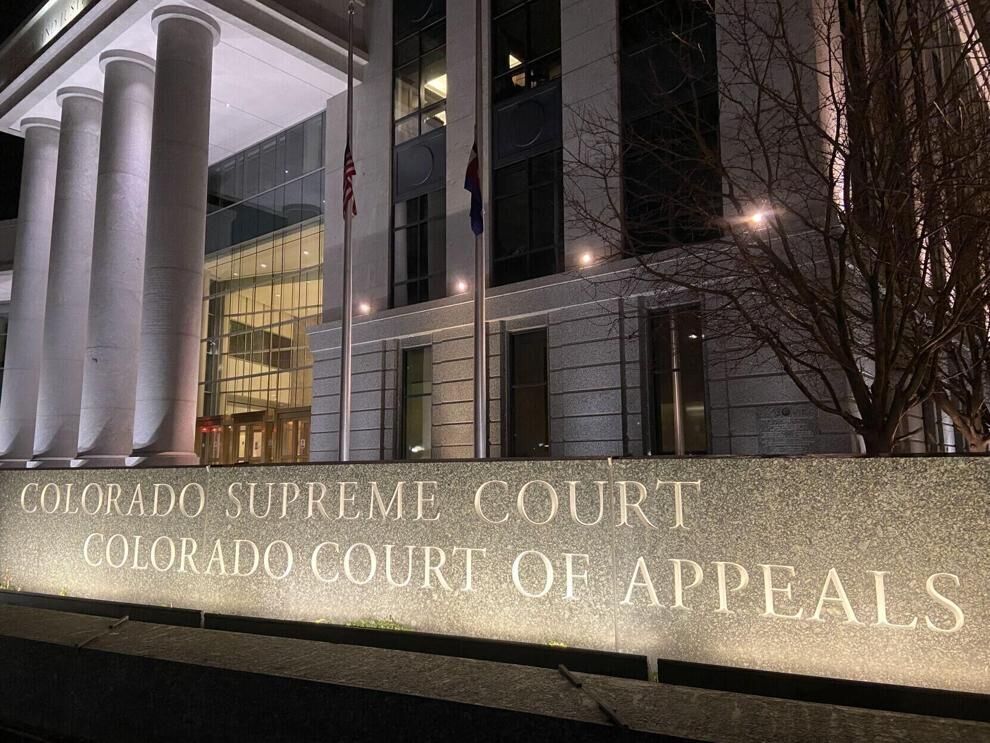
Colorado appeals judge’s delays in releasing opinions noted by performance commission
Michael Karlik
michael.karlik@coloradopolitics.com
Updated 21 hours ago
The citizen-led performance commission that provides guidance to voters about whether to retain members of Colorado’s second-highest court raised concerns by judges and attorneys that Judge Elizabeth L. Harris sometimes struggles with releasing opinions promptly. Harris, who joined the Court...

Colorado judge explores sanctions against DOJ, ICE for rearresting man 4 days after release on bond
Michael Karlik
michael.karlik@coloradopolitics.com
Updated 10 hours ago
A federal judge in Colorado is considering sanctions against the government after immigration agents rearrested a man four days after an immigration judge found him suitable for release on bond. On July 28, U.S. Magistrate Judge N. Reid Neureiter ordered...

Divided disciplinary panel censures Montezuma County judge after agreement reached
Michael Karlik
michael.karlik@coloradopolitics.com
Updated 9 hours ago
A disciplinary panel formally imposed a public censure, suspension, and further training on Montezuma County Court Judge Ian J. MacLaren on Tuesday by a 2-1 vote. Under constitutional Amendment H, which voters adopted in November 2024, MacLaren was set to...

Colorado’s Western Slope magistrate judges describe unique role in federal judiciary
Michael Karlik
michael.karlik@coloradopolitics.com
Updated 2 days ago
Two of Colorado’s federal judges stationed on the Western Slope spoke to lawyers on Wednesday about their unique roles, the ways their workloads differ, and the need for more criminal defense lawyers to take cases outside the Front Range. “Here...

Denver sues Philip Morris, other tobacco companies over cigarette butt litter
Deborah Grigsby
deborah.smith@denvergazette.com
Updated 17 hours ago
Denver is demanding that some of the biggest tobacco companies in the world pay for the cleanup of discarded cigarette butts on its streets, following a similar campaign that cities in other states have pursued. Denver’s lawsuit, filed this week...

Federal judge rules that request for bond hearing not necessary to challenge immigration detention
Michael Karlik
michael.karlik@coloradopolitics.com
Updated 9 hours ago
A federal judge in Colorado ruled last week that it is not mandatory for a person to seek a bond hearing with an immigration judge before they challenge the lawfulness of their detention in federal court. For the past year,...
Boulder Valley School District introduces new policies following antisemitism lawsuit
Marissa Ventrelli
marissa.ventrelli@coloradopolitics.com
Updated 10 hours ago
The chief of Boulder Valley School unveiled new policies for the 2026-2027 school year following a lawsuit filed on behalf of a student alleging antisemitic harassment. In June, the Anti-Defamation League filed a federal civil rights complaint against the school...

Colorado NRA chapter seeks injunction against new gun‑training requirement
Marissa Ventrelli
marissa.ventrelli@coloradopolitics.com
Updated 2 days ago
The Colorado chapter of the National Rifle Association is seeking an injunction to stop the state from enforcing a new law that took effect earlier this month. The new law requires anyone buying or selling certain firearms to first complete...
PREV
PREVIOUS

Colorado–Nebraska water clash heads to U.S. Supreme Court as canal fight intensifies
The U.S. Supreme Court on Monday agreed to hear Nebraska’s lawsuit against Colorado over the Perkins County canal, a move that advances a legal dispute likely to take years to resolve. The proposed Perkins County canal would run through land owned by six Colorado landowners in Sedgwick County before crossing into Perkins County in Nebraska. […]

Supreme Court rules constitutional privacy protections apply to cellphone users location history
WASHINGTON (AP) — The Supreme Court held Monday that constitutional privacy protections extend to cellphone location information, ruling in the case of a bank robber whose identity was discovered through a geofence warrant. Justice Elena Kagan wrote for the 6-3 court that people don’t forfeit expectations of privacy even when they opt into Google’s location […]