

U.S. Supreme Court upholds state laws banning transgender girls and women from school athletic teams
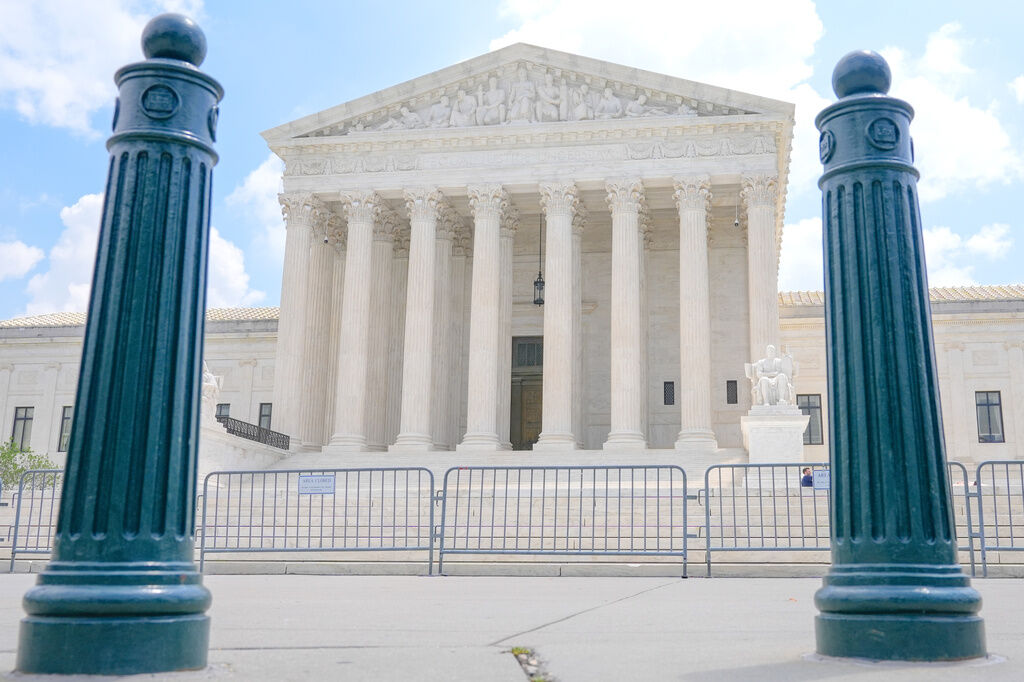
WASHINGTON • The U.S. Supreme Court on Tuesday upheld state laws barring transgender girls and women from playing on school athletic teams.
The court’s conservative majority ruled that state bans in Idaho and West Virginia don’t violate the U.S. Constitution or the federal law known as Title IX, which prohibits sex discrimination in education.
What the decision means for Colorado remains less certain.
While more than two dozen Republican-led states that have adopted bans on transgender girls and women participating in female sports, Colorado has gone in the opposite direction, expanding the legal rights of transgender residents over the years. In more recent years, Democrats who dominate the state Capitol, have also sought to penalize “deadnaming” and “misgendering” as discriminatory actions and to mandate the courts to include such claims in determining the allocation of parenting time in custody cases.
Officials with the state’s largest school district, Denver Public Schools, said Tuesday the ruling would not change high school athletics in Colorado.
“We do not anticipate any disruptions or changes to our athletic programs or student participation as a result of this ruling,” district spokesman Scott Pribble said.
The ruling also comes as Jeffco Public Schools battles the Trump administration over allegations the district allows transgender girls to compete in girls’ sports.
Federal officials have threatened to withhold $98 million in funding, though district officials say the 61 students identified by the federal government as “male students” participating in girls’ sports are team managers, athletic trainers and mascots — not athletes.
Julie Tolleson, the district’s chief legal counsel, said Tuesday she does not expect the Supreme Court’s decision to affect the dispute.
“I really don’t see that it’s going to play into (the lawsuit) because all it really says is if one state wants to ban transgender athletes, they can,” Tolleson said.
The funding threat comes as Jeffco continues working to stabilize its finances. The district ended the fiscal year Tuesday after closing a roughly $50 million budget gap. It is projecting a funding gap of about $13 million for the coming school year, district spokeswoman Devra Ashby said.
Meanwhile, Colorado voters will decide this November whether to prohibit gender surgeries for minors and bar public funding or insurance coverage for procedures that alter children’s biological sex characteristics.
Reaction to the decision predictably split along ideological lines.
“This is a victory for every girl who refused to stay quiet in the face of injustice,” Alliance Defending Freedom CEO and Chief Legal Counsel Kristen Waggoner said in a statement. “Men cannot be women, and no drug erases the male athletic advantage.”
U.S. Sen. Michael Bennet, D-Colorado, called the decision a “setback” for LGBTQ+ Americans.
“This ruling allowing state bans targets a small group of people and sends a message that transgender students do not belong, increasing the risk of harassment and bullying,” Bennet said in a statement.
In a statement posted on social media, Colorado House Republicans said the ruling would “protect women’s sports across the country.”
“This decision established a new precedent moving forward, one that the Colorado House Republicans will take seriously in our continued fight for the rights of every female athlete in the great state of Colorado,” the caucus said.
Underpinning the court’s rationale is its conclusion that biological differences between males and females are unequivocal, and that, “in virtually all competitive sports, forcing female athletes to compete against males can undermine competitive fairness.”
“The States argue — and the Court agrees — that the interests of safety and competitive fairness are important interests for purposes of equal protection analysis. And the States’ sex-based classification — limiting women’s and girls’ sports to biological females — is substantially related to those interests,” the court said.
“The underlying medical and scientific premise of the equal protection challenge here is that at least some biological males who identify as female and take puberty blockers or hormones do not retain physical advantages over biological females. That premise is the subject of ongoing medical and scientific debate. Even if true, that empirical claim would not alter the equal protection conclusion set forth above,” the court added.
More than two dozen other Republican-led states have adopted bans on female transgender athletes, and the decision seems certain to extend to them as well.
Left unresolved by the outcome are lawsuits challenging state laws and regulations in Connecticut, California and elsewhere that permit transgender athletes to compete consistent with their gender identity.
The plaintiff, Becky Pepper-Jackson, a 16-year-old high school sophomore in Bridgeport, West Virginia, has been taking puberty-blocking medication, has publicly identified as a girl since age 8 and has been issued a West Virginia birth certificate identifying her as female. Becky Pepper-Jackson is the only known transgender person who has sought to compete in girls sports in West Virginia.
Pepper-Jackson was a back-of-the-pack cross-country runner in middle school and won statewide champion in the shot put. Becky Pepper-Jackson beat the second-place finisher by 2 feet in last month’s West Virginia championship meet.
In the Idaho case, Lindsay Hecox sued over the state’s first-in-the-nation ban for the chance to try out for the women’s track and cross-country teams at Boise State University in Idaho. Hecox didn’t make either squad because the athlete “was too slow,” her lawyer, Kathleen Hartnett, told the court during arguments in January. Hecox competed in club-level soccer and running.
The Associated Press contributed to this article.


Jeff Crank, Jessica Killin set to face off in 2 debates in Colorado’s 5th Congressional District
Ernest Luning
ernest.luning@coloradopolitics.com
Updated 6 hours ago
Republican U.S. Rep. Jeff Crank and Jessica Killin, his Democratic challenger, have agreed to debate twice in the weeks leading up to the general election in Colorado’s 5th Congressional District, their campaigns have said. Crank is seeking a second term...
Golden fire chief fired days after city manager as city investigates ‘racist incident’
Matt Kyle
matt.kyle@denvergazette.com
Updated 6 hours ago
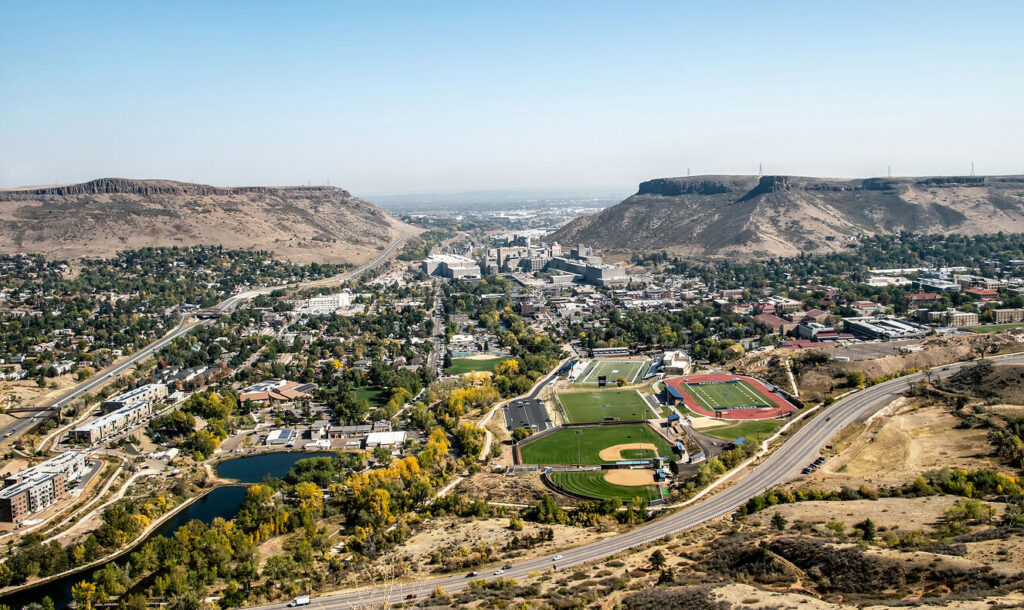
The City of Golden has terminated its fire chief days after terminating the city manager due to a “racist incident” earlier this year at a city fire station. City officials said that in March, a “Snoop on a Stoop” doll,...

Ikon Pass company cuts jobs in Denver and beyond amid several changes
Bernadette Berdychowski
bernadette.berdychowski@denvergazette.com
Updated 7 hours ago
As the ski resort company behind the Ikon Pass and the operator of Steamboat Springs, Arapahoe Basin and Winter Park Resort is going through a phase of changes, the Denver-based company is now cutting jobs. Alterra Mountain Co. has laid...

Healthcare Freefall: Finger‑pointing intensifies as Colorado’s healthcare system strains under rising costs, shrinking coverage
Thelma Grimes
thelma.grimes@coloradopolitics.com
Updated 11 hours ago
Editor’s Note: Colorado’s healthcare system is entering a period of accelerating instability — a “tsunami,” as multiple leaders describe it — driven by collapsing hospital finances, shrinking Medicaid reimbursements, disappearing services and a political fight over who is responsible for...

DPS board sends $44 million tax increase to Denver voters
Nico Brambila
nico.brambila@denvergazette.com
Updated 15 hours ago
The Denver Public Schools board on Thursday unanimously voted to place a mill levy override on the November ballot that — if approved by voters — would raise taxes by $43.9 million annually, largely to fund employee raises. The request...

General charged with Golden Dome raises alarm over future funding
Mary Shinn
mary-shinn@coloradopolitics.com
Updated 11 hours ago
The general leading the efforts to develop the new Golden Dome missile defense system raised concerns this week that the next phase of funding might not come through. Gen. Mike Guetlein spoke about Golden Dome funding during the Space and...

Fort Carson garrison commander says staff cuts created ‘uncertainty and fear’
Mary Shinn
mary-shinn@coloradopolitics.com
Updated 1 day ago
The Fort Carson garrison commander departed Wednesday after what he described as a difficult 18 months for installation and garrison staff. “I know the last 18 months has been marked by profound uncertainty and fear, but you weathered the storm...

After a snowless winter, agents say summer is luring second-home buyers to the mountains
Mark Samuelson Special to The Denver Gazette
mark.samuelson@denvergazette.com
Updated 11 hours ago
Last winter was a terrible growing season in Grand County for what arguably is its most important crop: snow. The county 60 miles west of Denver over the top of Berthoud Pass saw a record-low snowpack — poor enough that...

Aurora police officer resigns after taking narcotics found during traffic stop
Kyla Pearce
kyla.pearce@gazette.com
Updated 1 day ago
An Aurora Police Department officer resigned after investigators found that he took narcotics that were collected as evidence during a traffic stop. Michael Gallagher violated several agency policies, including substance abuse, tampering with evidence and lying in a criminal investigation,...

Douglas County measure to expand county commission advances to November ballot
Nicholas Fogleman
nicholas.fogleman@denvergazette.com
Updated 1 day ago
Douglas County voters will decide in November whether to expand the county’s Board of County Commissioners from three members to five after election officials certified a citizen-led petition effort Wednesday. The Douglas County Clerk and Recorder verified 20,434 petition signatures,...
PREV
PREVIOUS

Energy secretary says U.S. must grow capacity, lower price during Colorado visit
As a heatwave in the U.S. and Europe punctuated widespread calls for recommitments to solar and other “renewable” sources, U.S. Secretary of Energy Chris Wright doubled down on America’s current policy, telling a Thornton crowd on Monday that energy goals would be fixed on increasing the nation’s capacity — no matter what the source. “I […]

Supreme Court upholds birthright citizenship, rejecting Trump’s proposed limits
WASHINGTON • A divided Supreme Court on Tuesday upheld a broad conception of birthright citizenship, rejecting President Donald Trump’s executive order declaring that children born to people who are in the United States illegally or temporarily are not American citizens. The justices relied on the dominant understanding of the 14th Amendment, adopted after the Civil […]