

Douglas County measure to expand county commission advances to November ballot
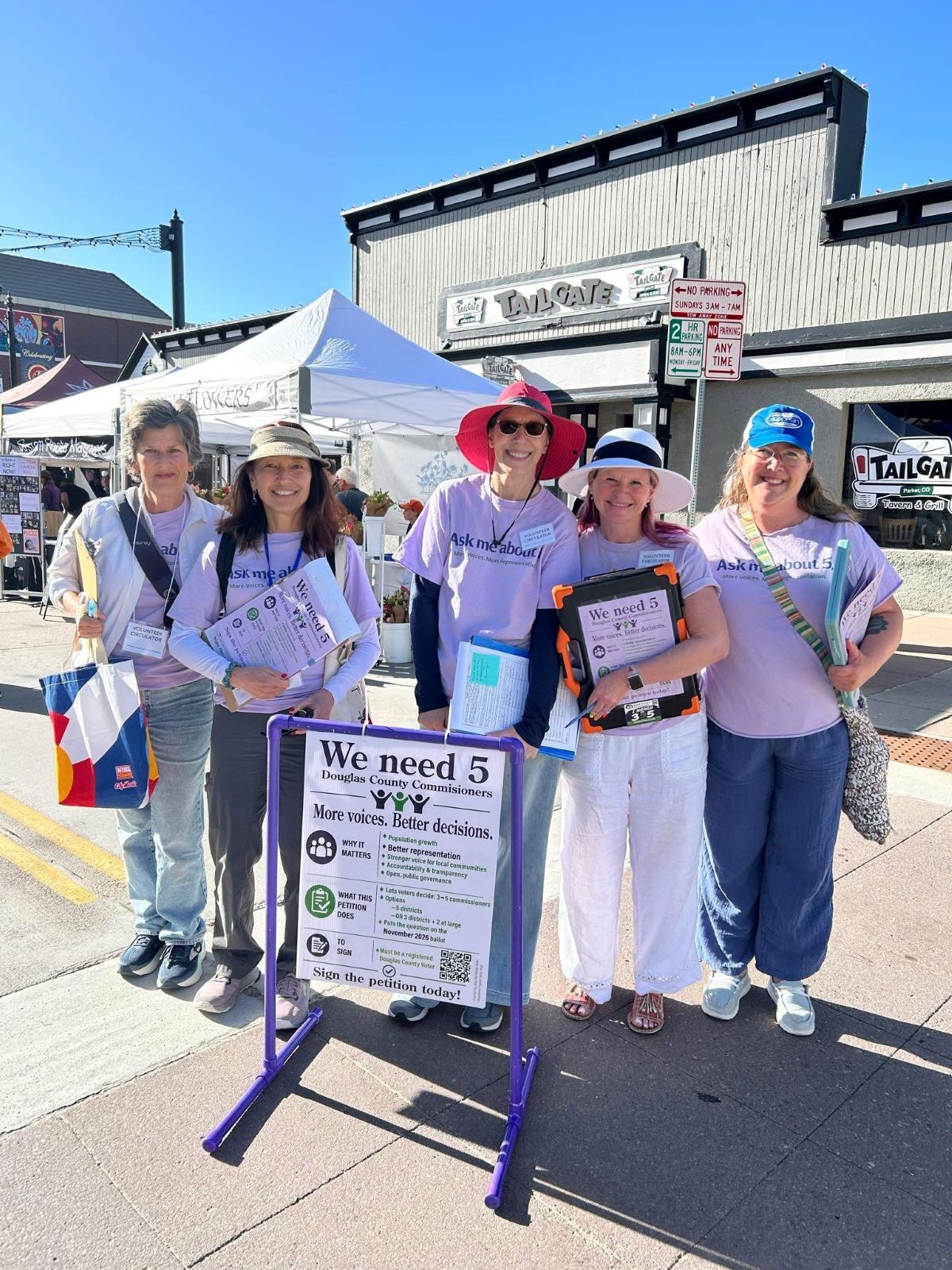
Douglas County voters will decide in November whether to expand the county’s Board of County Commissioners from three members to five after election officials certified a citizen-led petition effort Wednesday.
The Douglas County Clerk and Recorder verified 20,434 petition signatures, exceeding the 15,087 required under Colorado law and securing the measure’s place on the ballot.
The certification marks the culmination of a months-long campaign organized by supporters of the “3-to-5 Initiative,” a grassroots effort — according to organizers — that relied on more than 150 volunteers.
Voters will face two ballot questions. The first asks whether Douglas County should increase the number of commissioners from three to five. If approved, a second question would determine how those commissioners are elected: either all five would represent individual districts, or the county would adopt a hybrid system with three district-based commissioners and two elected at large.
“This is a victory for the people of Douglas County,” organizer Angela Thomas said in a statement. “Thousands of residents took the time to learn about this proposal, ask thoughtful questions, and make an informed decision to sign our petition. Today, their voices have been heard.”
Thomas told The Denver Gazette her interest in expanding the commission began after moving from a rural Nebraska county with fewer than 20,000 residents that also operated with a three-member board.
“I found it interesting that a county that had a much larger budget and geographic area was managed by three people,” Thomas said. “The job has become very large compared to what it was maybe 30 years ago, or even 15 years ago.”
Supporters of the ballot measure said Douglas County’s growth has outpaced its current governing structure. The county is home to more than 400,000 residents and operates on a budget exceeding $700 million.
Under the current system, two commissioners constitute a majority capable of approving county actions.
Former Douglas County Commissioner Lora Thomas, who supports the initiative, said the existing structure concentrates too much authority in too few officials.
“This multi-partisan grassroots effort demonstrates that the voters of Douglas County recognize the need, the necessity, for stronger representation at the local government level,” Thomas said in a statement. “A two-person majority should not be governing more than 400,000 Douglas County residents.”
Opponents of the measure have cited worries about expanding government bureaucracy and the estimated $500,000 annual cost associated with adding two commissioners, including salaries, staffing and related expenses.
The measure has drawn opposition from the Douglas County Republican Party, which has criticized both the proposal and the rationale behind it.
In social media posts and statements, party officials have characterized the effort as an unnecessary expansion of government.
“Expanding the Board of County Commissioners is a long-term expansion of county government that will cost taxpayers a bare minimum of $500,000+ per year with zero guarantees of any better outcome,” the party wrote in a May social media post.
In another post, the party stated that “Douglas County is consistently ranked among the best counties in America” and questioned what issue the expansion would fix.
The Douglas County Republican Party has also launched a website opposing the initiative. The site asks whether district-based representation would encourage commissioners to advocate only for their own areas and whether the benefits of adding two elected officials outweigh the additional costs and complexity.
The Douglas County Republican Party did not respond to a request for comment from The Denver Gazette on Wednesday.
Current county commissioners have also expressed opposition to expanding the board to a district-based model publicly.
In statements, commissioners cited concerns that expanding to district-only representation would create more bureaucracy and lead to the prioritization of district interests over countywide needs.
The Denver Gazette was unable to reach commissioners for comment on Wednesday.
Angela Thomas said many residents who signed the petition expressed frustration with county governance, citing concerns about transparency and opportunities for public participation.
She pointed to the commissioners’ decision earlier this year to discontinue regular public comment during meetings and argued that district-based representation would provide residents with clearer accountability.
The ballot initiative follows unsuccessful efforts to address the issue through state legislation.
During the 2026 legislative session, Rep. Bob Marshall sponsored House Bill 26-1203, which would have required counties with populations exceeding 70,000 residents to expand from three commissioners to five.
Because state law already allows counties to increase the size of their commissions through voter approval, supporters turned to the petition process instead, Angela Thomas said.
Colorado law permits counties with populations above 70,000 to expand their boards from three to five members through either a referred measure or citizen initiative. A similar measure has also qualified for the November ballot in Boulder County.
Currently, five Colorado counties — Adams, Arapahoe, El Paso, Pitkin and Weld — operate with five-member boards of county commissioners. Denver and Broomfield, which function as consolidated city-county governments, have larger representative governing bodies.
If Douglas County voters approve the measure, the county would begin establishing a five-member commission and implementing whichever election system voters select.
A state law passed this year outlines that process.
If voters approve the ballot measure, county commissioners must appoint an independent redistricting commission composed equally of members from the county’s two largest political parties and unaffiliated voters. The commission would be responsible for drawing commissioner district boundaries and submitting one or more final maps for adoption.

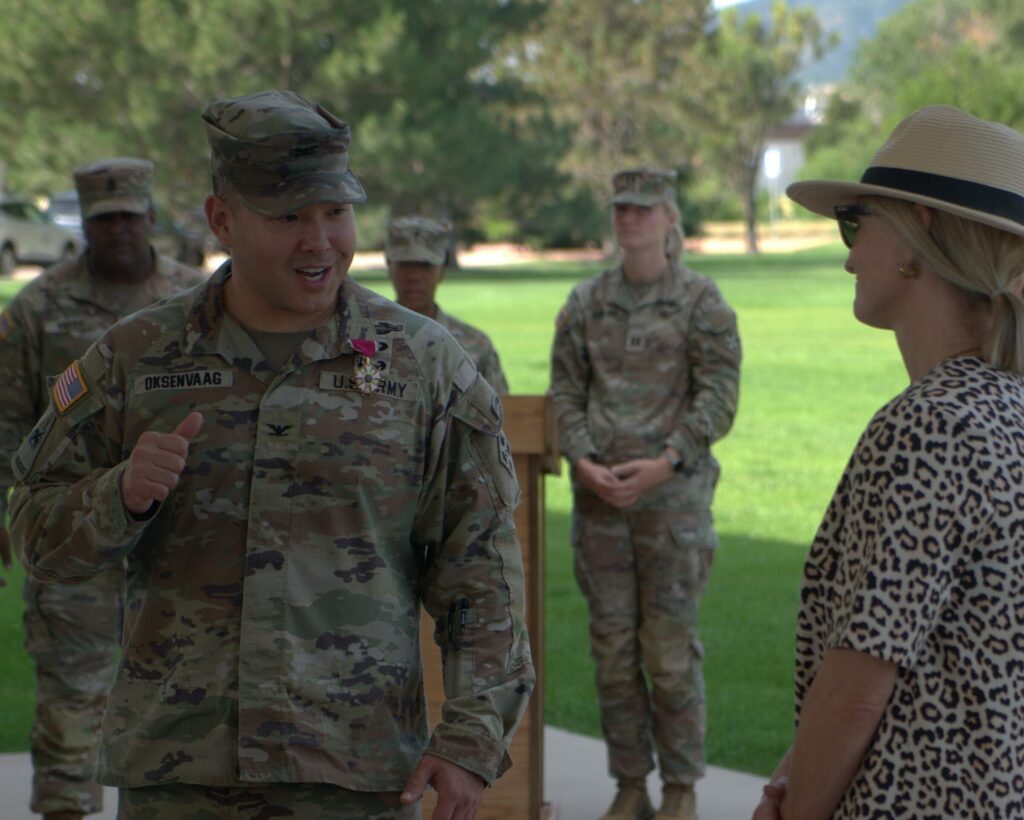
Fort Carson garrison commander says staff cuts created ‘uncertainty and fear’
Mary Shinn
mary-shinn@coloradopolitics.com
Updated 36 minutes ago
The Fort Carson garrison commander departed Wednesday after what he described as a difficult 18 months for installation and garrison staff. “I know the last 18 months has been marked by profound uncertainty and fear, but you weathered the storm...

Aurora police officer resigns after taking narcotics found during traffic stop
Kyla Pearce
kyla.pearce@gazette.com
Updated 22 minutes ago
An Aurora Police Department officer resigned after investigators found that he took narcotics that were collected as evidence during a traffic stop. Michael Gallagher violated several agency policies, including substance abuse, tampering with evidence and lying in a criminal investigation,...

Denver sues Philip Morris, other tobacco companies over cigarette butt litter
Deborah Grigsby
deborah.smith@denvergazette.com
Updated 59 minutes ago
Denver is demanding that some of the biggest tobacco companies in the world pay for the cleanup of discarded cigarette butts on its streets, following a similar campaign that cities in other states have pursued. Denver’s lawsuit, filed this week...

Golden city manager fired after ‘racist incident’ at fire station
Matt Kyle
matt.kyle@denvergazette.com
Updated 20 hours ago
The Golden City Council on Tuesday voted to terminate City Manager Scott Vargo following a reported “racist incident” at a city fire station. The alleged incident happened in March. Reportedly, a “Snoop on a Stoop” doll, which resembles an “Elf...

Aurora City Council consider socioeconomic impact permits for ‘high-risk’ businesses
Kyla Pearce
kyla.pearce@gazette.com
Updated 1 day ago
The Aurora City Council moved forward with the creation of a socioeconomic impact business permit intended to space out high-risk businesses. Councilmembers unanimously approved sending the permit question to a future regular meeting, where it would go to an official...

Signals mixed for Colorado economy halfway through 2026
Bernadette Berdychowski
bernadette.berdychowski@denvergazette.com
Updated 1 day ago
Colorado’s economy faced a mix of headwinds and tailwinds through the first half of the year. Inflation is up again, job growth is slowing and geopolitical turmoil has added the effects of high oil prices to the state’s economy. Yet,...

Denver schools to refinance bonds to create capacity for future borrowing
Nico Brambila
nico.brambila@denvergazette.com
Updated 2 days ago
Less than two years after voters approved a record $975 million school bond, Denver Public Schools is refinancing older debt — a move district officials say will save taxpayers money while creating capacity for another bond election. The district has...

Parker data center could get $19M tax rebate from Douglas County
Nicholas Fogleman
nicholas.fogleman@denvergazette.com
Updated 2 days ago
At a time when Denver and Front Range governments are restricting or banning data center development, Douglas County commissioners are poised to approve a $19.3 million tax rebate agreement Tuesday for a new data center under construction in Parker. The...

Denver City Council rejects contract that would have given video maker 8-year deal
Deborah Grigsby
deborah.smith@denvergazette.com
Updated 2 days ago
Denver’s Office of Human Resources will have to get creative to attract new city employees and place them in “hard-to-fill” jobs after a proposed five-year contract extension, valued at $600,000, failed to gain favor with the Denver City Council. The...
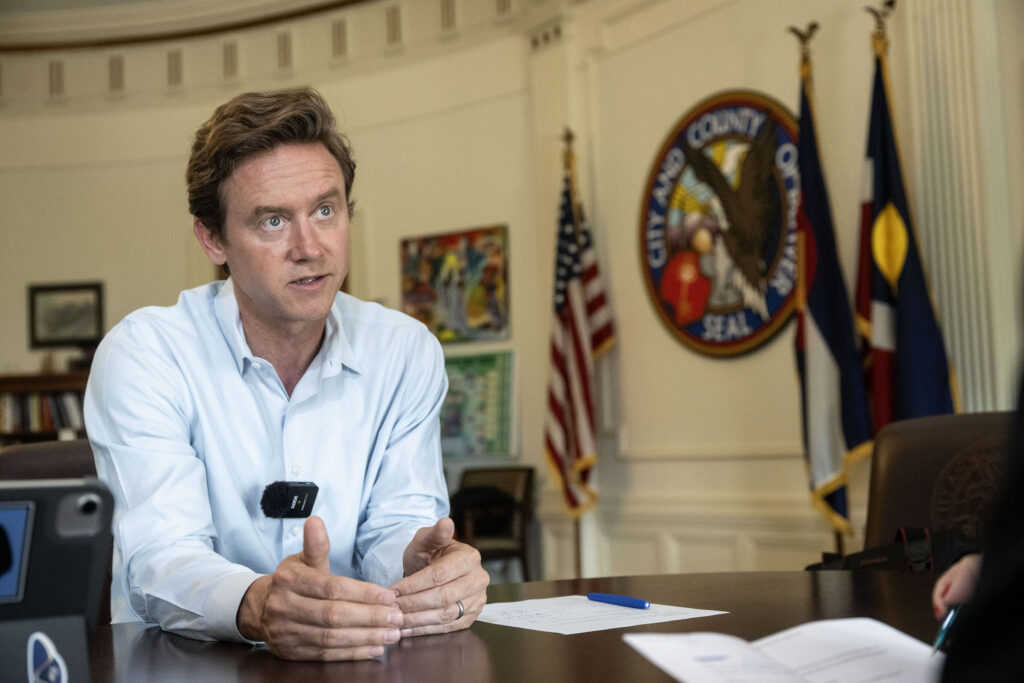
Denver Mayor Mike Johnston files to run for reelection in 2027
Michael Braithwaite
michael.braithwaite@gazette.com
Updated 2 days ago
Denver Mayor Mike Johnston officially filed his paperwork Monday to run again for Denver’s mayoral office next year. The filing comes weeks after Johnston confirmed to The Denver Gazette that he would seek reelection as he focuses the final year...
PREV
PREVIOUS
Colorado's Western Slope magistrate judges describe unique role in federal judiciary
Two of Colorado’s federal judges stationed on the Western Slope spoke to lawyers on Wednesday about their unique roles, the ways their workloads differ, and the need for more criminal defense lawyers to take cases outside the Front Range. “Here in Durango, in the area that I cover, we have two Indian reservations. And all […]

Aurora police officer resigns after taking narcotics found during traffic stop
An Aurora Police Department officer resigned after investigators found that he took narcotics that were collected as evidence during a traffic stop. Michael Gallagher violated several agency policies, including substance abuse, tampering with evidence and lying in a criminal investigation, according to an APD news release Wednesday. Gallagher took narcotics that had been collected as […]