

Denver schools to refinance bonds to create capacity for future borrowing

Less than two years after voters approved a record $975 million school bond, Denver Public Schools is refinancing older debt — a move district officials say will save taxpayers money while creating capacity for another bond election.
The district has roughly $2.4 billion in outstanding bond obligations. Under the Colorado constitution, voter approval is required to acquire public debt.
District officials are looking to refinance $436 million in callable debt from bond issuances in 2012 and 2017, said Katie Hechavarria, executive director of finance. The move is expected to save taxpayers $29.7 million.
“It also allows the district to create capacity for a future bond election, if that is something the board chooses, without having to increase the amount that it raises from Denver taxpayers,” Hechavarria said.
The district has $452.1 million in outstanding principal from the two bond series, district data show.
Officials plan to refinance $436 million, while the remaining roughly $16 million is scheduled to mature in December, said Bill Good, a district spokesperson. The district expects to issue $404.5 million in new bonds and use an additional $31.5 million premium generated from the sale to pay off the existing debt.
The refinancing essentially lowers the cost of existing debt, creating room for Denver Public Schools (DPS) to borrow more later without increasing the amount it needs to raise from taxpayers to cover the principal and interest.
In September, the district refunded $67 million in bonds to “save” taxpayers $9 million by reducing the district’s debt.
The refinancing lowers the cost of existing debt. It does not necessarily translate into lower property taxes.
Had Denver voters rejected the nearly $1 billion bond measure in 2024, taxpayers could have saved about $20 million a year in “five or six years,” Chuck Carpenter, the district’s chief financial officer, has said.
But this scenario also assumes voters reject future bond proposals — a pattern that has not held in recent decades.
Denver taxpayers have been counted on to consistently pass bond measures, approving more than $3.8 billion to maintain the district’s aging buildings and support classroom instruction since 1998.
That consistent support every four years has proven critical because DPS lacks a long-term facilities plan, reflecting a pattern of a district that relies heavily on voters funding basic needs.
Without new bond money, the district would face “hard choices,” Carpenter has said.
“We don’t have a revenue stream that would replace the bond right now,” he said.
Maintenance isn’t sexy. So, district officials routinely fill the bond with items taxpayers would vote for, such as new gymnasiums and air conditioning. The 2024 bond alone earmarked $240 million to provide air conditioning for 29 schools for more than 20,000 students.
With a 55-year-old average building age, officials have identified $7.9 billion in rebuilding and replacement costs for all buildings across the district, according to a 2019 assessment.
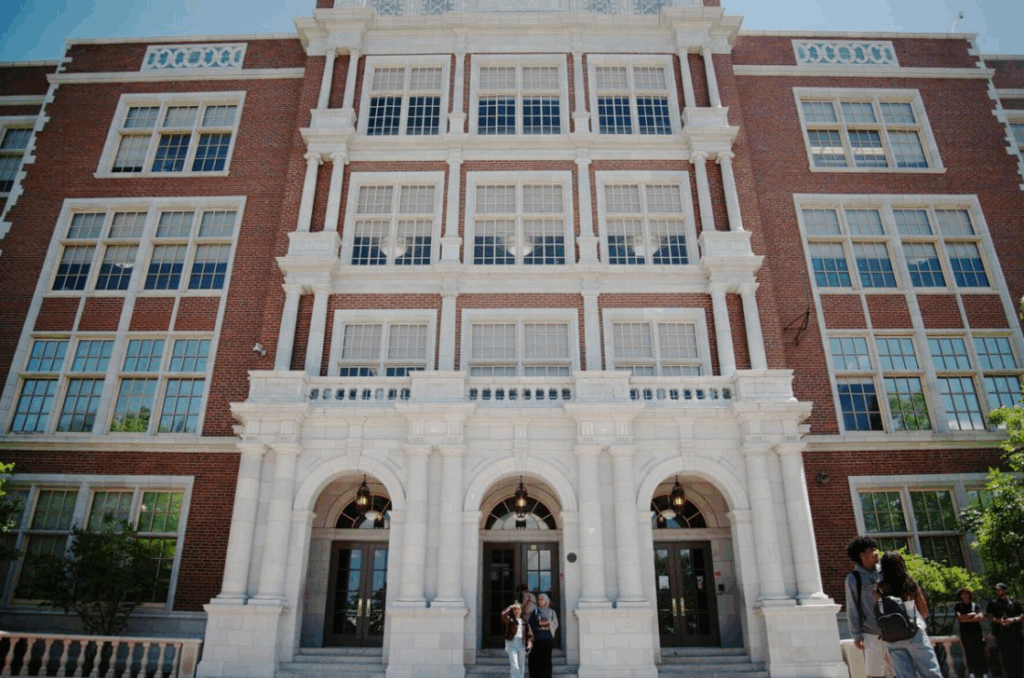
The district has faced criticism over its use of bond money, and, in recent years, several decisions about how those dollars were spent have drawn scrutiny.
This was underscored by a district promise that every school would benefit from the 2024 bond, even as officials knew they were preparing to close or restructure 10 schools — a list released only after the election.
District officials presented the bond refinancing during the Board of Education’s Finance and Audit Committee Monday. The board has delegated debt refinancing to the superintendent and a designee.
Hechavarria said the goal is to close on the deal in September.


Boulder Valley School District introduces new policies following antisemitism lawsuit
Marissa Ventrelli
marissa.ventrelli@coloradopolitics.com
Updated 2 hours ago
The chief of Boulder Valley School unveiled new policies for the 2026-2027 school year following a lawsuit filed on behalf of a student alleging antisemitic harassment. In June, the Anti-Defamation League filed a federal civil rights complaint against the school...

Colorado students push AI task force as schools navigate new tech era
Marissa Ventrelli
marissa.ventrelli@coloradopolitics.com
Updated 24 hours ago
A group of students is urging lawmakers to establish a task force on artificial intelligence in education to advise districts on how to ensure that pupils and educators use the technology effectively without becoming overly reliant on it. The students...
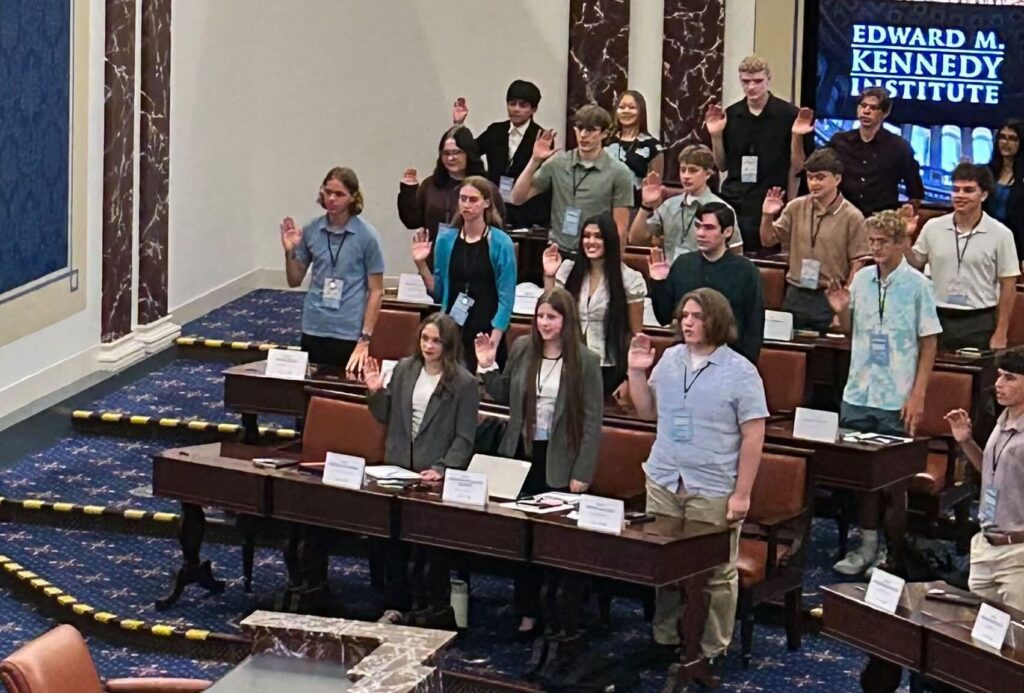
By the students, for the students: Sierra High School represents Colorado in developing national AI framework
Eric Young
eric.young@gazette.com
Updated 2 days ago
To many, the recent, rapid development of generative artificial intelligence and its lack of frameworks and oversight may evoke comparisons to the unrestrained Wild West in the 1800s or the economic potential of the dot-com boom in the early 2000s....

DOJ official decries ‘nonsense’ in Jeffco schools at fundraising gala
Matt Kyle
matt.kyle@denvergazette.com
Updated 4 days ago
Amid a legal battle between Jeffco Public Schools and the federal government, a Department of Justice official spoke at a fundraising gala and decried “crazy stuff” and “nonsense” in the school district. The gala was for Jeffco Kids First, an...
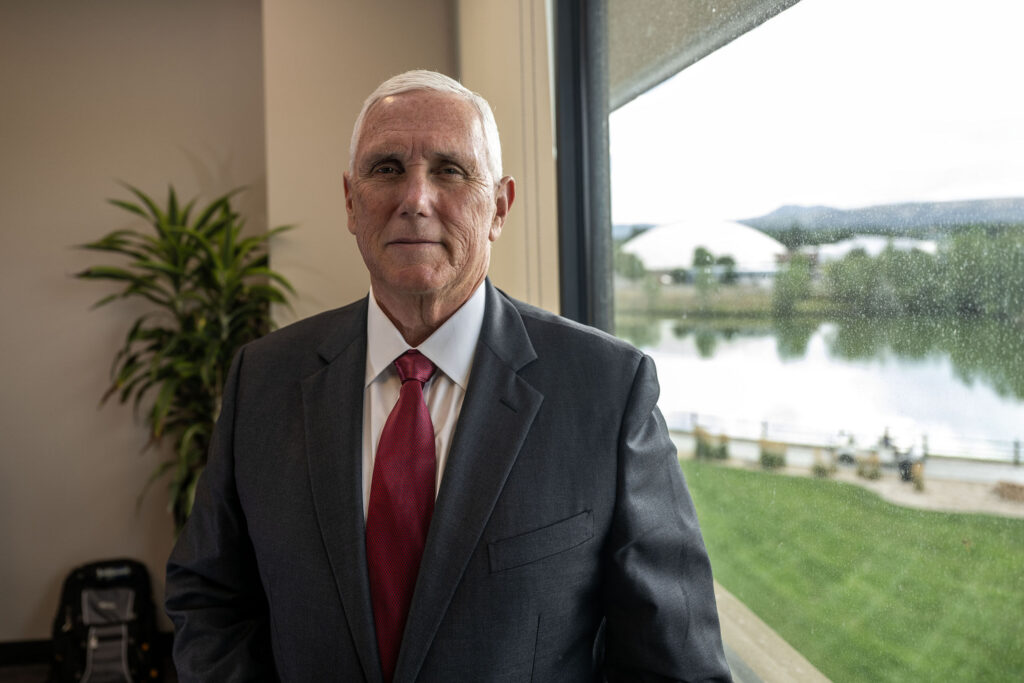
Former VP Mike Pence joining Colorado Christian University faculty
Marissa Ventrelli
marissa.ventrelli@coloradopolitics.com
Updated 6 days ago
Former Vice President Mike Pence has been hired as a visiting faculty member at Colorado Christian University, the Lakewood-based private evangelical university announced Tuesday. Pence will be on campus about once a month during the 2026-2027 school year to give...

‘Explosive’ diarrhea-causing parasite cyclosporiasis cases nearly triple in Colorado
Nico Brambila
nico.brambila@denvergazette.com
Updated 6 days ago
Cases of the “explosive” diarrhea-causing parasite cyclosporiasis nearly tripled in Colorado over the past month, prompting renewed attention after related deaths were reported in Michigan. Twenty-nine counties in Colorado have reported cases, according to the Colorado Department of Public Health...
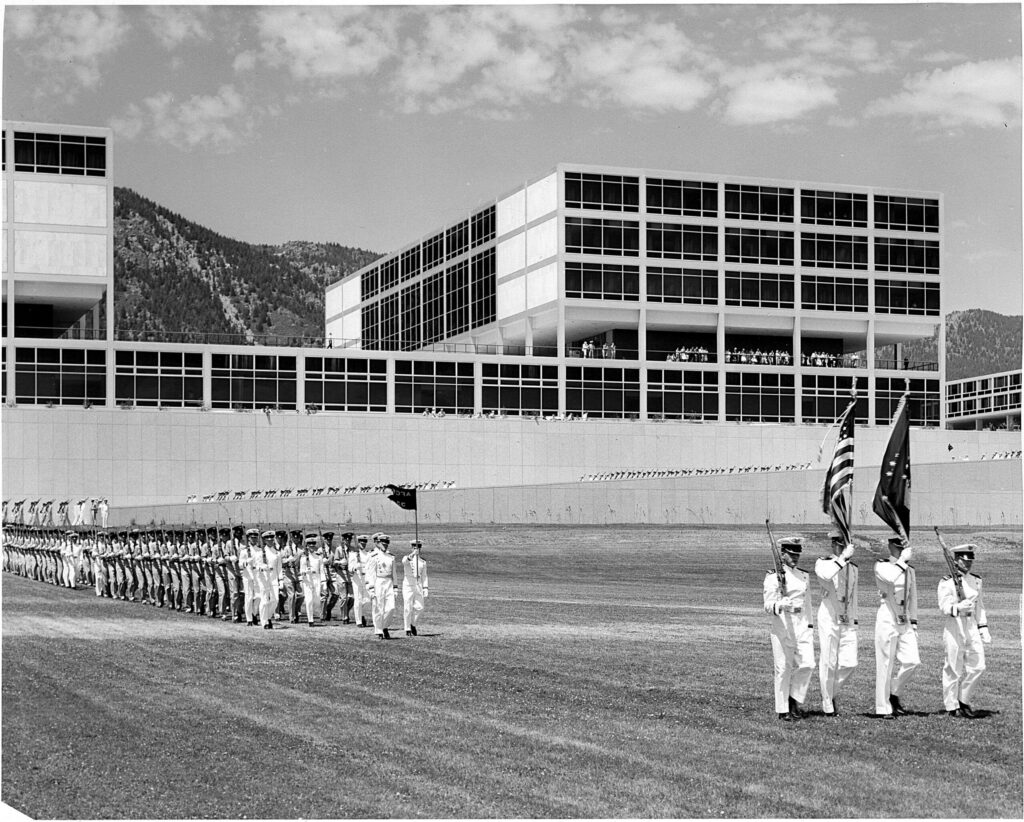
First Air Force Academy class of just 306 cadets started out in WWII barracks, faced high standards
Mary Shinn
mary-shinn@coloradopolitics.com
Updated 1 week ago
When the first class of the Air Force Academy arrived at Lowry Air Force in Denver, they were welcomed with an air show featuring bombers and fighter jets. “Most of us were overwhelmed,” recalled retired Col. Max Miller, the president...

Douglas County schools to consolidate administrative offices into $29M headquarters to cut costs
Nicholas Fogleman
nicholas.fogleman@denvergazette.com
Updated 2 weeks ago
The Douglas County School Board is moving forward with a $29 million plan to consolidate district administrative operations into a new headquarters. It’s part of an effort to reduce annual costs as the district faces ongoing budget pressures. In June,...

U.S. Department of Education investigates DPS over same-sex kissing assignment
Nico Brambila
nico.brambila@denvergazette.com
Updated 1 week ago
The U.S. Department of Education is investigating Denver Public Schools for its handling of a French high school teacher who was fired earlier this year over requiring students to perform a same-sex kissing scene as part of a classroom acting...
U.S. Department of Education investigates DPS over same-sex kissing assignment
Nico Brambila
nico.brambila@denvergazette.com
Updated 1 week ago
The U.S. Department of Education is investigating Denver Public Schools for its handling of a French high school teacher who was fired earlier this year over requiring students to perform a same-sex kissing scene as part of a classroom acting...
PREV
PREVIOUS

Colorado students push AI task force as schools navigate new tech era
A group of students is urging lawmakers to establish a task force on artificial intelligence in education to advise districts on how to ensure that pupils and educators use the technology effectively without becoming overly reliant on it. The students serve on the General Assembly’s Youth Advisory Council Committee or COYAC — a joint committee […]
Federal judge allows retaliation claims to proceed against prison officials
A federal judge agreed last week that a man incarcerated at Sterling Correctional Facility had credibly alleged that employees retaliated against him for filing grievances, including by taking away his disability accommodations and turning off his electricity. Louis Peoples Jr., 72, has visual and mobility impairments, plus a heart condition, diabetes, and susceptibility to seizures. […]