

First Air Force Academy class of just 306 cadets started out in WWII barracks, faced high standards
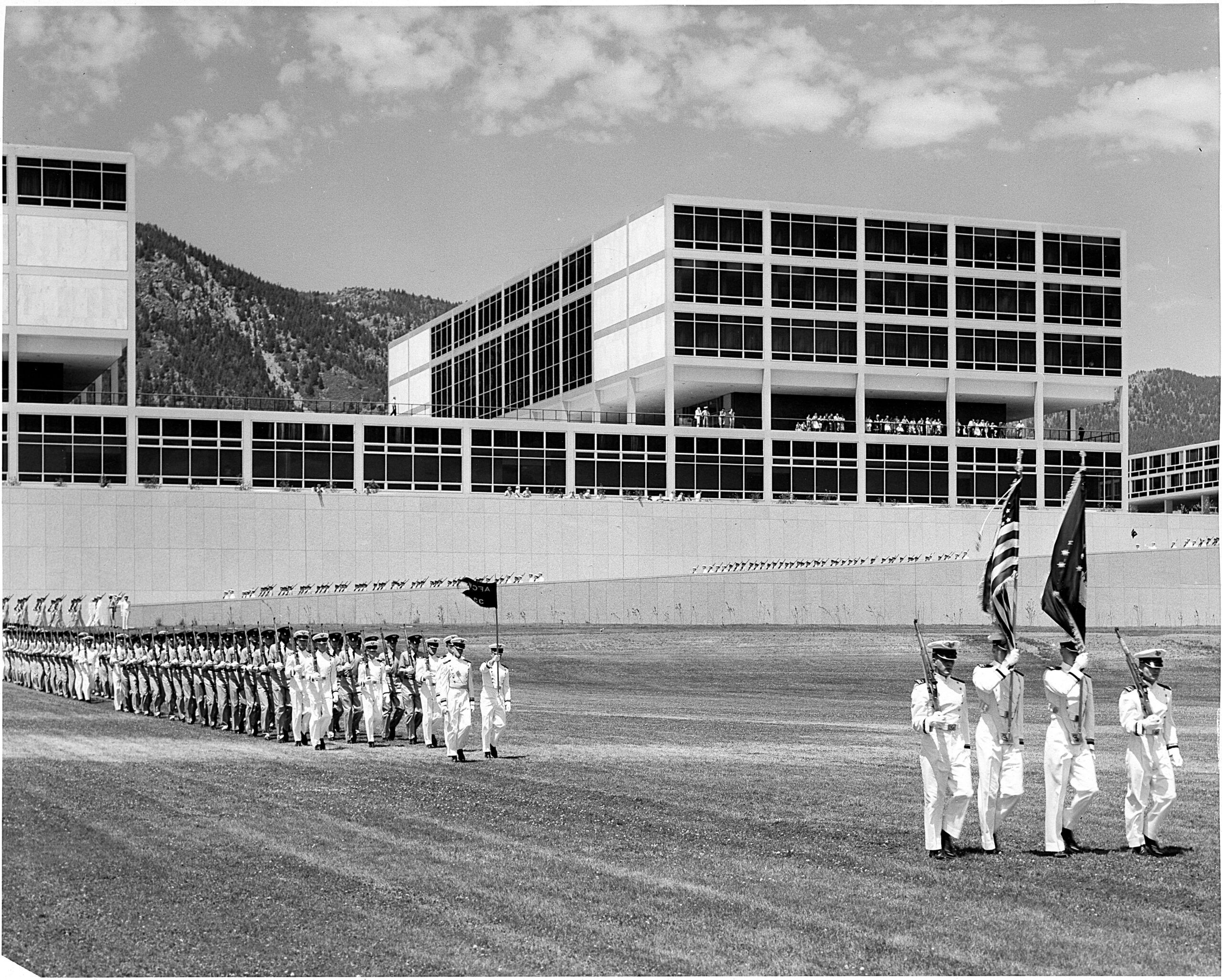
When the first class of the Air Force Academy arrived at Lowry Air Force in Denver, they were welcomed with an air show featuring bombers and fighter jets.
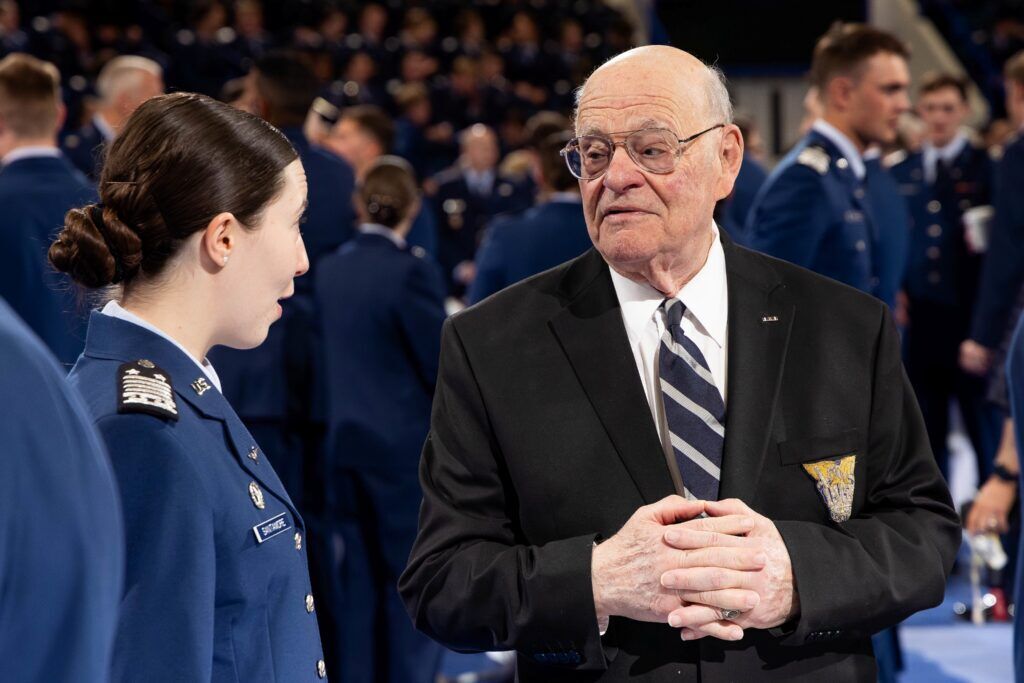
“Most of us were overwhelmed,” recalled retired Col. Max Miller, the president of the Class of 1959.
They were allowed to watch the show, but some were too nervous to look up after an intense few hours learning to march on their first day, recalled retired Gen. Bradley Hosmer.
Young officers from West Point and Annapolis were charged with training the 306 cadets who showed up on July 11, 1955, to Lowry, Miller said.
The base with its World War II barracks would be home for the next three years because the campus in Colorado Springs had not been built yet.
After putting on khaki uniforms and getting their hair cut, it was a sprint to be ready for a CBS broadcast hosted by Walter Cronkite.
“One of the air training officers told us how well we did and how good we looked, and that we were better than West Point and Annapolis,” Miller recalled, noting he didn’t believe them.
“That was the last compliment that any of us received for at least two months,” he said.
Military training was a bit of a shock for Miller, who had applied to the brand-new academy to please his dad, a veteran of the Army Air Corps. He had already secured a scholarship to Tulane University, and expected to get rejected for the new institution.
He wasn’t expecting an acceptance telegram.
“I was so honored that I said I’m gonna go out there and do the best I can,” said Miller, who drove out from his home in North Carolina. Miller went on to earn his doctoral degree in electrical engineering and work on military satellite programs, including some satellites that are still flying.
Grueling training
During summer military training, cadets were required to wear khaki trousers and shirts with neckties, Hosmer recalled. A brave classmate asked the commandant if they could take off their neckties when the heat reached over 90 degrees, and the commandant responded when they sweated through their collars and neckties, then they could take off the ties.
But when, a few weekends later, cadets’ sweat showed through their collars, the commandant changed his mind and the neckties stayed on, Hosmer said.
In another, perhaps more severe decision, a cadet and minor celebrity, Greg Boyington Jr., the son of Greg “Pappy” Boyington, a Medal of Honor recipient for his exploits as a Marine fighter pilot in the Pacific, had to cut out his tattoo because it didn’t conform to regulations, Miller recalled. Boyington went on to receive the Distinguished Flying Cross for his heroism as an F-4 pilot during Vietnam.

In addition to grueling military training, the academy was also academically demanding, with cadets taking 22 credit hours each semester, Miller said.
Currently, the average college student takes about 15 hours. The academy’s course load is still higher and, on average, upperclassmen take 17-20 credit hours per semester.
The academy’s first valedictorian, Hosmer studied all the scientific fields available, physics, thermodynamics, aerodynamics, chemistry, among other fields, during his four years.
Cadets also received a full year of airplane navigation training, which included flight time and so Hosmer estimates they received five years of school in four, he said.
“Gen. (Robert) McDermott revolutionized military academy academics and made it possible for cadets who were able to and wanted to move into advanced work very quickly,” he said. “It allowed one to work across many different disciplines at the same time. There was no requirement to work for a major, and so I did not.”
He graduated with a bachelor’s degree in basic sciences and went on to be the academy’s first Rhodes scholar and the first graduate to serve as superintendent.
The first class also led younger cadets through summer field training, and at the end of the exercises in August 1958, they boarded buses and drove down to the North Gate of the Academy, where they marched a few miles uphill carrying 60-pound packs to their new campus.
“We didn’t mind Lowry, but this was just unbelievable. … It was just awe-inspiring,” Miller recalled.
At the end of those first four years, only about two-thirds of the class graduated and of four lieutenants, who resigned their commission to attend, only one made it to the end, Miller said.
It’s a tough road,” he said, but he noted it will leave you with friends for life.
A regular at academy events, in his signature cowboy hat, Miller’s been a champion of the academy for decades and he’s spoken to every cadet class since 2004.
“My theme is how lucky you are to be here. … It’s an opportunity of a lifetime. So make the most of it. Make every day count,” he said.
Modernist campus
When cadets arrived in 1958, the whole campus wasn’t finished, but key buildings were in place, including Mitchell Hall, where meals are served, Vandenberg Hall, a dormitory, and Fairchild Hall, where classes took place.
Construction continued until the early 1960s, when the campus was largely complete, and it looks much the same now as it did then, said Brian Laslie, the Air Force Academy historian.
“It’s a modernist take on a military academy,” said Matt Mayberry, director of the Colorado Springs Pioneers Museum.
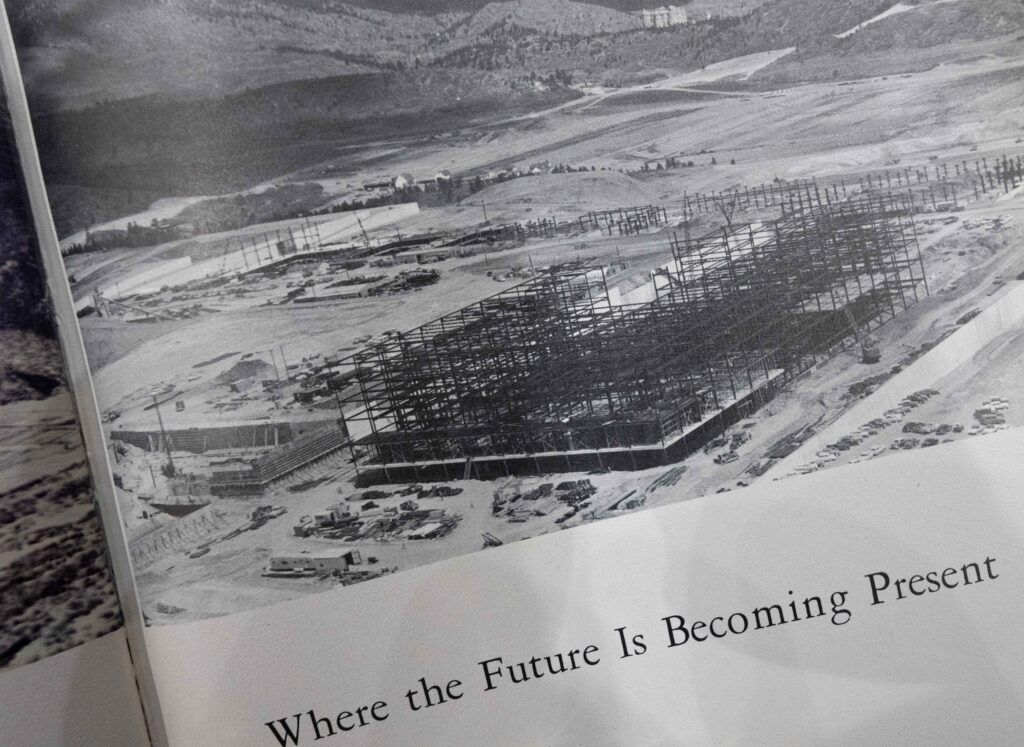
Where West Point and the Naval Academy feel like Ivy League institutions, the academy didn’t try to replicate that in the West.
It’s a “severe architecture,” Mayberry said, relying heavily on concrete.
The boundaries of the whole installation were also selected so that the terrain’s natural geography would help buffer the academy from the encroachment, Hosmer said. For example, the northern boundary is along a steep ridgeline, a natural barrier to the training in Jack’s Valley, home to summer basic training, where cadets run the obstacle and assault courses.
The North Gate is now home to a visitor center that bears Hosmer and his wife Zita’s names, and it was an addition he welcomed when it opened in May to help build understanding about the academy.
The base became more closed off after the terror attacks of Sept. 11, 2001, and it needed this new center outside the gates, he said.
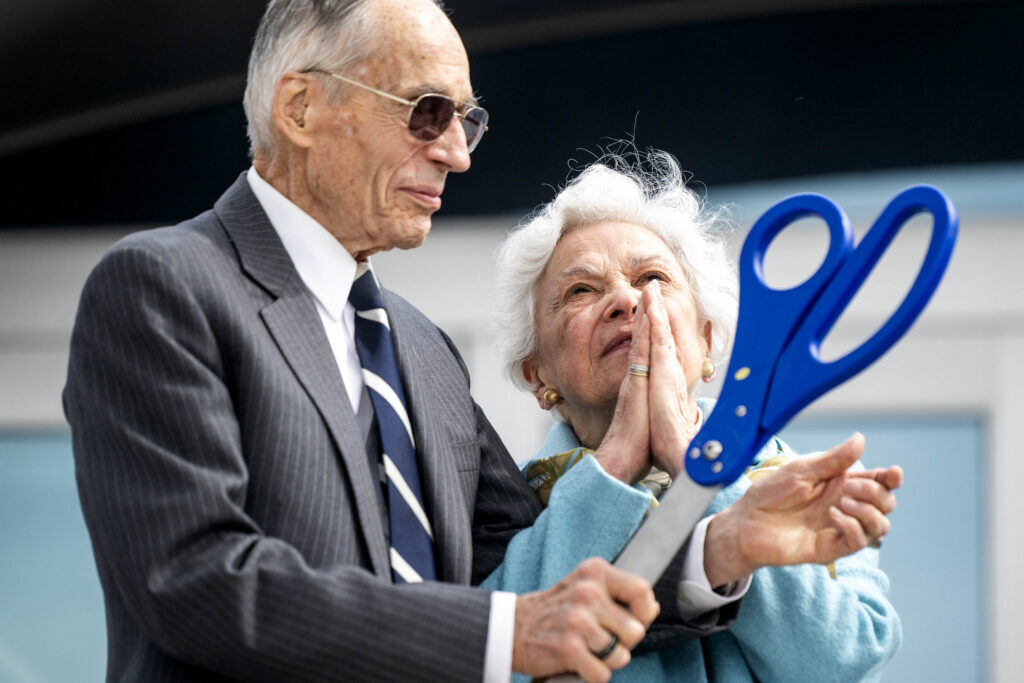
“We lost that contact with the public and losing that contact is not a good thing for the academy or for the public,” he said.
Hosmer said he hoped that the new center might offer an important window into academy life and inspire the next generation of service members.
He also spoke for about 57,000 academy graduates, a right he claimed by precedence as the first graduate.
“We believe this academy is a national asset. It’s important to the country and we believe that because we know that we graduate officers who understand profoundly the profession of arms,” he said.

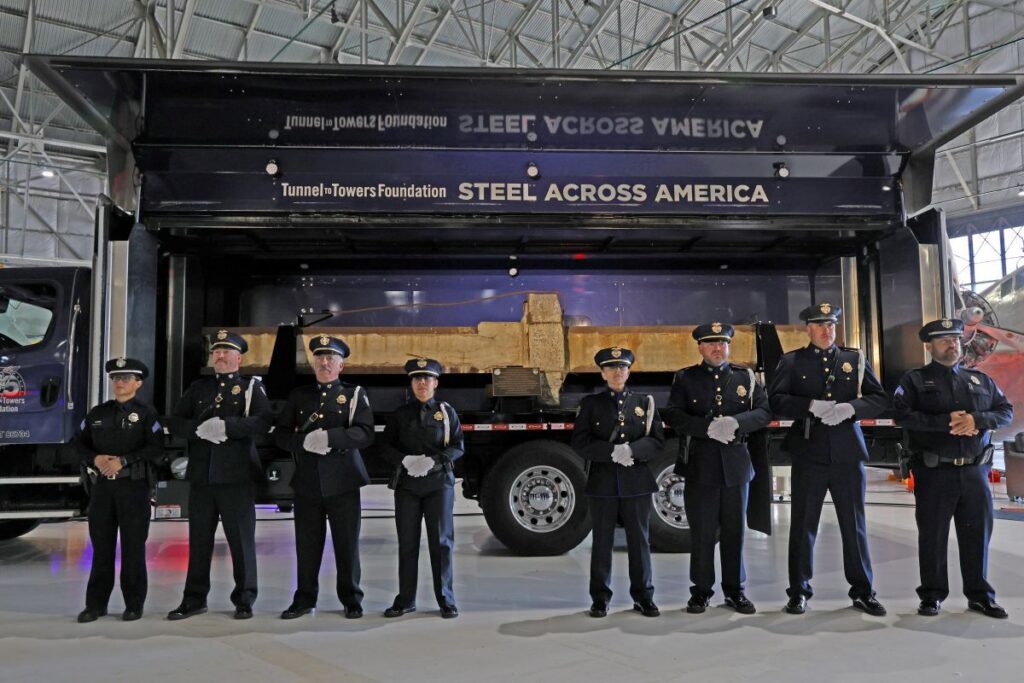
Tunnel to Towers brings 9/11 steel to Denver
Nicholas Fogleman
nicholas.fogleman@denvergazette.com
Updated 2 hours ago
A nationwide tour commemorating the 25th anniversary of 9/11 brought a piece of the World Trade Center to Denver on Saturday as the Tunnel to Towers Foundation hosted a ceremony at the Wings Over the Rockies Air & Space Museum....

At conservative summit, Colorado Republican leaders concede Democrats’ election edge
Marissa Ventrelli
marissa.ventrelli@coloradopolitics.com
Updated 2 days ago
Four Republican state lawmakers told attendees at a gathering of conservative leaders on Friday they doubt their party can win statewide races, noting that Colorado’s electorate has been shifting toward Democrats but adding they see an opening in several pockets....
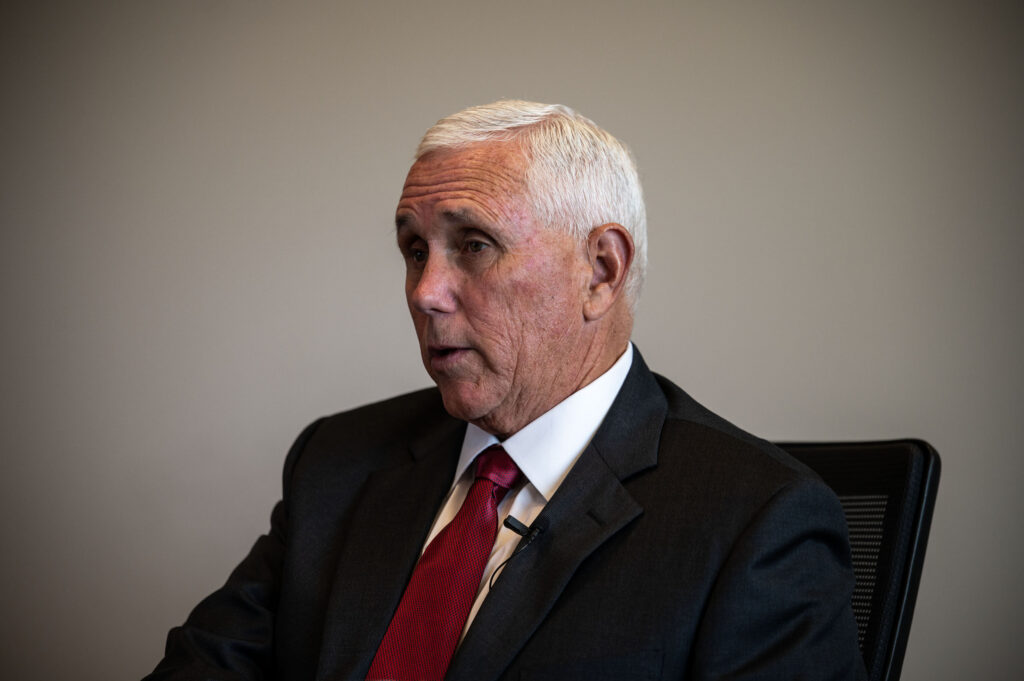
Q&A with Mike Pence | Former vice president says GOP’s populist turn from conservatism isn’t permanent
Ernest Luning
ernest.luning@coloradopolitics.com
Updated 2 days ago
Former Vice President Mike Pence says he’s concerned that the Republican Party has taken a populist turn away from bedrock conservative principles during President Donald Trump’s second term, but he believes the party will return to its roots when Trump...

Colorado farmers, ranchers wrestle with hurdles amid extreme drought conditions
Shen Wu Tan (Special to The Denver Gazette)
shen-wu-tan@gazette.com
Updated 1 hour ago
Some producers take drastic steps to adapt to dry climate, record-low snowpack This is the first time that Jim Magnuson, who operates a family farm in the rural town of Eaton, can ever recall planting only 75% of his acreage. ...
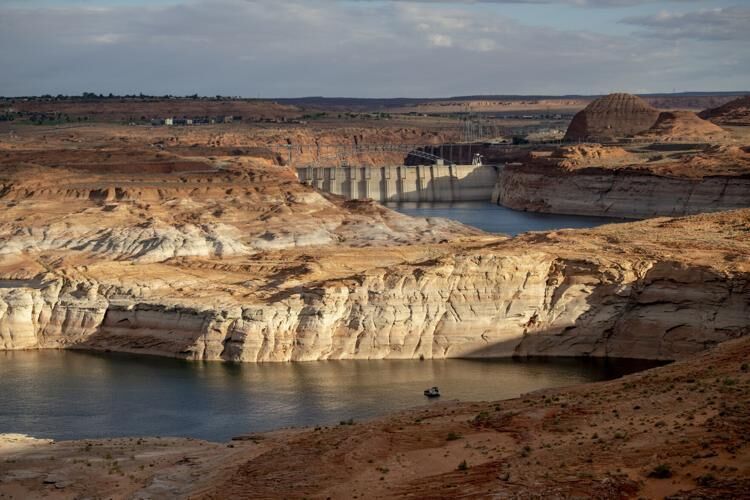
New federal plan sets short-term rules for Colorado River management
Marianne Goodland
marianne.goodland@coloradopolitics.com
Updated 3 days ago
Interior Department’s plan spares Colorado from mandatory cuts for now After years of stalled negotiations among the seven states that rely on the Colorado River, the federal government on Friday released its own plan for managing the drought-strained system. Calling...
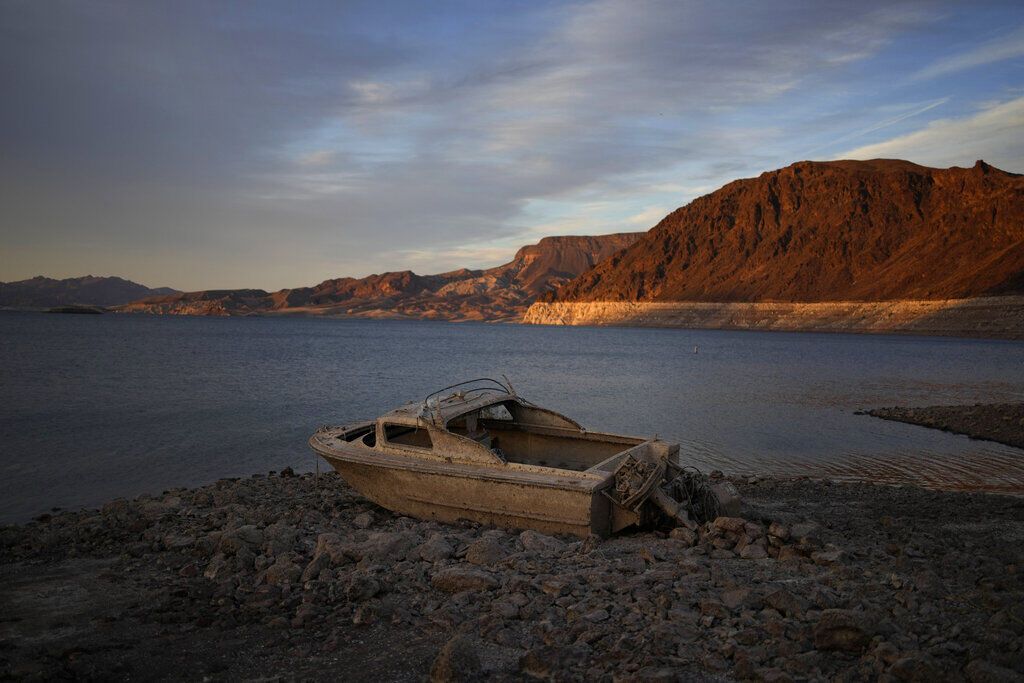
Colorado is spared mandatory cuts under federal Colorado River proposal
The Associated Press
the-associated-press@coloradopolitics.com
Updated 3 days ago
California, Arizona and Nevada to take less water under plan While Colorado has been spared from mandatory reductions, Arizona, California and Nevada would take less water from the Colorado River under a proposal announced Friday by the federal government to...

Republican Victor Marx taps George Markert as his lieutenant governor pick in Colorado’s gubernatorial race
Ernest Luning
ernest.luning@coloradopolitics.com
Updated 3 days ago
Colorado Republican gubernatorial nominee Victor Marx named George Markert, a retired Marine colonel, as his running mate for lieutenant governor Friday morning, saying the former U.S. Senate candidate will bring “exceptional character, proven leadership and a lifetime of serving others”...
Boulder County coroner IDs body found over 50 years ago
Matt Kyle
matt.kyle@denvergazette.com
Updated 3 days ago
After nearly 55 years, a body found in Boulder County has been identified. The Boulder County Coroner’s office on Thursday announced it has identified a set of remains found in Bluebell Canyon in August 1971 as Douglas Sumner, 22. The...

Democrat Jessica Killin’s internal poll shows dead heat with U.S. Rep. Jeff Crank in Colorado’s 5th CD
Ernest Luning
ernest.luning@coloradopolitics.com
Updated 4 days ago
Jessica Killin, the Democratic nominee in Colorado’s 5th Congressional District, is in a statistical tie with Republican U.S. Rep. Jeff Crank, according to an internal poll released this week by Killin’s campaign. The poll of likely general election voters, conducted...
Federal biotech commission examines Colorado’s role in critical minerals production
Scott Weiser
scott.weiser@gazette.com
Updated 3 days ago
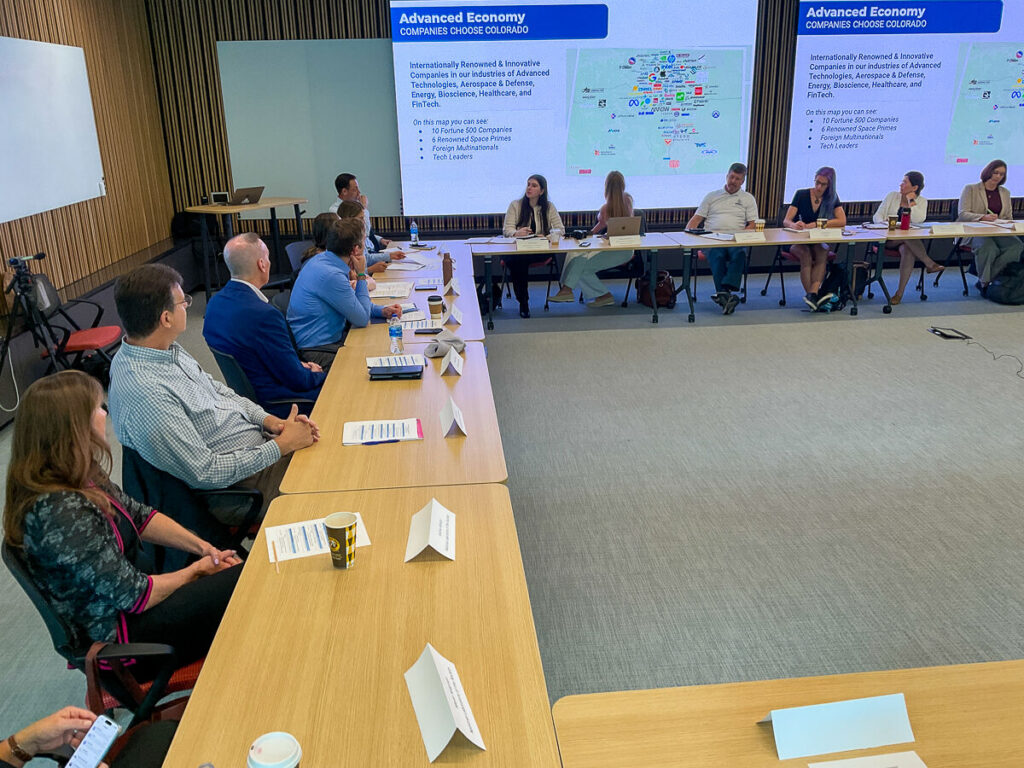
China’s dominance over critical mineral supplies has left U.S. manufacturers vulnerable. Colorado’s biotech and research community is working to ease that dependence. Leaders from the National Security Commission on Emerging Biotechnology met last week at the Colorado School of Mines...
PREV
PREVIOUS

Colorado Politics Calendar Aug. 3-9
CoPo’s weekly political calendar will help you find political and public-policy events throughout Colorado. It includes candidate and issue campaign events, public policy meetings, court hearings, state and local party conventions, assemblies, debates, rallies, parades, speaking engagements, traveling dignitary appearances, water meetings, book signings, county commission hearings, city council meetings and more. As a subscriber, […]

Top officials in Arizona's Maricopa County agree on how to oversee elections | OUT WEST ROUNDUP
ARIZONA Officials agree on election oversight PHOENIX — Election officials in Arizona’s most populous county reached an agreement a week before the state’s July 21 primary on how to jointly oversee the vote, ending a prolonged legal battle. Republican Maricopa County Recorder Justin Heap sued the predominantly GOP board of supervisors in June 2025, alleging […]