

Federal biotech commission examines Colorado’s role in critical minerals production

China’s dominance over critical mineral supplies has left U.S. manufacturers vulnerable. Colorado’s biotech and research community is working to ease that dependence.
Leaders from the National Security Commission on Emerging Biotechnology met last week at the Colorado School of Mines in Golden. The roundtable session was part of the commission’s ongoing Biotech Across America series of regional outreach and education meetings.
The Colorado stop focused on using microbiology to recover strategic minerals from mining waste and other domestic sources.
Commissioner Alexander Titus and commission staff joined participants from the School of Mines, the National Laboratory of the Rockies, the Colorado Office of Economic Development and International Trade and local startups.
Alta Resource Technologies is developing protein-based methods to separate critical minerals. Nathan Ratledge, co-founder and CEO of the Boulder company, told the group that supply constraints are already forcing production stoppages in semiconductors, aerospace, automotive and defense.
“No matter how bad you think it is, it’s worse,” he said.
He linked the shortages to decades of Chinese dominance in mining and processing and said new technology is required to rebuild domestic capacity.
Liz Dennett, founder and CEO of Arvada-based Endolith, described the practical obstacles companies face in moving from laboratory work to commercial scale. She said her firm has developed microorganisms that recover copper from copper mine waste piles that can increase total copper production by as much as 10%.
“We are going to need somewhere between $50 million and $100 million to build our first commercial field pilot,” Dennett said.
Mining customers move slowly, she said, and investors typically require firm purchase commitments before providing that level of capital.
Ratledge agreed, calling the resulting barrier a classic problem.
“A lot of this is chicken and egg,” he said.
Customers will not buy until a company is producing, he said, and project finance is hard to obtain until buyers are lined up.
Ratledge said Colorado has technical strengths but is being outcompeted by states offering larger, faster incentives. He pointed to Texas, where companies in related fields have secured multimillion-dollar grants tied to projects expected to create hundreds of jobs and attract more than $1 billion in capital investment each.
Texas has also established a $350 million advanced nuclear development fund and deployed semiconductor innovation grants that have supported rare earth and magnet manufacturing expansions.
Colorado supports the biotechnology sector mainly through its Advanced Industries Accelerator Program.
The program offers proof-of-concept grants up to $150,000 and early-stage capital grants up to $250,000 for companies in energy and natural resources, advanced manufacturing and related fields. The state also provides investment tax credits and job-growth incentives.
Recent Advanced Industries awards have totaled several million dollars across dozens of recipients. A new Governor’s Competitiveness Council, announced this month, is examining policy and regulatory changes to improve the state’s business climate.
Eve Lieberman, executive director of the Colorado Office of Economic Development and International Trade, pointed to existing state grant programs and the competitiveness council as tools to address these gaps.
Commission staff said federal tools such as advance purchase commitments and quicker pathways for demonstration projects could help close the gap between promising technology and market-ready production.
Participants at the Mines gathering described both the opportunity created by Colorado’s research institutions, biotech startups and the financing and market barriers that continue to slow commercial scaleup.


Douglas County schools to consolidate administrative offices into $29M headquarters to cut costs
Nicholas Fogleman
nicholas.fogleman@denvergazette.com
Updated 2 hours ago
The Douglas County School Board is moving forward with a $29 million plan to consolidate district administrative operations into a new headquarters. It’s part of an effort to reduce annual costs as the district faces ongoing budget pressures. In June,...

Veo scooter clutter, sidewalk riders frustrate Denverites
Deborah Grigsby
deborah.smith@denvergazette.com
Updated 2 hours ago
Denver resident Mike Miller was on a downtown sidewalk recently when a Veo scooter rider traveling at full speed passed him as the scooter blasted a “do not ride on sidewalks” warning. In a letter to Veo Policy and Partnerships...

Colorado’s 72-hour social media warrant law takes effect Aug. 12
Marissa Ventrelli
marissa.ventrelli@coloradopolitics.com
Updated 1 day ago
A law requiring social media platforms to respond to search warrants within 72 hours goes into effect on Aug. 12. Senate Bill 011 also requires platforms to create a staffed hotline for Colorado law enforcement agencies to contact regarding pending...

El Paso County rejects multi-family zoning request near Monument Academy
Savannah Eller
savannah-eller@coloradopolitics.com
Updated 2 days ago
The El Paso County Board of Commissioners narrowly rejected a developer’s bid to convert land from low- to high-density residential zoning. The request, made by MA Infrastructure, LLC, would have allowed 12 units per acre on half of a 14-acre...

Denver City Council sends Xcel franchise deal to voters
Deborah Grigsby
deborah.smith@denvergazette.com
Updated 3 days ago
This November, Denver voters will decide whether to renew the city’s longstanding franchise agreement with Xcel Energy. Members of the Denver City Council approved on Monday sending a proposed 20-year franchise agreement with Xcel that would deliver more than $180...

Chamber names its Top 25 Most Powerful Women in Business | NONPROFIT REGISTER
Joanne Davidson Special to Colorado Politics
joanne-davidson-special-to-colorado-politics@coloradopolitics.com
Updated 4 days ago
COLORADO WOMEN’S CHAMBER OF COMMERCE Denver News: Marielena DeSanctis, chancellor of the Colorado Community College System; Terri Jackson, executive director and co-founder of the African American Trade Association and Emily Trujillo, chief operating officer at HCA HealthONE Centennial, are among the 2026 Top 25 Most Powerful Women...

Colorado produce not tied to nationwide cyclospora outbreak, agriculture officials say
Marissa Ventrelli
marissa.ventrelli@coloradopolitics.com
Updated 6 days ago
There is no indication that the recent outbreak of cyclospora, a fecal parasite that has contaminated food and water across nearly every state, can be linked to produce grown in Colorado, according to the state’s Department of Agriculture. “Colorado growers...

Planning Commission rejects resident appeals to stop proposed data center
alex-edwards
alex.edwards@gazette.com
Updated 4 days ago
Editor’s note: This story has been updated to reflect comment from District 11 clarifying that it has not conducted a financial review of Project Taurus. The Colorado Springs Planning Commission rejected appeals Thursday night against a proposed artificial-intelligence data center...

Inspiration for film ‘Safety’ is tourney’s special guest | NONPROFIT REGISTER
Joanne Davidson Special to Colorado Politics
joanne-davidson-special-to-colorado-politics@coloradopolitics.com
Updated 7 days ago
VOLUNTEERS OF AMERICA COLORADO Denver News: Ray McElrathbey, a former Clemson University football player whose story of fighting to keep his brother out of foster care inspired the Disney+ movie “Safety,” will be the special guest when Volunteers of America Colorado hosts...
2026 Legends of Agriculture to be honored at fundraising dinner | NONPROFIT REGISTER
Joanne Davidson
joanne-davidson@coloradopolitics.com
Updated 7 days ago
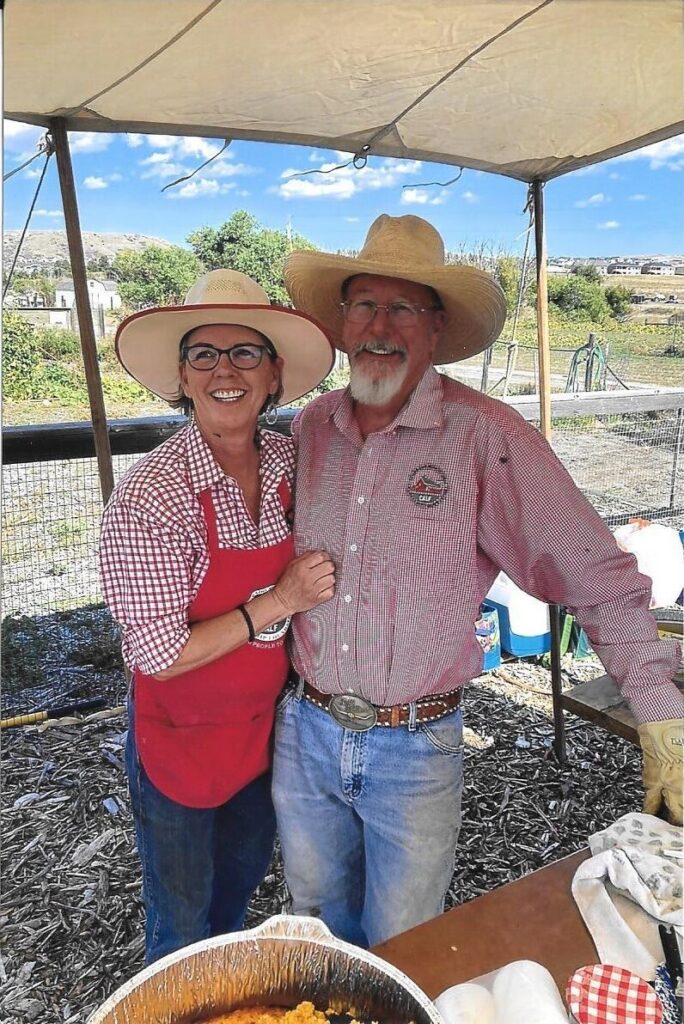
COLORADO AGRICULTURAL LEADERSHIP FOUNDATION Castle Rock News: Mark and Teri Moore have been selected as the 2026 Legends of Agriculture and will be honored at a Sept. 18 dinner benefiting the Colorado Agricultural Leadership Foundation (CALF). The event begins at 5 p.m. at CALF’s...
PREV
PREVIOUS

Violent and property crimes decreased in Colorado in 2025, according to new data
Violent and property crime rates in Colorado decreased significantly in 2025, according to data from the state’s public safety agency. The violent crime rate decreased by 10.7% from 2024 to 2025, resulting in over 3,300 fewer crimes reported statewide, while the property crime rate decreased by 17.3%, resulting in over 28,000 fewer reports, the Colorado […]

Democrat Jessica Killin’s internal poll shows dead heat with U.S. Rep. Jeff Crank in Colorado’s 5th CD
Jessica Killin, the Democratic nominee in Colorado’s 5th Congressional District, is in a statistical tie with Republican U.S. Rep. Jeff Crank, according to an internal poll released this week by Killin’s campaign. The poll of likely general election voters, conducted earlier this month by Democratic firm Global Strategy Group, found Killin trailing Crank 44%-45%, with […]