

Denver City Council sends Xcel franchise deal to voters

This November, Denver voters will decide whether to renew the city’s longstanding franchise agreement with Xcel Energy.
Members of the Denver City Council approved on Monday sending a proposed 20-year franchise agreement with Xcel that would deliver more than $180 million a year in franchise fees, infrastructure relocation savings and other undergrounding funds to the ballot.
The vote was 10-2 with Councilmembers Shontel Lewis and Sarah Parady holding the two dissenting votes.
Denver’s City Charter requires voter approval for any franchise that gives a private company access to public streets and rights-of-way.
If approved by voters, Xcel would be responsible for tasks such as maintaining street lights and assisting with utility line relocation.
“Denver has negotiated the strongest energy partnership agreement in the history of Colorado, and importantly, the benefits of this agreement and of being a franchisee extend far beyond any of the individual listed improvements and accomplishments,” said Jonathan Rogers, deputy director of Denver’s Climate Office.
Additionally, Denver would get “strong standing, oversight and negotiating power” at the Public Utilities Commission, according to city officials.
The franchise agreement would allow Denver to intervene in rate cases on behalf of residents. It would also help reduce costs and accelerate infrastructure projects across the city.
“We estimate that cost savings at $150 million a year, because keep in mind the franchise agreement is what requires Xcel Energy to move their own infrastructure when the city has public works projects,” Rogers said. “So Xcel Energy covers the entire cost of that relocation throughout the city when it is necessary as part of a city project; it also allows us to have additional utility investments and pilot project opportunities that are further expanded in the energy partnership agreement, which we will walk you through.”
The new deal would also lock in a 3% franchise fee projected at about $34 million next year to the General Fund and dedicate about $10 million a year — 1% of electric gross revenues — for city-directed undergrounding of overhead lines.
Should voters not approve the deal, Denver could face significant financial and operational consequences.
The city would lose the $34 million franchise fee that would otherwise support the General Fund. The responsibility for utility relocation costs would become less certain, and city officials have said that could result in delays and higher costs for projects.
“Denver’s energy needs are evolving as our city grows,” said Amy Ford, who oversees Denver’s Department of Transportation and Infrastructure (DOTI). “This agreement creates a stronger framework for coordinating infrastructure investments, improving reliability, supporting economic growth and minimizing disruption to Denverites.”
The current agreement, in place since 2007, has already saved Denver taxpayers an estimated $3 billion by requiring Xcel to cover the cost of relocating its facilities during city public works projects.
While the franchise agreement establishes the formal partnership between the city and Xcel Energy to deliver utility services, the city has also negotiated a companion agreement to advance additional “community-informed” energy priorities.
“Denver residents made their priorities clear, and this agreement reflects them,” Elizabeth Babcock, director of Denver’s Office of Climate Action, Sustainability and Resiliency, stated. “It ensures community oversight, unlocks programs that lower energy costs and ensures Xcel meets the climate, affordability and reliability expectations of Denverites.”
Close to two dozen individuals signed up for a special one-hour courtesy hearing, with strong support from local labor organizations eyeing new and continued job opportunities.
Opponents, including Together Colorado — a nonpartisan community organization that organizes residents around public issues such as housing and energy — argue that neighborhoods will continue to face rising costs, unreliable service and missed opportunities for climate progress.
“I believe that this moment in Denver, we are making the decision whether to be part of this great journey or to cling stubbornly to the destructive but familiar corporate profit model,” resident Ann Karlberg told members of City Council. “To say a courageous no to Xcel and send them back to the negotiating table means taking a risk, but not insisting on a better, more visionary collaboration means taking a far greater risk that will keep us stuck in the same old model of corporate greed over human need for the next 20 years.”
Councilmember Kevin Flynn said he “struggles to be impressed with the package but acknowledges the substantial improvement over last year’s rejected deal.”
The companion agreement would require Xcel to contribute a $2.5 million one-time shareholder-funded donation in 2027 for bill payment assistance and $125,000 annually in shareholder funds for income-qualified affordability programs.
It would also allocate at least 1% of each substation construction budget to neighborhood-compatible design improvements, backed by a citywide good-neighbor agreement that incorporates neighborhood input.
At-large Councilmember Sarah Parady criticized the $125,000 annual low-income energy assistance as insufficient.
“When we started this process over a year ago, I tasked the administration and Xcel with bringing back stronger agreements that were more responsive to community and council input and priorities,” Councilmember Amanda Sandoval said in a press statement. “These agreements meet the moment, and I look forward to Denver voters having the opportunity to weigh in at the ballot box.”
An additional $2 million annual carve-out from the franchise fee would support programs such as heat pumps or electric vehicles. Xcel would fund $250,000 a year for Energy Resource Navigators selected through a third-party process.
If approved by voters, the new franchise agreement would take effect on Jan. 1, 2027, following additional regulatory approvals by the Public Utilities Commission.
Denver Gazette reporter Scott Weiser contributed to this story

Colorado’s EV charging map nearly complete, state says
Scott Weiser
scott.weiser@gazette.com
Updated 7 days ago
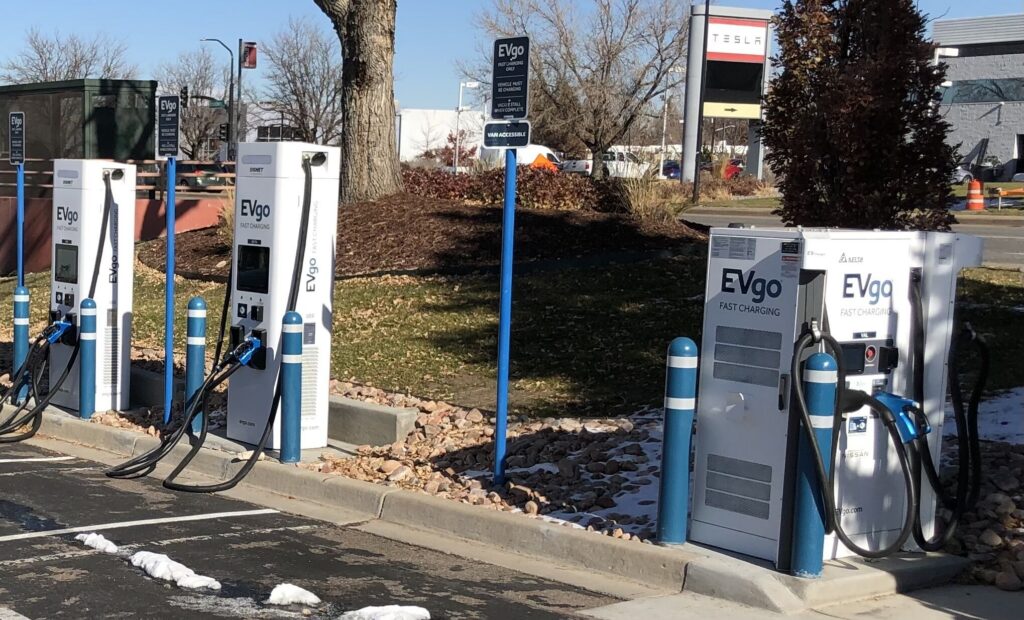
Gov. Jared Polis and the Colorado Department of Transportation released a statement calling the state’s public fast-charging network nearly built out. The Aug. 27 news release reports there are now 486 DC fast-charging locations and 83% of the state highway...
PUC adds weekly comment after killing private talks
Scott Weiser
scott.weiser@gazette.com
Updated 2 weeks ago
The Colorado Public Utilities Commission will take public comment at the start of every commissioner’s weekly meeting beginning Sept. 9 as part of its new transparency mandate, the commission announced, expanding a slot previously limited to the second Wednesday of...

Right-to-natural-gas proposal in Colorado qualifies for ballot
Marissa Ventrelli
marissa.ventrelli@coloradopolitics.com
Updated 1 month ago
A citizen initiative that seeks to enshrine the right to natural gas has qualified for the November ballot, Colorado’s election office confirmed on Thursday. Petitions containing signatures for Initiative No. 177 were turned in to the Secretary of State’s Office for review...

Colorado AG urges Supreme Court to let Boulder climate lawsuit proceed
Marissa Ventrelli
marissa.ventrelli@coloradopolitics.com
Updated 1 month ago
Colorado Attorney General Phil Weiser has filed a court brief with the U.S. Supreme Court in a lawsuit brought by Boulder city officials seeking to hold oil companies liable for their environmental impact. The case began in 2018, when the...

Federal biotech commission examines Colorado’s role in critical minerals production
Scott Weiser
scott.weiser@gazette.com
Updated 1 month ago
China’s dominance over critical mineral supplies has left U.S. manufacturers vulnerable. Colorado’s biotech and research community is working to ease that dependence. Leaders from the National Security Commission on Emerging Biotechnology met last week at the Colorado School of Mines...

Colorado allows big polluters to buy credits as it mandates local engagement
Scott Weiser
scott.weiser@gazette.com
Updated 2 months ago
Colorado air quality regulators on Friday decided to require major industrial plants to hold in-person meetings with nearby communities and to cut certain pollutants on site. The same rules allow those plants to meet most of their greenhouse gas targets...

Record utility rate requests hit $9.2 billion nationwide in second quarter
Scott Weiser
scott.weiser@gazette.com
Updated 2 months ago
Colorado had no requests last quarter Electric and gas utilities sought a record $9.2 billion in rate increases nationwide during the second quarter, according to a new analysis by the consumer advocacy organization PowerLines, as utilities continue seeking billions for...

Xcel franchise renewal clears first Denver City Council committee hurdle
Scott Weiser
scott.weiser@gazette.com
Updated 2 months ago
More than $180 million a year in franchise fees, infrastructure relocation savings and undergrounding funds would continue flowing to Denver under a proposed 20-year franchise agreement with Xcel Energy. It cleared a major City Council hurdle Tuesday, while adding new...
Elbert County takes transmission dispute with Xcel to court
Scott Weiser
scott.weiser@gazette.com
Updated 2 months ago
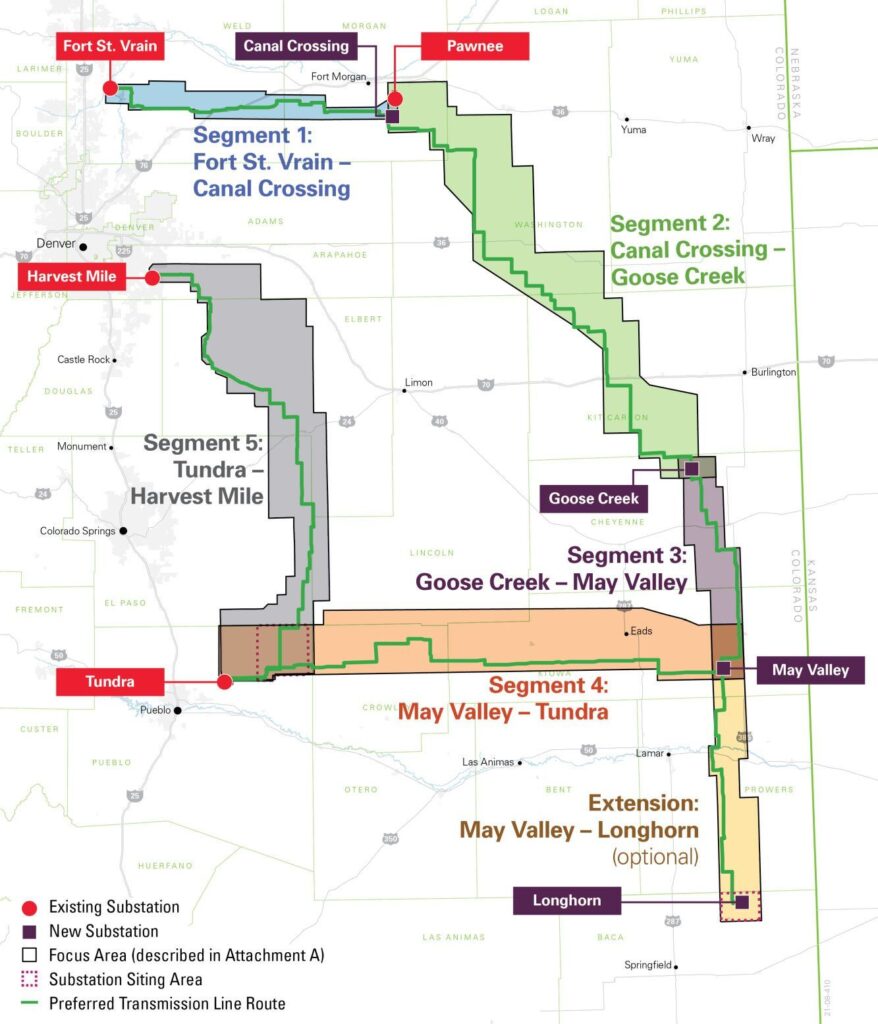
Elbert County filed a lawsuit in Elbert County District Court to challenge the state’s approval of Xcel Energy’s preferred route for a major transmission line, marking the latest escalation in a dispute over how much weight local land-use decisions should...
Colorado’s haze lawsuit tests coal plant closure | ANALYSIS
Scott Weiser
scott.weiser@gazette.com
Updated 2 months ago
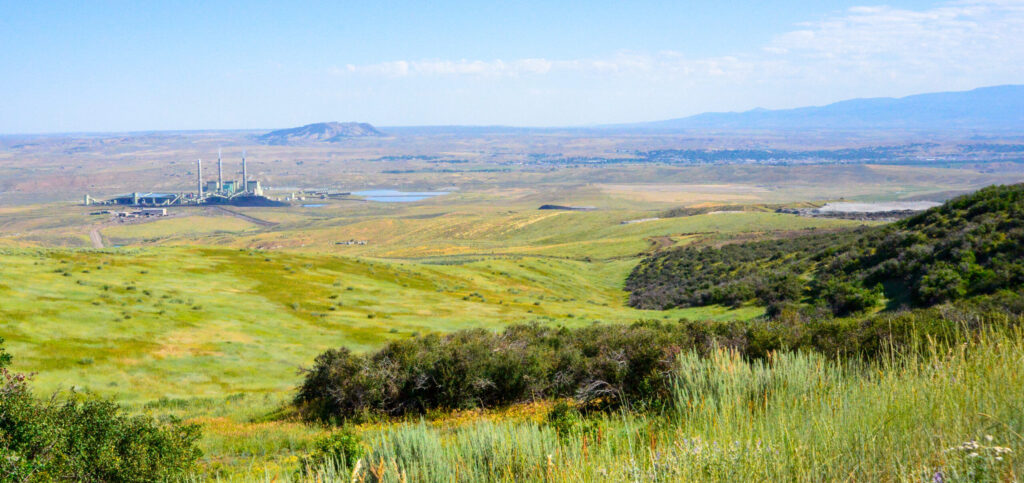
Colorado is asking a federal appeals court to overturn the U.S. Environmental Protection Agency’s decision to reject the state’s plan to reduce haze at national parks and wilderness areas. At the center of the fight is a straightforward but difficult...
PREV
PREVIOUS

Douglas County commissioners postpone meetings due to injury
Douglas County officials have postponed Tuesday’s Business Meeting and Land Use/Public Hearing after a county commissioner sustained an injury, according to a statement from the county. County officials said the commissioner is “OK but may require surgery.” As a result, the meetings will be rescheduled as soon as possible. The commissioner “asks for privacy at […]

Gov. Polis celebrates Colorado’s first-place education ranking by U.S. News
Colorado officials said they have something to celebrate this week, in addition to the state’s sesquicentennial birthday on Saturday. U.S. News & World Report on Tuesday gave Colorado its top ranking for education efforts from pre-K to postsecondary, though it didn’t fare well in other areas, such as health access and crime. Gov. Jared Polis […]