

Colorado farmers, ranchers wrestle with hurdles amid extreme drought conditions
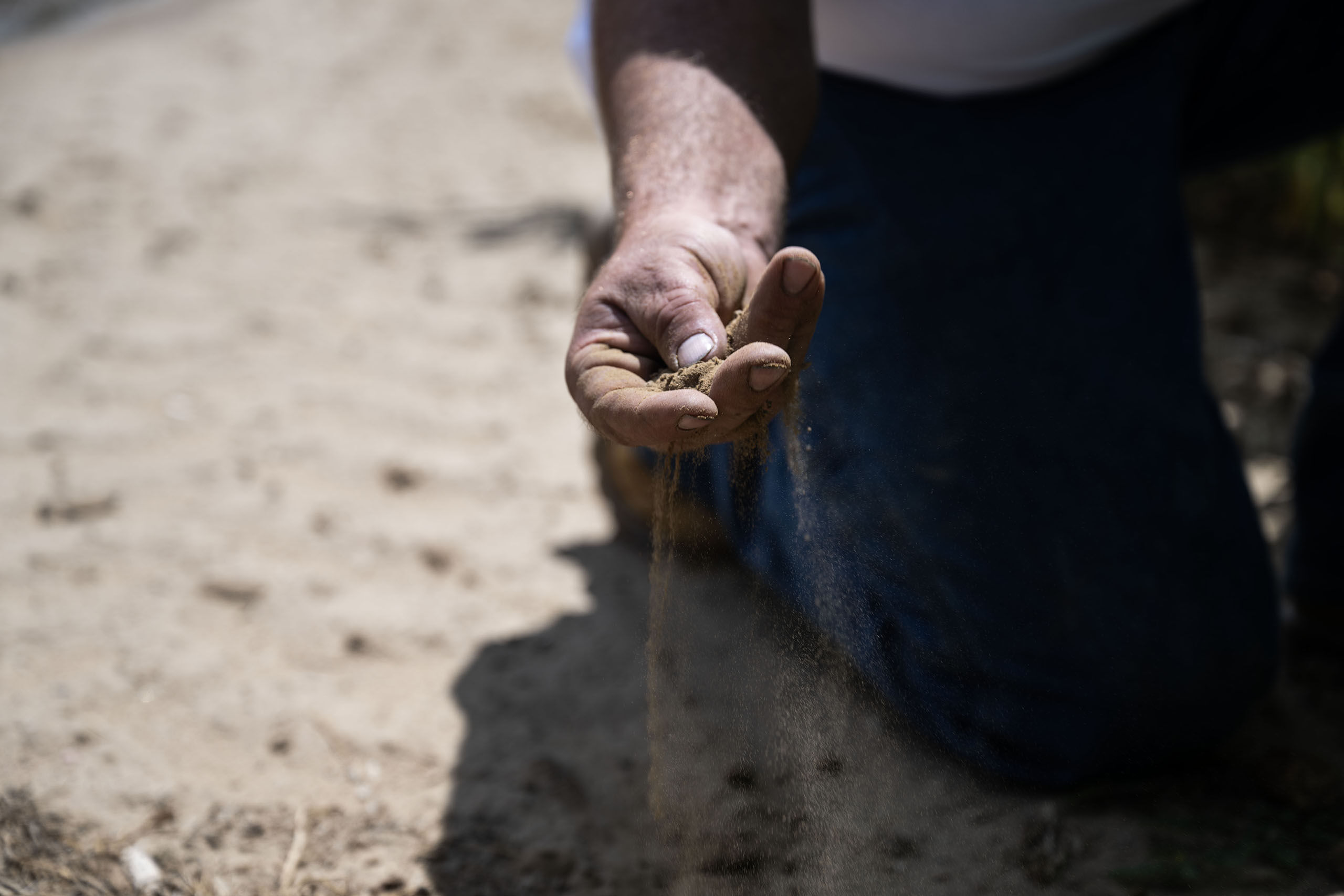
Some producers take drastic steps to adapt to dry climate, record-low snowpack
This is the first time that Jim Magnuson, who operates a family farm in the rural town of Eaton, can ever recall planting only 75% of his acreage.
Magnuson and his brother, Tim, primarily grow corn and alfalfa on their farm, Magnuson Bros., which has been in their family since 1908, located alongside stretches of County Road 33.
Given the lack of precipitation, the brothers decided to set aside 25% of their acreage for farming millet and sorghum, forages more suited for drier conditions that can be sold as cattle feed.
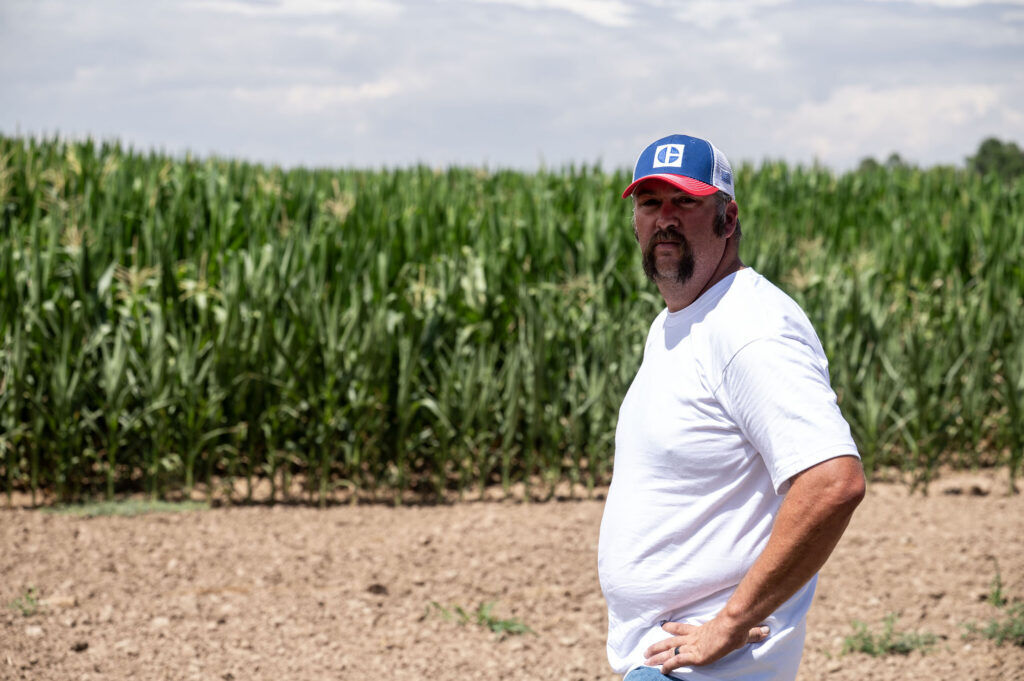
“In these historically dry times, we haven’t had near the amount of precipitation both on our farms but also up in the mountains,” Magnuson said. “We rely heavily on snowmelt to supply our irrigation canals. Most of our water comes in the form of runoff down the Poudre River.”
“We’re trying to utilize what water we have to the best of our abilities,” he added, noting the lower snowpack and lower water allotments through their canal systems.
During previous years, Magnuson and his brother have opted not to plant some acreage — maybe up to 10% or 15% of their land.
They’ve never decided not to farm 25% of their land until this year.
The brothers also run a small feedlot and bring in cattle from other farmers on a custom basis to care for in the wintertime. During the cold months, they will take in 200 to 500 cattle, depending on the year. However, they will not be able to provide as much feed and acres for cattle this winter.
Farmers need a “miserably wet winter” and a lot of snow up in the mountains to water crops in the Front Range, Magnuson said.
“We’re essentially depleting our reservoirs this year,” he said. “If we don’t have a great snowpack next year, we’re not going to be able to refill our reservoirs. We’ll be short on water next year.”
Drought affects farmers and ranchers
Magnuson isn’t alone in his struggles.
He’s in good company with several farmers, who are facing similar challenges and making tough decisions.
South of Eaton, Robert Sakata and his family chose not to plant about 40% of their farmable acreage due to the extremely low snowpack this past winter. The family farm, located in Brighton, grows corn for silage and heavily relies on direct-flow water rights from the South Platte River.
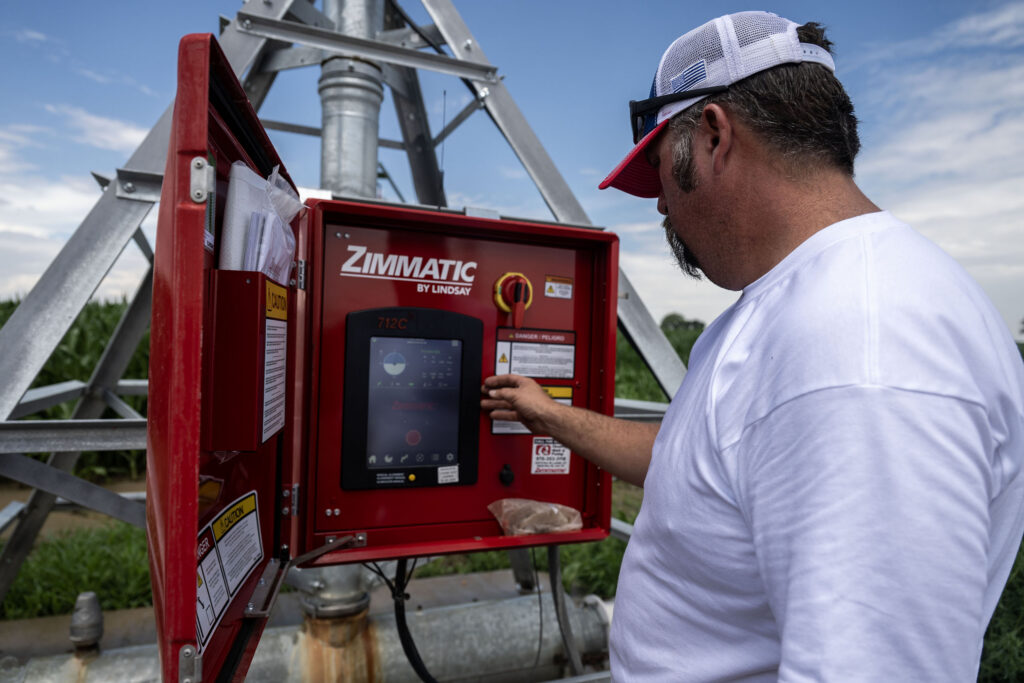
“This extreme action of fallowing so much land this season is how we are dealing with the drought,” said Sakata, calling the move a severe step. “We estimated how much we wanted to risk planting and growing a crop against the unknown of how much water there could be for irrigation. It is an instant 40% pay cut for us even though we will still have many overhead costs — like property taxes that we will still have to pay.”
Farming fewer crops means that Sakata and Magnuson won’t be able to provide as much feed for cattle, and dairy farmers might have to scour for other food sources.
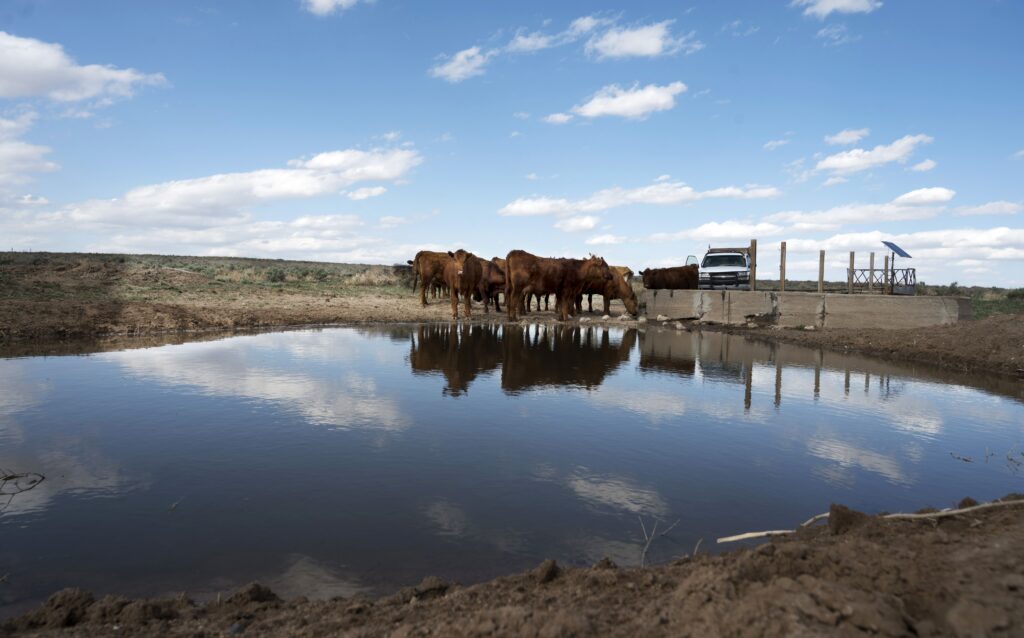
Due to the diverse agricultural industry in Colorado, farmers and ranchers across the state are adjusting to the drought in various ways, whether it’s hauling in water for their animals or downsizing their herds.
“All of these actions driven by the extreme climatic conditions this year have the potential to lead to extreme emotional stress,” said Sakata, who is also an agricultural water policy adviser for the Colorado Department of Agriculture.
Not only are farmers grappling with trying to plant crops and raise livestock in drier conditions, but they’re also facing challenges with increased prices for supplies.
For Sakata, it’s not just about adapting agriculture to drought conditions. It’s a matter of adapting to aridification, a more permanent climatic change.
On his family farm, they irrigate off four different canal systems to minimize the impacts of drought.
To adapt to aridification, they gradually stopped growing vegetables. Growing vegetables is a costly endeavor, Sakata noted. Vegetable crops don’t do well with less-than-optimal water amounts.
“Unlike other feed crops, where you can reduce the amount of supplemental irrigation water and it can suffer for a period of time and look stressed, even turning brown, with vegetable crops you don’t have that flexibility,” he added.
Low snowpack and stream flows
Colorado saw the lowest snowpack in recorded history in 2026 as a statewide average, said Jason Ullmann, director of the Division of Water Resources for the Colorado Department of Natural Resources, citing data from the Natural Resources Conservation Service.
The NRCS measured snow water equivalents at manual snow courses and automated SNOTEL stations. The earliest available data dates back to the winter of 1978.
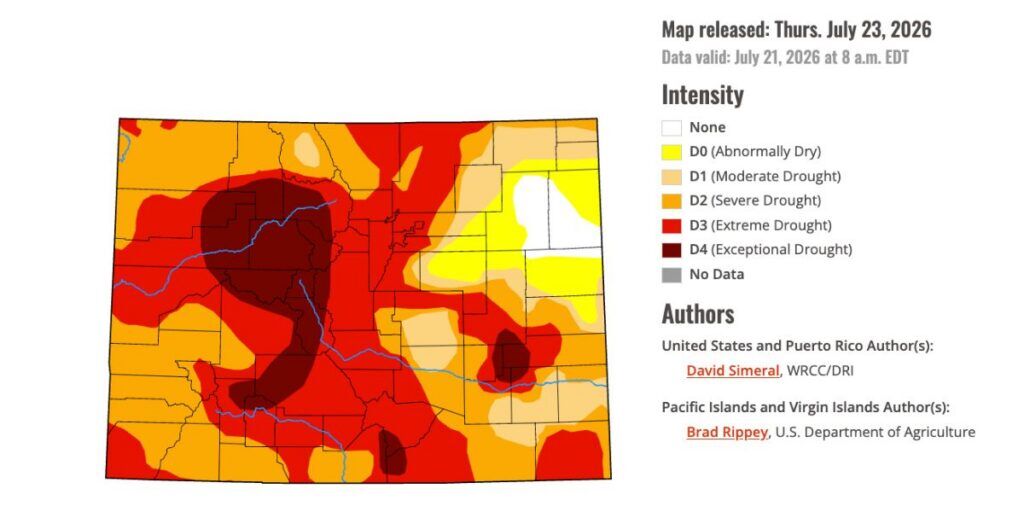
The latest data shows that nearly 91% of Colorado is in drought, with 37.2% in extreme drought and 31.8% in severe drought as of July 21, per the U.S. Drought Monitor.
In early June, Gov. Jared Polis issued a statewide drought emergency declaration in response to prolonged warm temperatures and record-low snowpack.
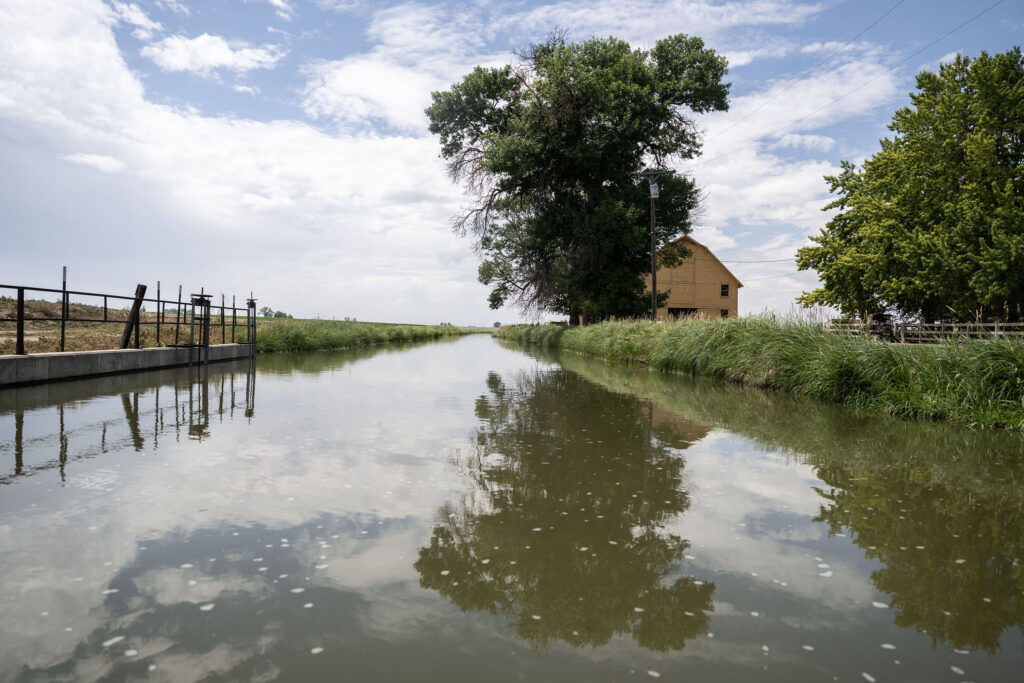
Irrigators are not solely affected by the amount of snowpack but also the timing of runoff. Ullmann noted that March 2026 was the hottest March on record, with some parts of Northern Colorado hitting 90 degrees weeks earlier than previously documented. The higher temperatures caused nearly half the snow water equivalent to melt, leading to an earlier runoff.
“The significant amount of runoff that occurred in March happened prior to the bulk of irrigation needs,” Ullmann said. “If this meager runoff from low snowpack was not captured in a storage reservoir, it was not usable by agricultural operations.”
On top of that, Colorado has experienced near-historic low stream flows during the summer. According to Ullman, dryland farmers growing crops, such as winter wheat, will have one of their lowest yields in decades due to lack of precipitation. Many areas saw around 4 inches less than average precipitation.
“These conditions are why we at DWR have heard many farmers express that this year is the worst or at least one of the worst that they can remember,” he said.
The challenges of a local wheat farmer
The long-term average yield for Alan Linnebur, a wheat farmer and general partner of Progressive Farms Partnership, is 40 to 45 bushels per acre. This year, the average yield across the farm was only 23 bushels per acre, roughly half the long-term average.
Although the farm is headquartered in Byers, Linnebur and his business partners manage and farm land in four counties: Adams, Arapahoe, Washington and Weld.
And the lack of a somewhat normal winter hurt their yields the most this year.
“We certainly were drier than we would’ve liked to have been, but most farmers here would always say that,” Linnebur said. “Effective precipitation for dryland farmers in eastern Colorado is by far the most limiting factor.”
Due to the warm winter and early spring, a cold shock came through and the wheat plants were weeks ahead of schedule for development. This caused a good deal of freeze damage to the plants since the wheat heads were developing and too far along when the cold front hit.
While some of Linnebur’s fields didn’t suffer as much freeze damage, a number of his fields didn’t do well. Only two out of 30 fields were close to the long-term average yield for bushels of wheat.
Coupled with the dry weather, Linnebur and his partners were also dealing with infestations of brown wheat mites and Russian wheat aphids. Insects are attracted to stressed crops, adding to the difficulties, Linnebur noted.
Additionally, an influx of wheat viruses carried forward in the warm temperature.
“This (year) definitely ranked high on frustrating seasons for winter wheat, for sure,” he said.
‘We’re the eternal optimists‘
There are several government programs to assist farmers during droughts, including the Colorado Soil Health Program, the Climate Resilience Grant Program, the Emergency Livestock Assistance Program and a digital hay directory to connect producers that need feed, among others.
The Colorado Department of Agriculture also has a dedicated webpage with a drought impacts survey and information about state and federal funding opportunities and mental health resources for producers.
Additionally, Colorado State University researchers are developing more drought-resistant corn, wheat and sorghum.
For years, the university has studied and produced varieties of crops that fare better in drier conditions and some varieties that are weed and pest-resistant, according to a CSU Source article. University scientists examine a plant’s genetic code and field test to assess which genes help make plants more adaptable to drought.
Despite the challenges, Magnuson has no plans to move on from the family farm during his lifetime. The farm has been in his family for more than a century, and he’s been involved with the business since he could walk.
If it’s another dry winter, it’s possible that Magnuson will not grow any crops for 2027 into 2028.
Yet, predisposed to think positively, Magnuson believes Colorado is at the tail end of a yearslong drought cycle and moving toward a super El Niño, meaning higher chances of wetter summers and snowier winters.
“In agriculture, we’re the eternal optimists,” Magnuson said. “If we didn’t think the next year would be better, none of us would still be doing what we’re doing — raising cattle, raising crops, doing all the things that we do on the chance that the weather is going to cooperate.”
He added, “My heart is with our family operations at home and I’m planning on sticking it out and being here as long as I can.”


Colorado produce not tied to nationwide cyclospora outbreak, agriculture officials say
Marissa Ventrelli
marissa.ventrelli@coloradopolitics.com
Updated 1 week ago
There is no indication that the recent outbreak of cyclospora, a fecal parasite that has contaminated food and water across nearly every state, can be linked to produce grown in Colorado, according to the state’s Department of Agriculture. “Colorado growers...
With no 7-state deal, federal agency turns to 10-year Colorado River strategy
Marianne Goodland
marianne.goodland@coloradopolitics.com
Updated 2 months ago
The U.S. Department of the Interior is moving forward with a 10-year framework for managing the Colorado River after 2026, outlining a plan to issue new operating guidelines every two years as the seven basin states remain unable to reach...
Colorado on the hook for $1 million in costs to pay for wolves’ livestock kills
Marianne Goodland
marianne.goodland@coloradopolitics.com
Updated 3 months ago
After paying more than $700,000 in March to ranchers for livestock lost to wolves, the Colorado Parks and Wildlife Commission is poised to approve two additional claims totaling $262,000 at its meeting this week. Those approvals would bring total payouts...
Overtime for farms, school safety, public office rules: What’s new in Colorado law
Marianne Goodland
marianne.goodland@coloradopolitics.com
Updated 3 months ago
Gov. Jared Polis signed 25 bills into law Monday, bringing changes that will affect workers, families, schools, and local governments across Colorado. The new laws deal with a range of issues – from overtime rules for farmworkers to limits on...
While growth slows statewide, small-town populations in Colorado boom
Savannah Eller
savannah-eller@coloradopolitics.com
Updated 3 months ago
A proposed housing project could more than double the population of Calhan, a town of just 760 on the Eastern Plains outside Colorado Springs. For some small towns on the Front Range, it’s a familiar situation. Colorado’s overall population growth...
Governor’s wildlife commission picks face pushback ahead of Colorado Senate hearing
Marianne Goodland
marianne.goodland@coloradopolitics.com
Updated 4 months ago
Colorado’s largest coalition of hunters, anglers, and wildlife conservation groups is urging state lawmakers to reject two of Gov. Jared Polis’ latest nominees to the Colorado Parks and Wildlife Commission, setting up a contentious confirmation hearing before the Senate Agriculture...
Cannabis overhaul introduced in Colorado Senate
Chris Osher
chris-osher@gazette.com
Updated 4 months ago
Colorado lawmakers on Wednesday introduced a measure that, if approved, would place a ballot proposal before voters this fall that contains changes backers say would improve consumer safety and overhauls how the marijuana industry is taxed. The proposed ballot initiative would fund a testing...

Colorado House passed a bill raising threshold for agriculture overtime by one vote
Marianne Goodland
marianne.goodland@coloradopolitics.com
Updated 4 months ago
The bill that would raise the overtime threshold for overtime pay for certain agricultural workers won the narrowest of votes Thursday in the Colorado House. Senate Bill 121 won a 33-32 vote, a dramatic difference from votes cast Wednesday on...
Colorado marijuana regulators pledge crackdown on intoxicating hemp
Christopher Osher
chris.osher@gazette.com
Updated 4 months ago
Citing potential tax avoidance, ‘serious risk to public safety,’ Marijuana Enforcement Division warns companies about swapping illegal chemically converted hemp for marijuana This article was produced for ProPublica’s Local Reporting Network in partnership with The Denver Gazette. Colorado regulators announced...
Senate-passed farmworkers overtime bill easily clears Colorado House committee
Marianne Goodland
marianne.goodland@coloradopolitics.com
Updated 4 months ago
A proposal to ease Colorado’s overtime requirements for agricultural employers cleared a key House committee Monday, setting up a broader fight over whether the state should scale back a labor policy adopted just five years ago. The House Agriculture, Water...
PREV
PREVIOUS
New federal plan sets short-term rules for Colorado River management
Interior Department’s plan spares Colorado from mandatory cuts for now After years of stalled negotiations among the seven states that rely on the Colorado River, the federal government on Friday released its own plan for managing the drought-strained system. Calling it a balanced approach that offers flexibility and predictability, the plan released by the U.S. […]

Q&A with Mike Pence | Former vice president says GOP’s populist turn from conservatism isn’t permanent
Former Vice President Mike Pence says he’s concerned that the Republican Party has taken a populist turn away from bedrock conservative principles during President Donald Trump’s second term, but he believes the party will return to its roots when Trump passes the torch to the GOP’s next nominee in 2028. It’s important, as attention turns […]