

‘Explosive’ diarrhea-causing parasite cyclosporiasis cases nearly triple in Colorado

Cases of the “explosive” diarrhea-causing parasite cyclosporiasis nearly tripled in Colorado over the past month, prompting renewed attention after related deaths were reported in Michigan.
Twenty-nine counties in Colorado have reported cases, according to the Colorado Department of Public Health and Environment.
Colorado has had 241 cases of cyclosporiasis since January, state data shows. Of the completed investigations, only 45 of the cases were acquired domestically. The vast majority, or 74%, reported international travel.
Several factors could account for the increased number of cases, including greater awareness because of outbreaks in other states.
“The case count alone does not indicate that an outbreak is occurring in Colorado,” Kayla Glad, a CDPHE spokesperson, said in an email.
To date, there have been four cases in Colorado that resulted in hospitalizations.
The state had 204 cases last year.
“Some of the increase also is probably associated with increased testing,” said Dr. Michelle Barron, senior medical director of infection prevention and control for UCHealth.
Barron added: “There may be a little bit of a testing bias.”
According to the Centers for Disease Control and Prevention (CDC), more than 6,700 laboratory-confirmed cases have been reported in 45 states since May 1, the start of the cyclosporiasis season, which typically runs through the end of summer.
But this doesn’t include the 11,500 cases reported by the Michigan Department of Health and Human Services.
Michigan reported the first deaths this week: two.
Colloquially referred to as “cyclo,” cyclosporiasis is a parasitic disease that infects the intestinal tract.
The most common symptom is watery diarrhea with frequent “explosive” bowel movements, according to the state health department. Other symptoms can include loss of appetite, weight loss, increased gas, abdominal cramps, bloating, nausea and fatigue.
Vomiting, body aches, headache and other flu-like symptoms may also occur.
The incubation period is, on average, seven days, but ranges up to 14 days or longer. If left untreated, symptoms can linger for a month or longer.
Its cause is associated with ingesting contaminated food or water.
The parasite in stools is not considered infectious, meaning person-to-person spread is unlikely.
Cyclosporiasis is treated with antibiotics, rest and hydration.

Those with preexisting medical conditions could be at greater risk of complications related to dehydration, which the triple-digit heat could exacerbate.
“If they have underlying medical conditions, they should really see their doctor sooner rather than later,” said Dr. Kum Kap Foong, a Denver Health infectious disease physician and medical director of the Antimicrobial Stewardship Program.
Shredded iceberg lettuce supplied to Taco Bell by California-based supplier Taylor Farms, which has a facility in Colorado Springs, has been identified as a source of contamination in an outbreak in nine states that has sickened thousands of people in the U.S.
Taylor Farms initiated a recall last month of all iceberg lettuce sourced from central Mexico.
The best way to prevent cyclosporiasis is to avoid food or water contaminated with feces.
Those sickened nationally were between 1 and 98 years old. The median age is 44, with females accounting for nearly six in 10 cases.
Health officials have said that they believe the number of cases is likely higher because some may have recovered without medical intervention.
The CDC recommends washing hands with soap and water before and after handling or preparing raw fruits and vegetables.
Consumers should cut away damaged or bruised areas before preparing and eating, remove the outer layers and thoroughly wash fruits and vegetables, scrubbing firm produce such as melons and cucumbers with a clean produce brush.
Health officials do note that washing produce does not completely eliminate the risk.
Barron, with UCHealth, further recommends using a separate cutting board for produce and meat or cutting fruits and vegetables first.


First Air Force Academy class of just 306 cadets started out in WWII barracks, faced high standards
Mary Shinn
mary-shinn@coloradopolitics.com
Updated 3 days ago
When the first class of the Air Force Academy arrived at Lowry Air Force in Denver, they were welcomed with an air show featuring bombers and fighter jets. “Most of us were overwhelmed,” recalled retired Col. Max Miller, the president...

Douglas County schools to consolidate administrative offices into $29M headquarters to cut costs
Nicholas Fogleman
nicholas.fogleman@denvergazette.com
Updated 6 days ago
The Douglas County School Board is moving forward with a $29 million plan to consolidate district administrative operations into a new headquarters. It’s part of an effort to reduce annual costs as the district faces ongoing budget pressures. In June,...

U.S. Department of Education investigates DPS over same-sex kissing assignment
Nico Brambila
nico.brambila@denvergazette.com
Updated 3 days ago
The U.S. Department of Education is investigating Denver Public Schools for its handling of a French high school teacher who was fired earlier this year over requiring students to perform a same-sex kissing scene as part of a classroom acting...
U.S. Department of Education investigates DPS over same-sex kissing assignment
Nico Brambila
nico.brambila@denvergazette.com
Updated 3 days ago
The U.S. Department of Education is investigating Denver Public Schools for its handling of a French high school teacher who was fired earlier this year over requiring students to perform a same-sex kissing scene as part of a classroom acting...
Jeffco taxpayers could be on the hook for a possible child sex assault settlement
Matt Kyle
matt.kyle@denvergazette.com
Updated 6 days ago
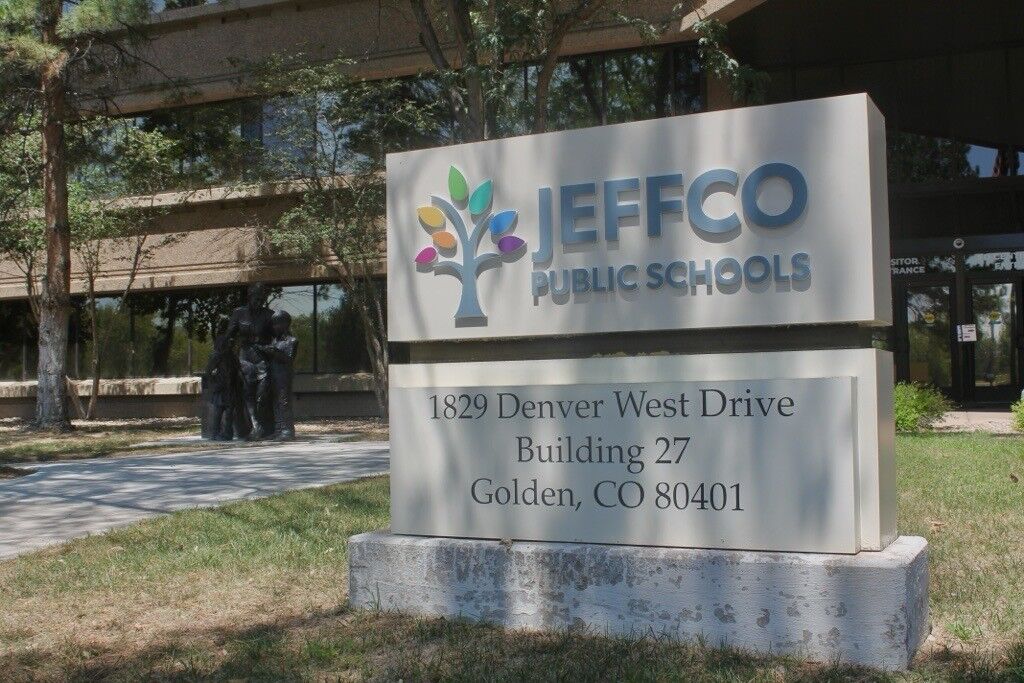
Taxpayers may end up on the hook for a child sexual assault settlement, possibly worth up to $15 million, after Jeffco Public Schools failed to notify its insurance company in a timely manner about the case. The incident stems from...

Colorado Springs D-11 may present voters with $775 million bond measure
Eric Young
eric.young@gazette.com
Updated 7 days ago
Colorado Springs’ oldest school district could see new capital funding for the first time in over 20 years. Colorado Springs District 11’s Board of Education will decide whether to present a new, districtwide bond totaling $775 million to voters this...

Jeffco Public Schools sues Trump administration to protect funding after alleged transgender policies violation
Matt Kyle
matt.kyle@denvergazette.com
Updated 1 week ago
In the wake of several threats by the Trump administration to revoke federal funding, Jeffco Public Schools filed a lawsuit against the Department of Education seeking to protect that badly needed money. Jeffco has been under investigation by the DOE’s...
Q&A with Jeffco Public Schools’ interim superintendent on budget deficit, federal investigation
Matt Kyle
matt.kyle@denvergazette.com
Updated 4 days ago
For the upcoming school year, Robert Stein will serve as Jeffco Public Schools’ superintendent. The 66-year-old Denver native has been semi-retired for the last few years. He spent 40 years in education, as both a teacher and administrator. Most recently,...

Gov. Polis celebrates Colorado’s first-place education ranking by U.S. News
Marianne Goodland
marianne.goodland@coloradopolitics.com
Updated 1 week ago
Colorado officials said they have something to celebrate this week, in addition to the state’s sesquicentennial birthday on Saturday. U.S. News & World Report on Tuesday gave Colorado its top ranking for education efforts from pre-K to postsecondary, though it...

Colorado schools receive $24 million for free meals program
Marissa Ventrelli
marissa.ventrelli@coloradopolitics.com
Updated 1 week ago
The Colorado Department of Education is providing Colorado schools with nearly $24 million in grant funding to implement a free lunch program. Approved by voters in 2022, the Healthy School Meals for All provides free breakfast and lunch to all...
PREV
PREVIOUS

Denver aerospace company Voyager sees rapid growth in latest earnings
A fast-growing aerospace and defense company based in Denver saw record revenues and record bookings in the latest quarter. Voyager Technologies announced it generated $52.7 million in the second quarter, according to its latest earnings report released Monday. Revenues are up 51% from the first quarter. The company saw a surge in demand in the […]

Denver’s pay-for-performance shelter plan falls short on key metric
Denver’s recent shift to a pay-for-performance contract model has improved day-to-day operations across the city’s seven noncongregate homeless shelters, but has struggled to deliver promising numbers on its most important metric: getting people out of shelters and into housing. However, city officials still plan to expand the model to five additional city shelters while working […]