

Supreme Court upholds birthright citizenship, rejecting Trump’s proposed limits
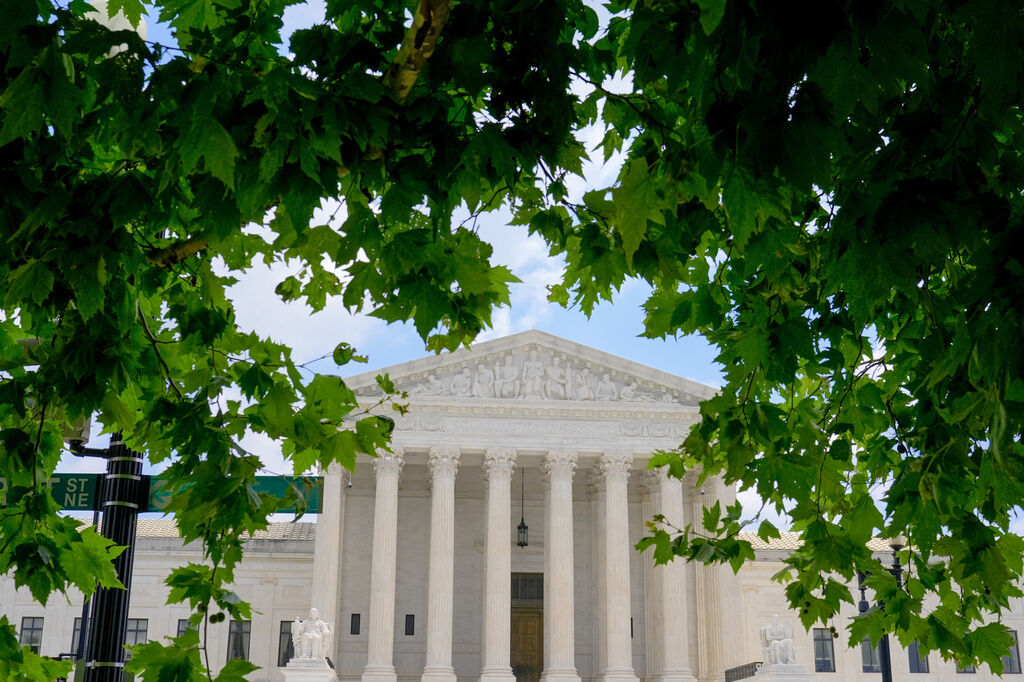
WASHINGTON • A divided Supreme Court on Tuesday upheld a broad conception of birthright citizenship, rejecting President Donald Trump’s executive order declaring that children born to people who are in the United States illegally or temporarily are not American citizens.
The justices relied on the dominant understanding of the 14th Amendment, adopted after the Civil War and more recent federal laws in ruling that anyone born in the country, with very limited exceptions, is a citizen.
“Citizenship, then and now, was the right to have rights — to freely participate in our political community. The Framers of the Fourteenth Amendment extended that promise to ‘every freeborn person in this land,’” Chief Justice John Roberts wrote for the court, citing congressional debate over the amendment, “We keep that promise today.”
Three conservative justices would have allowed the restrictions to take effect.
“The Court today takes the extraordinary step of holding facially unconstitutional the President’s Order excluding from citizenship the children of foreign temporary visitors and illegal aliens,” Justice Clarence Thomas wrote in a 91-page dissent. “In doing so, the Court adds to the sad history of the Fourteenth Amendment, which was designed and understood to secure equal rights for the freed blacks but has instead been repurposed for political projects that the Reconstruction Congress did not support.”
The Republican president’s restrictions had been blocked by several lower courts and had not taken effect anywhere in the U.S.
During arguments in April, both conservative and liberal justices questioned the order’s legality in a case that was magnified by Trump’s attendance in the courtroom.
The justices ruled on Trump’s appeal of a lower-court ruling from New Hampshire that struck down the citizenship restrictions.
The birthright citizenship order, which Trump signed on the first day of his second term, is part of his administration’s broad crackdown on illegal immigration.
Birthright citizenship was the first Trump immigration-related policy to reach the court for a final ruling. The justices previously struck down global tariffs Trump had imposed under an emergency powers law.
The Trump administration had argued that the common view of citizenship is wrong, asserting that children of noncitizens are not “subject to the jurisdiction” of the United States and therefore are not entitled to citizenship. The administration had maintained the 14th Amendment had never been interpreted, until more recently, to extend American citizenship broadly to everyone born within the U.S. The 14th Amendment states that “all persons born or naturalized in the United States, and subject to the jurisdiction thereof, are citizens of the United States and of the State wherein they reside.”
The Trump policy sought to exclude American citizenship to a child whose mother was illegally staying in the U.S. and the father was not a U.S. citizen or lawful permanent resident at the time of birth, or when the mother is legally but temporarily staying in the U.S., such as individuals with student and tourist visas.
In a series of decisions, lower courts have struck down Trump’s executive order as illegal. The decisions have invoked the high court’s 1898 ruling in Wong Kim Ark, which held that the U.S.-born child of Chinese nationals was a citizen.
More than one-quarter of a million babies born in the U.S. each year would have been affected by the executive order, according to research by the Migration Policy Institute and Pennsylvania State University’s Population Research Institute.

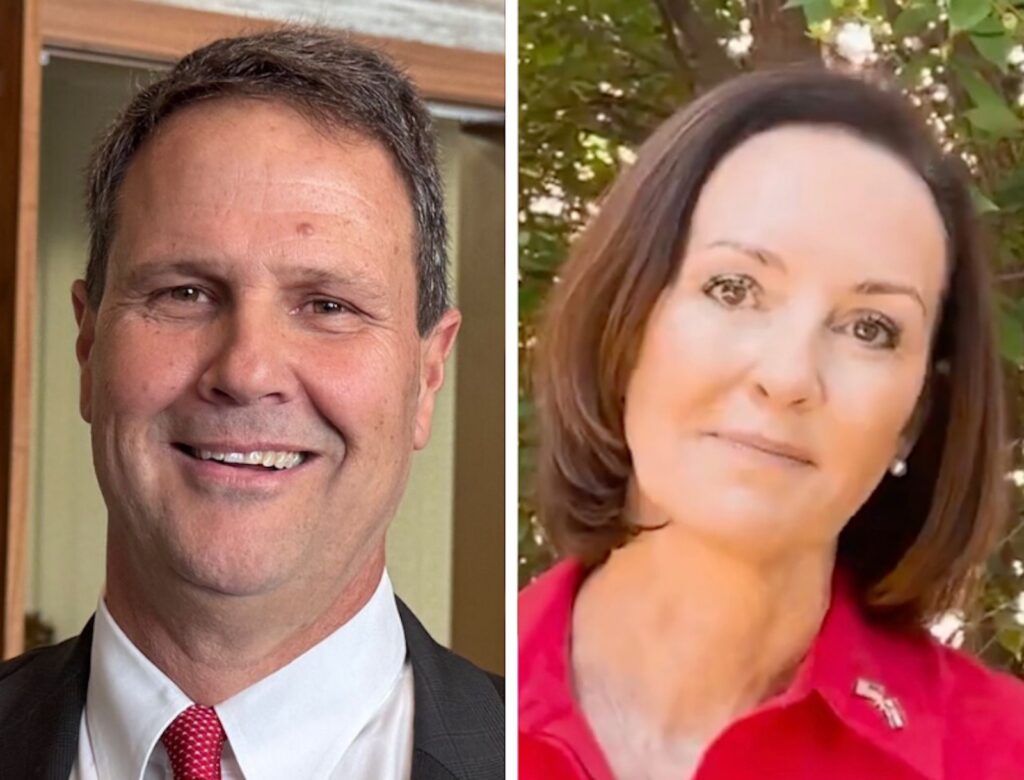
Jeff Crank, Jessica Killin set to face off in 2 debates in Colorado’s 5th Congressional District
Ernest Luning
ernest.luning@coloradopolitics.com
Updated 5 hours ago
Republican U.S. Rep. Jeff Crank and Jessica Killin, his Democratic challenger, have agreed to debate twice in the weeks leading up to the general election in Colorado’s 5th Congressional District, their campaigns have said. Crank is seeking a second term...
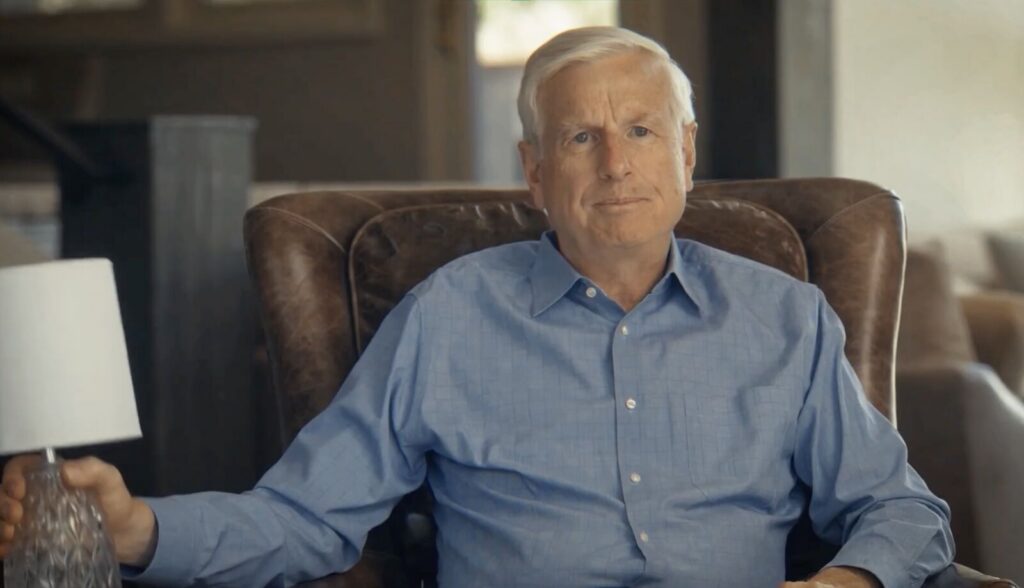
‘Ticked off’: Third-party U.S. Senate candidate in Colorado launches $1.3 million TV ad campaign
Ernest Luning
ernest.luning@coloradopolitics.com
Updated 1 day ago
Bob Chew, the Forward Party nominee for U.S. Senate in Colorado, sends household objects flying in a TV ad set to run statewide through September, backed by $1.3 million in ad reservations across multiple platforms, his campaign told Colorado Politics....

Colorado shifts vaccine authority to state as Trump administration revises childhood framework
Marissa Ventrelli
marissa.ventrelli@coloradopolitics.com
Updated 2 days ago
As the Trump administration rolls out a revised childhood vaccine framework, Colorado’s law allowing the state to set its own immunization schedule has now taken effect. Issued Monday, President Donald Trump’s executive order separates childhood and adolescent vaccines into three...

U.S. Rep. Lauren Boebert’s son arrested, faces charges of sexual exploitation of minor
Matt Kyle
matt.kyle@denvergazette.com
Updated 4 days ago
U.S. Rep. Lauren Boebert’s son Tyler Jay Boebert has been arrested and accused of recording and sharing a video depicting himself having intercourse with a minor, according to court records. The case originated in Garfield County in Western Colorado and...

Democratic group aims Spanish-language TV ad at Gabe Evans in Colorado’s battleground 8th CD
Ernest Luning
ernest.luning@coloradopolitics.com
Updated 3 days ago
A national group tied to House Democratic leadership launched a six-figure Spanish-language TV ad in Colorado this week targeting Republican U.S. Rep. Gabe Evans and the GOP’s signature budget legislation. The 30-second spot is part of $15 million in new...

Colorado School of Mines lands major share in Trump’s $100M mining-education plan
Thelma Grimes
thelma.grimes@coloradopolitics.com
Updated 3 days ago
President Donald Trump on Friday named the Colorado School of Mines among roughly a dozen institutions that will share in a $100 million commitment “to train the next generation of American miners.” Paul Johnson, the university’s president, said he is...
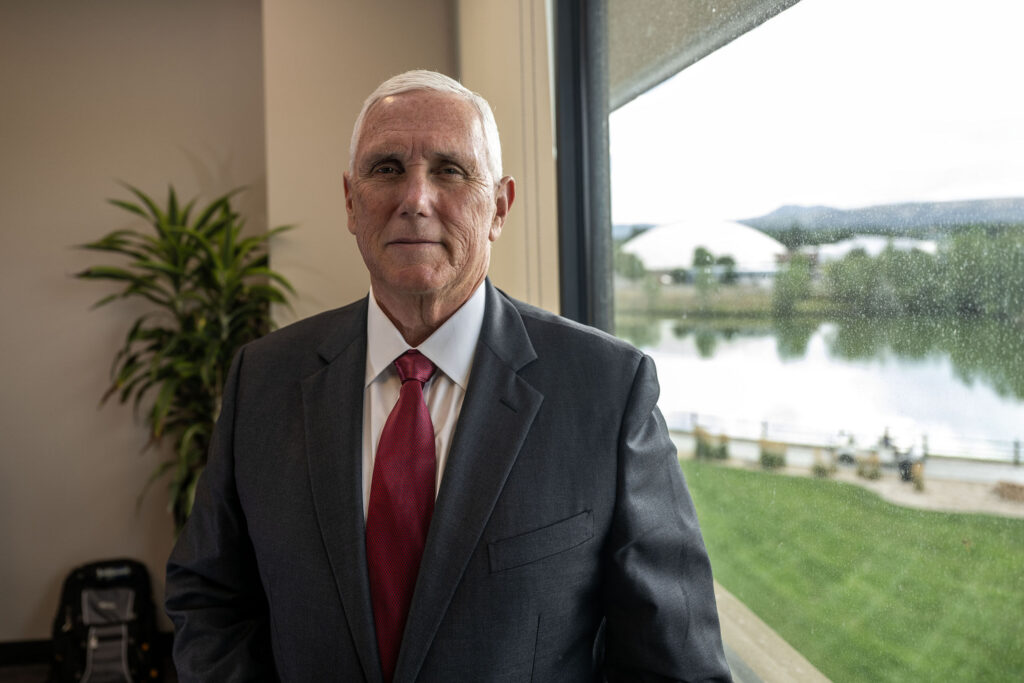
Former VP Mike Pence joining Colorado Christian University faculty
Marissa Ventrelli
marissa.ventrelli@coloradopolitics.com
Updated 1 week ago
Former Vice President Mike Pence has been hired as a visiting faculty member at Colorado Christian University, the Lakewood-based private evangelical university announced Tuesday. Pence will be on campus about once a month during the 2026-2027 school year to give...

National House Democrats add Colorado seats held by Lauren Boebert, Jeff Hurd to target list
Ernest Luning
ernest.luning@coloradopolitics.com
Updated 4 days ago
The national House Democrats’ campaign arm on Wednesday added the Colorado congressional district held by Republican U.S. Reps. Jeff Hurd and Lauren Boebert to the list of targeted seats the party believes are vulnerable in this year’s midterms. The Democratic...
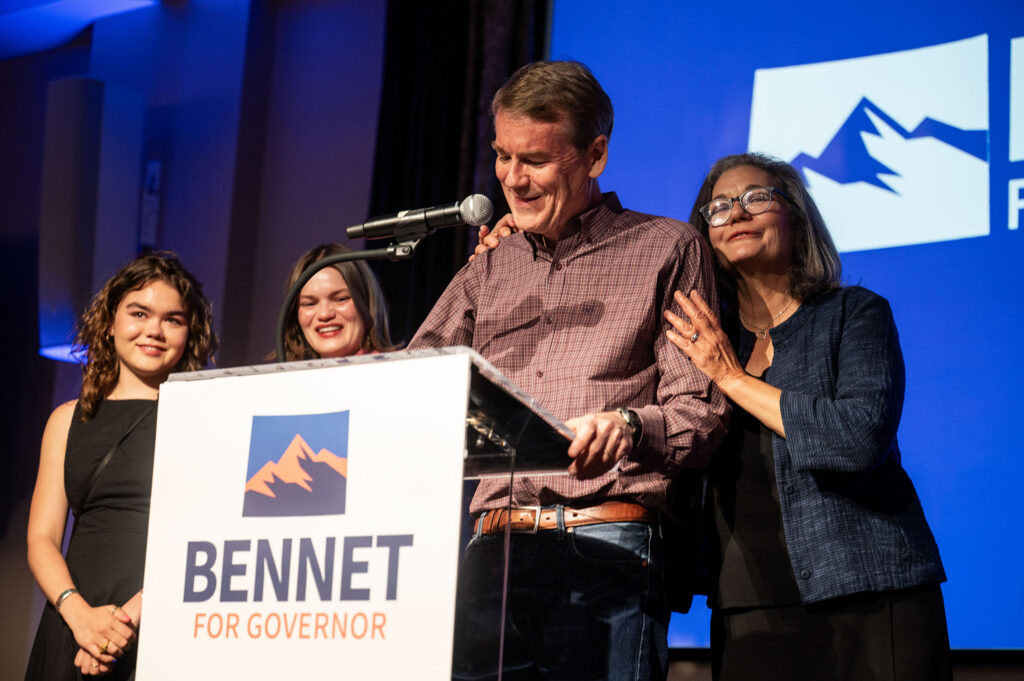
Bennet settles campaign finance complaints, admits violating state law
Marianne Goodland
marianne.goodland@coloradopolitics.com
Updated 1 week ago
U.S. Sen. Michael Bennet’s gubernatorial campaign has agreed to pay a $7,433 fine for using his Senate campaign account to pay for gubernatorial campaign travel expenses. The July 31 settlement includes an admission by Bennet and his campaign that they...
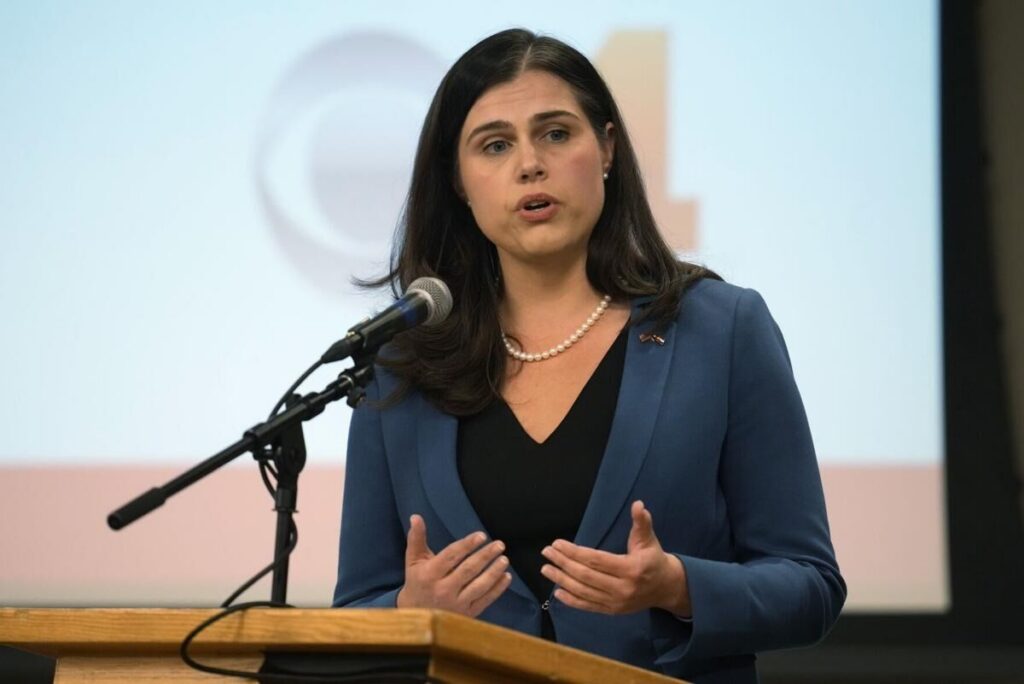
Federal judge rejects DOJ bid to force Colorado to hand over voter information
Marissa Ventrelli
marissa.ventrelli@coloradopolitics.com
Updated 1 week ago
A U.S. district court judge has dismissed a lawsuit filed by the U.S. Department of Justice against Colorado Secretary of State Jena Griswold for refusing to provide the agency with personal voter information. Last December, the DOJ’s Civil Rights Division asked...
PREV
PREVIOUS

U.S. Supreme Court upholds state laws banning transgender girls and women from school athletic teams
WASHINGTON • The U.S. Supreme Court on Tuesday upheld state laws barring transgender girls and women from playing on school athletic teams. The court’s conservative majority ruled that state bans in Idaho and West Virginia don’t violate the U.S. Constitution or the federal law known as Title IX, which prohibits sex discrimination in education. What […]
Colorado Supreme Court tosses man’s lawsuit over daughter’s traffic death
The Colorado Supreme Court applied a confusing matrix of conditions and deadlines in state law to conclude on Monday that a man waited too long to sue after his daughter was rendered unconscious and later died from a vehicle accident. At the same time, the justices acknowledged that their interpretation may result in differential treatment […]