

Colorado Supreme Court tosses man’s lawsuit over daughter’s traffic death
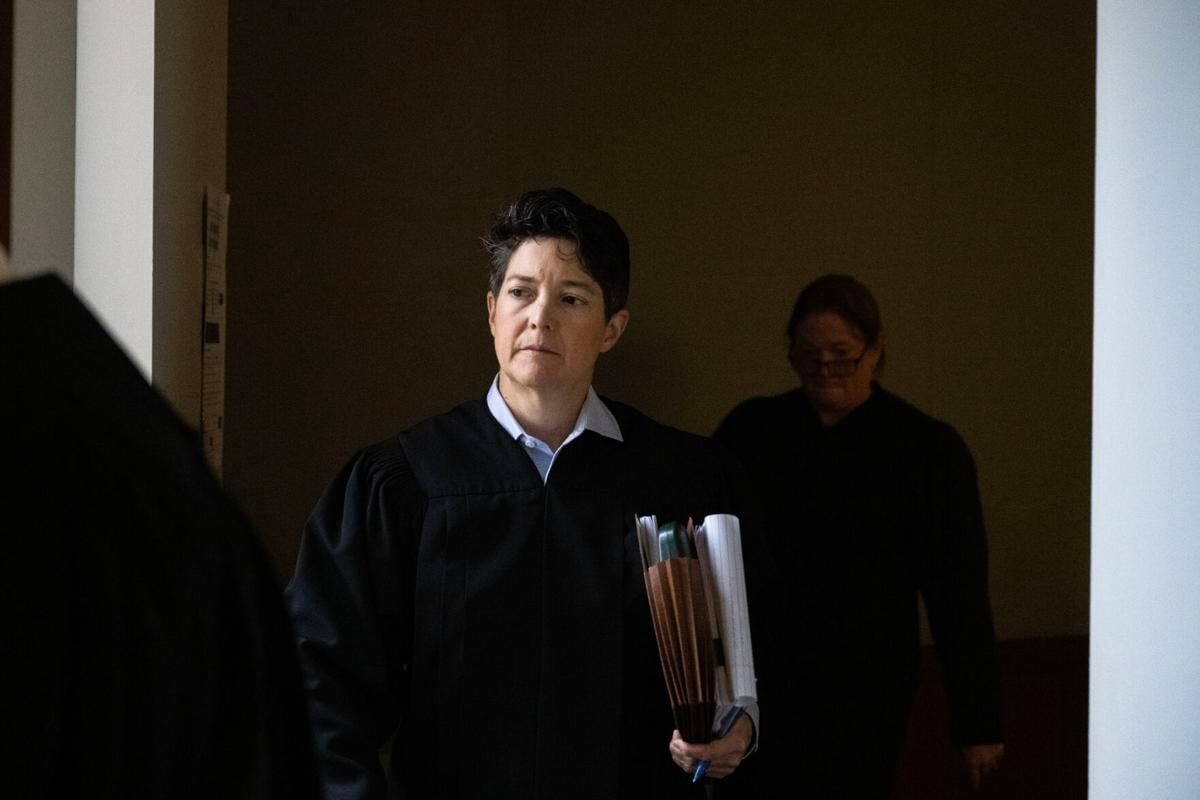
The Colorado Supreme Court applied a confusing matrix of conditions and deadlines in state law to conclude on Monday that a man waited too long to sue after his daughter was rendered unconscious and later died from a vehicle accident.
At the same time, the justices acknowledged that their interpretation may result in differential treatment for plaintiffs bringing lawsuits over someone’s death, which the Court of Appeals previously rejected as being contrary to lawmakers’ intent.
Danielle Nicola was crossing a Grand Junction street one night in November 2018 when a driver struck and seriously injured her. After spending 19 days unconscious, she died. Her father, John Nicola, settled with the driver who hit her, but he then sued the city and Xcel Energy nearly two years after Danielle Nicola’s death. Those entities owned and maintained a streetlight that, according to John Nicola, was inoperable and contributed to the vehicle-pedestrian collision.
But the litigation became ensnared in a dispute over John Nicola’s deadline to sue given the combination of Danielle Nicola’s 19-day incapacitation, the timing of her death, and her lack of a legal representative before her death. A Mesa County trial judge originally dismissed the claims, reasoning that Danielle Nicola, as a person under legal disability who did not have a representative, had one year following her death for her father to file suit.
In reviewing that decision, a three-judge Court of Appeals panel addressed the interlocking provisions of the law. Contrary to what the trial judge, Grand Junction, and Xcel believed, the appeals court determined the specific provision accounting for a person who dies under disability did not apply to Danielle Nicola, which would have imposed a one-year deadline to sue. Instead, the panel decided her representative — John Nicola — had at least two years from the date of her death to file suit.
The law as a whole is meant to “protect persons under a disability during the period of disability,” wrote Judge Jaclyn Casey Brown. Giving John Nicola just one year to sue after his daughter’s death, when a car crash victim who died instantly would have had much longer, “would contravene that purpose.”

During oral arguments in April 2025, some justices appeared uneasy about the city and Xcel’s argument that the legal representative of someone in Danielle Nicola’s shoes only has one year after her death to file suit, based on her 19-day window of unconsciousness.
“If she had died at the scene, she would have a three-year statute of limitations,” said Justice Brian D. Boatright. “What’s the policy behind that? Because she lived for 19 days she gets less time to file the case?”
“That’s the public policy of the legislature,” responded attorney Franz Hardy for Xcel.
More than a year later, the Supreme Court concluded that the combination of relevant factors did not support the Court of Appeals’ interpretation.
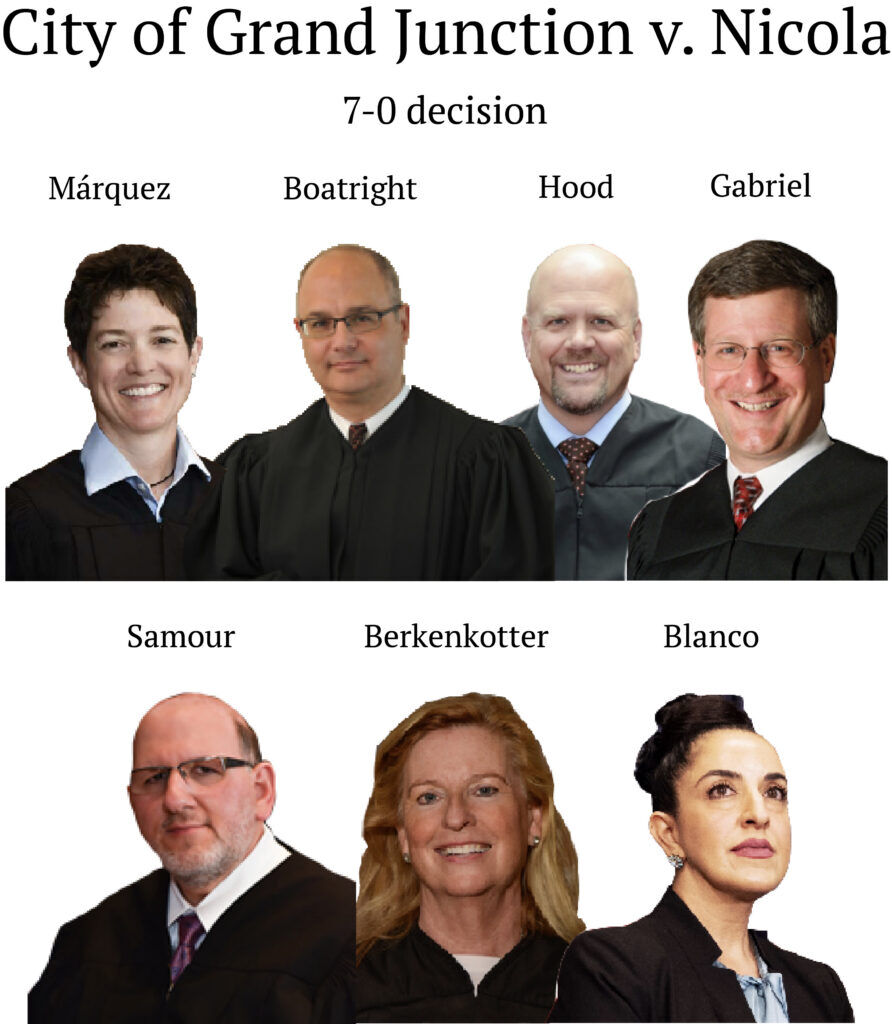
“Nicola had one year from the date of Danielle’s death to bring the survival claims. Because Nicola brought the claims almost two years after Danielle’s death, they are untimely,” wrote Chief Justice Monica M. Márquez in the June 29 opinion.
“We also recognize that our interpretation today may shorten the amount of time within which executors and administrators of some decedents under disability may file claims, depending on the circumstances of a case. However, we are not at liberty to rewrite (the law),” she continued. “Our goal is to effectuate the legislature’s intent, and here, the legislature has unambiguously imposed a one-year limitations period under the circumstances.”
Damon Davis, an attorney for John Nicola, said the Supreme Court “selectively applied” the principles of legal interpretation to arrive at its result, which will generate disputes about when an incapacitated person’s legal disability begins.
“The ruling’s reach is greater than people may appreciate. Under the statute, a person under a disability includes anyone under the age of 18,” Davis said. “Thus, the grieving families of deceased children must somehow determine the responsible parties, open an estate, and bring suit within one year, even though the families of adults who died would have one year or the remainder of the statute of limitations, whichever is longer. We have a hard time believing that is what the legislature intended.”
He added that lawmakers should consider whether to revise the law and tailor it more precisely to the needs of various people who are legally disabled, either through incapacitation or through their status as minors.
Attorneys for Grand Junction and Xcel did not respond to a request for comment.
The case is City of Grand Junction et al. v. Nicola.

Federal judge green-lights excessive force, retaliation claims for trial against Fort Collins officers
Michael Karlik
michael.karlik@coloradopolitics.com
Updated 7 hours ago
A federal judge green-lit a jury trial last week against multiple Fort Collins police officers on claims that they used excessive force on one man who was standing unarmed in his underwear, and retaliated against another man for exercising his...
10th Circuit revives wage violation lawsuit against Papa John’s operator
Michael Karlik
michael.karlik@coloradopolitics.com
Updated 2 hours ago
The Denver-based federal appeals court on Tuesday reinstated a former Papa John’s delivery driver’s lawsuit alleging violations of federal and state wage law. Steve Mighell worked for one month at a Denver Papa John’s location in summer 2023. He alleged...
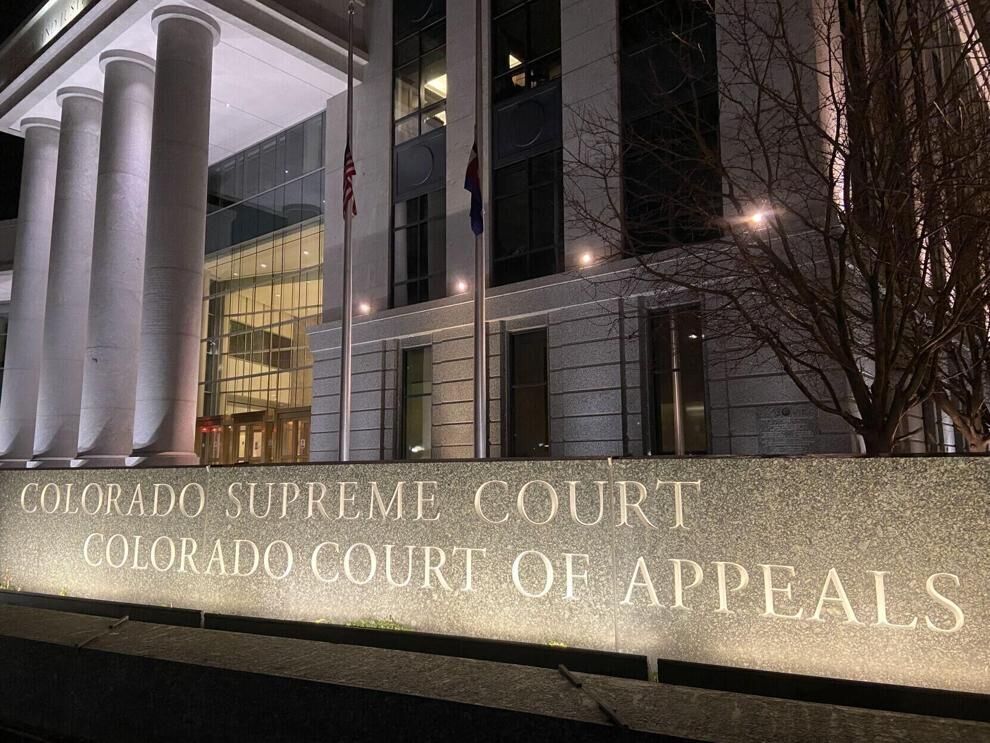
Colorado appeals judge’s delays in releasing opinions noted by performance commission
Michael Karlik
michael.karlik@coloradopolitics.com
Updated 17 hours ago
The citizen-led performance commission that provides guidance to voters about whether to retain members of Colorado’s second-highest court raised concerns by judges and attorneys that Judge Elizabeth L. Harris sometimes struggles with releasing opinions promptly. Harris, who joined the Court...

Colorado judge explores sanctions against DOJ, ICE for rearresting man 4 days after release on bond
Michael Karlik
michael.karlik@coloradopolitics.com
Updated 7 hours ago
A federal judge in Colorado is considering sanctions against the government after immigration agents rearrested a man four days after an immigration judge found him suitable for release on bond. On July 28, U.S. Magistrate Judge N. Reid Neureiter ordered...

Divided disciplinary panel censures Montezuma County judge after agreement reached
Michael Karlik
michael.karlik@coloradopolitics.com
Updated 6 hours ago
A disciplinary panel formally imposed a public censure, suspension, and further training on Montezuma County Court Judge Ian J. MacLaren on Tuesday by a 2-1 vote. Under constitutional Amendment H, which voters adopted in November 2024, MacLaren was set to...
Colorado’s Western Slope magistrate judges describe unique role in federal judiciary
Michael Karlik
michael.karlik@coloradopolitics.com
Updated 2 days ago
Two of Colorado’s federal judges stationed on the Western Slope spoke to lawyers on Wednesday about their unique roles, the ways their workloads differ, and the need for more criminal defense lawyers to take cases outside the Front Range. “Here...

Denver sues Philip Morris, other tobacco companies over cigarette butt litter
Deborah Grigsby
deborah.smith@denvergazette.com
Updated 14 hours ago
Denver is demanding that some of the biggest tobacco companies in the world pay for the cleanup of discarded cigarette butts on its streets, following a similar campaign that cities in other states have pursued. Denver’s lawsuit, filed this week...
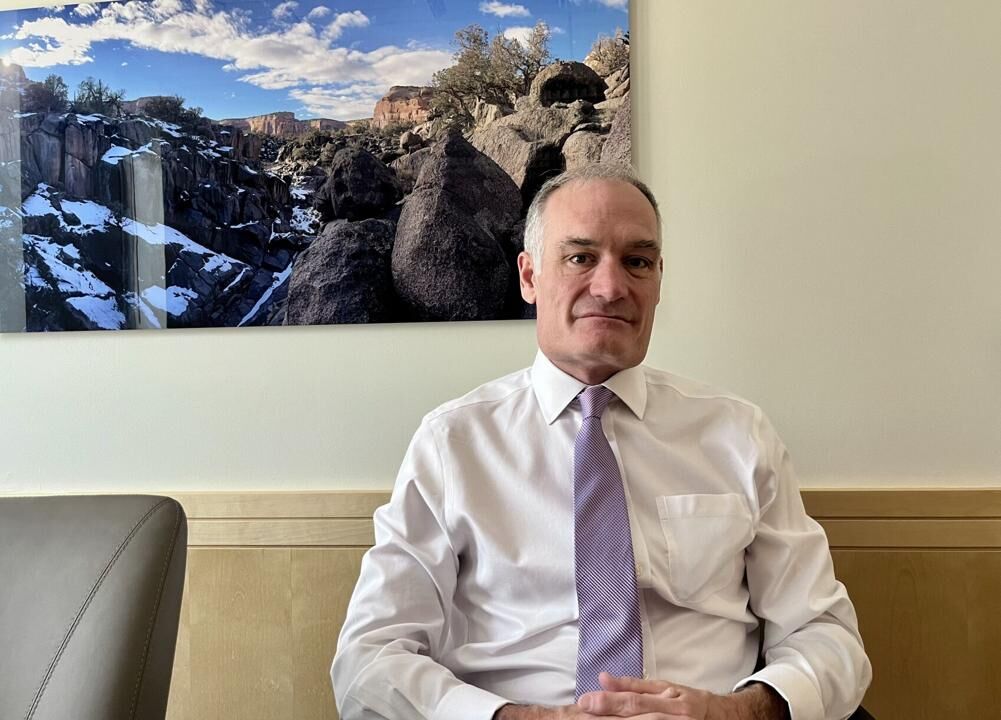
Federal judge rules that request for bond hearing not necessary to challenge immigration detention
Michael Karlik
michael.karlik@coloradopolitics.com
Updated 6 hours ago
A federal judge in Colorado ruled last week that it is not mandatory for a person to seek a bond hearing with an immigration judge before they challenge the lawfulness of their detention in federal court. For the past year,...

Boulder Valley School District introduces new policies following antisemitism lawsuit
Marissa Ventrelli
marissa.ventrelli@coloradopolitics.com
Updated 6 hours ago
The chief of Boulder Valley School unveiled new policies for the 2026-2027 school year following a lawsuit filed on behalf of a student alleging antisemitic harassment. In June, the Anti-Defamation League filed a federal civil rights complaint against the school...

Colorado NRA chapter seeks injunction against new gun‑training requirement
Marissa Ventrelli
marissa.ventrelli@coloradopolitics.com
Updated 1 day ago
The Colorado chapter of the National Rifle Association is seeking an injunction to stop the state from enforcing a new law that took effect earlier this month. The new law requires anyone buying or selling certain firearms to first complete...
PREV
PREVIOUS

Supreme Court upholds birthright citizenship, rejecting Trump’s proposed limits
WASHINGTON • A divided Supreme Court on Tuesday upheld a broad conception of birthright citizenship, rejecting President Donald Trump’s executive order declaring that children born to people who are in the United States illegally or temporarily are not American citizens. The justices relied on the dominant understanding of the 14th Amendment, adopted after the Civil […]

Appeals court reverses Jeffco assault convictions due to omitted jury instruction
Colorado’s second-highest court agreed last month that a Jefferson County defendant’s assault convictions could not stand because his jury should have been allowed to consider whether he used force against a bar patron to defend his girlfriend from inappropriate touching. While the testimony conflicted and the surveillance video was not conclusive, jurors heard that Scott […]