

Federal judge postpones CU regent’s request to lift censure restrictions
A federal judge on Thursday canceled an upcoming hearing to decide whether to block the restrictions the University of Colorado’s governing body has placed on one of its members, indicating that he would instead pivot to the defendants’ motion to dismiss.
CU Regent Wanda James is suing her fellow Board of Regents members over their decision to censure her last July and remove her committee assignments. U.S. District Court Judge Philip A. Brimmer had scheduled a hearing for July 21 to decide whether to grant James a preliminary injunction and block the board’s sanctions while her lawsuit unfolded.
However, earlier in the week, the defendants turned to the Denver-based federal appeals court to prevent Brimmer from holding the hearing. They argued that they had invoked various forms of immunity that would bar James’ lawsuit, and that it was improper for Brimmer to proceed with a hearing without first evaluating their entitlement to immunity.
In a July 9 order, Brimmer wrote that he saw no clear precedent describing how he should handle a request to refrain from addressing a preliminary injunction motion. Still, relying on the established factors for deciding whether to pause a case, Brimmer determined it was proper to hold off until he could address the defendants’ forthcoming motion to dismiss.
The U.S. Supreme Court “is clear that immunity, and protecting immune defendants from the burden of litigation, is in the public interest, as immunity prevents public officials from being distracted by litigation, and avoids deterring people from public service,” he wrote. “Thus, the Court will stay this action pending the Court’s ruling on whether defendants are entitled to immunity.”
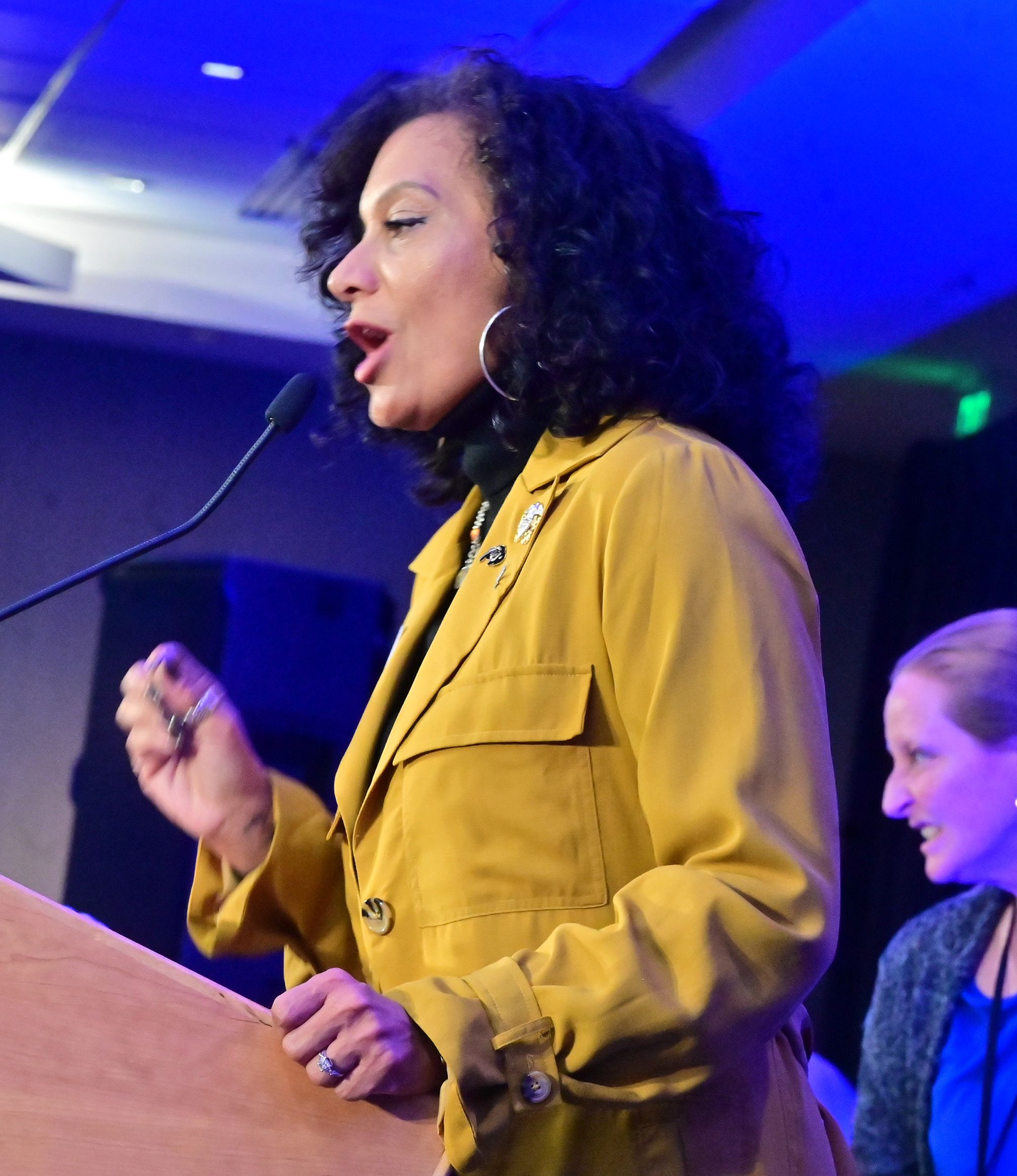
The flurry of activity in the weeks before the planned preliminary injunction hearing stemmed from the Board of Regents’ decision to censure James for violating her duties as a regent. James has represented the 1st Congressional District on the board since 2023, and she criticized a THC education campaign’s imagery as racist. The board also found that she worked to revoke funding from the university program behind the campaign. James, who is also an entrepreneur in the marijuana industry, disclaimed responsibility in her legal filings for any funding decisions.
Last summer, the board voted by 7-1 to censure James. It removed her from committee assignments and rescinded her invitations to university events that regents attend in their official capacities. James then sued the board members who voted to censure her, alleging they violated her First Amendment rights.
“The sanctions imposed have prevented me from doing my job as a regent, stripped me of the privileges of my office, and punished me,” James wrote in a statement submitted with her motion for a preliminary injunction in May. “Regent committees are the primary mechanism through which individual regents exercise the decisional authority of the office. Through committee assignments, regents review and shape University budgets, academic affairs, governance policies, and executive decisions.”
The defendants moved to halt the proceedings. They argued they were immune from being sued as legislators, and also for their quasi-judicial decision to censure James.
“Because immunity doctrines are designed to protect defendants from the burden of such proceedings, the Court should specify that it will neither order a hearing nor decide Regent James’s preliminary injunction motion until the question of immunity is resolved,” wrote their attorneys.
However, Brimmer scheduled a preliminary injunction hearing for July 21, where he would hear from witnesses and listen to legal arguments. On July 8, two weeks before the hearing, the defendants announced that they were appealing his scheduling order to the U.S. Court of Appeals for the 10th Circuit.
Although judges’ pretrial decisions are not normally subject to immediate appeal, there is an exception for decisions denying immunity to government defendants. The CU defendants argued that, by green-lighting the preliminary injunction hearing, Brimmer had effectively denied them immunity.
“The Regents’ immunity will be destroyed if they are compelled to prepare for, attend, and testify at an evidentiary hearing from which immunity protects them, and any delay to Regent James is a necessary consequence of the fundamental importance of immunity,” they argued to the 10th Circuit.
Meanwhile, James’ lawyers asked Brimmer to designate the appeal as “frivolous.” They noted that, earlier this year, defendants from the Jefferson County Sheriff’s Office similarly attempted to argue that a trial judge’s decision allowing for the exchange of certain evidence amounted to a denial of immunity.
In that case, U.S. District Court Judge S. Kato Crews found the appeal of his decision to be frivolous, which allowed him to regain control of the case. The 10th Circuit quickly agreed that Crews’ decision had neither granted nor denied immunity, so it was not immediately appealable.
Brimmer’s scheduling order “is about case management, it does not adjudicate Defendants’ immunity defenses, and it is not a properly appealed (order),” wrote James’ lawyers.
Ultimately, Brimmer headed off the confrontation by agreeing to halt the proceedings until he could evaluate the defendants’ assertions of immunity and decide whether to dismiss the case. He wrote that James had not shown that a delay would significantly harm her, and the purpose of immunity is to protect defendants from unnecessary participation in civil lawsuits.
“The Court finds that preparing for and attending a preliminary injunction hearing is a substantial burden on defendants,” he wrote.
Brimmer gave the defendants two weeks to file their motion to dismiss.
The case is James v. Rennison et al.

Wrongfully deported man to be returned to U.S., Colorado federal judge orders
Michael Karlik
michael.karlik@coloradopolitics.com
Updated 16 hours ago
Colorado’s chief federal judge took the extraordinary step of directing the government on Tuesday to do everything it can to return a man it deported in violation of his order. At the same time, Colorado’s chief magistrate judge has set...
Denver murder, assault convictions reversed due to faulty jury instructions
Michael Karlik
michael.karlik@coloradopolitics.com
Updated 1 day ago
Colorado’s second-highest court reversed a defendant’s convictions for murder and assault last week after concluding a Denver judge incorrectly omitted key jury instructions that could have affected the verdict and sentencing. Stephen C. Swainson fatally stabbed Israel Casillas in downtown...
‘Understand people for who they are’: 2 federal judges talk about compassion in courtroom
Michael Karlik
michael.karlik@coloradopolitics.com
Updated 6 hours ago
Before taking the bench in 2022, U.S. District Court Judge Charlotte N. Sweeney was an employment discrimination attorney. While the cases could be emotionally charged, they were different from the criminal proceedings she is now handling. “It wasn’t necessarily affecting...
Denver murder conviction reversed for incomplete self-defense instruction
Michael Karlik
michael.karlik@coloradopolitics.com
Updated 2 days ago
Colorado’s second-highest court reversed a defendant’s murder conviction last week because a Denver judge gave an incomplete instruction to the jury about the man’s right to self-defense. Donald R. Gonzales and Gary McLaughlin met up in a Capitol Hill parking...
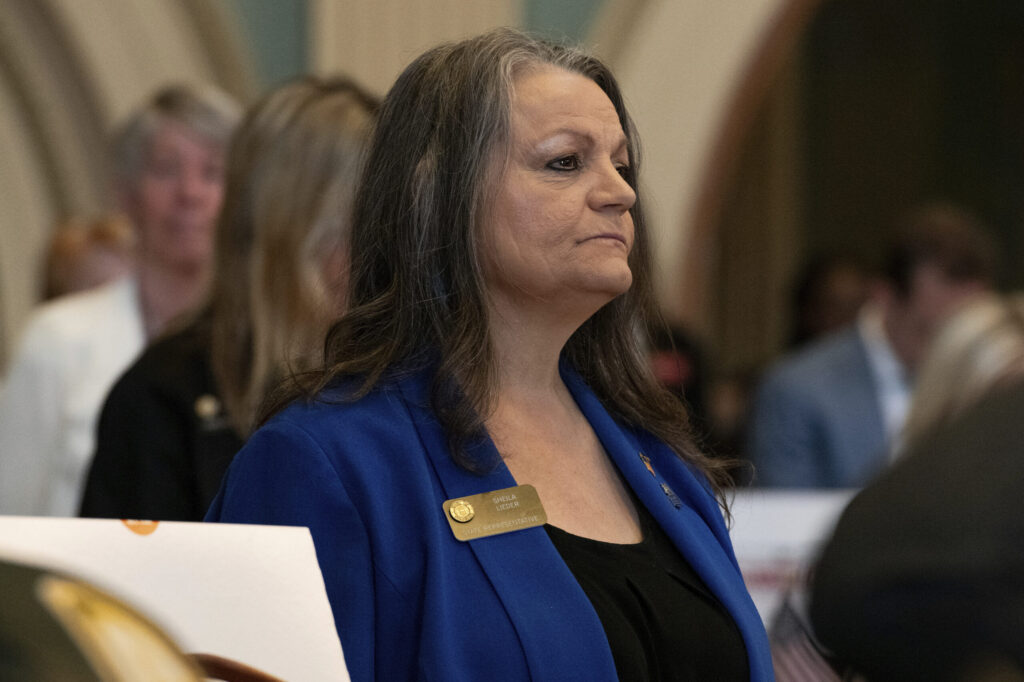
Colorado lawmaker, House leaders named in workplace-retaliation lawsuit
Marianne Goodland
marianne.goodland@coloradopolitics.com
Updated 2 days ago
A former legislative aide has filed a lawsuit alleging she was mistreated, illegally directed to perform campaign work and harmed by a House leadership structure she charged was fragmented, politicized and ineffective at protecting employees. The lawsuit, filed by Jennifer...
Federal judge hears arguments about Colorado’s 3-day gun purchase waiting period
Michael Karlik
michael.karlik@coloradopolitics.com
Updated 3 days ago
A federal judge heard arguments on Monday about the constitutionality of a 2023 Colorado law that generally imposes a three-day waiting period on firearm purchases after the initiation of a background check. The test that the U.S. Supreme Court created...
Colorado Supreme Court intervenes in Weld County prosecution dismissed due to Missy Woods misconduct
Michael Karlik
michael.karlik@coloradopolitics.com
Updated 2 days ago
The Colorado Supreme Court ordered a Weld County trial judge last week to respond to the district attorney’s claim that he improperly dismissed a criminal case because of “outrageous” conduct by the Colorado Bureau of Investigation. Daniel Lee Eatinger stood...
Schoolchildren’s presence at child sex-related trial did not harm Arapahoe County defendant, appeals court says
Michael Karlik
michael.karlik@coloradopolitics.com
Updated 5 days ago
Colorado’s second-highest court decided on Thursday that the presence of a group of schoolchildren on the first day of a child sexual exploitation trial did not violate an Arapahoe County defendant’s constitutional right to a fair trial. Prosecutors charged Jerry...
Appeals court cites week-old Colorado law to reinstate child neglect case at child, father’s request
Michael Karlik
michael.karlik@coloradopolitics.com
Updated 5 days ago
Colorado’s second-highest court invoked a new state law for the first time on Thursday and reinstated a child neglect case that both the child and her father wished to reopen. House Bill 1227 took effect on Aug. 12, reversing a...
Colorado Supreme Court names William Hood as next chief justice
Michael Karlik
michael.karlik@coloradopolitics.com
Updated 10 hours ago
The Colorado Supreme Court has selected Justice William W. Hood III to be the next chief justice, the judicial branch announced on Friday. Hood will succeed Chief Justice Monica M. Márquez, who took over the role in July 2024. “I...
PREV
PREVIOUS
Appeals court reverses 'particularly brutal' sex assault convictions due to flawed warrant
Colorado’s second-highest court reversed a Jefferson County defendant’s sexual assault and kidnapping convictions last month after concluding that police relied on an unconstitutionally broad search warrant to obtain evidence from the man’s cell phone. Jurors convicted Joseph Gabriel Van Eck of abducting multiple women near Colfax Avenue, driving them toward the mountains, and sexually assaulting […]

Gov. Polis outlines vision for Colorado's higher ed, workforce development
Gov. Jared Polis spoke with the Colorado Commission for Higher Education on Friday about his vision for the future of the state’s higher education and workforce training programs, telling the commission that the state needs to do a better job of helping students gain the skills and knowledge they need for successful careers. “Colorado is […]