

Federal judge declines to recuse from death penalty case after Supermax visit

A federal judge declined to recuse herself last month from a death penalty case arising out of Colorado’s “Supermax” prison, finding that her tour of the facility earlier this year did not bias her decision-making.
U.S. District Court Judge Charlotte N. Sweeney is presiding over the federal murder prosecution of Ishmael Petty, who is accused of killing a fellow inmate at the U.S. Penitentiary, Administrative Maximum Facility in Florence (ADX). Sweeney, her law clerks, the prosecution, and the defense toured areas of the prison in March without objection by either side.
However, after Sweeney issued a subsequent evidentiary order rebuking the defense, Petty’s lawyers moved to disqualify her from the case. They alleged she engaged in “ex parte” communications during the tour, meaning those without both parties present. The defense also argued Sweeney’s impartiality could be questioned in light of her conversations with the warden and other ADX employees.
In a May 28 order, Sweeney declined to step aside. She noted that she had no communications exclusively with the prosecution during the tour, and any information she obtained flowed from her judicial role. Further, the defense mistakenly believed her evidentiary order was influenced by the prison tour.
“Contrary to Defendant’s suggestion, the Court did not rely at all on any kind of impermissible, extrajudicial source in ruling on the parties’ motions,” Sweeney wrote. “Again: Saying it does not make it so.”

According to an after-action report from ADX, Petty immediately confessed to murdering Lamarcus Hillard on Sept. 19, 2020. Petty said he induced Hillard to fake a hostage-taking scenario in their housing area, but he strangled and stabbed Hillard while the lights were off.
For reasons that are unclear, the government indicted Petty for murder 4.5 years later, in April 2025. The prosecution is seeking the death penalty.
During a status conference in January, Sweeney suggested she wanted to pick up the pace and that visiting ADX herself might help resolve the motions. Specifically, the defense raised various circumstances that jurors consider when deciding whether to impose death, including failures by prison staff to follow policies or intervene to prevent a death.
“Both sides would need to be there, obviously, for that tour,” Sweeney added.
The defense offered a lengthy list of areas it wanted Sweeney to see, but the ADX warden only authorized a tour of Petty’s housing area.
“The purpose of the tour is to enlighten the Court – not to provide discovery to the defense or address concerns the defendant may have related to other issues,” wrote U.S. Department of Justice attorney Barry K. Disney.
Sweeney’s judicial assistant responded that Sweeney was fine with the warden’s parameters, but she believed “it is important to see the C Unit Bubble (video control room), if not on this tour then during one at some time in the future.”
The tour took place on March 24. Two weeks later, Sweeney issued an order clarifying her prior directive for the government to preserve certain audio and video recordings at ADX. In harsh terms, she wrote that the defense was “borderline disingenuous,” had incorrectly interpreted her prior orders, and its accusations against the government were “not … well-taken.”
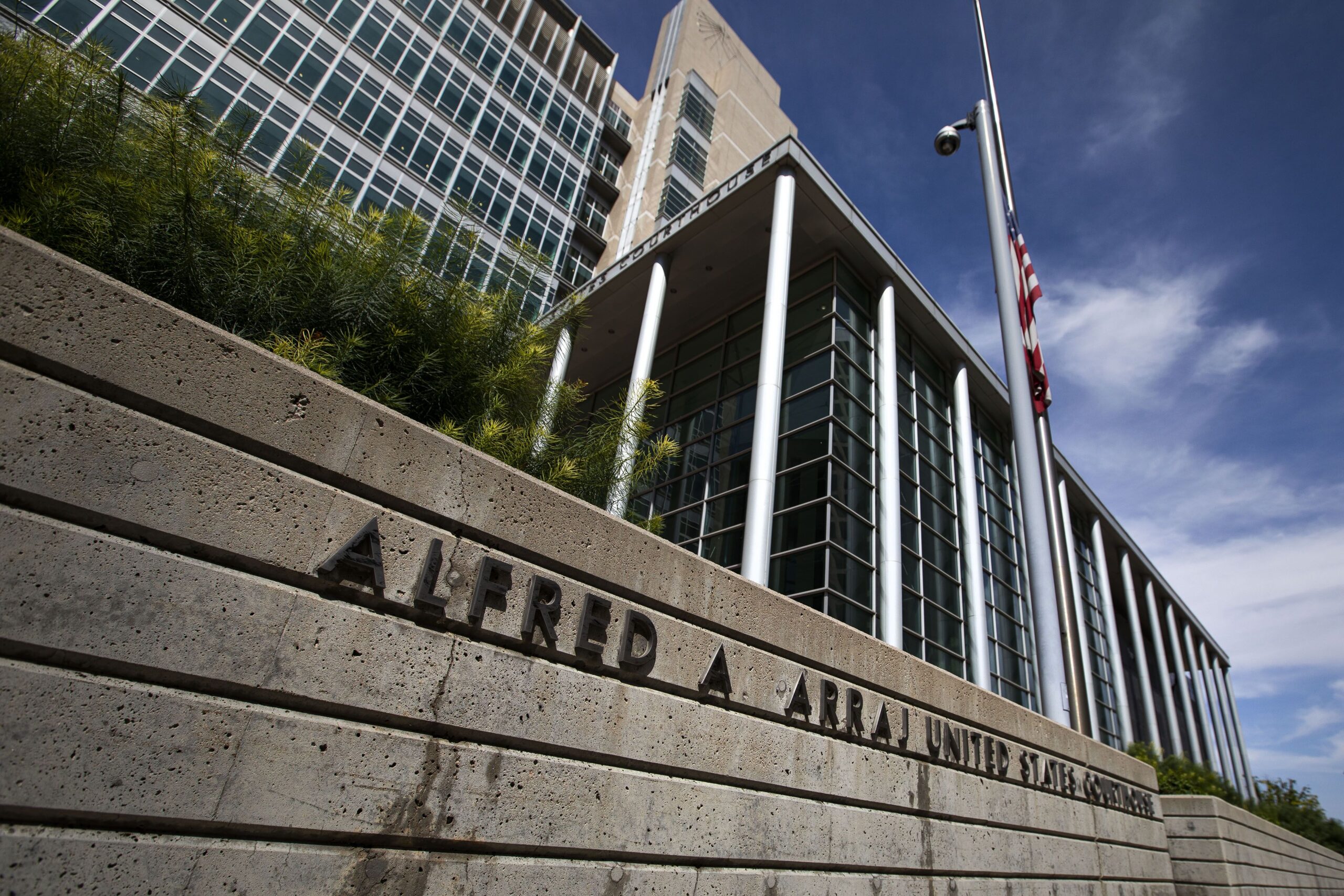
On April 24, Petty’s lawyers moved to disqualify Sweeney from the case. They pointed to a conversation Sweeney had with the warden during the tour, away from the attorneys, which lasted “more than ten minutes.” The defense also took issue with Sweeney viewing the control room with the warden and ADX’s own counsel.
That “represented a reversal from the Court’s position set forth in the (pre-tour) email that either everyone would see the bubble during the March 24 tour or another tour would be scheduled for a later date,” wrote Petty’s lawyers.
“During the ex parte communications that occurred on March 24, the Court obtained information about matters in dispute in this case from extrajudicial sources,” they continued. “The issue here is not that the judicial officer toured ADX. The problem is that, during such tour, the judicial officer took part in multiple ex parte conversations with ADX officials interested in and/or involved in this litigation.”
Finally, the defense suggested that Sweeney’s conversations at ADX may have influenced her evidentiary decision two weeks later.
“Here, the defendant has not identified any conduct that might have improperly caused the Court to abandon its objectivity, much less has he shown such that some word, gesture or look likely had the desired effect,” responded Disney, the prosecutor. “Instead, he attempts to carry his burden by extrapolating from an empty record that government officials, charged with escorting a federal judicial officer through a secure prison environment, not only attempted to bias the judge but somehow did so in a matter of minutes.”
He added that the current ADX warden was not in charge at the time of Petty’s alleged crime, and that the purpose of the tour was for Sweeney to learn about the prison.
Sweeney, in her order, wrote that the defense’s request hinged in part on a misunderstanding of the tour. It was not the case, as the defense argued, that “either everyone would see the bubble” on the tour, or they would see it during a later tour. Rather, the tour was for Sweeney to view relevant areas of the prison.
Sweeney explained she was not obligated to recuse based on speculation about her conversations with ADX personnel.
“Yet these are precisely what Defendant offers in seeking disqualification based on the introductory conversation: tenuous allegations as to what Defendant believes occurred without any evidence tending to support Defendant’s speculations or characterizations of this event,” she wrote. “And to be clear, the Court has no such partial interest in this case in favor of either party, nor has it ‘prejudged’ any aspect of this case.”
The case is United States v. Petty.

10th Circuit dismisses Tina Peters’ challenge to confinement as moot
Michael Karlik
michael.karlik@coloradopolitics.com
Updated 4 minutes ago
The Denver-based federal appeals court granted the state’s unopposed request on Wednesday to dismiss former Mesa County clerk Tina Peters’ challenge to her confinement as moot. Although Peters received a commutation of her prison sentence last month from Gov. Jared...
Appeals court clarifies offense of impersonating a peace officer
Michael Karlik
michael.karlik@coloradopolitics.com
Updated 6 hours ago
Colorado’s second-highest court clarified this month that a person commits the offense of impersonating a peace officer if they engage in “any conduct” while pretending to be law enforcement. In a case out of El Paso County, Richard James Coulier...
Colorado Supreme Court reverses 2 Chaffee County judges for imposing fee on habeas petitioner
Michael Karlik
michael.karlik@coloradopolitics.com
Updated 1 day ago
The Colorado Supreme Court rejected two separate appeals earlier this month from an incarcerated defendant seeking immediate release from prison, but concluded that two Chaffee County judges incorrectly required him to prepay filing fees for his cases. David J. Gottorff...
Weld County judge wrongly denied bail to murder defendant in gap between law change
Michael Karlik
michael.karlik@coloradopolitics.com
Updated 23 hours ago
Colorado’s second-highest court ruled this month that a Weld County judge was wrong to deny bail to a murder defendant in the window between the state Supreme Court’s recognition of the right to bail and the voters’ subsequent overruling of...
Defendants acquitted by insanity are eligible for records-sealing, appeals court says
Michael Karlik
michael.karlik@coloradopolitics.com
Updated 20 hours ago
Colorado’s second-highest court clarified last month that defendants who are found not guilty by reason of insanity are eligible to have their criminal records sealed from public view. Judges must seal criminal records if, among other things, a defendant is...
Colorado Supreme Court shuts down ‘new form of representation’ in postconviction cases
Michael Karlik
michael.karlik@coloradopolitics.com
Updated 2 days ago
While unrepresented defendants in postconviction proceedings are permitted to have a court-appointed attorney investigate and augment their claims, that is not the case when a private lawyer authors the original petition, the Colorado Supreme Court decided on Monday. In contrast...

Colorado State Shooting Association files constitutional challenge to firearms dealer law
Marissa Ventrelli
marissa.ventrelli@coloradopolitics.com
Updated 2 days ago
A firearms group has filed a lawsuit challenging a recently signed law expanding regulations for firearms dealers in Colorado. House Bill 26-1126 clarifies that firearms dealers must hold both a federal and state license to operate. The bill also allows the...
Colorado justices walk back appeals court’s expansion of rezoning via ballot box
Michael Karlik
michael.karlik@coloradopolitics.com
Updated 2 days ago
The Colorado Supreme Court ruled on Monday that rezonings of planned-unit developments cannot occur through a vote at the ballot box, reversing an appellate decision that found such changes were fair game for a popular vote. In contrast to traditional,...
Colorado Supreme Court recognizes right to self-defense in workplace
Michael Karlik
michael.karlik@coloradopolitics.com
Updated 2 days ago
The Colorado Supreme Court recognized on Monday that there is a right to self-defense in the workplace for which employers may not terminate workers so long as they lawfully exercise that right. The court’s majority in the 5-2 decision cautioned...

Colorado Supreme Court heads toward summer recess, newest justice authors first opinion | COURT CRAWL
Michael Karlik
michael.karlik@coloradopolitics.com
Updated 2 days ago
Welcome to Court Crawl, Colorado Politics’ roundup of news from the third branch of government. The state Supreme Court is in the process of releasing a large batch of opinions as it heads toward its summer recess in July, plus...
PREV
PREVIOUS

Colorado legislators, candidates differ over social media regulations for minors
Following the 2020 accidental overdose of her daughter, Colorado’s Patti Lujan is still pursuing a lawsuit against Snapchat, the social media platform she claims connected her daughter with a drug dealer, police said. Lujan, like many parents, is looking for more social media protections for juveniles through increased regulation. Lujan’s “lawsuit alleges that Snapchat’s platform […]

10th Circuit dismisses Tina Peters' challenge to confinement as moot
The Denver-based federal appeals court granted the state’s unopposed request on Wednesday to dismiss former Mesa County clerk Tina Peters’ challenge to her confinement as moot. Although Peters received a commutation of her prison sentence last month from Gov. Jared Polis and has since left prison, her federal proceedings addressed whether Peters could be freed […]