

Signatures submitted to cap Colorado’s income tax rate

The group behind a ballot measure aiming to cap the state’s income tax at the current rate has submitted signatures from voters to election officials for review, part of the tug and pull in Colorado between opposing political forces fighting over state revenue.
That fight is taking shape as the contending sides push their diametrically opposed ballot measures. One side has long sought to raise more revenue, arguing what the state collects is insufficient to pay for services and programs. The other side counters that a flat tax is fair to everyone, producing sufficient revenue for state spending, and what policymakers need is fiscal discipline.
Backed by Advance Colorado, Initiative No. 232 would cap Colorado’s individual and corporate income tax rate at 4.4%. That rate has been in place since 2022.
The group said it submitted 190,000 signatures to the Secretary of State’s Office. The proposal needs just over 124,000 valid signatures to appear on the ballot.
“This is a clear counter to the far left’s attempt to hike taxes in Colorado, price people out of the state we love, and drive business out. We’ll always fight to protect TABOR and keep our taxes low,” Michael Fields, executive director of Advance Colorado, said in a statement.
Colorado is one of 15 states with a flat income tax rate, meaning all taxpayers pay the same percentage of their income regardless of how much they make.
The alternative is a graduated or progressive tax rate, which a coalition of progressive groups is pushing to put on the November ballot.
Initiative No. 195, backed by the Denver-based think tank Bell Policy Center and a coalition known as Protect Colorado’s Future, would establish a graduated income tax, in which individuals and businesses would be taxed differently based on their earnings.
For example, those who make over $1 million a year would see an increase from the current flat income tax rate of 4.4% to 8.41%, while those earning under $25,000 would see a reduction to 3.71%.
The measure would result in lower income tax for 97% of Colorado residents and 95% of businesses, insisted the Bell Policy Center.
Critics said the measure is a tax hike of billions of dollars, with the majority seeing a tax cut of only a few hundred dollars while higher-income earners would pay the state government tens of thousands more.
The federal government uses a graduated income tax rate, as do several states, including Minnesota, Wisconsin, California and Alabama.
The graduated tax proposal is anticipated to increase the tax base by $2 billion, depending on which proposal ultimately ends up on the ballot. The new revenue would be used for K-12 education, healthcare and early childcare and education, according to the proponents.
A debate between Fields and Chris deGruy Kennedy, president and CEO of the Bell Policy Center, erupted on X on Thursday.
“This only protects the 3% of Coloradans and 5% of corporations (most of which are out-of-state) making more than $500,000 per year from a tax increase,” deGruy Kennedy said on the social media platform.
“Everyone else is set to get a tax cut from the grad inc tax proposal,” he added.
“The progressive tax hike,” countered Fields, “would increase taxes on seniors and military veterans.”
“This measure says, ‘Any income tax law change after July 1, 1992 shall also require all taxable net income to be taxed…’ It would put in the state constitution a strict mandate that the state must tax all income,” he wrote. “This means that state deductions will be taken away and taxes will be increased on Colorado’s seniors, retirees, and military veterans.”
“False,” deGruy Kennedy replied. “It says ‘to be taxed with no added surcharge.’ You can’t just leave out part of the sentence.”
Kathy White, the executive director at Colorado Fiscal Institute, which supports the measure, earlier argued that Colorado’s working families “shouldn’t have to pick up the tab so the wealthiest get a $71,000-a-year gift from Congress — especially when TABOR has already tied our hands for decades.”
Meanwhile, Jake Fogleman of the Independence Institute, which has persuaded voters to reduce Colorado’s income tax rate, earlier said a flat tax offers several advantages, notably making tax filing “simpler and more predictable.”
A single tax rate, he wrote, also “prevents schemes to impose concentrated costs on small groups of residents.”
“Thus,” he said, “the flat tax acts as a powerful political disincentive against policymakers making routine requests for higher taxes.”
Protect Colorado’s Future has not yet submitted its signatures to the Secretary of State’s Office, but it has until Aug. 3 to do so. To qualify for the ballot, initiatives must receive just over 124,000 valid signatures.
If both initiatives are approved, the one with the higher vote total would take effect. That means a victory for Initiative 195 would move Colorado to a graduated income tax system, while a win for Initiative 232 would allow income tax cuts but prohibit increases.


Colorado state House Democratic candidate arrested in Texas for public intoxication
Marianne Goodland
marianne.goodland@coloradopolitics.com
Updated 12 hours ago
A Democrat from Lone Tree who is running for a House seat was arrested in Texas in May on charges of public intoxication and resisting arrest. Christian Schilder, the Democrat, is challenging Rep. Brandi Bradley, the Republican incumbent, in the...
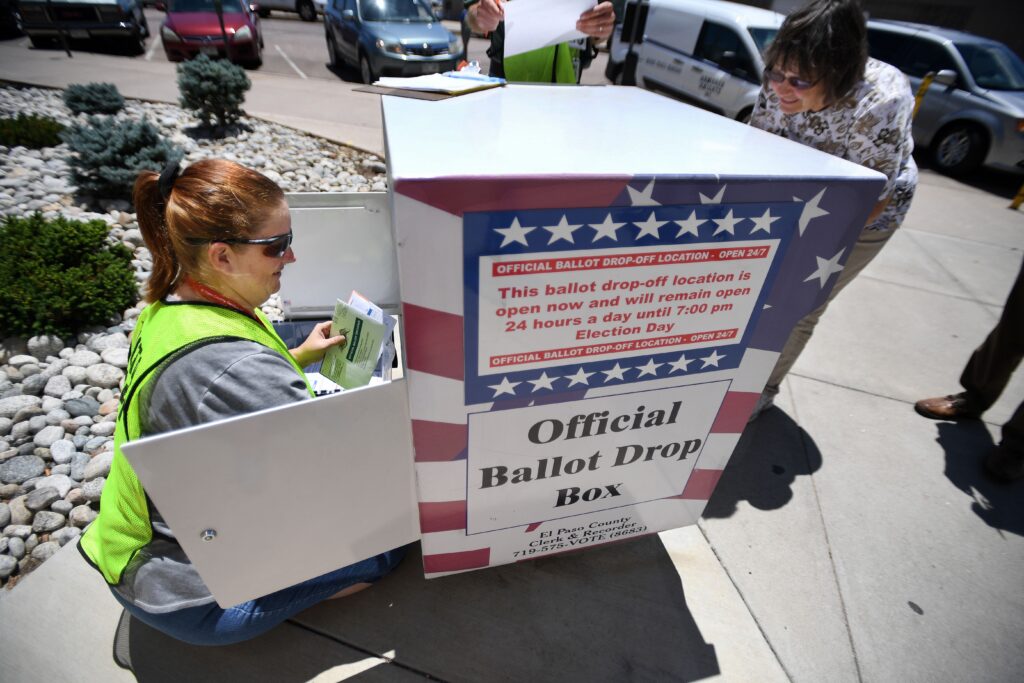
Initiative asks Colorado voters to approve 8th-grade reading standard for ballot measures
Marissa Ventrelli
marissa.ventrelli@coloradopolitics.com
Updated 13 hours ago
A ballot initiative that would require all ballot measures to be written at no higher than an eighth-grade reading level has qualified for the November ballot, according to the Colorado Secretary of State’s Office. The measure, backed by the group...

Denver man charged with tampering with water gates, diverting millions of dollars worth of drinking water
Elizabeth Pond
elizabeth.pond@denvergazette.com
Updated 14 hours ago
A Denver man has been charged for alleged interference with a public water system that supplies drinking water to several communities along the Front Range, according to the Colorado Attorney General’s Office. Fabrizio Lorenzin, 65, is suspected of repeatedly tampering...

Colorado schools are losing students as births, migration slow
Nico Brambila
nico.brambila@denvergazette.com
Updated 19 hours ago
Colorado public schools went from adding roughly 3,500 students a year before the COVID-19 pandemic in 2020 to losing nearly 4,000 students a year afterward. As more than 870,000 Colorado students return to the classroom for another school year, they...

Englewood mayor pro tem dies while hiking
Elizabeth Pond
elizabeth.pond@denvergazette.com
Updated 20 hours ago
Joe Anderson, Englewood’s mayor pro tem, died Friday while on a hike in Summit County, according to city officials. The Summit County Sheriff’s Office responded to the lower slopes of Quandary Peak around 6:40 a.m. Friday to reports of an...

What courageous citizenship really looks like | Vince Bzdek
Vince Bzdek
vince.bzdek@gazette.com
Updated 3 days ago
By Vince Bzdek What exactly is courage? Ernest Hemingway famously called it grace under pressure. Mark Twain wrote that “courage is resistance to fear, mastery of fear — not absence of fear.” C.S. Lewis refined that even more: “Courage is...
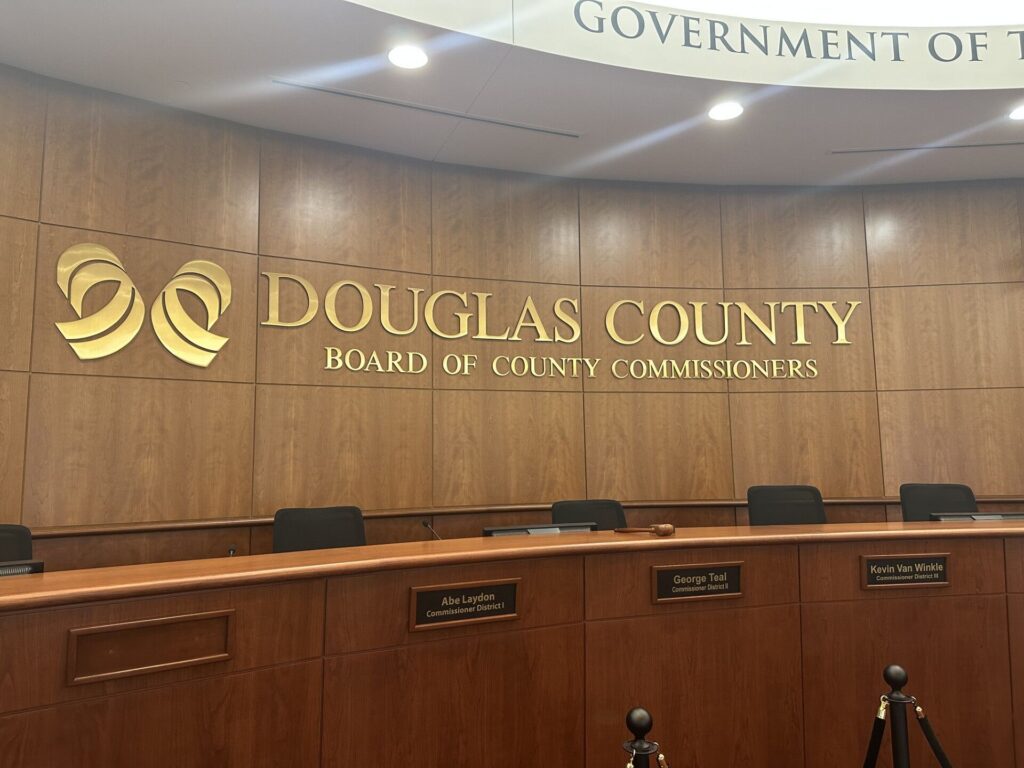
DougCo commissioners set ballot language for initiative to expand board from 3 to 5 members
Nicholas Fogleman
nicholas.fogleman@denvergazette.com
Updated 19 hours ago
Douglas County commissioners on Friday approved revised ballot language for a voter-led initiative that would expand the board from three members to five. Following a contentious public comment period, commissioners approved additional language that included the estimated ongoing expense to...
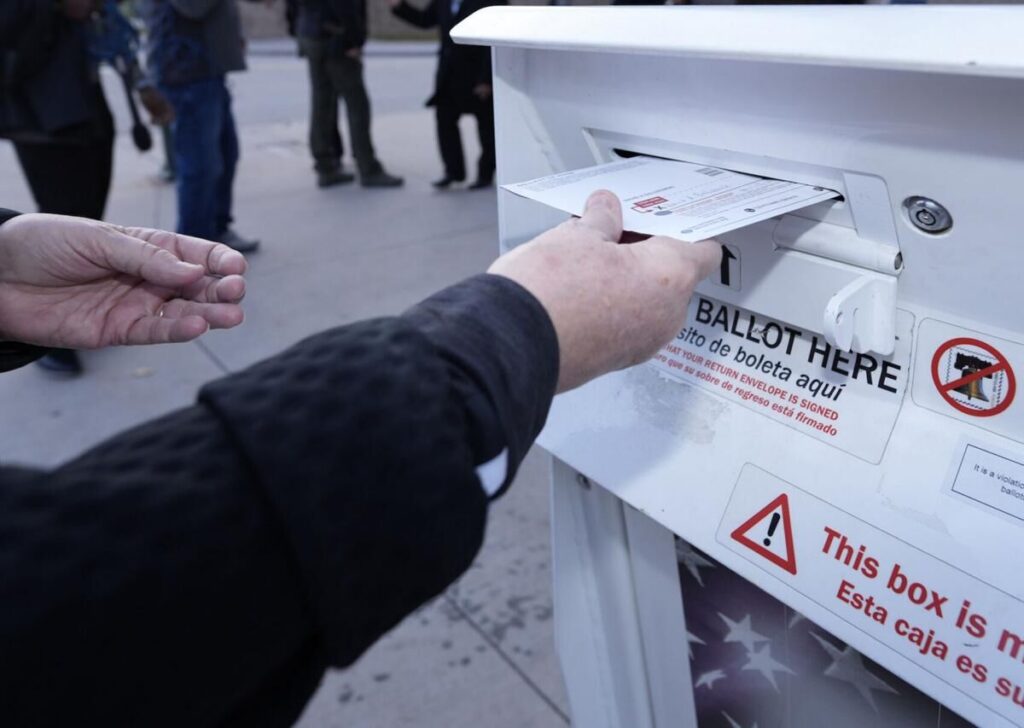
Colorado measure adding ID checks to mail-in voting qualifies for ballot
Marissa Ventrelli
marissa.ventrelli@coloradopolitics.com
Updated 4 days ago
A ballot initiative that would require voters to include additional information on mail-in ballots has qualified for the November election, according to the Secretary of State’s Office. Backed by El Paso County Treasurer Chuck Broerman and former Deputy Secretary of...
Colorado election website error exposes personal data of confidential voters
Marissa Ventrelli
marissa.ventrelli@coloradopolitics.com
Updated 4 days ago
A system update accidentally lifted protections on confidential records in Colorado, exposing dozens of voters’ personal information, according to the Secretary of State’s Office. The limit that normally blocks access to confidential voter profiles was inadvertently disabled during an update...

PUC adds weekly comment after killing private talks
Scott Weiser
scott.weiser@gazette.com
Updated 4 days ago
The Colorado Public Utilities Commission will take public comment at the start of every commissioner’s weekly meeting beginning Sept. 9 as part of its new transparency mandate, the commission announced, expanding a slot previously limited to the second Wednesday of...
PREV
PREVIOUS
Colorado governor says he doesn't want socialists to 'destroy' state
The ideological divide within the Colorado Democratic Party once more burst into the open on Wednesday when Gov. Jared Polis responded to a legislator’s criticism by referencing Zimbabwe’s socialist experiment. “Thanks to socialism, the average Zimbabwean became a trillionaire,” the governor posted on X, using his personal account, referring to the oft-repeated sarcastic jab at […]

Ex-Broncos linebacker’s discrimination lawsuit returned to Colorado court
A federal judge returned a former Broncos linebacker’s disability discrimination lawsuit to state court last month, rejecting the NFL defendants’ attempt to keep the case in federal court. Randy Gregory, who played for the Broncos between 2022 and 2023, sued the team and the NFL for violations of the Colorado Anti-Discrimination Act. He alleged that […]