

Colorado repeals attorney immigration attestation law after one year
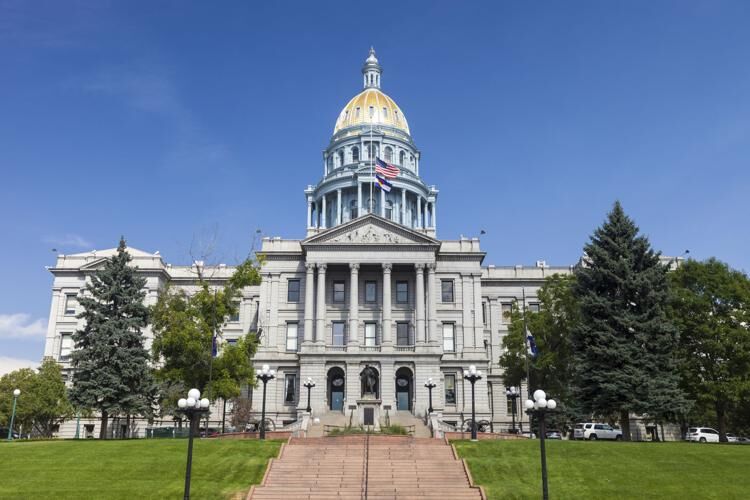
One year and 12 days.
That’s how long a Colorado law requiring attorneys to certify they would not use court data for federal immigration enforcement remained on the books before lawmakers repealed it.
Gov. Jared Polis signed the initial legislation, Senate Bill 25-276, on May 23, 2025. That legislation extended to the courts a law prohibiting disclosure of information for the purpose of assisting in federal immigration enforcement.
The governor signed the modification to that law via House Bill 26-1276 on June 4. That modification exempted the Colorado courts’ e-filing system from the requirement that users certify they would not disclose information for the purpose of federal immigration enforcement.
More than 40,000 account holders had agreed to the certification, said Suzanne Karrer, a spokesperson for the Colorado Judicial Branch.
Some opposed the requirement, arguing it violated their First Amendment rights.
“The final version of this legislation reflects the work of lawmakers and stakeholders throughout the legislative process to fix this problem for attorneys so they don’t have to risk making a false representation or committing perjury,” a spokesperson for Polis said. “The Governor signed HB26-1276 because it strengthens protections for personal information, improves oversight and accountability for immigration detention facilities, and helps ensure Colorado laws are implemented consistently.”
Rep. Lorena Garcia, D-Adams County, a co-sponsor of both bills, said the original legislation was intended to strengthen data privacy protections for immigrants.
“This year, Colorado Democrats passed HB26-1276 to establish some needed guardrails on federal detention centers,” Garcia said in a statement to The Denver Gazette. “We learned that immigration attorneys were having a difficult time getting information about their clients, and this year’s law excluded the e-filing system requirement to streamline and improve the process.”
State Sen. Julie Gonzales, a Denver Democrat running for the U.S. Senate who was also among the sponsors, said that the certification requirement for lawyers was unintended.
The 2025 rule had mandated that attorneys accessing the state’s electronic court filing system certify that information obtained from the database would not be used to assist federal immigration enforcement.
Colorado statute already prohibits state employees from disclosing any identifying information to assist with immigration enforcement.
Crucially, the law extended the definition of “state agency” to the judicial and legislative branches. That change meant the courts became subject to the law, requiring third parties accessing nonpublic records to certify, “under penalty of perjury,” that they will not use the information for the purposes of immigration enforcement.
Under the law, a government worker faced a civil fine of $50,000 for each violation.
Ian Speir, a constitutional attorney in Colorado Springs, said he clicked “accept” under protest.
Speir said the state had to have known the law was going to be a problem.
“Colorado has been ground zero for rampant First Amendment violations,” Speir said.
He cited the U.S. Supreme Court’s 8-1 ruling in Chiles v. Salazar, which found Colorado’s “conversion therapy” ban for minors unconstitutionally restricted the First Amendment rights of therapists.
“These kinds of laws are not isolated problems in Colorado, unfortunately,” Speir said.
The state “received a small number of concerns” about the certification, none referred for investigation, Karrer, the court spokesperson, said.
In April, the U.S. House Judiciary Committee sought information from Colorado’s court administrator about the certification, arguing the state law had unlawfully obstructed federal law and compelled political speech tied to the state’s “sanctuary” policies.
“This certification, made under penalty of perjury, obstructs federal law and prevents federal officials from using Colorado state court information to enforce federal immigration law,” the letter from the House Judiciary Committee said.
“It also hijacks the private practice of law to fulfill the political goals of the state of Colorado and undermines attorneys’ ethical obligations, all to ensure that illegal and criminal aliens in Colorado can remain in the state indefinitely,” the letter, addressed to the court administrator, added.
The letter was signed by U.S. Reps. Jim Jordan, chairman of the Judiciary Committee, and Tom McClintock, chairman of its Subcommittee on Immigration Integrity, Security and Enforcement.
U.S. Department of Homeland Security officials have said that the state’s stance on immigration enforcement was a threat to public safety.
A blue state that has passed “sanctuary” laws, Colorado has been in the Trump administration’s crosshairs as the president has cracked down on illegal immigration.
Colorado officials, meanwhile, have adopted a confrontational stance against the administration’s policies, routinely criticizing the president and suing over an array of issues.
Broadly speaking, “sanctuary” policies restrict or prohibit cooperation with federal immigration authorities.
Colorado and Denver have adopted laws barring such cooperation, though political leaders insist that neither the state nor the municipality is a “sanctuary” jurisdiction.
Denver, and Colorado more broadly have become part of the national immigration debate following an influx of more than 40,000 immigrants, who arrived three years ago after illegally crossing America’s southern border, straining city finances.
Denver emerged as an unexpected destination, despite its distance from the southern border, in part due to the temporary housing and services city officials provided during the illegal immigration surge.
The Venezuelan gang Tren de Aragua later became a focal point in the presidential election, with Trump promising mass deportations beginning in Aurora.

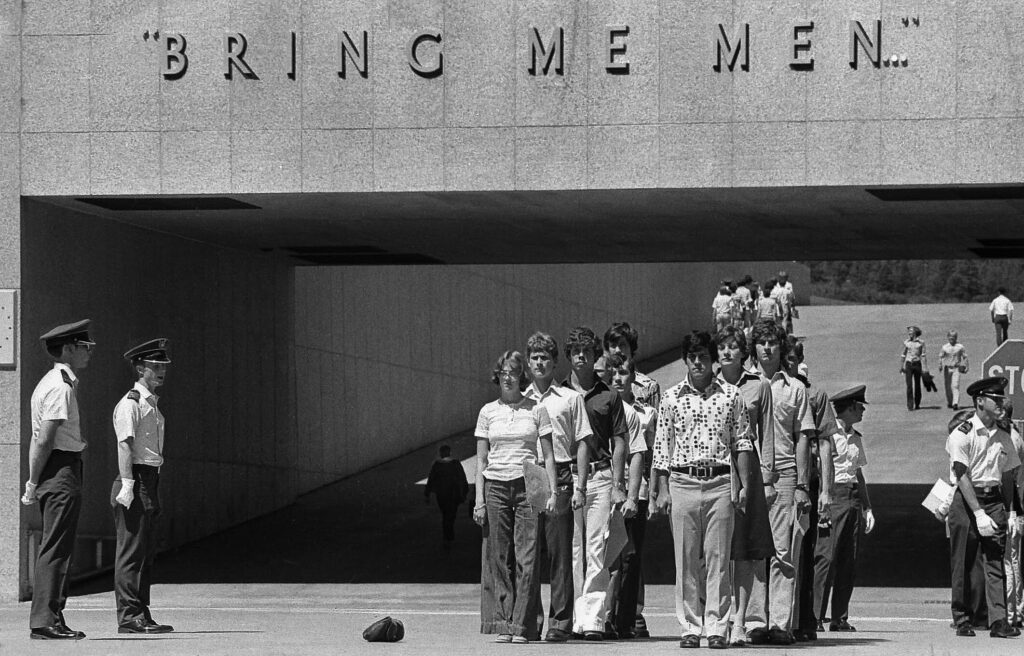
Fifty years later, women reflect on first coed class at the Air Force Academy, struggle for equality
Mary Shinn
mary-shinn@coloradopolitics.com
Updated 18 hours ago
When the first female Air Force Academy cadets arrived 50 years ago this summer, they stood in front of an enormous sign on campus that read “Bring me men.” In the shadow of that sign, Kathleen Utley Kornahrens, one of...

A new day? Colorado’s troubled guardianship office pursues ‘cultural reset’
Marianne Goodland
marianne.goodland@coloradopolitics.com
Updated 3 days ago
Colorado’s guardianship program, long criticized for mismanagement and high staff attrition, is undergoing a “cultural reset,” as its new director works to repair partnerships and prepare for a major expansion under recent legislation. Created by lawmakers in 2017, the Office...

Democratic group aims Spanish-language TV ad at Gabe Evans in Colorado’s battleground 8th CD
Ernest Luning
ernest.luning@coloradopolitics.com
Updated 2 days ago
A national group tied to House Democratic leadership launched a six-figure Spanish-language TV ad in Colorado this week targeting Republican U.S. Rep. Gabe Evans and the GOP’s signature budget legislation. The 30-second spot is part of $15 million in new...

Colorado School of Mines lands major share in Trump’s $100M mining-education plan
Thelma Grimes
thelma.grimes@coloradopolitics.com
Updated 2 days ago
President Donald Trump on Friday named the Colorado School of Mines among roughly a dozen institutions that will share in a $100 million commitment “to train the next generation of American miners.” Paul Johnson, the university’s president, said he is...
Judge dismisses lawsuit seeking records from Colorado Democratic group
Marianne Goodland
marianne.goodland@coloradopolitics.com
Updated 2 days ago
A lawsuit seeking to obtain records from Democratic lawmakers affiliated with a caucus has been thrown out by a Denver District Court judge. On July 17, Judge Ericka Englert dismissed the April lawsuit filed by progressive activist Derrick Blanton, who...
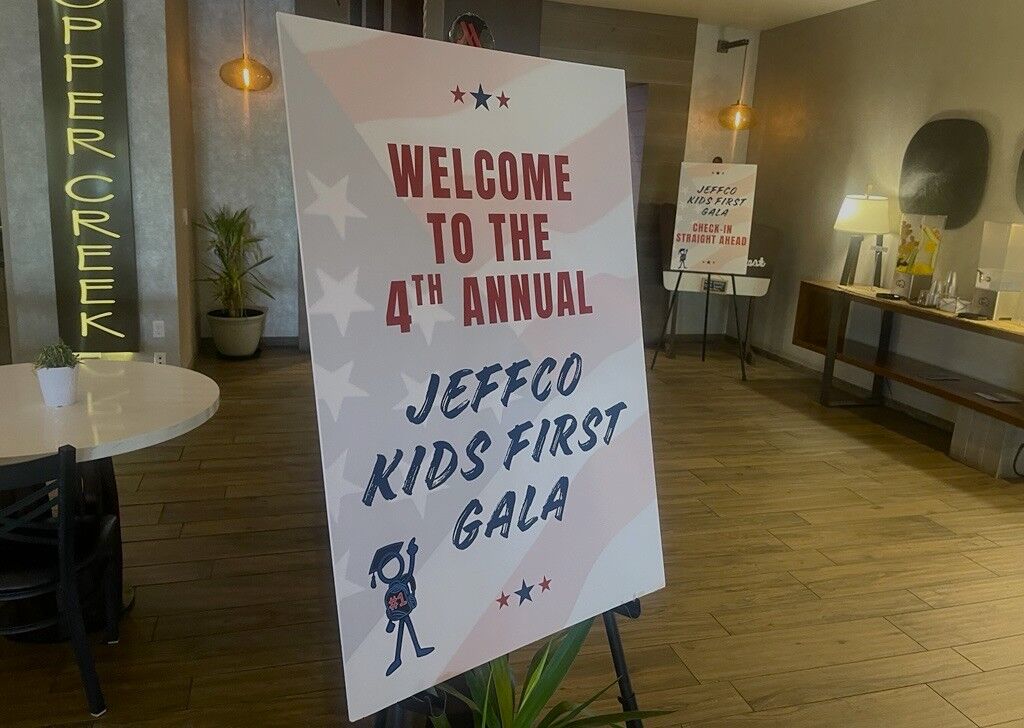
DOJ official decries ‘nonsense’ in Jeffco schools at fundraising gala
Matt Kyle
matt.kyle@denvergazette.com
Updated 23 hours ago
Amid a legal battle between Jeffco Public Schools and the federal government, a Department of Justice official spoke at a fundraising gala and decried “crazy stuff” and “nonsense” in the school district. The gala was for Jeffco Kids First, an...
Colorado Springs mother Deborah Nicholls’ murder conviction overturned
Nick Smith
nick-smith@coloradopolitics.com
Updated 2 days ago
A Colorado Springs mother convicted in 2008 of murdering her three children in a house fire might get a new trial after a judge ruled that prosecutors withheld key evidence that could have impacted the jury’s verdict. Deborah Nicholls, whose...

Aurora Community College student journalist accuses college of ‘unconstitutional gag order’
Kyla Pearce
kyla.pearce@gazette.com
Updated 2 days ago
An Aurora Community College student is accusing the college of putting an “unconstitutional gag order” on his student-run publication, saying the college banned it from publishing until students jumped through “countless bureaucratic hoops.” A college spokesperson said the college is...

Polis administration relaunches Colorado e-bike rebates with $3 million
Scott Weiser
scott.weiser@gazette.com
Updated 2 days ago
Gov. Jared Polis and the Colorado Energy Office announced Thursday the return of the state’s popular e-bike rebate program, with registration set to open later this month. The office plans to provide point-of-sale rebates totaling $3 million from the Community...

Appeals court rejects former DougCo commissioner’s legal fee claim
Nicholas Fogleman
nicholas.fogleman@denvergazette.com
Updated 2 days ago
The Colorado Court of Appeals rejected a former Douglas County commissioner’s bid for reimbursement of attorney fees she incurred while responding to multiple investigations into her conduct. The dispute stemmed from a 2019 anonymous letter sent to county officials alleging...
PREV
PREVIOUS

Monitor says Denver police not sharing information about disciplinary program
Denver’s civilian public safety oversight system is not receiving information it needs to properly review certain programs within the city’s police department, according to Lisabeth Pérez Castle, Denver’s independent monitor. Pérez Castle, who presented the OIM 2025 annual report to a Denver City Council committee Wednesday, said that her office has been sidelined in its […]

Trump's 10th Circuit nominee declines to name 2020 election winner, defends immigration decisions
President Donald Trump’s nominee to the Denver-based federal appeals court declined to say who won the 2020 presidential election during his appearance before the U.S. Senate Judiciary Committee on Wednesday, and defended his recent rulings in immigration detention cases. U.S. District Court Chief Judge Daniel D. Domenico, who Trump appointed during his first term to […]