

A new day? Colorado’s troubled guardianship office pursues ‘cultural reset’

Colorado’s guardianship program, long criticized for mismanagement and high staff attrition, is undergoing a “cultural reset,” as its new director works to repair partnerships and prepare for a major expansion under recent legislation.
Created by lawmakers in 2017, the Office of Public Guardianship serves as a ward of last resort for indigent or incapacitated people who lack family, friends or a private guardian to care for them.
The public guardians are responsible for protecting their clients’ rights and supporting their independence to the greatest extent possible.
Staff turnover crippled early operations
The office struggled from the outset.
Lawmakers did not seek state funding for it in 2017, instead expecting the program to run on gifts, grants and donations — with hopes of raising $1.7 million. In its first two years, it collected only about $2,000.
In 2019, lawmakers stepped in to fund the office through probate fees that generated about $800,000 per year. The first guardians began taking referrals in Denver’s 2nd Judicial District, with planned expansion into the districts serving Delta and Trinidad.
Legislation passed in 2023 broadened the office’s authority, directing it to operate in all 23 judicial districts by 2030.
Later in 2019, the five-member board hired Sophia Alvarez as executive director.
The guardianship office began accepting referrals in 2020 but quickly encountered a major obstacle — severe staff turnover.
The agency struggled to even get enough guardians to cover the three districts it was authorized to operate in. Most guardians, frustrated with an alleged toxic work environment they attributed to Alvarez and the agency’s deputy director, Janelle Cantu, lasted less than a year.
Some employees left after only a few months.
In its 2024 end-of-year report, the office had listed 11 guardians. By Jan. 19, 2025, seven of the 11 were gone.
In 2024, seven of the division’s former guardians asked Gov. Jared Polis for an audit. Another former guardian filed a complaint with the state’s Civil Rights Commission, although the status of that complaint is unknown due to the privacy laws.
At the same time, several partner agencies — including Denver Health, its largest — stopped sending referrals, saying the office was mismanaged. In a 2022 state hearing, Denver Health reported that one guardian had physically confronted a client at the hospital and that another client, who died there, had been effectively abandoned by the agency.
As staffing problems persisted, the agency’s mortality rate came under scrutiny. Of the first 80 clients, more than two dozen died during the office’s first three years. Most were elderly and medically fragile, though some were in their 20s or 30s. The agency declined to release even basic public information beyond a client’s age or limited details.
The governor’s office showed little interest in the unfolding problems, even after seven former guardians sent the 2024 letter pleading for stronger oversight. One former guardian told Colorado Politics the office replied with a form letter and never followed up.
The agency’s board meetings showed the agenda was swamped with personnel issues.
New leadership takes charge
Following Alvarez’s resignation in 2025, officials said the agency finally began moving toward the mission it was created to fulfill.
In November, the board hired Amelia Milton McKeon, a veteran with more than two decades of experience working with people with disabilities. In Florida, she helped launch the state’s first statewide public guardianship program and later led three agencies serving people with intellectual and developmental disabilities.
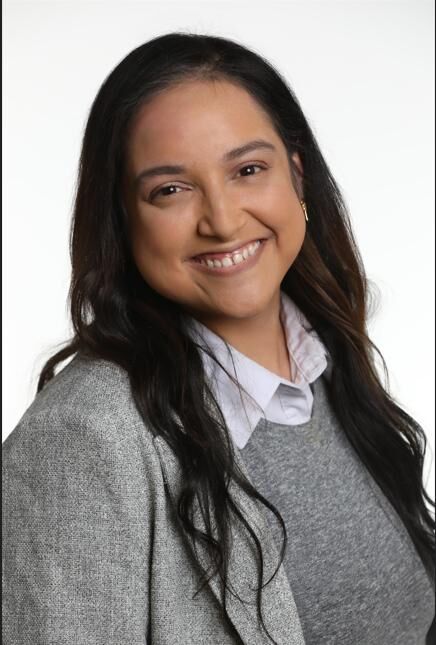
She arrived in Colorado fully aware of the office’s troubled past. Before accepting the job, she said she read every Colorado Politics story detailing the agency’s dysfunction. She wasn’t deterred, she said, adding she has weathered “tough press” before.
McKeon’s background is steeped in human services. Her mother was a health and human services lobbyist who helped build Florida’s intellectual and developmental disabilities agency. Her father, a longtime Florida State University professor, taught educational leadership. Together, they published research in the field and became guardianship experts.
McKeon jokes she had “no choice” but to follow the same path.
“I love it,” she said.
She started early, at 17, working in a high school pilot program supporting special‑education students who were pressured to meet state testing requirements despite qualifying for exemptions. She mentored those students and met two attorneys, Twyla Sketchley and Karen Campbell, who specialized in guardianship and independence. She later worked as Sketchley’s paralegal.
Those experiences shaped her philosophy, she said, nothing that systems are built for the masses and the challenge is to tailor services to each person’s needs. She carried that into her role as a clients’ rights advocate at Florida’s Agency for Persons with Disabilities, where the state was facing multiple lawsuits over how it applied waiver services.
“They needed someone to be a thorn in their behind,” she said. “I was that thorn.”
Her approach to guardianship centers on preserving independence, she said.
“Even in a guardianship, it is my statutory obligation that anything they can exercise, anything they can choose, I’m going to support them in doing that,” she said. Guardianship, she added, is not about taking over someone’s life — ethically or legally. “It is not to substitute our opinions for theirs.”
Florida’s experience closely mirrored Colorado’s — beginning with guardians in three judicial districts before expanding statewide, with the same number of districts and similarly rural regions.
The Colorado office had long struggled to retain guardians in its two rural districts. McKeon made stabilizing those areas an early priority. There was also the issue of ensuring that people in rural areas knew these services were available.
“We need to be available, especially in the most rural areas that have no other resources,” McKeon said. She said she wants to avoid a system where people must travel to metro Denver to get help. “We want them to stay where they are, in their homes, in their communities.”
It points to another challenge for rural Colorado: ensuring the services clients need are available and the barriers to access removed. McKeon said that, too, has been part of her focus.
Mending bridges
Among McKeon’s major challenges is to repair the relationships with Denver Health and other partner agencies.
Those efforts have been noticed.
Brad Torch, guardianship director for the Guardianship Alliance, said his organization had been absorbing referrals when the state office became an unreliable option. Last year, he told Colorado Politics the alliance was effectively filling the gap left by the agency’s instability.
The last nine months have been a different story, he said.
“It’s much better,” Torch said, adding the work environment has become collaborative.
He meets weekly with McKeon to work through the issues, and she’s helping the alliance on some of its state funding challenges, he said.
The state office recently hired a Guardianship Alliance staffer, he noted. That guardian is now in the 16th Judicial District, based in Pueblo, a sign of slow but steady expansion.
Competency mandate reshapes role
The Office of Public Guardianship’s “cultural shift” is not the only big change in the agency in the last nine months.
During the 2026 session, it became part of state’s efforts to address the competency issue, as enacted through Senate Bill 26-149.
“We should be involved in this space and have a seat at the table,” McKeon said.
She argued that the state office offers not only the most cost-effective option, but also long-term stability and support for people — helping them live better lives, improving community safety and reducing the likelihood they will cycle back into the criminal justice system.
Under the new law, if a person is adjudicated not restorable to competency, it will be up to OPG, working alongside other state agencies, to stand as an emergency guardian, responsible for providing long-term care.
McKeon also added staff to ensure the bill works as intended on their side. She recently hired Brad Turner to serve as in-house counsel.
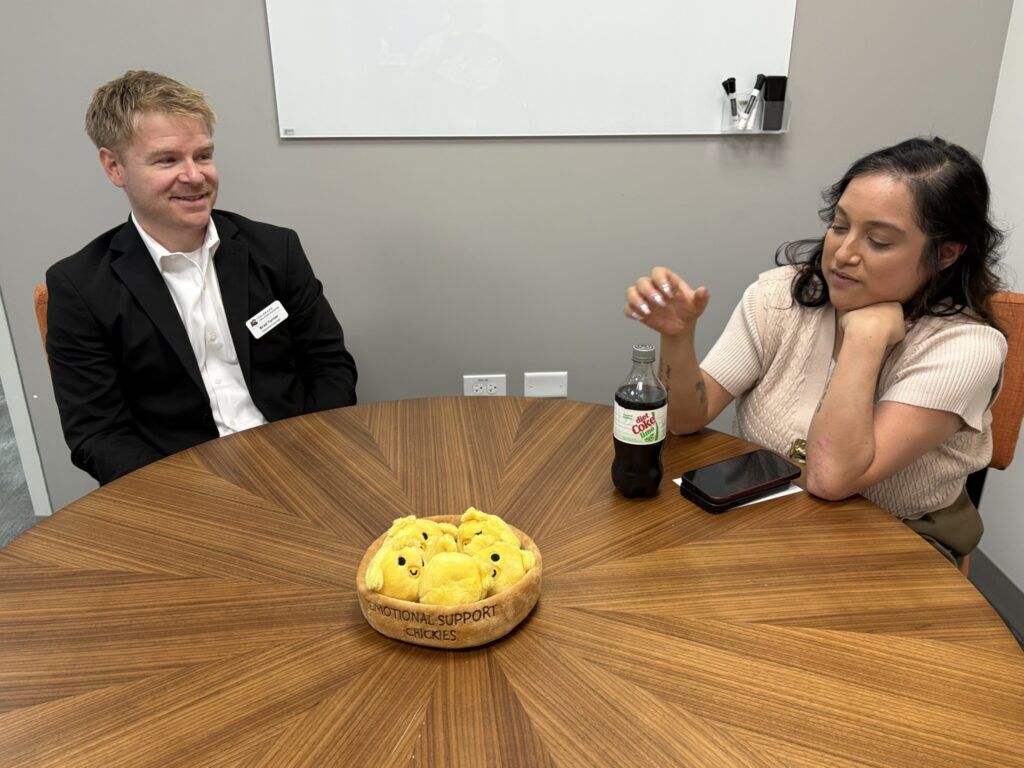
Turner wrote the 2026 bill in his role with the Colorado District Attorney’s Council and in collaboration with the Colorado State Public Defender.
He explained that the bill requires that, when a criminal defendant is deemed incompetent, any interested person can petition the criminal court for the appointment of an emergency guardian.
That excludes the City and County of Denver, which constitutionally has jurisdiction over appointing a guardian in some cases.
“We wanted to make that process transparent and easy,” and it’s identical to the process of appointing an emergency guardian in a civil case, Turner said.
Prior to SB 149, there was a significant gap in moving someone into the civil or voluntary treatment system. The new law allows courts to direct district or county attorneys to file civil petitions for involuntary treatment.
If the guardian agrees, that guardian can take over those petitions instead of the county attorney.
Turner said the major shift under SB 149 is that, once the criminal case or short-term treatment ends, the guardian remains involved.
The in-house counsel said that distinction matters: Incompetence determines whether someone can be prosecuted, while incapacity means they need another person to make decisions for them.
To meet its new responsibilities, the office also hired a “flex” guardian — someone who can take cases anywhere in the state, help people access the civil treatment system and provide services in districts that don’t yet have an assigned guardian.
McKeon said her office’s role is to provide guardianship services to those who are incompetent and incapacitated, and she believes there is more overlap than people might expect.
When guardianship first came into being, it was mostly age-based, she explained. That’s shifting now to handling intellectual or developmental disabilities and mental health, and she believes individuals in substance abuse will be the next population that could require guardianship.
“If you have a high-involvement case, someone committing significant felonies and they have been deemed incompetent and continue to reoffend, it begs the question if there is a legal incapacity issue,” she said.
While it hasn’t happened in the past, there’s nothing to prevent the civil and criminal sides from working together, she said.
Navigating ethical dilemmas
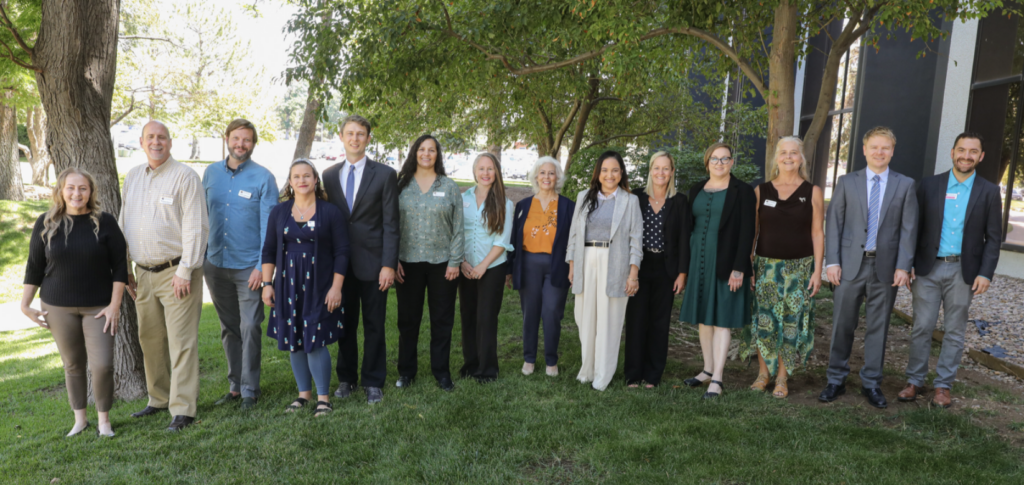
Colorado Politics recently visited the office’s Greenwood Village office, where staff gather weekly to work through some of the most complicated situations guardians face.
One recent training scenario involved two residents of the same apartment complex. The woman, 30, is developmentally disabled but able to live independently. The man, 38, is a registered sex offender whose offense occurred when he was a teenager and has not reoffended. The pair are in love, want to marry and may want children, though the woman cannot care for a child and shows little interest in doing so.
Guardians — each client has their own — were asked how they would support the couple’s plans. Then McKeon added a twist: the woman is now pregnant.
The staff split into two groups, one for each guardian, to discuss privacy rights and how to approach the situation. McKeon emphasized that these exercises aren’t meant to produce clear-cut answers.
In this case, they didn’t. The group advising the woman’s guardian suggested seeking court guidance but acknowledged numerous unresolved issues and no simple path forward.
The state office has also created an on-call guardian role, one of the agency’s biggest operational lifts. That guardian can respond to emergencies anywhere in the state — including the death of a client, threats to safety, suspected criminal activity involving a client, attempted suicide, mistreatment or disappearance.
Critics question the office’s purpose
Maureen Welch of Navigating Disability remains a vocal critic of the state office, though she acknowledged the new director is an improvement over what she called “awful” past leadership.
Welch argues the agency shouldn’t exist at all, describing it as “a state office that sanctions civil death by court appointments of public employees who make life-impacting decisions.” She contends that many guardian clients have friends or family who were wrongly excluded from consideration by courts or by the guardianship office.
Her primary interactions with the agency have been through board meetings, where she said she was cut off while attempting to give public comment on July 22. Welch said the board should be more open to public participation, hold meetings in person so the public can see “the expensive office space” and improve a website she finds difficult to navigate. She also noted the director’s monthly report no longer lists when clients die.
Welch pointed to the office’s $3 million budget, funded through what she described as a drafting error in the original bill — one that allows the office to collect fees on every probate filing statewide, not just guardianship filings or filings in counties where the office operates. She believes the original intent was far narrower. To her, the current structure amounts to “empire building.”
McKeon said she has been in conversation with Welch and welcomes scrutiny of guardianship itself.
“It is the most restrictive option available; it should be questioned and used sparingly and appropriately,” she said.
“I welcome her feedback and criticism.”
The road ahead
McKeon acknowledged the agency still has significant ground to make up, especially in rebuilding trust and repairing its reputation, but that signs of progress are emerging.
Among the new hires is a senior guardian who has followed the agency since its inception and only recently felt confident enough to join. The office now has nine guardians and plans to hire at least 12 more over the next year, in part to handle the caseload expected under the competency bill.
Another recent addition is a guardian assigned to the 18th Judicial District in Arapahoe County — the site of one of last year’s most high-profile competency cases, which helped drive the 2026 legislation.
Since McKeon arrived last November, not a single staff member has left.


Democratic group aims Spanish-language TV ad at Gabe Evans in Colorado’s battleground 8th CD
Ernest Luning
ernest.luning@coloradopolitics.com
Updated 1 day ago
A national group tied to House Democratic leadership launched a six-figure Spanish-language TV ad in Colorado this week targeting Republican U.S. Rep. Gabe Evans and the GOP’s signature budget legislation. The 30-second spot is part of $15 million in new...

Colorado School of Mines lands major share in Trump’s $100M mining-education plan
Thelma Grimes
thelma.grimes@coloradopolitics.com
Updated 1 day ago
President Donald Trump on Friday named the Colorado School of Mines among roughly a dozen institutions that will share in a $100 million commitment “to train the next generation of American miners.” Paul Johnson, the university’s president, said he is...
Judge dismisses lawsuit seeking records from Colorado Democratic group
Marianne Goodland
marianne.goodland@coloradopolitics.com
Updated 1 day ago
A lawsuit seeking to obtain records from Democratic lawmakers affiliated with a caucus has been thrown out by a Denver District Court judge. On July 17, Judge Ericka Englert dismissed the April lawsuit filed by progressive activist Derrick Blanton, who...
DOJ official decries ‘nonsense’ in Jeffco schools at fundraising gala
Matt Kyle
matt.kyle@denvergazette.com
Updated 20 hours ago
Amid a legal battle between Jeffco Public Schools and the federal government, a Department of Justice official spoke at a fundraising gala and decried “crazy stuff” and “nonsense” in the school district. The gala was for Jeffco Kids First, an...
Colorado Springs mother Deborah Nicholls’ murder conviction overturned
Nick Smith
nick-smith@coloradopolitics.com
Updated 2 days ago
A Colorado Springs mother convicted in 2008 of murdering her three children in a house fire might get a new trial after a judge ruled that prosecutors withheld key evidence that could have impacted the jury’s verdict. Deborah Nicholls, whose...

Aurora Community College student journalist accuses college of ‘unconstitutional gag order’
Kyla Pearce
kyla.pearce@gazette.com
Updated 2 days ago
An Aurora Community College student is accusing the college of putting an “unconstitutional gag order” on his student-run publication, saying the college banned it from publishing until students jumped through “countless bureaucratic hoops.” A college spokesperson said the college is...

Polis administration relaunches Colorado e-bike rebates with $3 million
Scott Weiser
scott.weiser@gazette.com
Updated 2 days ago
Gov. Jared Polis and the Colorado Energy Office announced Thursday the return of the state’s popular e-bike rebate program, with registration set to open later this month. The office plans to provide point-of-sale rebates totaling $3 million from the Community...
Appeals court rejects former DougCo commissioner’s legal fee claim
Nicholas Fogleman
nicholas.fogleman@denvergazette.com
Updated 2 days ago
The Colorado Court of Appeals rejected a former Douglas County commissioner’s bid for reimbursement of attorney fees she incurred while responding to multiple investigations into her conduct. The dispute stemmed from a 2019 anonymous letter sent to county officials alleging...

Right-to-natural-gas proposal in Colorado qualifies for ballot
Marissa Ventrelli
marissa.ventrelli@coloradopolitics.com
Updated 2 days ago
A citizen initiative that seeks to enshrine the right to natural gas has qualified for the November ballot, Colorado’s election office confirmed on Thursday. Petitions containing signatures for Initiative No. 177 were turned in to the Secretary of State’s Office for review...

Emerald ash borer confirmed in Colorado Springs, ‘pest is here to stay’
Brennen Kauffman
brennen-kauffman@coloradopolitics.com
Updated 3 days ago
Colorado Springs is asking residents to be on the lookout for an invasive beetle species that has jumped down the Front Range and into local ash trees. City officials said Wednesday that a confirmed emerald ash borer infestation had been...
PREV
PREVIOUS

As Lake Powell shrinks, marinas are having to adapt to dwindling water levels | OUT WEST ROUNDUP
ARIZONA Reservoirs near record lows PAGE — The Colorado River’s Lake Powell, the second largest reservoir in the U.S., is shrinking. A record-dry winter and extreme heat — as well as decades of overuse, chronic drought and climate change — are threatening to pummel the lake to near historic lows. Low water levels have forced […]

Colorado Democrats, your time is coming | Jon Caldara
Hey, Colorado Democrats! All the fun you’ve had watching Republican dysfunction in Colorado for the last 20 years was just a preview of what is about to happen to you. The Colorado Republican Party no longer exists as a competitive institution. Republicans did it to themselves. They built a culture around purity tests, with no […]