Fifty years later, women reflect on first coed class at the Air Force Academy, struggle for equality
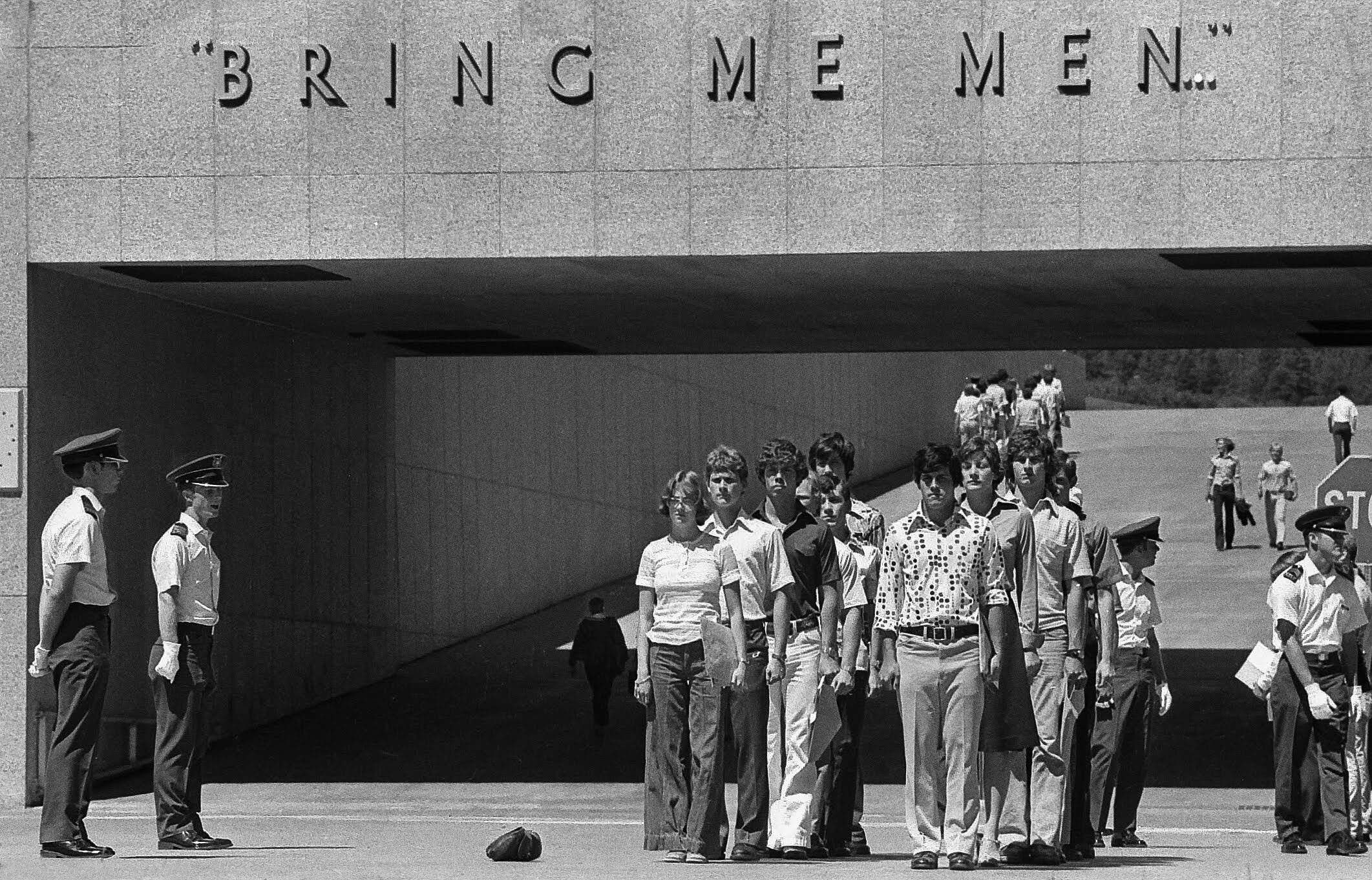
When the first female Air Force Academy cadets arrived 50 years ago this summer, they stood in front of an enormous sign on campus that read “Bring me men.”
In the shadow of that sign, Kathleen Utley Kornahrens, one of the first 157 women to arrive in 1976, learned the five responses available to basic cadets during training on her first day.
The phrases back then and today are much the same. She could say: “Yes, sir!” “No sir!” “No excuse, sir!” “Sir, may I ask a question?” And, “Sir, may I make a statement?”
When one of the young women didn’t perfectly recite one of the five responses, an older cadet came down on the group.
“You girls really are dumb. A whole lot dumber than you look,” the cadet told them, Kornahrens recounted in her book, “’Bring me Men …’ Brought Women.”
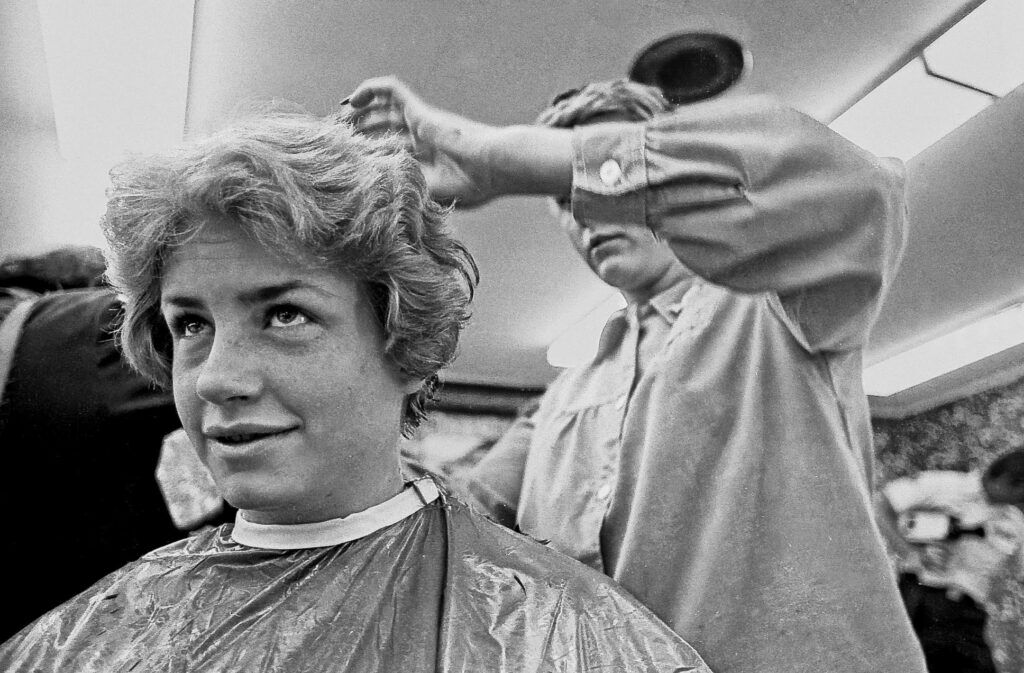
All the ladies had their hair cut along with the boys that day. It wasn’t buzzed off, but all the women’s hair was “cropped and choppy,” she wrote. Now women are allowed to keep their long hair and can choose from various styles, including buns, braids and ponytails as long as the style fits certain regulations.
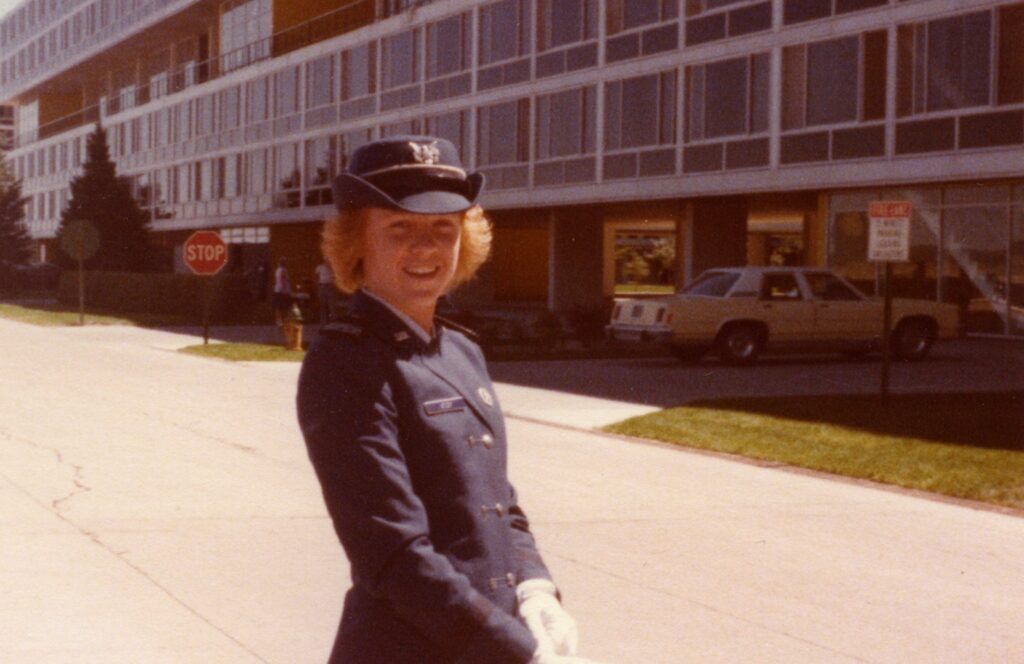
The young freshmen were also issued skirts to wear to class and pants for military training, including marching with their M-1 rifles.
While they had supporters, the women faced intense criticism from people who didn’t think they belonged at the academy.
“Every day we were told to quit, to get out, you don’t belong here,” recalled Linda Garcia Cubero, a member of the class of 1980, who went on to work as an intelligence officer at the Pentagon and in varied high-level corporate roles.
Naysayers told the young women that they had come to husband hunt and their presence would lower the standards.
Instead, they thrived in the Air Force, Garcia Cubero said.
Members of the class include retired Lt. Gen. Susan Helms, who went on to be an astronaut and was the first woman to live on the International Space Station, and retired Gen. Janet Wolfenbarger, who was the first woman to become a four-star general in the Air Force and ended her career overseeing Air Force Materiel Command.
“They are pioneers that opened the door,” said Dana Born, a member of the class of 1983 and the first female dean.
Through the decades as an instructor at the Academy in the late 1980s, 1990s and later as the dean from 2004 to 2013, Born saw a long arc of progress that included women attending in greater numbers and more positions opening up to women, including combat roles.
During that first class, women accounted for about 10.5% of their class of about 1,500.
Since then, the overall percentage of women at the academy has risen fairly steadily, Born said.
The class of 2023 graduated 270 women, who represented 29% of the class.
Women who arrived this summer represented 24% of the incoming class. They will graduate in 2030.
In those first few years, women took part in highly physical training, including exercises meant to prepare them should they be captured behind enemy lines. But combat roles were not yet open to them. In 1993, the military services opened combat flight roles to women. The last remaining combat roles, including Air Force parajumpers, opened to women in 2015.
Each generation of women has passed on a responsibility to the next to ensure more opportunities are available, Born said.
“I have a terrific appreciation for those who went before,” she said.
Early missteps
When those first female cadets arrived, the academy housed them all together on the sixth floor of Vandenberg Hall, one of two large dorms on campus.
“Separation always breeds some kind of thoughts about inequality and different treatment,” Kornahrens said, in an interview. The separate housing earned the nickname “the penthouse” among male cadets.
The academy also only integrated the women into the first 20 of the academy’s 40 squadrons, so about half the cadet wing remained all male. The squadrons are numbered one through 40, and cadets across the four classes train together in squadrons of about 100 people, with the older cadets leading the younger ones.
Garcia Cubero said the housing isolation was likely for the freshmen women’s protection, but it worked against them in an already tough environment.
“All 40 squadrons would send reps to harass us every time we left our rooms. So we were constantly late, and of course it was our fault,” she said.
She struggled with the “mental and emotional stress from the mind games,” she recalled.
The older cadets would scream in the women’s faces as they stood braced against the wall, she said.

The harassment continued during mealtimes when freshmen cadets had to sit with their chins pointed toward their chests as they tried to eat. At the same time, they had to field questions from upperclassmen.
Many of the questions were based on Contrails, a book cadets must still memorize today.
The physical training that followed insufficient meals was brutal, Garcia Cubero said. Cadets no longer have to brace during meals, which is a positive change, she said.
Through the tough early days, Kornahrens said, the women found strength in each other.
“I think we held our own and we held each other up,” she said.
As part of the Air Force Academy’s “pink plan” for integrating women as required by a 1975 law, the institution brought in 15 young female officers to serve as role models for the freshmen women. The Air Force allowed women to commission through ROTC starting in 1969, so there was a pool of available women to serve as Air Training Officers for the younger cadets.
Those 15 ladies arrived ahead of time to get a quasi-cadet experience, when they were mooed and oinked at, Kornahrens reported in her book. She went on to say those young officers received almost none of the attention or credit, even though they paused their careers to hold space for incoming cadets.
“They were wonderful in many things,” Kornahrens recalled in an interview. But they hadn’t been cadets and so they didn’t understand “the lore” of the institution. Eventually, male cadets took over all the training.
The men of the class of 1980 also caught criticism for the women in the ranks, Garcia Cubero said.
“They were told their class was weak because they had women. I mean, they took a lot of heat for us, but they really rallied around us,” Garcia Cubero said.
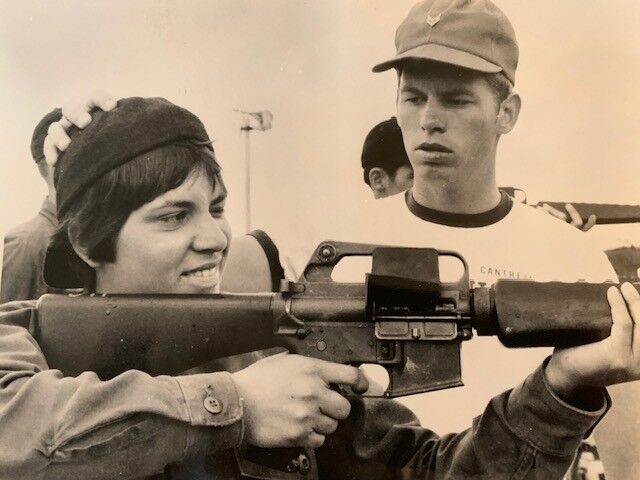
Playboy Bunnies on campus
Beyond the regular rigors of military training, the cadets were faced with a social challenge when the Playboy Bunnies visited from Denver during their fall semester as part of a pep rally for a football game.
The bunnies in their bodysuits and ears rode on the back of older cadets’ Corvettes, Firebirds and Camaros and got a wildly enthusiastic reception from the men.
One of Kornahrens’ friends got chided by an upperclassman for not cheering the bunnies, she said.
After it was over, Kornahrens discussed it with her friends and they decided since the situation was ridiculous, they too would be ridiculous.
So they decided to dress up like Playboy Bunnies themselves. They worked with the very limited options in their closets and put on athletic shorts, their calf-high combat boots, their swimsuits, and used the hoods of their parka coats, halfway unzipped to form ears.
In the twilight, they likely looked like “bowing monks to the deity of big ears,” she wrote, in part because they kept bending over to stifle their laughter.
Their classmates smiled at their game-day spirit, and laughed with them, not at them, she wrote, and no one was punished.
“We broke in athletically. We broke in with physicality. We broke in with spirit. We broke in with academics when we got to that. And not all of us did all of them, but each woman, each one, moved the needle, moved a cadet, a group of cadets, a little bit to understand, to accept us as fellow cadets,” Kornahrens said. In the end, 97 women graduated.
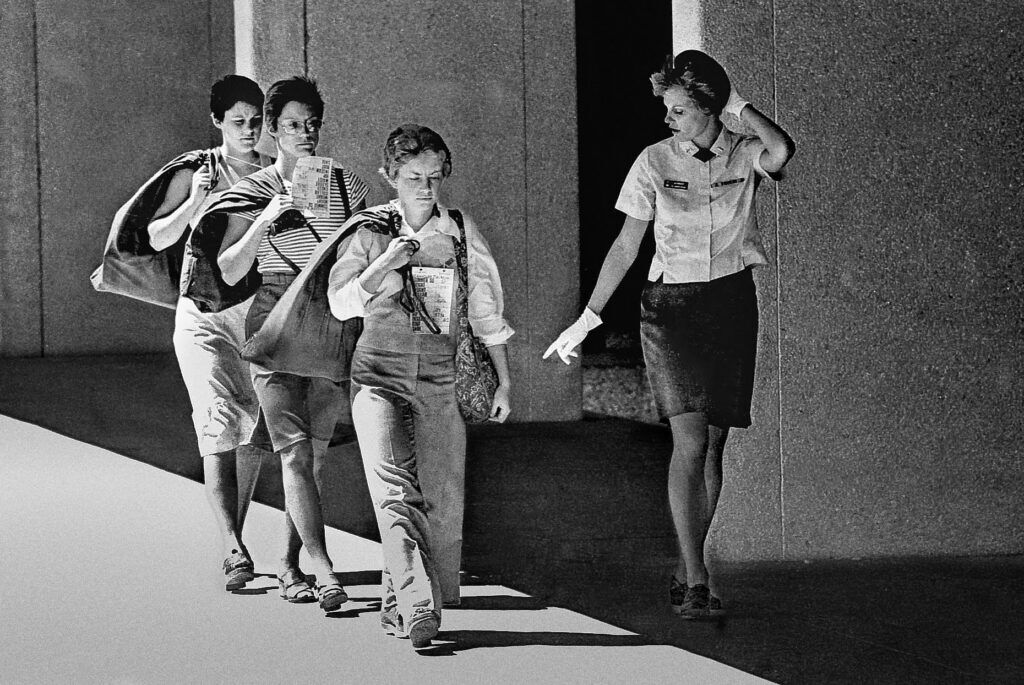
A big fix
At the end of the fall semester, the Academy leadership ended the isolated housing in Vandenberg Hall and the practice of limiting women to squadrons 1-20.
The ladies were thrilled with the news, but it was tough for Kornahrens because her small group of friends was split up. She was sent with two others to new housing in Sijan Hall to a squadron that had remained all male.
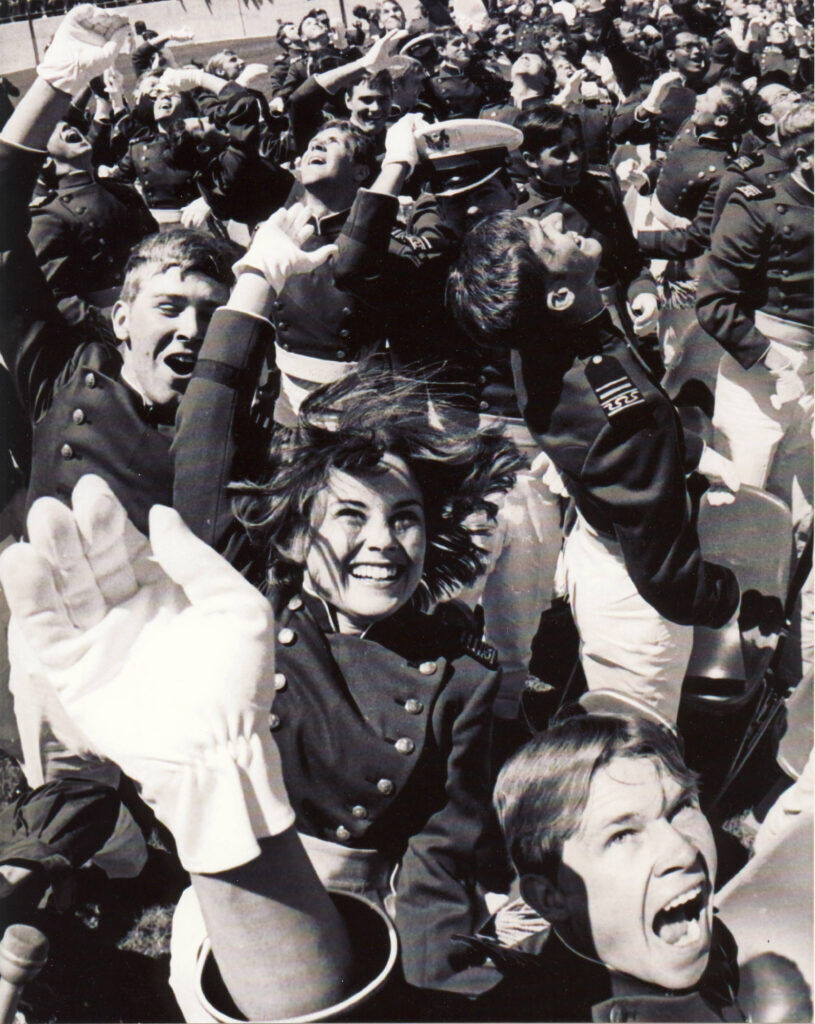
“So after having earned the respect and the understanding of our interest and our determination to succeed from one whole group of cadets. We had to move over and start over,” she said.
But it was a needed pivot, she said.
The next year, women were allowed to live with the squadrons they trained with, she said. The restrooms were not quite ready for them, with pots of fake flowers sitting in the urinals that had yet to be removed, but it was the right change to make at the time.
“It was amazing to have that opportunity to truly integrate so soon,” she said.
Generations of service
After the first semester, Garcia Cubero went home and regaled her family with stories of how tough it was, but even so, her little sister, Mara Garcia Smith, vowed she would attend as well. Eight years later, she graduated, Garcia Cubero said. Their older sister Amanda Garcia commissioned through ROTC. Her niece is scheduled to graduate in 2027.
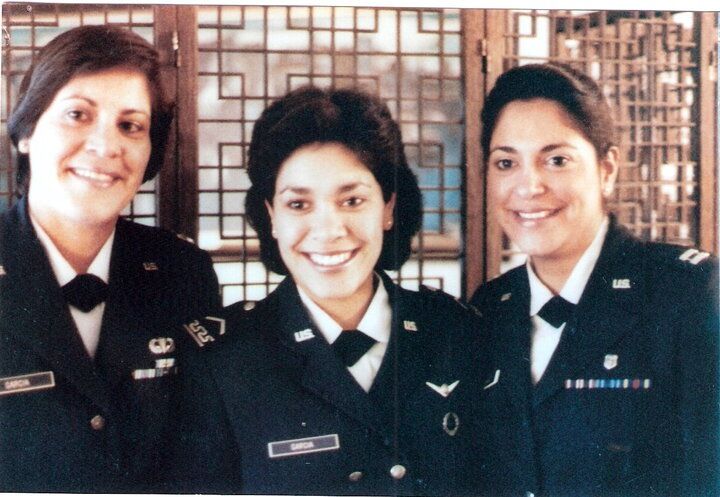
The sisters followed their parents into the Air Force. Their father flew KC-135 refueling air tankers and deployed eight times to Vietnam, Garcia Cubero said.
Kornahrens also followed both of her parents into the service. Her dad spent 27 years in the Army and her mom served in the Navy during World War II. Her son, John, graduated 10 years ago from the academy and she believes his education was even better than the one she received, as it featured research and world travel.
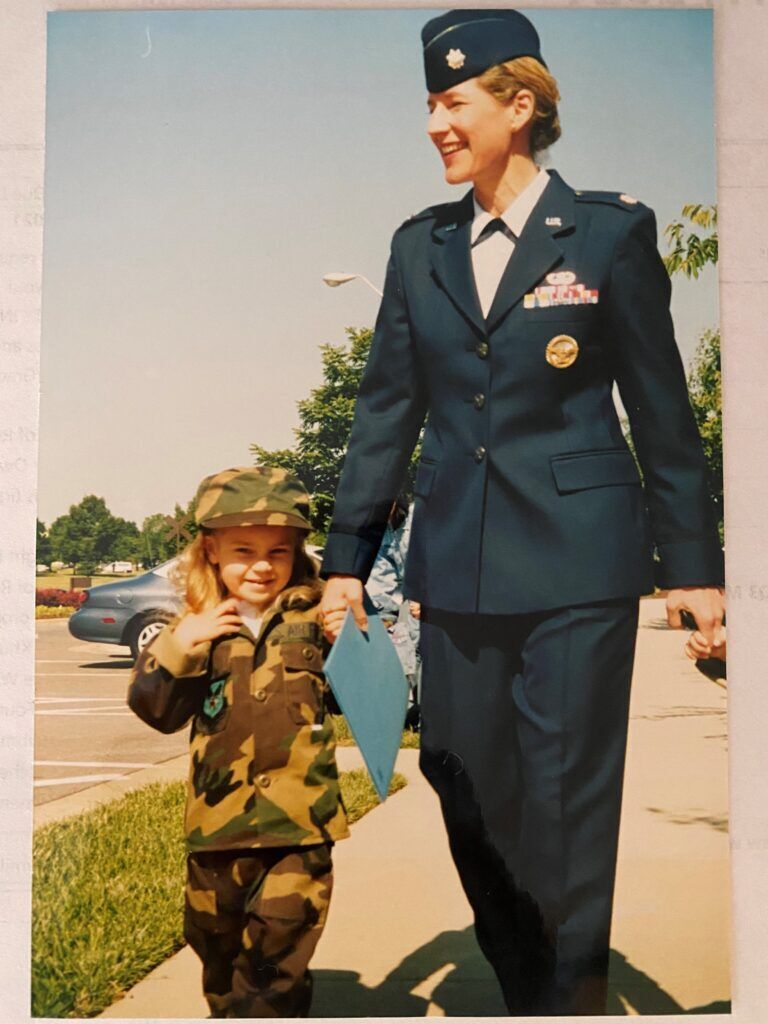
During a recent trip to the academy, Kornahrens’ 9-year-old granddaughter Fiona added pilot to her possible list of careers. The list also features fashion designer and singer after meeting women in flight suits and women carrying falcons, among other role models.
She also did not see the sign, “Bring me men.”
It came down in 2003.


DOJ official decries ‘nonsense’ in Jeffco schools at fundraising gala
Matt Kyle
matt.kyle@denvergazette.com
Updated 23 hours ago
Amid a legal battle between Jeffco Public Schools and the federal government, a Department of Justice official spoke at a fundraising gala and decried “crazy stuff” and “nonsense” in the school district. The gala was for Jeffco Kids First, an...

Colorado Springs mother Deborah Nicholls’ murder conviction overturned
Nick Smith
nick-smith@coloradopolitics.com
Updated 2 days ago
A Colorado Springs mother convicted in 2008 of murdering her three children in a house fire might get a new trial after a judge ruled that prosecutors withheld key evidence that could have impacted the jury’s verdict. Deborah Nicholls, whose...

Aurora Community College student journalist accuses college of ‘unconstitutional gag order’
Kyla Pearce
kyla.pearce@gazette.com
Updated 2 days ago
An Aurora Community College student is accusing the college of putting an “unconstitutional gag order” on his student-run publication, saying the college banned it from publishing until students jumped through “countless bureaucratic hoops.” A college spokesperson said the college is...

Polis administration relaunches Colorado e-bike rebates with $3 million
Scott Weiser
scott.weiser@gazette.com
Updated 2 days ago
Gov. Jared Polis and the Colorado Energy Office announced Thursday the return of the state’s popular e-bike rebate program, with registration set to open later this month. The office plans to provide point-of-sale rebates totaling $3 million from the Community...

Appeals court rejects former DougCo commissioner’s legal fee claim
Nicholas Fogleman
nicholas.fogleman@denvergazette.com
Updated 2 days ago
The Colorado Court of Appeals rejected a former Douglas County commissioner’s bid for reimbursement of attorney fees she incurred while responding to multiple investigations into her conduct. The dispute stemmed from a 2019 anonymous letter sent to county officials alleging...

Emerald ash borer confirmed in Colorado Springs, ‘pest is here to stay’
Brennen Kauffman
brennen-kauffman@coloradopolitics.com
Updated 3 days ago
Colorado Springs is asking residents to be on the lookout for an invasive beetle species that has jumped down the Front Range and into local ash trees. City officials said Wednesday that a confirmed emerald ash borer infestation had been...

Former Parker police sergeant pleads guilty to unlawful sexual conduct, misconduct charge
Nicholas Fogleman
nicholas.fogleman@denvergazette.com
Updated 3 days ago
Former Parker Police Department Sgt. Troy Brienzo pleaded guilty Monday to a felony charge of unlawful sexual conduct by a police officer and first-degree official misconduct in Douglas County District Court. Brienzo entered the guilty pleas before Judge Ryan Stuart,...

Annual survey documents emerging threat to Pikes Peak’s bighorn sheep
Savannah Eller
savannah-eller@coloradopolitics.com
Updated 3 days ago
After a brief pre-dawn gathering, over 40 volunteers and Colorado Parks and Wildlife staff split into teams Wednesday morning and headed off into the high alpine. They were on an annual mission to count and catalog the bighorn sheep population...

Northglenn city manager resigns immediately after 8 years
Kyla Pearce
kyla.pearce@gazette.com
Updated 3 days ago
Northglenn will have a new city manager after the current one resigned effective immediately after eight years with the city. City Manager Heather Geyer was appointed in July 2018 and was the first woman to hold the role in the...

Defendant’s competency in question in El Paso County case involving slain Army police officer
Nick Smith
nick-smith@coloradopolitics.com
Updated 3 days ago
It will be another 60 days before a 4th Judicial District court determines if a man charged in the shooting death of an Army police officer is competent to proceed in his case. Judge Erin Sokol granted a request Wednesday...