

Missy Woods accepts plea deal, avoids trial on 102 felony counts
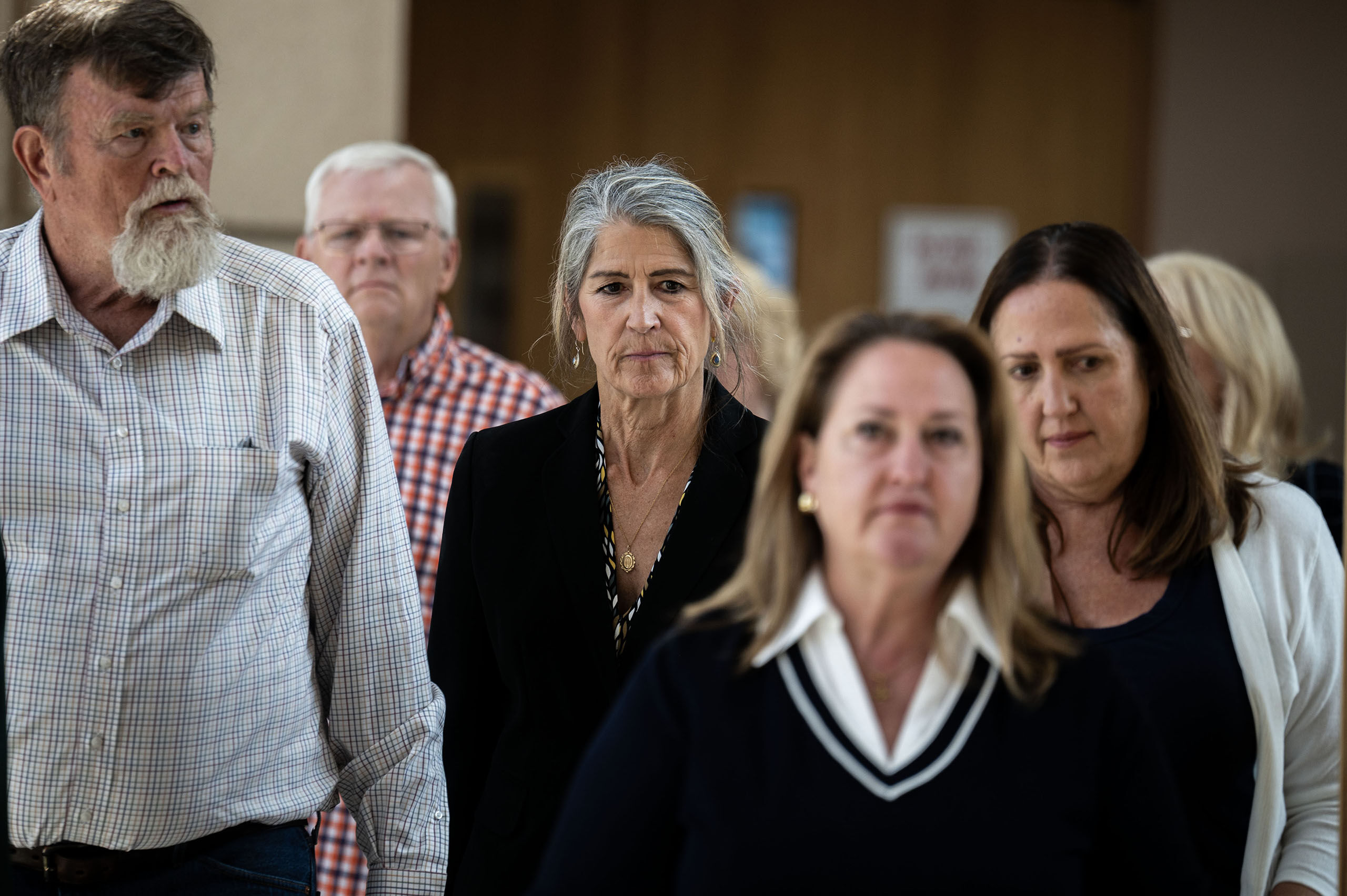
The former top Colorado Bureau of Investigation forensic scientist accused of altering and deleting DNA evidence in scores of criminal cases across the state for years pleaded guilty to four criminal counts Tuesday in Jefferson County.
Yvonne “Missy” Woods, 65, changed her plea rather than face trial on 102 felony charges that included one count of cybercrime, one count of perjury, 48 counts of attempt to influence a public servant and 52 counts of forgery.
She now faces up to 16 years in prison after pleading guilty to four counts of the original indictment. Jefferson County District Judge Andrew Poland accepted the pleas.
Woods had initially pleaded not guilty to all charges in February, more than a year after her arrest. Her trial, expected to last more than a month, had been scheduled to begin in September.
Her sentencing is scheduled for Sept. 8.
She pleaded guilty to one of each of the charges she faced, the most serious being the cybercrime. She faces from eight to 16 years on that count. Had she been found guilty at trial, she could have faced up to 24 years on that count and a fine of up to $1 million.
On Tuesday, she also pleaded guilty to one count of perjury, forgery and attempt to influence a public servant. While those counts also carry prison time, she will serve those sentences concurrently, according to the plea agreement.
Jefferson County Deputy District Attorney Darren Kafka said at the hearing Tuesday morning that his office had insisted that Woods serve time in prison for her crimes, adding they have had significant impact on the community.
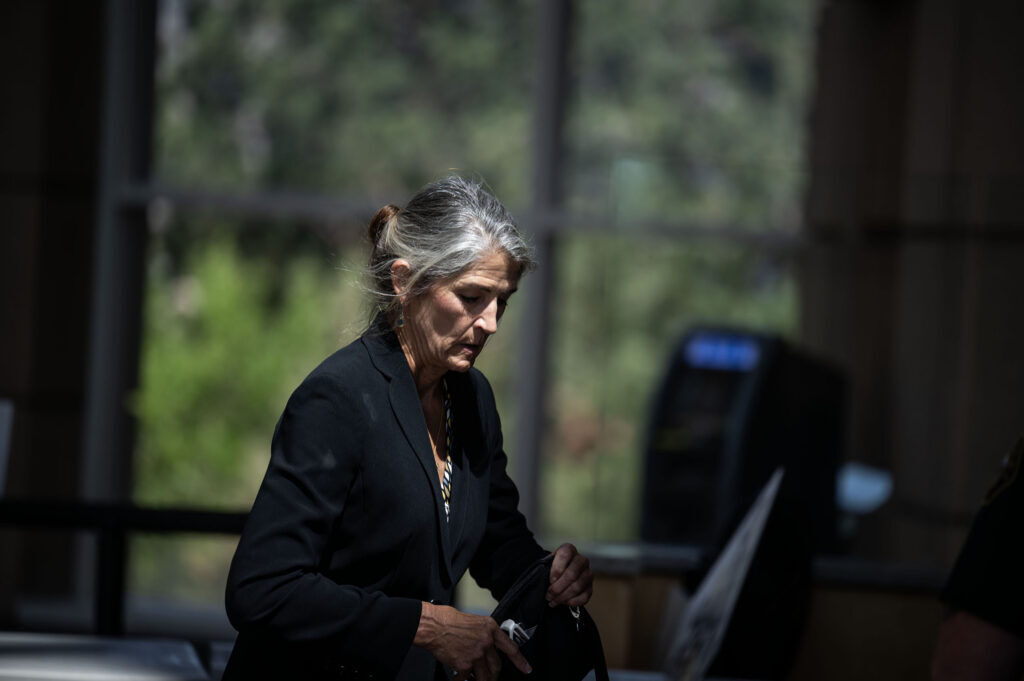
Woods, dressed in a black pantsuit with her hair pulled back in a bun, spoke calmly and clearly when asked if she understood the plea arrangement and that she was waiving her right to trial. As each of the four counts was read, she replied “guilty.”
The Colorado Bureau of Investigation issued a statement saying Woods acted alone, adding that crimes “constituted intentional criminal fraud carried out by a single individual.”
“The conduct violated the law and professional standards of the Colorado Bureau of Investigation. It was not reflective of CBI’s institutional practices or mission,” the agency said.
“This moment is not about moving on. For CBI it’s about moving forward,” said Director Armando Saldate in the news release. “Today’s guilty plea is an important moment of accountability.”
The agency added that “CBI has undertaken reforms that go beyond routine compliance and reflect a commitment to national best practices in forensic science.”
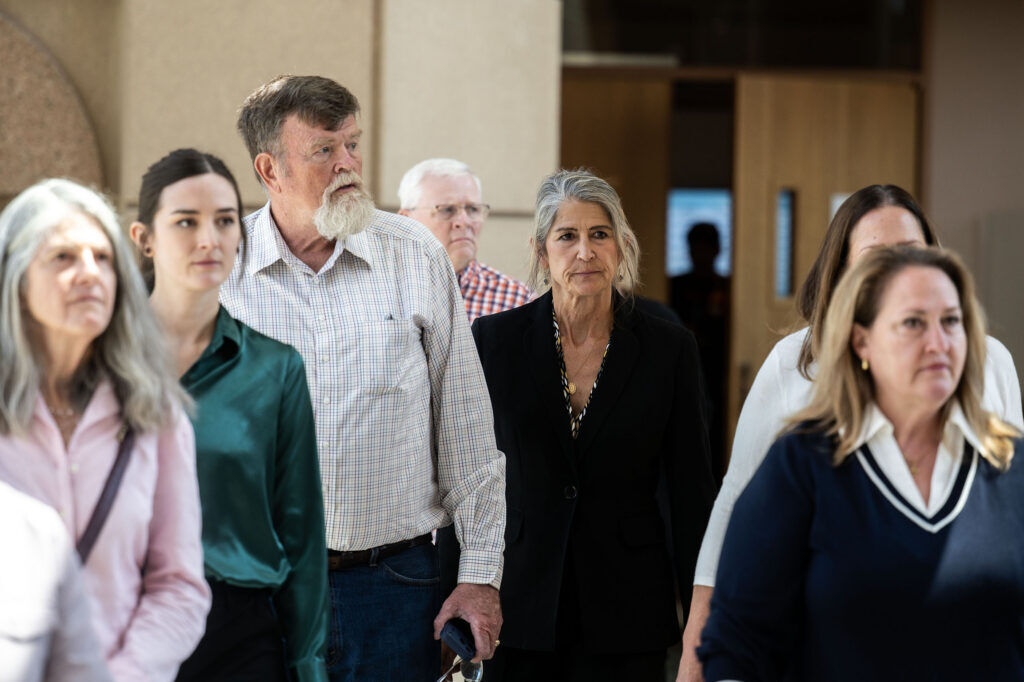
A contingent of Woods’ friends and family filled one side of the courtroom and offered support.
On the opposite side of the room, Tamara Dean Harney and her husband, KC Harney, watched the proceedings unfold. Tamara Harney’s father, Roger Dean, was slain in 1985 in Lone Tree and Woods’ analysis had been key to the case.
Dean’s killer, Michael Jefferson, was not arrested until 2021 and was awaiting trial when the CBI scandal broke and Woods’ work was thrown into question. Prosecutors offered him a plea deal with a reduced sentence rather than risk trial because Woods’ analysis of DNA in the case was potentially no longer seen as credible.
Woods’ defense attorneys, Tom Ward and Lindsay Brown, said neither they nor their client would comment at this time.
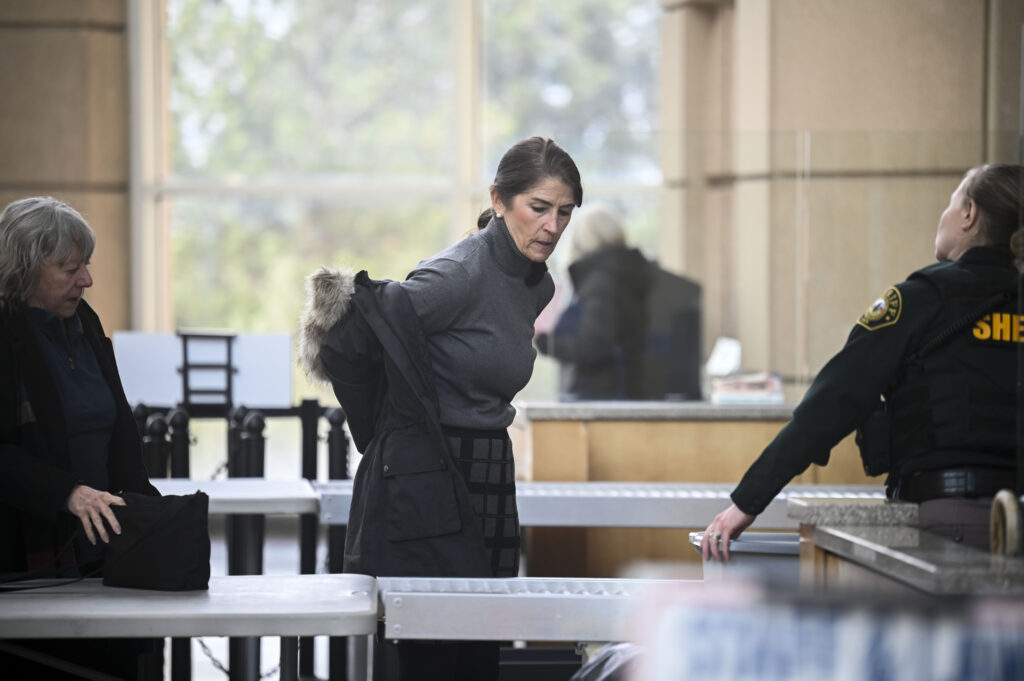
Woods, once considered the go-to expert at Colorado’s state crime lab for her ability to analyze DNA, especially in tricky cold cases, surrendered to Jefferson County authorities on Jan. 22, 2025 and was released on bond.
While the change of plea on Tuesday closes one chapter of a scandal that has roiled the state’s judicial system, many questions remain unanswered.
It remains unclear how her alleged misconduct not only affected those now in prison due to her findings but also potential defendants who might have escaped prosecution over the years due to her conclusions.
In her indictment, it was alleged that she changed quantities of DNA found in sexual assault cases to make it appear there was less than actually detected so she could skip analysis.
In Denver, its police lab has reviewed more than 1,000 cases once handled by CBI to check for inconsistencies or problems in the analysis. The result of that review has not been publicly released.
In a 2023 interview with internal investigators, Woods acknowledged, in part, skipping steps, as she said she felt overwhelmed by her workload and under pressure from supervisors to clear cases quickly.
The ripple effect of Woods’ alleged misconduct has had far-reaching effects.
In at least three murder cases since her arrest, suspects awaiting trial were offered lesser charges and lighter sentences by prosecutors, rather than risk taking the cases to trial because of the taint hanging over CBI.
Tamara Harney told The Denver Gazette prior to Tuesday’s hearing that living with the uncertainty surrounding her father’s case and whether his killer would face full consequences because of Woods “left a hole in my chest.”
“After nearly 40 years, the outcome I counted on was weakened by someone who was supposed to protect it,” Harney said. “When Missy Woods’ misconduct came out, everything changed.”
On Tuesday, at the conclusion of the proceedings, Harney had mixed feelings.
“I won’t know how satisfied I am until we know what the sentence is,” she said.
Another case with possibly deep implications from the DNA scandal is that of Michael Clark. He was tried and convicted of a 1994 Boulder murder, in large part on the strength of Woods’ DNA analysis in his case.
Clark’s conviction was set aside last year after a retest of the DNA evidence found inconsistent results from what Woods had reported.
Clark, who was convicted in 2012 and spent nearly 13 years in prison of a life-without-parole sentence, is now awaiting a second trial.
Others worry about lingering ramifications, particularly the scandal’s impact on public trust.
“As a prosecutor, Woods’ crimes injected a serious, unnecessary and unjustified level of skepticism about rock-solid DNA evidence and scientific testing in general,” said George Brauchler, the district attorney for the 23rd Judicial District. “The ripple effects of her hubris-driven corner-cutting are not yet completely known, but they cannot be good. As a taxpayer, where do we go to recover the jillions of dollars her misconduct has cost Colorado?”
CBI has maintained that no one was wrongly convicted because of Woods’ actions. But the full breadth of the impact remains unclear and some critics, including defense attorneys and some sexual assault victims, have said it is intentionally hidden.
In September 2023, after an intern in the CBI lab became alarmed by some of Woods’ past work, an internal investigation was launched. Woods was allowed to retire with full pension after 29 years at the lab, rather than be fired just before the scandal became public in November of that year.
CBI has said it discovered “anomalies” or some kind of problem in 1,045 of her cases dating back decades. That means that there were issues found in roughly 1 in 10 of the more than 10,780 cases Woods worked.
Details of the nature of what was uncovered have still not been fully disclosed by CBI, as its leadership said it is waiting for her criminal case to be resolved.
An internal CBI investigation after the scandal broke revealed that in both 2014 and 2018, others in the lab alerted supervisors of suspected problems with Woods’ work in criminal cases, but those allegations were never told to prosecutors, defense attorneys or the public.
Other than being briefly removed from duty and ordered to undergo some therapy, Woods faced no consequences from those earlier complaints.
Denver Gazette freelance writer Carol McKinley contributed to this story.

U.S. Rep. Lauren Boebert’s son arrested, faces charges of sexual exploitation of minor
Matt Kyle
matt.kyle@denvergazette.com
Updated 16 minutes ago
U.S. Rep. Lauren Boebert’s son Tyler Jay Boebert has been arrested and accused of recording and sharing a video depicting himself having intercourse with a minor, according to court records. The case originates in Garfield County in Western Colorado and...
Hunter shot Colorado wolf after mistaking it for a coyote, wildlife office says
Marianne Goodland
marianne.goodland@coloradopolitics.com
Updated 39 minutes ago
Colorado Parks and Wildlife said Monday that a female wolf from British Columbia that died in January was shot by a hunter who mistook her for a coyote. The wolf, identified as 2504‑BC, was one of 17 wolves relocated since...
By the students, for the students: Sierra High School represents Colorado in developing national AI framework
Eric Young
eric.young@gazette.com
Updated 5 hours ago
To many, the recent, rapid development of generative artificial intelligence and its lack of frameworks and oversight may evoke comparisons to the unrestrained Wild West in the 1800s or the economic potential of the dot-com boom in the early 2000s....

Colorado’s troubled guardianship office pursues ‘cultural reset’
Marianne Goodland
marianne.goodland@coloradopolitics.com
Updated 6 hours ago
Colorado’s guardianship program, long criticized for mismanagement and high staff attrition, is undergoing a “cultural reset,” as its new director works to repair partnerships and prepare for a major expansion under recent legislation. Created by lawmakers in 2017, the Office...
Fifty years later, women reflect on first coed class at the Air Force Academy, struggle for equality
Mary Shinn
mary-shinn@coloradopolitics.com
Updated 2 days ago
When the first female Air Force Academy cadets arrived 50 years ago this summer, they stood in front of an enormous sign on campus that read “Bring me men.” In the shadow of that sign, Kathleen Utley Kornahrens, one of...

Democratic group aims Spanish-language TV ad at Gabe Evans in Colorado’s battleground 8th CD
Ernest Luning
ernest.luning@coloradopolitics.com
Updated 3 days ago
A national group tied to House Democratic leadership launched a six-figure Spanish-language TV ad in Colorado this week targeting Republican U.S. Rep. Gabe Evans and the GOP’s signature budget legislation. The 30-second spot is part of $15 million in new...
Colorado School of Mines lands major share in Trump’s $100M mining-education plan
Thelma Grimes
thelma.grimes@coloradopolitics.com
Updated 3 days ago
President Donald Trump on Friday named the Colorado School of Mines among roughly a dozen institutions that will share in a $100 million commitment “to train the next generation of American miners.” Paul Johnson, the university’s president, said he is...

Denver City Council to consider $248M in airport contracts
Deborah Grigsby
deborah.smith@denvergazette.com
Updated 6 hours ago
Denver International Airport leaders anticipate that the Denver City Council will approve resolutions for three large airport contracts totaling more than $248 million. The council will consider a $135 million, 10-year program management agreement for the North Terminal Expansion and...

Aurora City Council to discuss data center regulations, business permits
Kyla Pearce
kyla.pearce@gazette.com
Updated 6 hours ago
The Aurora City Council will discuss a permit for businesses that target low-income communities and vote on regulations for new data centers in a study session and regular council meeting Monday night. In the study session, the City Council will...
Judge dismisses lawsuit seeking records from Colorado Democratic group
Marianne Goodland
marianne.goodland@coloradopolitics.com
Updated 3 days ago
A lawsuit seeking to obtain records from Democratic lawmakers affiliated with a caucus has been thrown out by a Denver District Court judge. On July 17, Judge Ericka Englert dismissed the April lawsuit filed by progressive activist Derrick Blanton, who...
PREV
PREVIOUS

Aurora creates police oversight office in final vote
The Aurora City Council voted unanimously Monday to create a police oversight office as the city’s consent decree comes to an end. Without discussion, council members approved a final ordinance creating the Office of Public Safety Accountability, prompting city officials to begin the hiring process. The office will serve as an “independent function reporting administratively […]

Property owners may access evidence before eminent domain decisions, Colorado justices conclude
The Colorado Supreme Court ruled on Tuesday that a Douglas County judge incorrectly believed he lacked the authority to allow a property owner to pursue evidence challenging a government entity’s legal right to take its property through eminent domain. In a June 23 opinion, Justice Susan Blanco wrote that the law does not explicitly provide […]