

Colorado justices suggest father entitled to appeal of custody decision
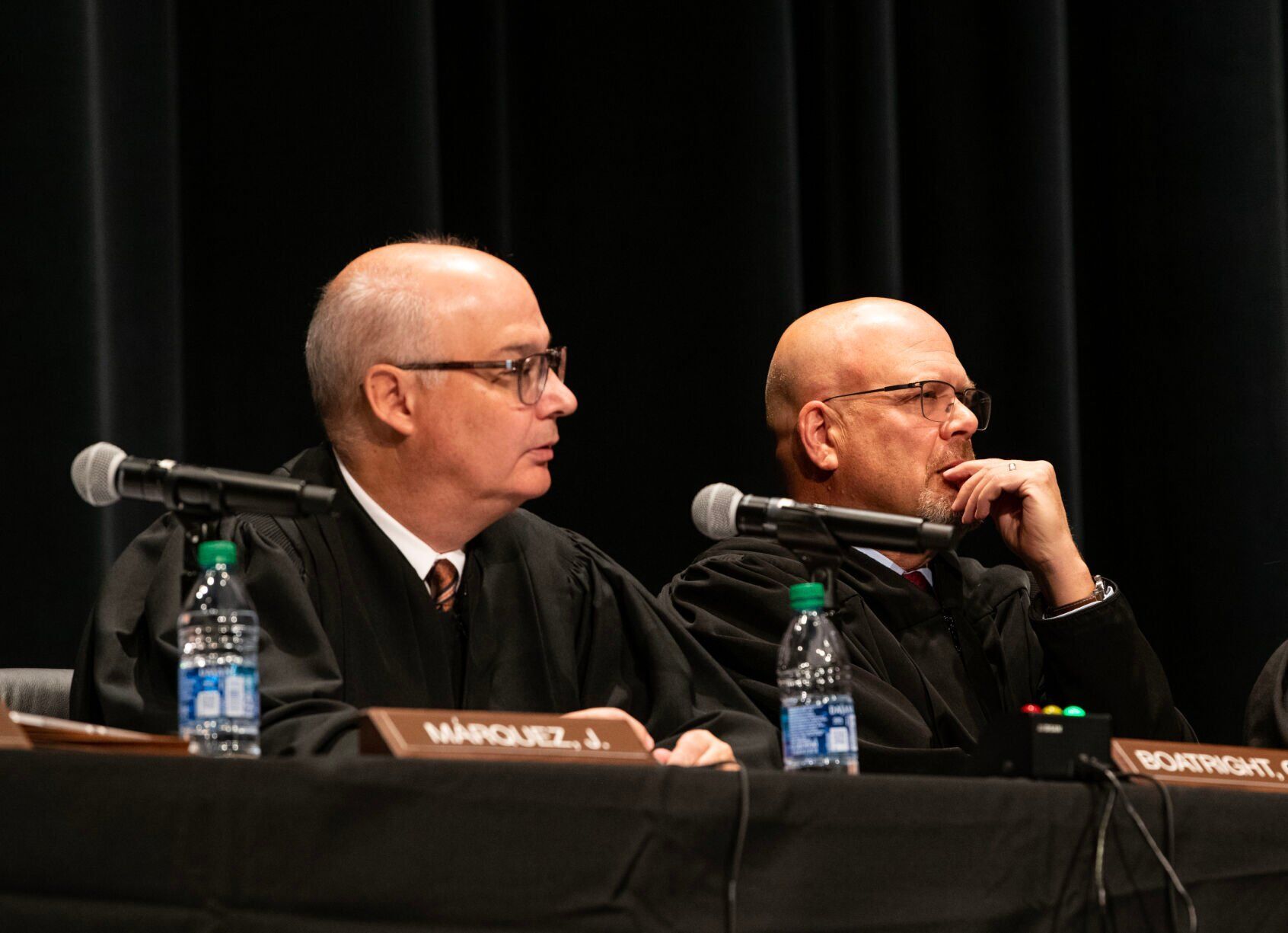
Members of the Colorado Supreme Court signaled strongly on Tuesday that a father deserved some avenue for challenging a temporary child custody order that no lower court believed it could review due to the unusual circumstances of the case.
Because the appeal involved a child welfare matter, neither the underlying filings describing the case nor the prior judicial orders are publicly available. However, the discussion during the Supreme Court’s oral arguments outlined the basic dilemma for a father identified as T.L.P.
An Arapahoe County magistrate issued a temporary custody order in a child neglect case, transferring T.L.P.’s child out of state to the mother. The Department of Human Services then successfully moved to dismiss the case. T.L.P. filed a petition asking a district judge to review the temporary custody order, but the judge ruled it was unreviewable because the case had been dismissed.
The Court of Appeals similarly concluded it could not hear the challenge, leading T.L.P. to seek the Supreme Court’s intervention.
A majority of the justices seemingly agreed that parents in T.L.P.’s shoes should be able to challenge a temporary custody order that, due to procedural oddities, is simultaneously void and functionally the final decision for the case.
“It’s just very troublesome to me that this gentleman loses the custody of his child and has no right to appeal it,” said Justice Brian D. Boatright.
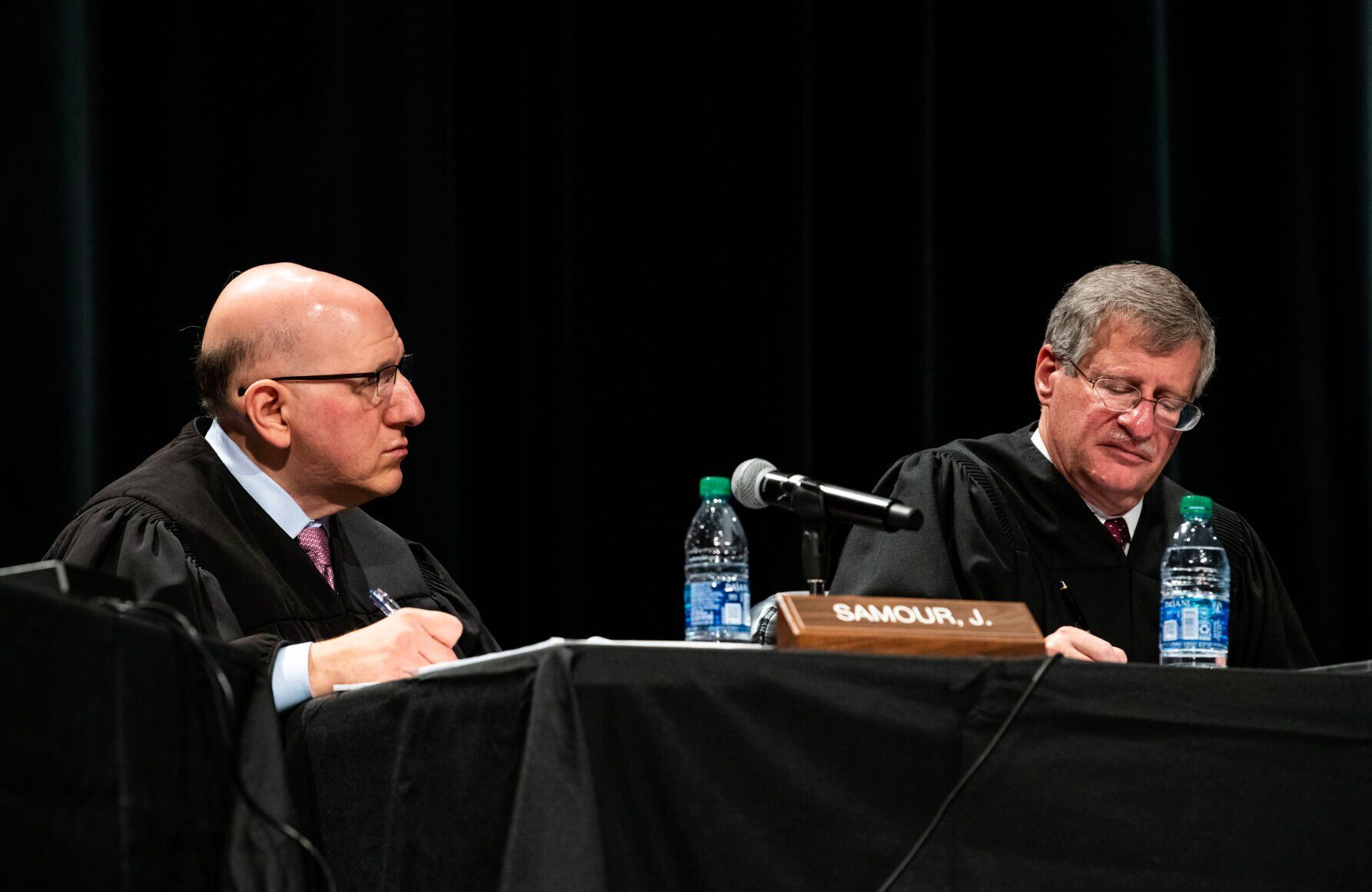
“Or even to get a district court review. I mean, he tried to get the district court to review it and he couldn’t even get that,” added Justice Carlos A. Samour Jr. “And then he goes to the Court of Appeals and it’s not reviewable there either. It just boggles the mind. You have somebody here, and you’re saying, ‘Well, it’s a temporary order.’ Well, it doesn’t feel temporary to the father.”
Some members of the court questioned whether the custody issue should be litigated separately through a new domestic relations case. Attorney Andrew A. Gargano, representing T.L.P., replied that his client would be on his own in that venue.
“I’m appointed counsel. Father just can’t afford counsel in DR court,” he said.
Justice Susan Blanco wondered why T.L.P. would want child neglect proceedings to continue.
The county “clearly wants this case to be done, and so does father. He just wants his child to return,” said Gargano. “He just wants it to reopen so we could look back at what happened.”
Alison Bettenberg, representing Arapahoe County, acknowledged that in retrospect, the county probably should have asked the district judge to review the magistrate’s custody order. However, she cautioned about keeping a child neglect case open for the sake of a custody dispute.
“But he necessarily has to appeal the dismissal in order to resurrect the issue about the (temporary) order. That’s the conundrum,” said Chief Justice Monica M. Márquez.
“I’m not a fan of using the word ‘gamesmanship’,” added Justice Richard L. Gabriel. “I’m not accusing you of gamesmanship. But I’m concerned about the risk of gamesmanship down the road so a hypothetical (county) can come in down the road, get what it wants, walk away, and say, ‘Gotcha. No appeal.’”
Other justices appeared willing to reject the idea that T.L.P. should file a separate case on his own to dispute custody.
“If somebody, for example, doesn’t have the financial ability or the legal know-how to go fight and get their kid back — we’ve moved the kid to another state and let’s just assume the person is in the most vulnerable place possible as a parent — we didn’t put things back to the physical status quo,” said Blanco. “So, if he can’t go get the kid back, he doesn’t have the financial resources, what is dad supposed to do?”
Boatright suggested that it was possible to avoid a flood of appeals for temporary custody orders if the Supreme Court decided to limit the availability of an appeal solely to circumstances that unfolded in T.L.P.’s case.
“It’s a mess,” he said.
The case is T.L.P. v. People.


Colorado judge explores sanctions against DOJ, ICE for rearresting man 4 days after release on bond
Michael Karlik
michael.karlik@coloradopolitics.com
Updated 3 hours ago
A federal judge in Colorado is considering sanctions against the government after immigration agents rearrested a man four days after an immigration judge found him suitable for release on bond. On July 28, U.S. Magistrate Judge N. Reid Neureiter ordered...

Divided disciplinary panel censures Montezuma County judge after agreement reached
Michael Karlik
michael.karlik@coloradopolitics.com
Updated 6 hours ago
A disciplinary panel formally imposed a public censure, suspension, and further training on Montezuma County Court Judge Ian J. MacLaren on Tuesday by a 2-1 vote. Under constitutional Amendment H, which voters adopted in November 2024, MacLaren was set to...

Colorado’s Western Slope magistrate judges describe unique role in federal judiciary
Michael Karlik
michael.karlik@coloradopolitics.com
Updated 20 hours ago
Two of Colorado’s federal judges stationed on the Western Slope spoke to lawyers on Wednesday about their unique roles, the ways their workloads differ, and the need for more criminal defense lawyers to take cases outside the Front Range. “Here...

Denver sues Philip Morris, other tobacco companies over cigarette butt litter
Deborah Grigsby
deborah.smith@denvergazette.com
Updated 1 hour ago
Denver is demanding that some of the biggest tobacco companies in the world pay for the cleanup of discarded cigarette butts on its streets, following a similar campaign that cities in other states have pursued. Denver’s lawsuit, filed this week...

Federal judge rules that request for bond hearing not necessary to challenge immigration detention
Michael Karlik
michael.karlik@coloradopolitics.com
Updated 20 hours ago
A federal judge in Colorado ruled last week that it is not mandatory for a person to seek a bond hearing with an immigration judge before they challenge the lawfulness of their detention in federal court. For the past year,...

Boulder Valley School District introduces new policies following antisemitism lawsuit
Marissa Ventrelli
marissa.ventrelli@coloradopolitics.com
Updated 22 hours ago
The chief of Boulder Valley School unveiled new policies for the 2026-2027 school year following a lawsuit filed on behalf of a student alleging antisemitic harassment. In June, the Anti-Defamation League filed a federal civil rights complaint against the school...

Colorado NRA chapter seeks injunction against new gun‑training requirement
Marissa Ventrelli
marissa.ventrelli@coloradopolitics.com
Updated 4 hours ago
The Colorado chapter of the National Rifle Association is seeking an injunction to stop the state from enforcing a new law that took effect earlier this month. The new law requires anyone buying or selling certain firearms to first complete...
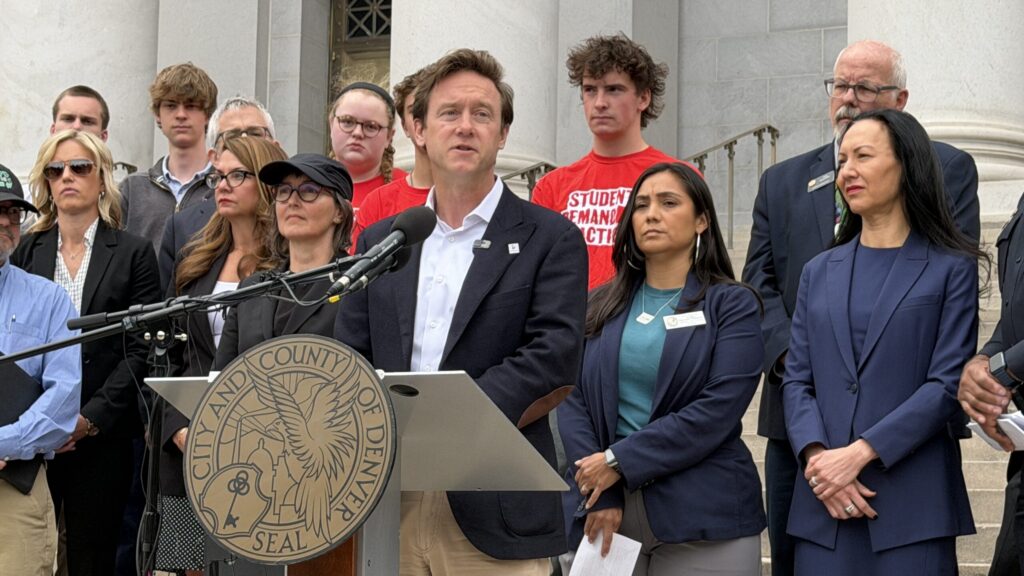
Denver moves to dismiss Trump challenge to ‘assault-style’ weapons ban
Deborah Grigsby
deborah.smith@denvergazette.com
Updated 21 hours ago
Denver has filed a motion to dismiss a lawsuit brought by the Trump administration challenging the city’s ban on “assault-style” weapons and magazines exceeding a 15-round capacity. The U.S. Department of Justice filed a suit in federal court in May,...
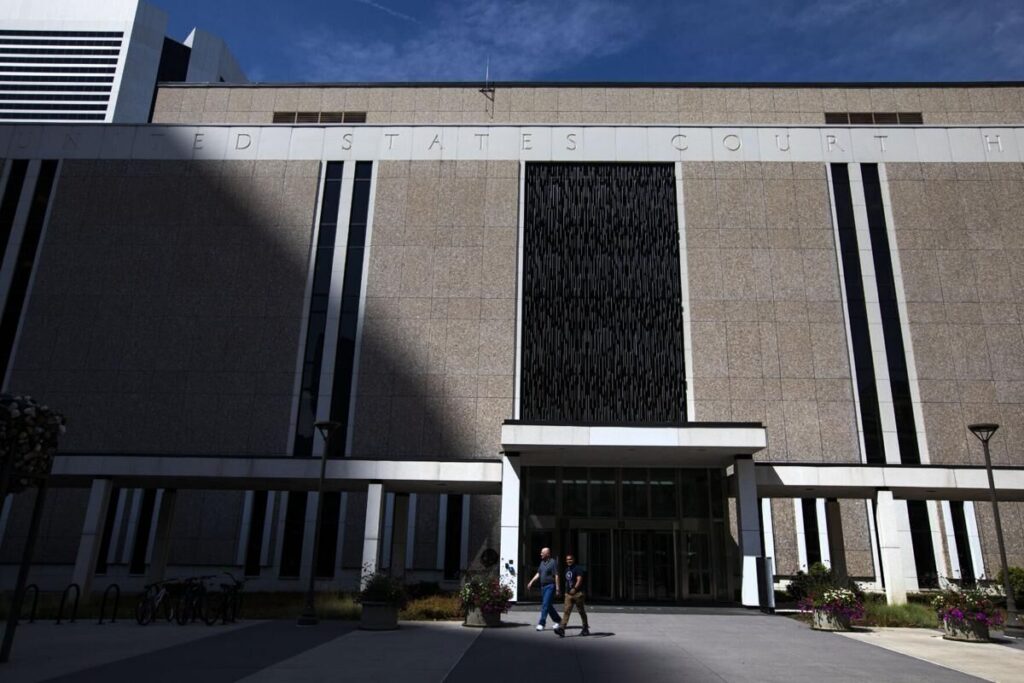
Federal judge dismisses ex-Colorado judicial discipline director’s conspiracy lawsuit
Michael Karlik
michael.karlik@coloradopolitics.com
Updated 2 days ago
A federal judge dismissed a lawsuit from Colorado’s former judicial discipline director on Tuesday, finding that he failed to adequately state claims for conspiracy or constitutional violations. Christopher S.P. Gregory, who served as the executive director of the Colorado Commission on Judicial...
Federal judge allows retaliation claims to proceed against prison officials
Michael Karlik
michael.karlik@coloradopolitics.com
Updated 21 hours ago
A federal judge agreed last week that a man incarcerated at Sterling Correctional Facility had credibly alleged that employees retaliated against him for filing grievances, including by taking away his disability accommodations and turning off his electricity. Louis Peoples Jr.,...
PREV
PREVIOUS

Court snuffs out challenge to Denver’s flavored tobacco ban
The smoke finally cleared in Denver’s battle over a citywide ban on flavored tobacco products when a Denver court dismissed a challenge from local vape shop owners seeking to declare the ordinance unconstitutional and block its enforcement. On Wednesday, Denver District Court Judge Erica F.H. Englert dismissed a lawsuit filed by the Rocky Mountain Smoke-Free […]

Phil Weiser leading Michael Bennet in Colorado’s Democratic gubernatorial primary, internal poll finds
Attorney General Phil Weiser holds a lead over U.S. Sen. Michael Bennet among likely voters less than a week before ballots are due in Colorado’s Democratic gubernatorial primary, according to a new poll released Thursday by a group backing Weiser. The survey, conducted Wednesday and Thursday by Democratic firm Public Policy Polling, found Weiser with […]