

Colorado justices find ability to extend appeal deadline applies equally to prosecutors, defendants
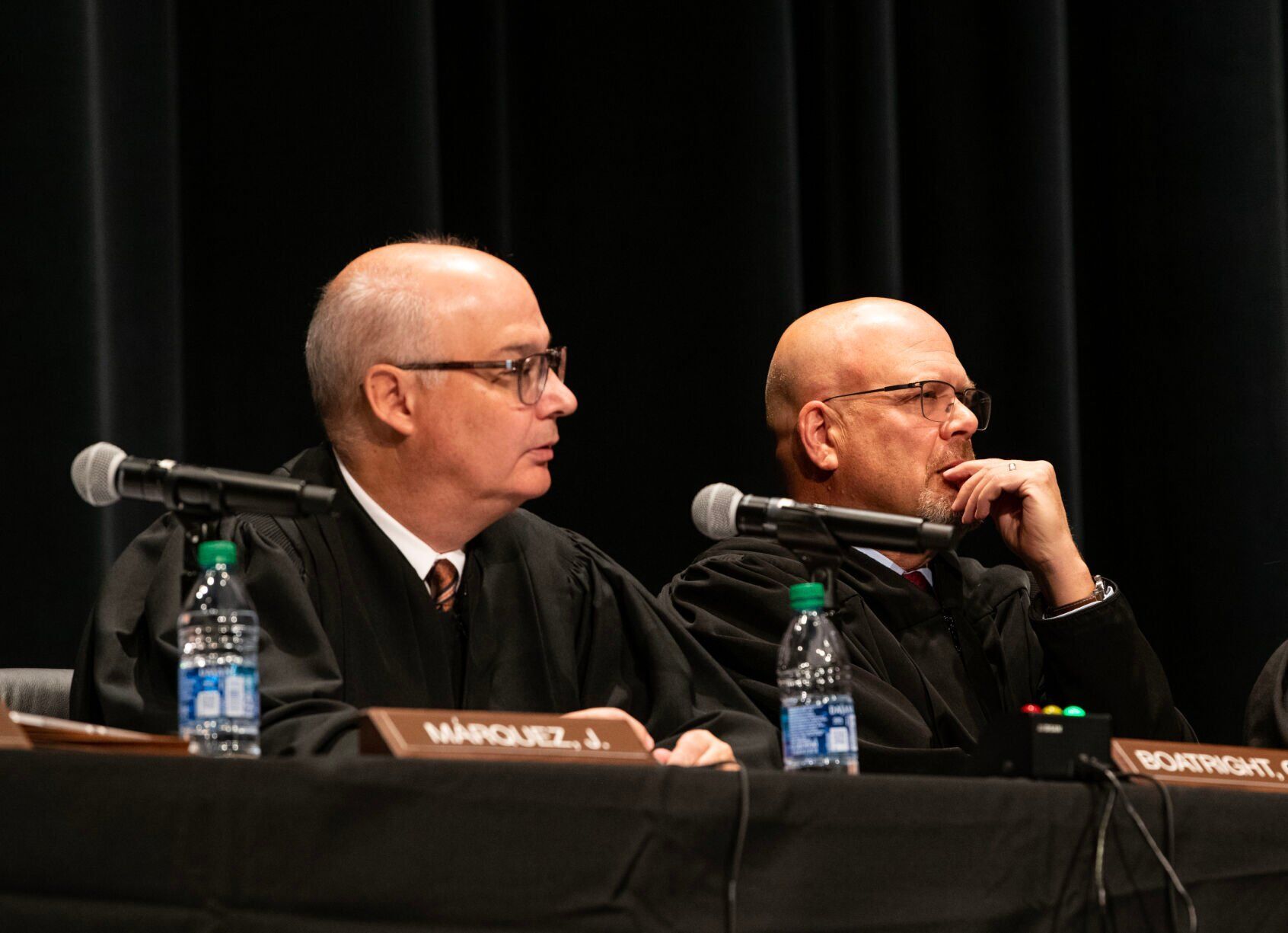
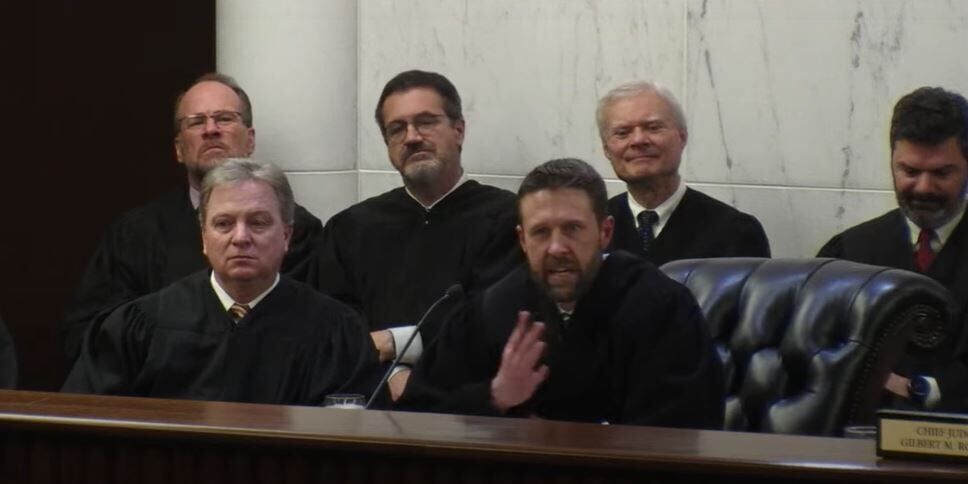
The Colorado Supreme Court decided on Tuesday that prosecutors have the same ability as criminal defendants to freeze their deadline to appeal a trial judge’s ruling when they ask for reconsideration, even though the rules do not explicitly say so.
Denver prosecutors charged Quinn M. Jebe with offenses relating to drug distribution and sexual assault on a child. In July 2023, shortly before trial, the district attorney’s office announced the alleged victim was unable to testify. It asked for the case to be dismissed without prejudice, meaning prosecutors could later refile the charges.
Instead, District Court Judge Nikea T. Bland dismissed the case with prejudice, precluding the refiling of charges. The prosecution immediately asked for reconsideration and, 39 days later, Bland denied the motion. Twenty-three days after that, the prosecution moved to appeal the dismissal.
The Court of Appeals was then confronted with the question of whether it could even hear the district attorney’s appeal. Did the prosecution have to abide by the 49-day appeal deadline, starting from the date of the original dismissal order? Or did the motion for reconsideration push back the deadline?
“We first conclude that a prosecutorial motion for reconsideration of a final judgment does not extend the time for filing an appeal,” wrote Judge Neeti V. Pawar in the three-judge appellate panel’s opinion.
She elaborated that, as the rule is written, exceptions to the 49-day deadline apply to defendants. But the same caveats do not apply when the prosecution is appealing. Finally, the panel believed the prosecution’s “misinterpretation of the law” was not grounds to waive the deadline.
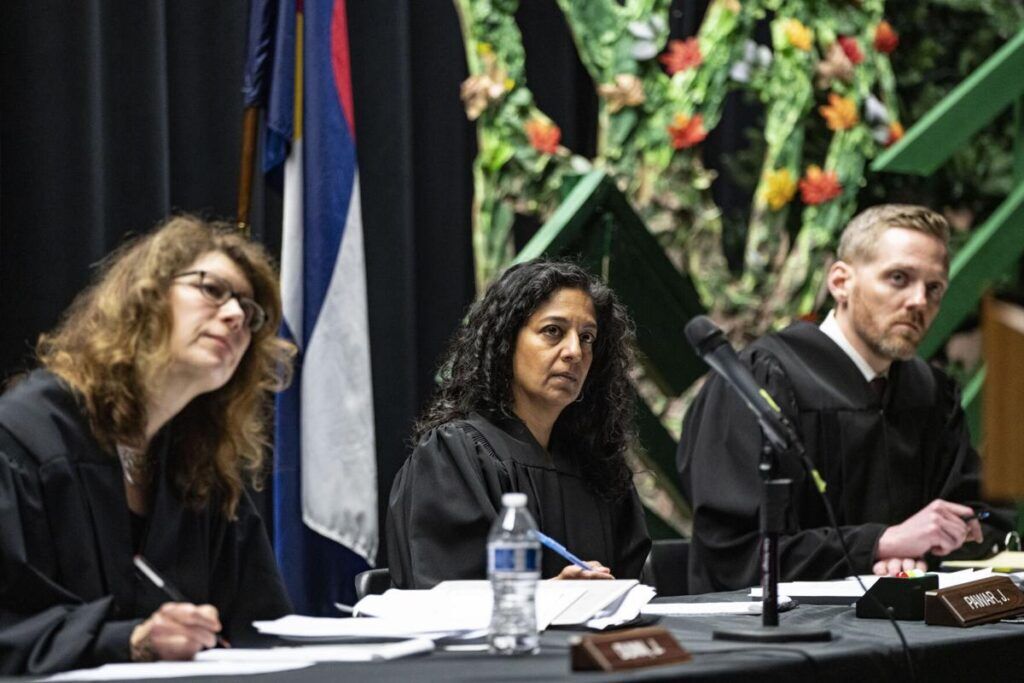
Turning to the Supreme Court, the district attorney’s office argued that the Court of Appeals’ “unnecessarily rigid” interpretation of the rule could undermine trial judges’ ability to correct their mistakes, possibly eliminating the need for an appeal in the first place.
During oral arguments, Justice William W. Hood III proposed a potential resolution that would allow the Denver District Attorney’s Office to prevail in Jebe’s case on one of the grounds the Court of Appeals rejected: That the prosecution’s failure to appeal in time was “excusable neglect” that should not be held against it.
“It seems to me, stepping back from all the nuances that we’ve been talking about, that maybe the appropriate outcome is just to say excusable neglect in this instance because there are reasonable arguments on both sides,” he said. “And then give it to the rule-making committee to sort out.”
Ultimately, the Supreme Court’s majority decided outright that the rule permitting defendants to push back the appeal deadline also applies when the prosecution files a motion to reconsider the dismissal of charges.
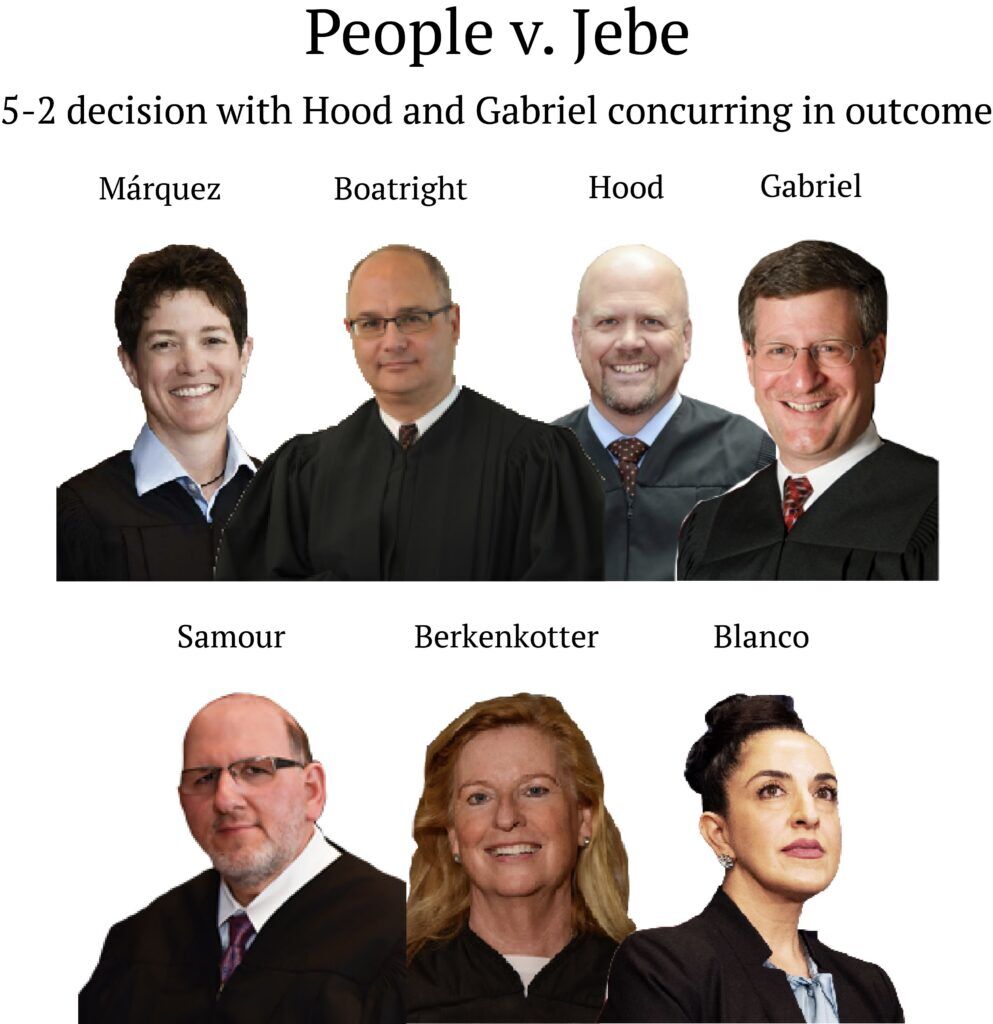
The rule “is silent regarding the effect of motions to reconsider on the timing for prosecutorial appeals in criminal cases,” acknowledged Justice Brian D. Boatright in the June 23 opinion. But logistically, he continued, a trial judge would not be authorized to decide a prosecutor’s motion for reconsideration if an appeal were filed.
“On the other hand, if the trial court recognizes that it erred and could correct that error before (prosecutors) commence an appeal, then this would improve efficiency,” Boatright wrote.
Justice Richard L. Gabriel, writing for himself and Hood, did not believe the rule applies equally to prosecutors and defendants. He wrote that the rule’s authors seemed to deliberately choose the wording to prevent the prosecution from obtaining deadline extensions.
If the rule “is to include such a provision, then the proper procedure is to request that our Rules of Appellate Procedure Committee amend that rule,” Gabriel wrote. “I do not believe that we should effectively amend our procedural rules by way of case law, thereby bypassing our usual processes (including standing committee vetting and, often, public comment and hearing) for the adoption or amendment of such rules.”
However, because he believed a “reasonably careful attorney” could have interpreted other court decisions as extending the prosecution’s deadline to appeal under the circumstances, Gabriel agreed that reinstating the Denver District Attorney’s Office’s appeal was proper.
The case is People v. Jebe.

Colorado justices confirm leaving-the-scene prosecutions require no proof of driver’s knowledge
Michael Karlik
michael.karlik@coloradopolitics.com
Updated 14 hours ago
The Colorado Supreme Court confirmed on Tuesday that its 20-year-old decision involving drivers who leave the scene of an accident remains good law and prosecutors do not have to prove that such defendants knew they were involved in an accident....

Judge blocks Colorado’s proposed ban on using SNAP benefits for soda
Marissa Ventrelli
marissa.ventrelli@coloradopolitics.com
Updated 17 hours ago
A federal judge has temporarily blocked Colorado and several other states from enforcing a proposed “Healthy Choice Waiver” that would have barred Supplemental Nutrition Assistance Program (SNAP) recipients from using their benefits to buy soda and other sugary drinks. Under...
Boulder police overreached in interrogating suspect, Colorado Supreme Court finds
Michael Karlik
michael.karlik@coloradopolitics.com
Updated 17 hours ago
Two Boulder detectives violated a man’s constitutional rights by interrogating him at his home using a court order that solely authorized the collection of his DNA evidence, the Colorado Supreme Court concluded on Tuesday. The ruling curtailed the ability of...
Property owners may access evidence before eminent domain decisions, Colorado justices conclude
Michael Karlik
michael.karlik@coloradopolitics.com
Updated 17 hours ago
The Colorado Supreme Court ruled on Tuesday that a Douglas County judge incorrectly believed he lacked the authority to allow a property owner to pursue evidence challenging a government entity’s legal right to take its property through eminent domain. In...
Missy Woods accepts plea deal, avoids trial on 102 felony counts
Jenny Deam
jenny.deam@gazette.com
Updated 18 hours ago
The former top Colorado Bureau of Investigation forensic scientist accused of altering and deleting DNA evidence in scores of criminal cases across the state for years pleaded guilty to four criminal counts Tuesday in Jefferson County. Yvonne “Missy” Woods, 65,...

10th Circuit grants Boulder-Weld district’s fire chief immunity for firing union leader
Michael Karlik
michael.karlik@coloradopolitics.com
Updated 2 days ago
The Denver-based federal appeals court decided on Monday that the chief of a fire protection district spanning Boulder and Weld counties could not be held liable for terminating a union leader through the process outlined in the collective bargaining agreement....

State Supreme Court oral arguments, 10th Circuit nominee recuses from cases | COURT CRAWL
Michael Karlik
michael.karlik@coloradopolitics.com
Updated 2 days ago
Welcome to Court Crawl, Colorado Politics’ roundup of news from the third branch of government. The state Supreme Court will hear its last set of oral arguments this week before breaking for the summer, and the nominee for a vacancy...

Appeals court adopts federal standard for jail deaths under Colorado law
Michael Karlik
michael.karlik@coloradopolitics.com
Updated 2 days ago
Colorado’s second-highest court decided last month that the standard used by federal courts for assessing whether government officials may be liable for constitutional violations upon the death of a jail detainee also applies to claims made under the Colorado Constitution....
Trump’s 10th Circuit nominee recuses from cases against federal government without explanation
Michael Karlik
michael.karlik@coloradopolitics.com
Updated 3 days ago
President Donald Trump’s nominee to fill a vacancy on the Denver-based federal appeals court recused himself without a clear explanation from nine cases against the executive branch while he was undergoing vetting by the White House this spring. U.S. District...
Adams County murder conviction reversed due to faulty jury instruction
Michael Karlik
michael.karlik@coloradopolitics.com
Updated 3 days ago
Colorado’s second-highest court overturned an Adams County defendant’s murder conviction last month because the instruction provided to the jury about a trespasser’s right to use self-defense did not accurately reflect Colorado law. A person is justified in using force to...
PREV
PREVIOUS

Colorado’s primary turnout tops 10% as election officials warn it’s too late to mail ballots
Colorado election officials cautioned on Tuesday that it’s too late to mail ballots for the June 30 primary and urged voters to use drop boxes and their county’s voting centers instead. Secretary of State Jena Griswold said in a release that 437 secure drop boxes and 137 in-person voter centers are open throughout the state. […]

Federal agents arrest ex-New York Mayor Eric Adams’s former chief of staff
Federal agents arrested former New York Mayor Eric Adams’s chief of staff as part of a wider corruption investigation, according to several outlets. Frank Carone, Adams’s first chief of staff, was reportedly arrested with three others as part of a bribery probe. A person familiar with the matter identified to Politico the other three as […]