

Boulder police overreached in interrogating suspect, Colorado Supreme Court finds
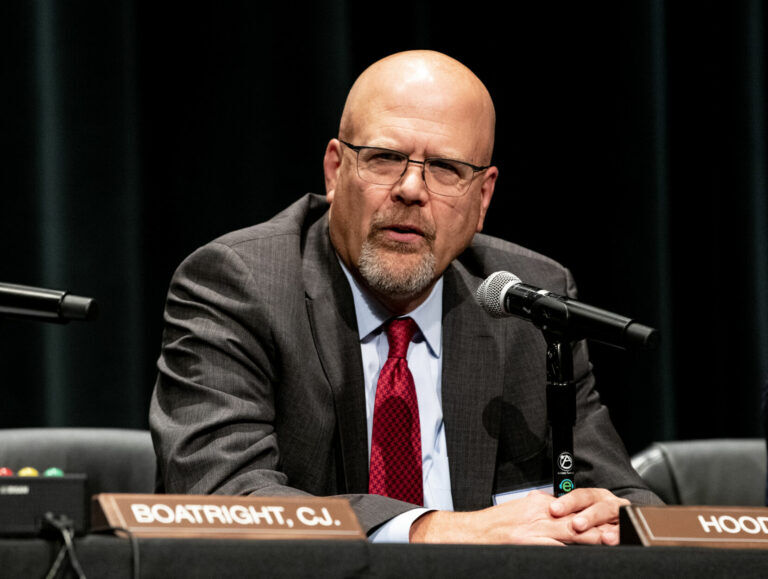
Two Boulder detectives violated a man’s constitutional rights by interrogating him at his home using a court order that solely authorized the collection of his DNA evidence, the Colorado Supreme Court concluded on Tuesday.
The ruling curtailed the ability of police to use a narrow category of court orders, issued without probable cause, to obtain incriminating testimony from a suspect after they inform him of their authorization to collect other forms of evidence.
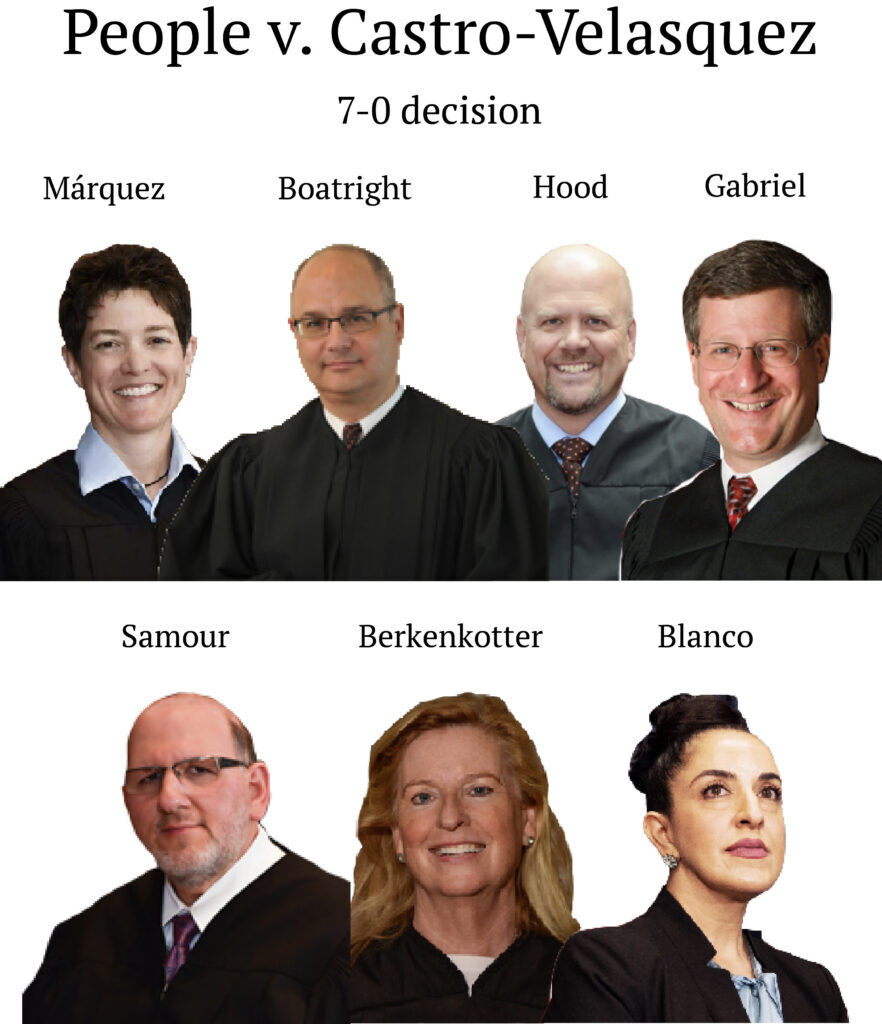
When officers show up to execute the order, wrote Justice William W. Hood III in the June 23 opinion, the suspect is not free to leave and is subject to a constitutional “seizure.”
“And unless the officers independently possess probable cause to believe the suspect committed the crime at issue, they are strictly prohibited from ‘intentionally and purposefully elicit(ing) information from’ the suspect in a manner not authorized by the order,” Hood wrote.
Under Colorado’s criminal rules, law enforcement may obtain an order for “nontestimonial identification,” allowing them to pursue a person’s fingerprints, blood specimen, handwriting sample, picture or other evidence that does not stem from an interrogation.
Notably, police only need to demonstrate “reasonable grounds,” not probable cause, that their target committed an offense.
Upon securing a “41.1 order,” as it is known, to collect the DNA of Angel Adrian Castro-Velasquez, who was suspected of an attempted sexual assault, Detectives Kevin Marples and Kara Wills arrived at Castro-Velasquez’s house one morning. Marples originally told Castro-Velasquez about the 41.1 order over the phone the day before, but Marples realized it would not work for Castro-Velasquez to come to the police station after hours as they had planned.
Instead of moving to collect the evidence authorized by the order, the detectives interrogated Castro-Velasquez at length. He eventually confessed, after which they executed the order. Marples later testified he lacked probable cause to arrest Castro-Velasquez for the attempted attack at the time he and Wills showed up at the house.
On appeal, Castro-Velasquez argued the detectives manipulated the order to detain and interrogate him without probable cause. Such conduct allegedly violated the Fourth Amendment’s prohibition on unreasonable seizures.
A three-judge Court of Appeals panel concluded Castro-Velasquez was seized during the encounter, meaning he would not have felt able to leave or disregard the detectives’ questioning. While police were not prohibited from investigating Castro-Velasquez further, wrote then-Judge Anthony J. Navarro, they could not interrogate him under the narrow authorization of the 41.1 order.
“Overall, the record reveals that the detectives intentionally elicited Castro’s statements about the alleged offenses while he was detained on less than probable cause,” Navarro wrote. “We cannot condone it.”
To the Supreme Court, the government argued the appellate panel was wrong to ask whether Castro-Velasquez was “free to leave” during the encounter at his home. Instead, the government maintained that Castro-Velasquez was not in custody until the interrogation concluded and the detectives took him for a DNA swab.
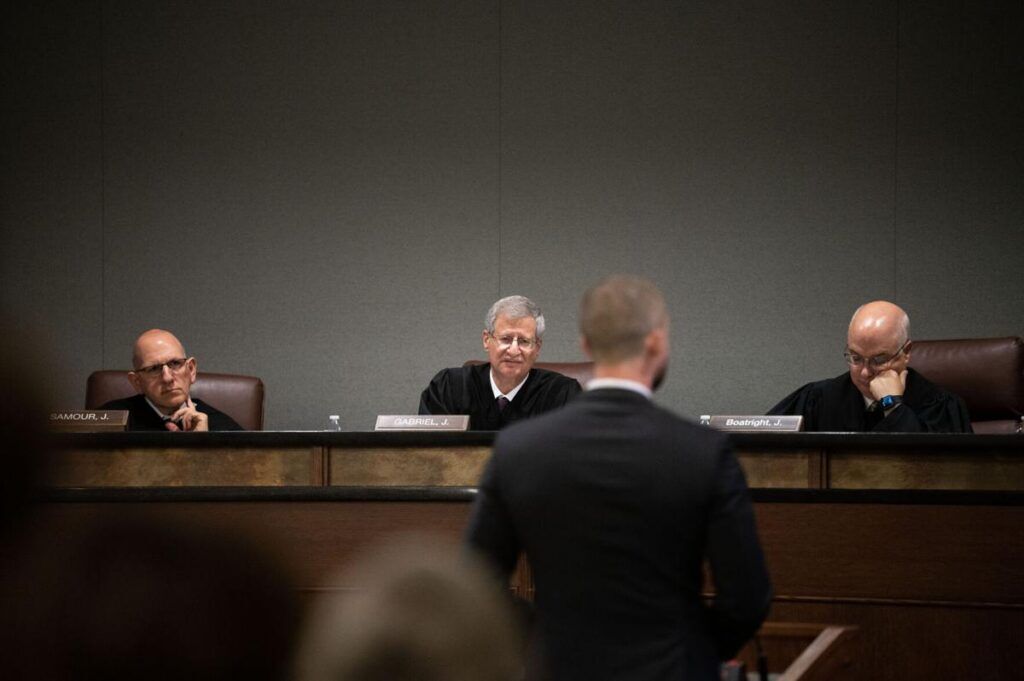
Justice Richard L. Gabriel countered during oral arguments that if police had shown up to a suspect’s home, asked to talk and he invited them in, that would be a permissible consensual encounter or, at most, a brief investigatory stop.
“But the 41.1 order seems to make some sort of difference here,” he said. “He’s not free to leave. At that point, we have an order. And I think the world is different.”
Further, Gabriel continued, once a suspect is being interrogated in custody, they have the protection of their Miranda rights. Therefore, the guardrails for executing 41.1 orders would be redundant.
Defense attorney Todd Narum argued that police “execute” a 41.1 order once the suspect is aware of it and there is a police presence in connection with it. Both of those conditions were met at the time of Castro-Velasquez’s interrogation.
“So, as soon as there’s a 41.1 signed and as soon as the defendant is made aware of that,” said Justice Susan Blanco, “there is no circumstance where law enforcement can have a consensual interaction with the defendant?”
“Correct, because they’ve already done something that they’re not allowed to do in the typical situation,” said Narum.
Hood, in the court’s opinion, wrote that the Court of Appeals correctly focused on whether Castro-Velasquez was free to leave. When the detectives showed up hours after telling Castro-Velasquez about the 41.1 order, Castro-Velasquez would not have felt free to leave.
While there would be no constitutional issue if Castro-Velasquez voluntarily made statements to the detectives, the audio of the interrogation showed the detectives confronting him about the crime.
“To be clear, we don’t include these details to suggest that the detectives coerced Castro-Velasquez into making the inculpatory statements,” wrote Hood, “but only as further evidence that a reasonable person in Castro-Velasquez’s position could infer from the tenor of the interaction that this wasn’t a consensual interview; he wasn’t free to terminate the conversation at will; and the execution of the Rule 41.1 order had begun.”
The Supreme Court agreed that Castro-Velasquez’s statements could not be used against him and upheld the Court of Appeals’ directive for a new trial.
The case is People v. Castro-Velasquez.


A new day? Colorado’s troubled guardianship office pursues ‘cultural reset’
Marianne Goodland
marianne.goodland@coloradopolitics.com
Updated 3 days ago
Colorado’s guardianship program, long criticized for mismanagement and high staff attrition, is undergoing a “cultural reset,” as its new director works to repair partnerships and prepare for a major expansion under recent legislation. Created by lawmakers in 2017, the Office...
Local party leaders, incoming judge among members of judicial performance commission that violated law
Michael Karlik
michael.karlik@coloradopolitics.com
Updated 19 hours ago
A local Democratic leader and 2024 presidential elector. A legislative aide and leader in the Young Republicans. An incoming county court judge freshly appointed by the governor. They are among the eight members of the northeastern Colorado judicial performance commission...
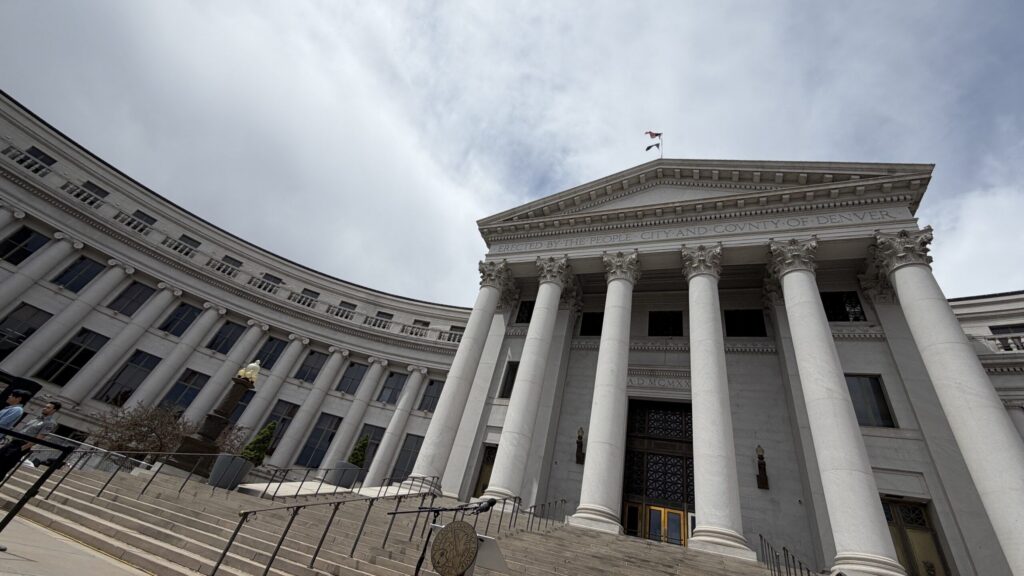
Judge dismisses lawsuit seeking records from Colorado Democratic group
Marianne Goodland
marianne.goodland@coloradopolitics.com
Updated 2 days ago
A lawsuit seeking to obtain records from Democratic lawmakers affiliated with a caucus has been thrown out by a Denver District Court judge. On July 17, Judge Ericka Englert dismissed the April lawsuit filed by progressive activist Derrick Blanton, who...
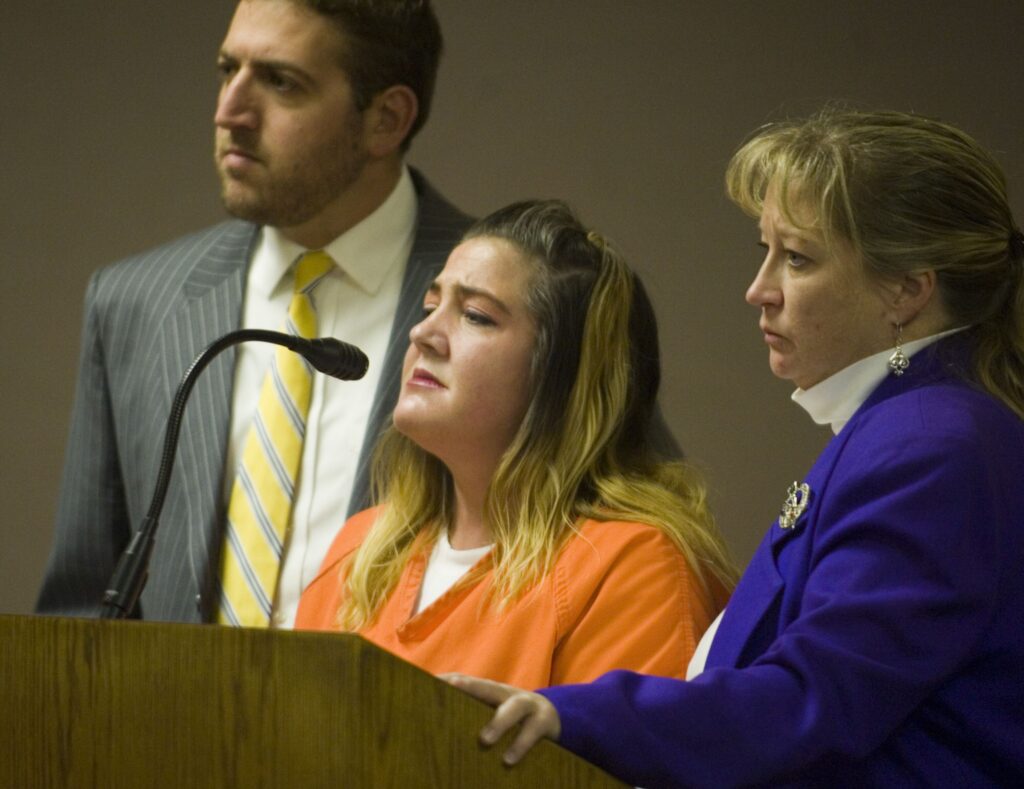
Colorado Springs mother Deborah Nicholls’ murder conviction overturned
Nick Smith
nick-smith@coloradopolitics.com
Updated 3 days ago
A Colorado Springs mother convicted in 2008 of murdering her three children in a house fire might get a new trial after a judge ruled that prosecutors withheld key evidence that could have impacted the jury’s verdict. Deborah Nicholls, whose...
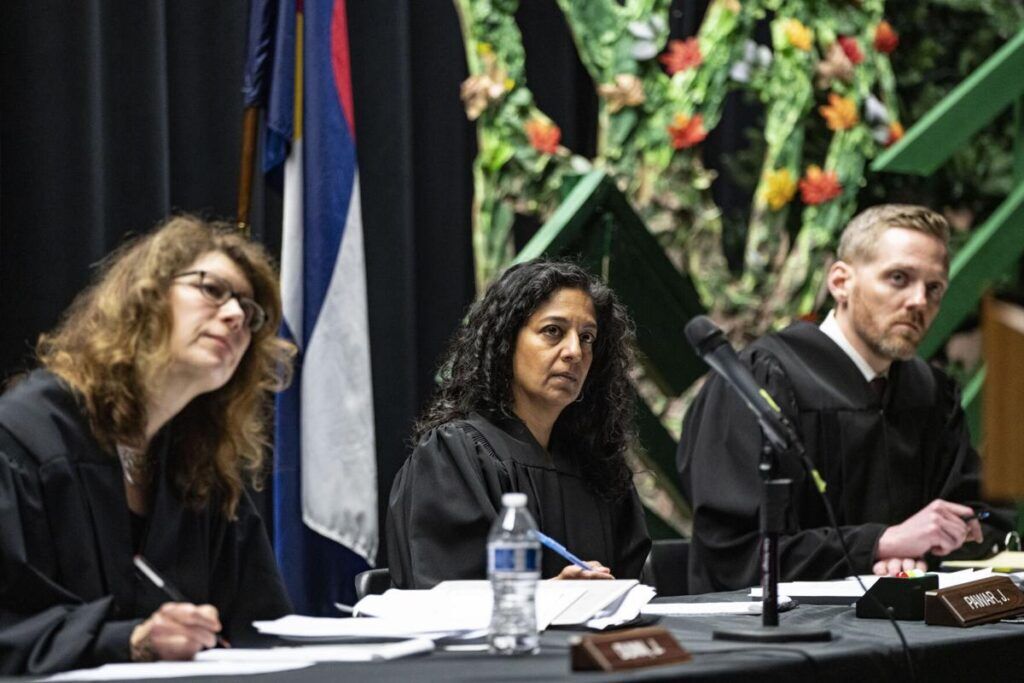
Colorado court overturns illegal $7,000 restitution order
Michael Karlik
michael.karlik@coloradopolitics.com
Updated 2 days ago
Colorado’s second-highest court overturned a Weld County defendant’s obligation to pay more than $7,000 in crime victim restitution on Thursday because a trial judge failed to issue a legally compliant restitution order at the time of sentencing. In Colorado, as...

Appeals court rejects former DougCo commissioner’s legal fee claim
Nicholas Fogleman
nicholas.fogleman@denvergazette.com
Updated 2 days ago
The Colorado Court of Appeals rejected a former Douglas County commissioner’s bid for reimbursement of attorney fees she incurred while responding to multiple investigations into her conduct. The dispute stemmed from a 2019 anonymous letter sent to county officials alleging...
Appeals court orders second look at Denver Water’s immunity for cyclist’s injury
Michael Karlik
michael.karlik@coloradopolitics.com
Updated 3 days ago
Colorado’s second-highest court ordered another look at a bicyclist’s negligence lawsuit against Denver Water on Thursday, concluding that a trial judge needed to evaluate the utility’s potential immunity using the state Supreme Court’s new guidance. Joseph A. “Joey” Scott alleged...
Labels, duration not definitive proof of ‘intimate relationship,’ Colorado court rules in domestic violence case
Michael Karlik
michael.karlik@coloradopolitics.com
Updated 2 days ago
Colorado’s second-highest court clarified on Thursday that the length of a couple’s relationship and the labels they attach to it are not conclusive evidence of whether it is an “intimate relationship” that can give rise to a domestic violence prosecution....

Colorado AG urges Supreme Court to let Boulder climate lawsuit proceed
Marissa Ventrelli
marissa.ventrelli@coloradopolitics.com
Updated 3 days ago
Colorado Attorney General Phil Weiser has filed a court brief with the U.S. Supreme Court in a lawsuit brought by Boulder city officials seeking to hold oil companies liable for their environmental impact. The case began in 2018, when the...
10th Circuit says landowner cannot sue ex-Routt County judge for statements in decision
Michael Karlik
michael.karlik@coloradopolitics.com
Updated 4 days ago
A Routt County landowner cannot sue a former judge for his allegedly inaccurate statements in a case where the landowner was not a party, the Denver-based federal appeals court decided on Wednesday. Anne Fitzsimmons, who lives in Germany, owns a...
PREV
PREVIOUS
Property owners may access evidence before eminent domain decisions, Colorado justices conclude
The Colorado Supreme Court ruled on Tuesday that a Douglas County judge incorrectly believed he lacked the authority to allow a property owner to pursue evidence challenging a government entity’s legal right to take its property through eminent domain. In a June 23 opinion, Justice Susan Blanco wrote that the law does not explicitly provide […]

Medicaid suspends agency behind 'The Program,' citing 'credible' fraud allegations
The agency overseeing Colorado’s federal Medicaid program has suspended an Aurora home-health agency that is the focus of an investigation into an enterprise that lured dozens of homeless people with promises of free housing and cash and reaped tens of millions of dollars in Medicaid reimbursements. Officials said it has stopped paying Medicaid claims filed […]