

Appeals court adopts federal standard for jail deaths under Colorado law

Colorado’s second-highest court decided last month that the standard used by federal courts for assessing whether government officials may be liable for constitutional violations upon the death of a jail detainee also applies to claims made under the Colorado Constitution.
A three-judge Court of Appeals panel upheld the dismissal of a lawsuit over the July 2022 suicide of Gavin Tweed in the Denver jail. The panel concluded that Tweed’s surviving common law spouse needed to allege the sheriff’s defendants were deliberately indifferent to Tweed’s serious medical needs. The standard requires that a person know about, but disregard, a substantial risk of harm to the detainee.
“If the officers had known that Tweed was suicidal, we would agree that using aggressive tactics or inadequately monitoring him could, under some circumstances, show deliberate indifference toward his serious medical needs,” wrote Judge Grant T. Sullivan in the May 28 opinion. But the plaintiff “didn’t allege that any defendant knew that Tweed might harm himself.”
Case: Brooks v. City and County of Denver
Decided: May 28, 2026
Jurisdiction: Denver
Ruling: 3-0
Judges: Grant T. Sullivan (author)
Terry Fox
W. Eric Kuhn
The plaintiff, Shia Brooks, alleged that Denver police arrested Tweed at his home on July 17, 2022, on an outstanding misdemeanor warrant from Adams County. The officers “aggressively” locked Tweed in the Denver jail and “formed the belief” that he had assaulted them. As a result, the jail assigned Tweed a felony-level classification.
Sheriff’s employees at the jail allegedly failed to assess Tweed’s history of trauma and mental disorder. They also failed to adequately monitor him. Four days after his arrest, Tweed attempted suicide. Although medical staff at nearby Denver Health placed him on life support, he died on July 23.
Brooks filed suit against the police chief, sheriff, Denver Health, the city and various other defendants. She alleged the defendants unlawfully arrested him, violated his due process rights by failing to keep him alive and were liable for wrongful death, among other claims.
In part, Brooks relied on a Colorado law enacted in 2020 that authorized claims against law enforcement officers for monetary damages for violations of state constitutional rights. Her lawyers also noted Colorado Supreme Court precedent — predating the law change — that generally rejected the existence of damages for state constitutional violations. Brooks asserted that she intended to ask the Supreme Court to overturn that earlier ruling.
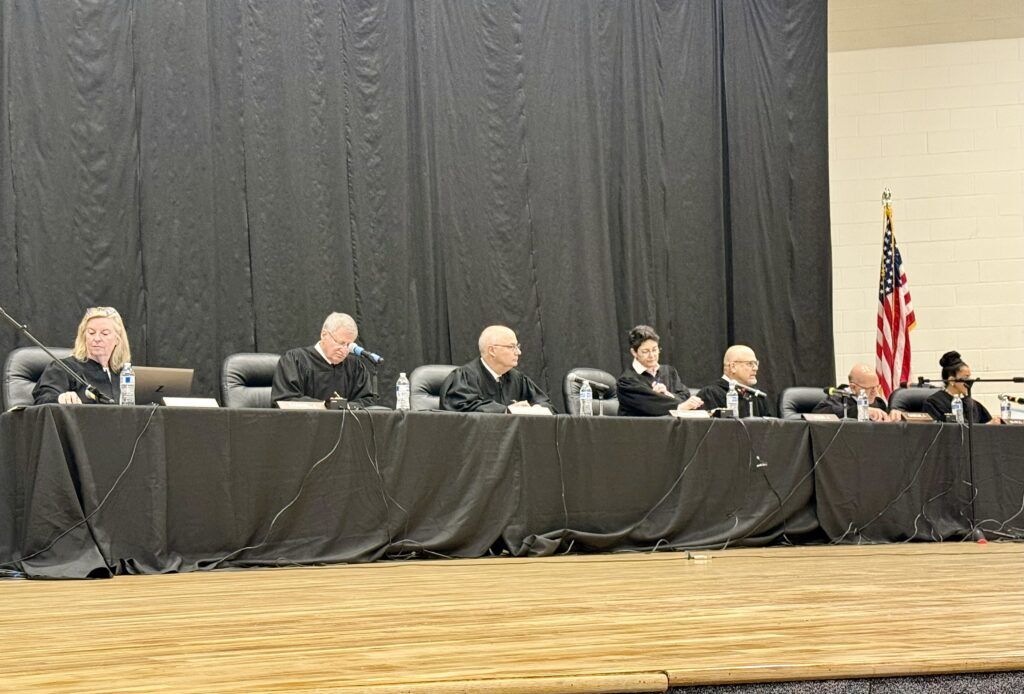
In a May 2025 order, District Court Judge Jill D. Dorancy granted the defendants’ motion to dismiss all claims. She did not mention the 2020 law permitting damages claims against law enforcement officers. Instead, she leaned on the Supreme Court’s precedent and believed that Brooks could only pursue state constitutional claims if they differed from those under the U.S. Constitution.
Because Brooks’ state constitutional claims could have been brought as federal constitutional violations, Dorancy dismissed them. As for the wrongful death claim, she concluded that Brooks did “not identify any protocols that were violated or that personnel were aware of Mr. Tweed’s suicide risk or mental health needs. Further, Plaintiff provides insufficient information as to what procedures were or were not followed, what information was known to staff or how any departure from protocol led to harm.”
In reviewing Brooks’ appeal of the dismissal order, the Court of Appeals panel acknowledged that Dorancy had not mentioned the 2020 change in law. Sullivan largely sidestepped her reasoning, focusing instead on the standard for evaluating jail death claims under the Colorado Constitution. He wrote that the federal standard of deliberate indifference was appropriate, even though the parties had not explicitly advocated for it.
“Brooks didn’t allege that any defendant knew about Tweed’s traumatic history or that he was suicidal at the time of his detention,” wrote Sullivan. “And without actual knowledge that Tweed was currently suicidal, the defendants couldn’t have been deliberately indifferent by failing to ascertain Tweed’s medical and mental health needs.”
As for the sheriff and police chief, who were allegedly responsible for failing to implement effective suicide-prevention policies, “Brooks never alleged that (they) knew that their agencies’ suicide-prevention policies presented an excessive risk to detainees’ safety,” Sullivan continued.
Because the appellate panel decided Brooks failed to allege that any government official violated Tweed’s rights, Sullivan noted the panel did not need to engage with the Supreme Court’s precedent barring damages claims for state constitutional violations. He pointed out, however, that the Supreme Court’s ruling permitted Brooks to bring a federal lawsuit for damages in the alternative.
Finally, the panel rejected Brooks’ claim of an unlawful seizure for Tweed’s arrest, with Sullivan writing that the allegations painted “a picture of a relatively unremarkable arrest.”
The case is Brooks v. City and County of Denver et al.


A new day? Colorado’s troubled guardianship office pursues ‘cultural reset’
Marianne Goodland
marianne.goodland@coloradopolitics.com
Updated 4 days ago
Colorado’s guardianship program, long criticized for mismanagement and high staff attrition, is undergoing a “cultural reset,” as its new director works to repair partnerships and prepare for a major expansion under recent legislation. Created by lawmakers in 2017, the Office...

Local party leaders, incoming judge among members of judicial performance commission that violated law
Michael Karlik
michael.karlik@coloradopolitics.com
Updated 2 days ago
A local Democratic leader and 2024 presidential elector. A legislative aide and leader in the Young Republicans. An incoming county court judge freshly appointed by the governor. They are among the eight members of the northeastern Colorado judicial performance commission...
Judge dismisses lawsuit seeking records from Colorado Democratic group
Marianne Goodland
marianne.goodland@coloradopolitics.com
Updated 3 days ago
A lawsuit seeking to obtain records from Democratic lawmakers affiliated with a caucus has been thrown out by a Denver District Court judge. On July 17, Judge Ericka Englert dismissed the April lawsuit filed by progressive activist Derrick Blanton, who...
Colorado Springs mother Deborah Nicholls’ murder conviction overturned
Nick Smith
nick-smith@coloradopolitics.com
Updated 3 days ago
A Colorado Springs mother convicted in 2008 of murdering her three children in a house fire might get a new trial after a judge ruled that prosecutors withheld key evidence that could have impacted the jury’s verdict. Deborah Nicholls, whose...
Colorado court overturns illegal $7,000 restitution order
Michael Karlik
michael.karlik@coloradopolitics.com
Updated 2 days ago
Colorado’s second-highest court overturned a Weld County defendant’s obligation to pay more than $7,000 in crime victim restitution on Thursday because a trial judge failed to issue a legally compliant restitution order at the time of sentencing. In Colorado, as...

Appeals court rejects former DougCo commissioner’s legal fee claim
Nicholas Fogleman
nicholas.fogleman@denvergazette.com
Updated 3 days ago
The Colorado Court of Appeals rejected a former Douglas County commissioner’s bid for reimbursement of attorney fees she incurred while responding to multiple investigations into her conduct. The dispute stemmed from a 2019 anonymous letter sent to county officials alleging...
Appeals court orders second look at Denver Water’s immunity for cyclist’s injury
Michael Karlik
michael.karlik@coloradopolitics.com
Updated 3 days ago
Colorado’s second-highest court ordered another look at a bicyclist’s negligence lawsuit against Denver Water on Thursday, concluding that a trial judge needed to evaluate the utility’s potential immunity using the state Supreme Court’s new guidance. Joseph A. “Joey” Scott alleged...
Labels, duration not definitive proof of ‘intimate relationship,’ Colorado court rules in domestic violence case
Michael Karlik
michael.karlik@coloradopolitics.com
Updated 3 days ago
Colorado’s second-highest court clarified on Thursday that the length of a couple’s relationship and the labels they attach to it are not conclusive evidence of whether it is an “intimate relationship” that can give rise to a domestic violence prosecution....

Colorado AG urges Supreme Court to let Boulder climate lawsuit proceed
Marissa Ventrelli
marissa.ventrelli@coloradopolitics.com
Updated 4 days ago
Colorado Attorney General Phil Weiser has filed a court brief with the U.S. Supreme Court in a lawsuit brought by Boulder city officials seeking to hold oil companies liable for their environmental impact. The case began in 2018, when the...
10th Circuit says landowner cannot sue ex-Routt County judge for statements in decision
Michael Karlik
michael.karlik@coloradopolitics.com
Updated 5 days ago
A Routt County landowner cannot sue a former judge for his allegedly inaccurate statements in a case where the landowner was not a party, the Denver-based federal appeals court decided on Wednesday. Anne Fitzsimmons, who lives in Germany, owns a...
PREV
PREVIOUS

Registered voters on the eve of the 2026 primaries | Cronin & Loevy
The Colorado Secretary of State’s Office has published the latest voter registration figures for the state and its counties as of June. Colorado ranks among the highest states for independent, or unaffiliated, voters. Only Alaska and Massachusetts have more. New Hampshire, New Jersey, Maine and Oregon also rank highly. So here is what the state looks like politically as Coloradans are voting in this year’s party primary elections. Keep in […]

Rural frustration, parental rights shape Scott Bottoms’ pitch ahead of Colorado's gubernatorial primaries
With just weeks before Colorado’s June primary, Republican gubernatorial candidate state Rep. Scott Bottoms is spending nearly all his time on the road — literally crisscrossing the Western Slope and Eastern Plains — in a final push to connect with voters who, he argued, have been ignored for too long. “We spend a lot of […]